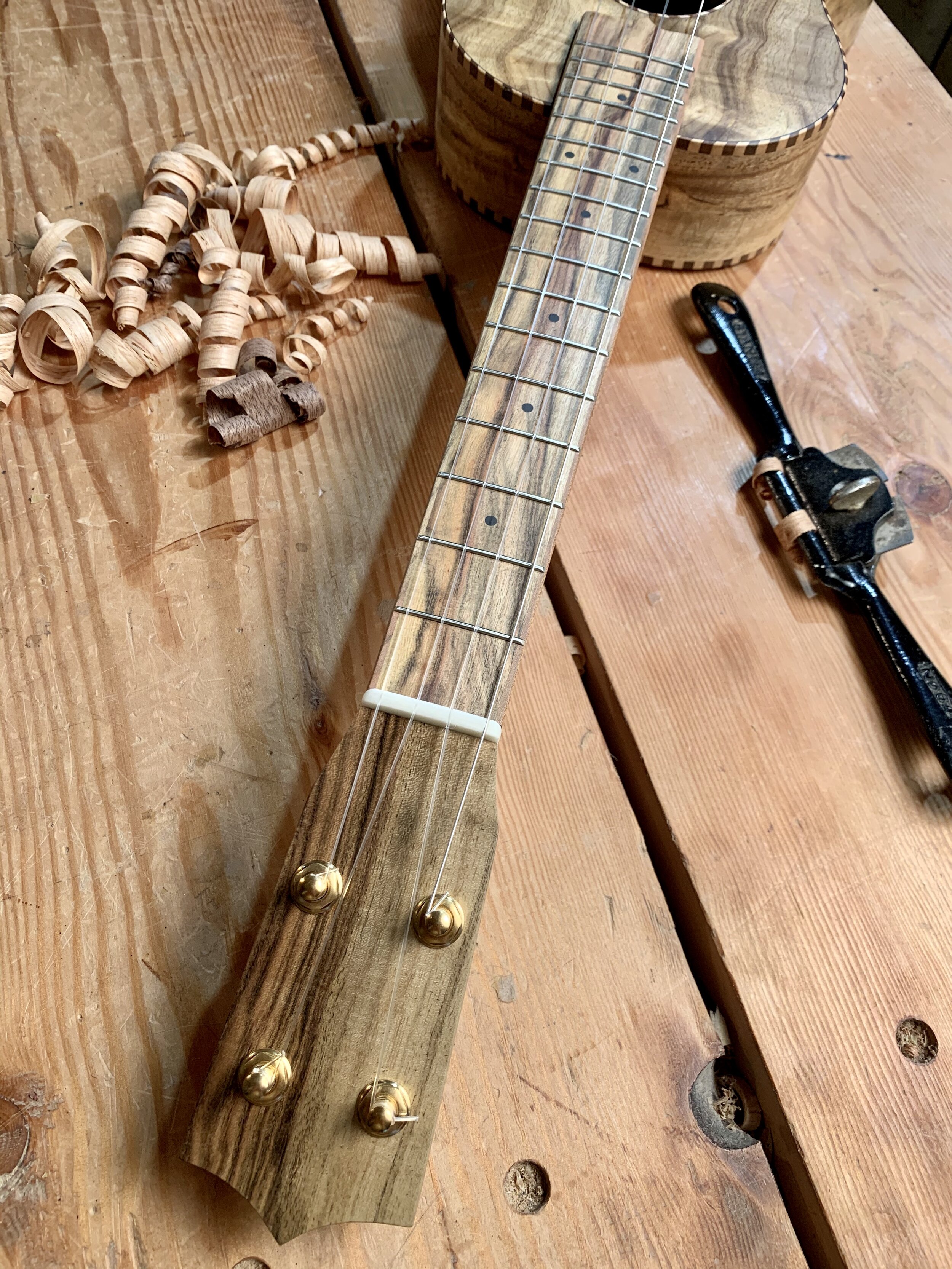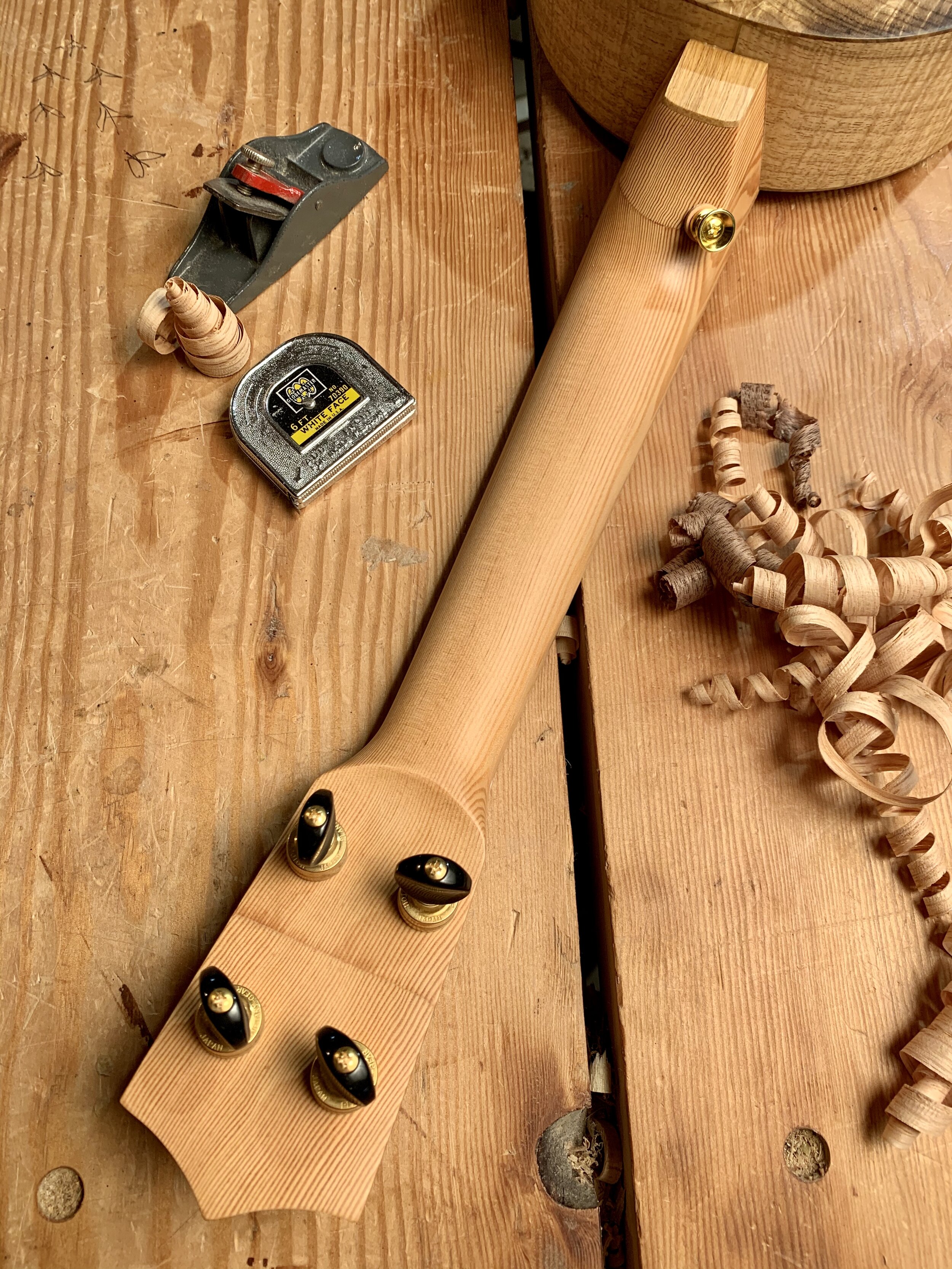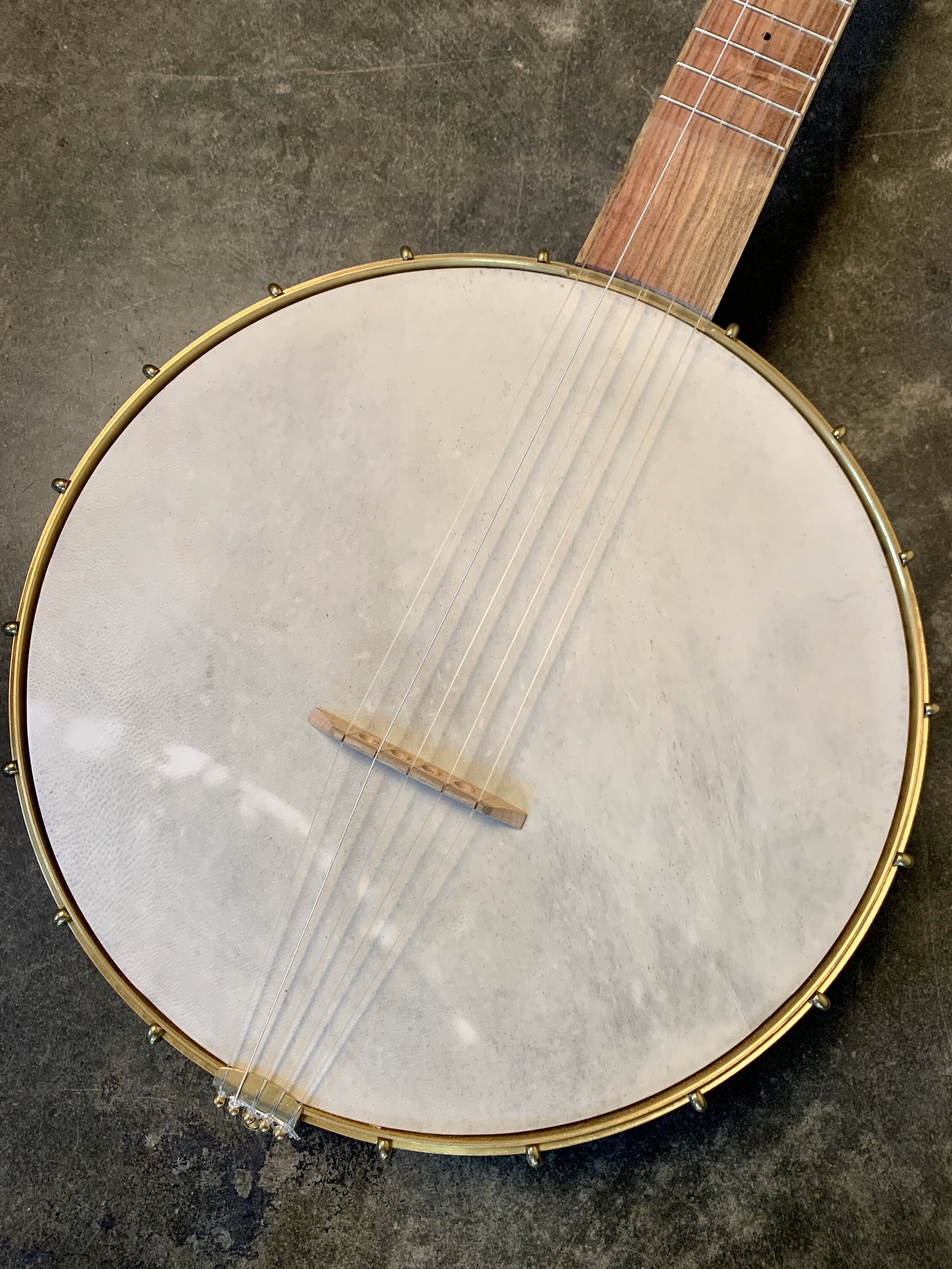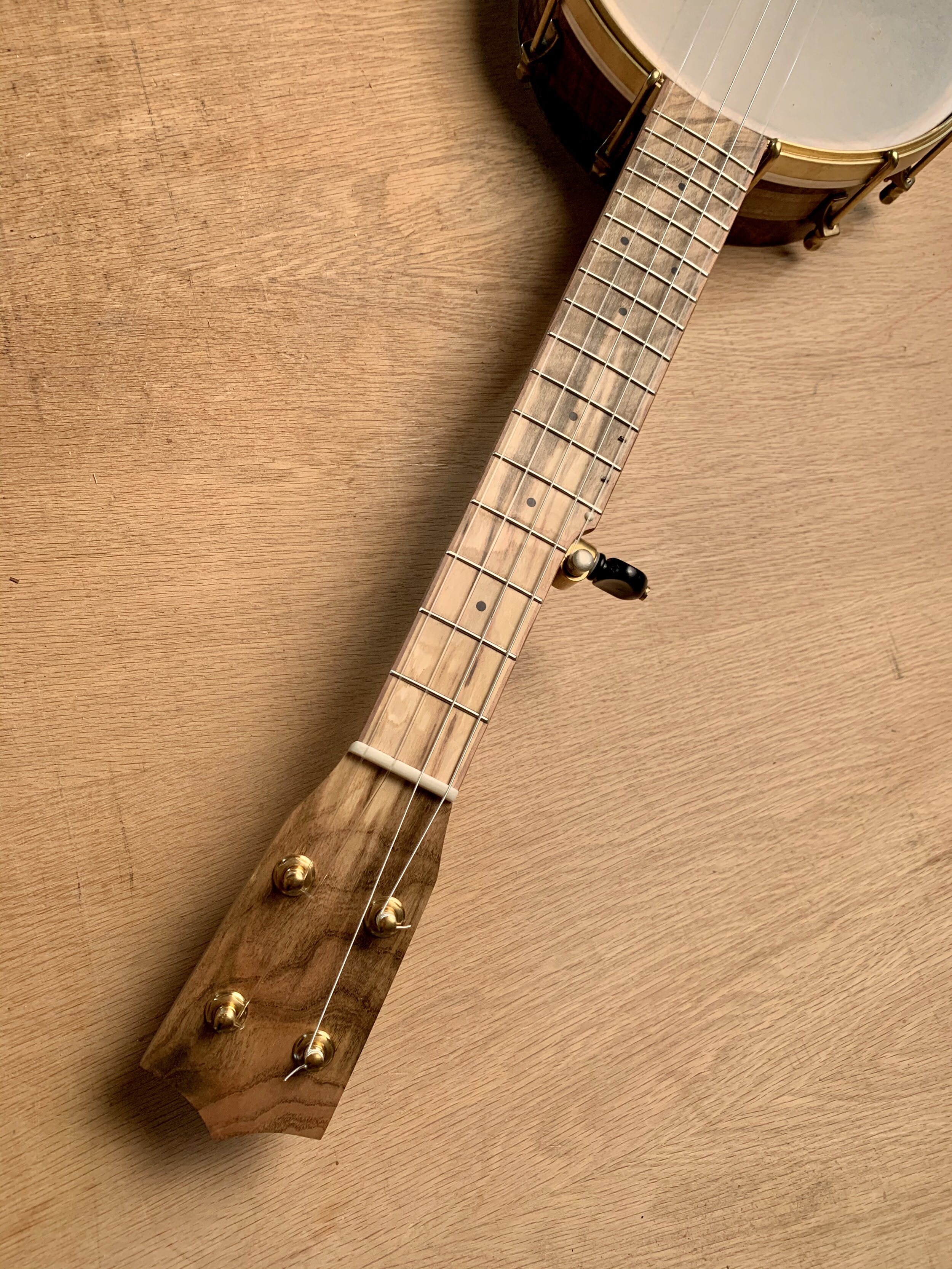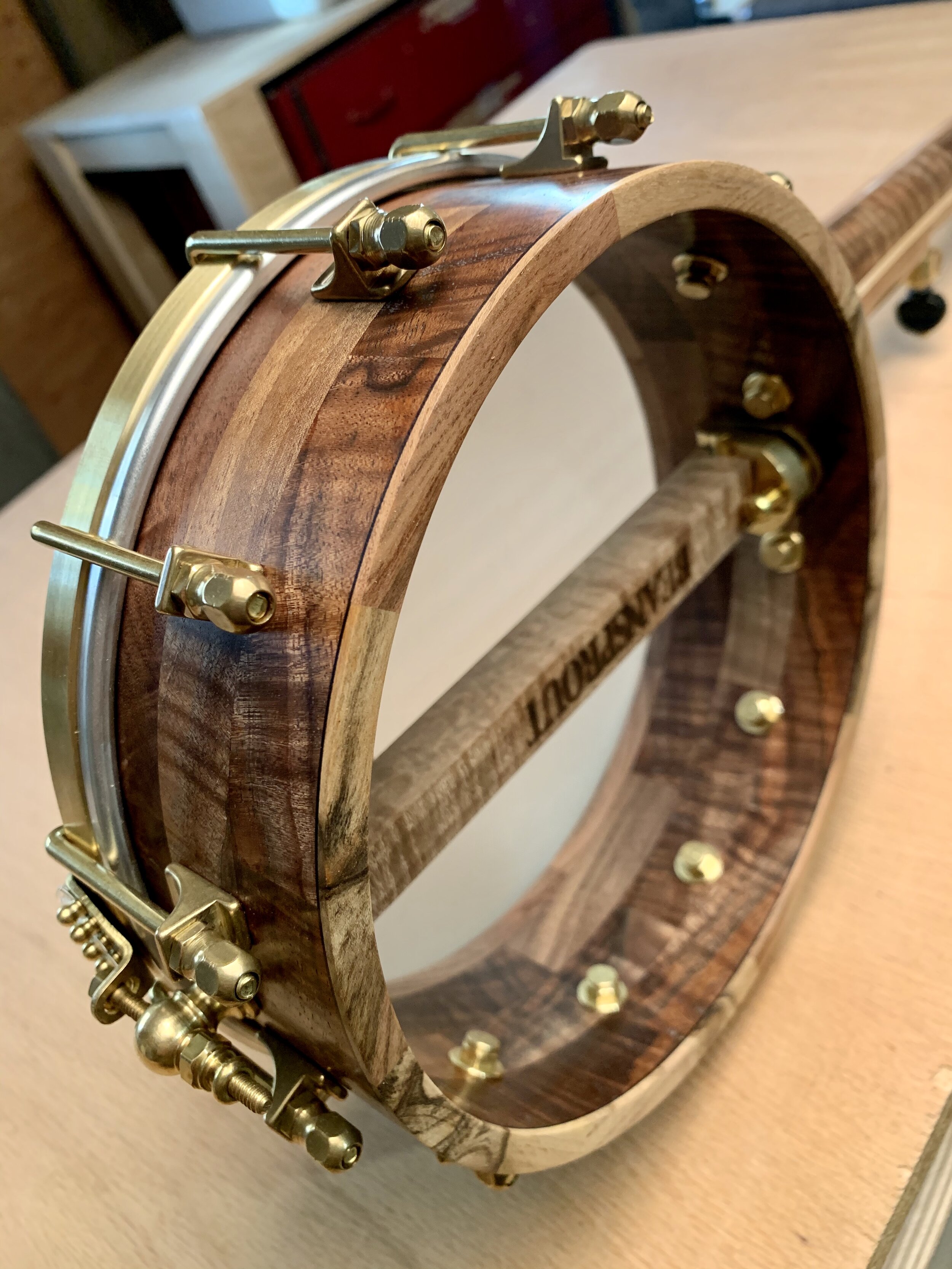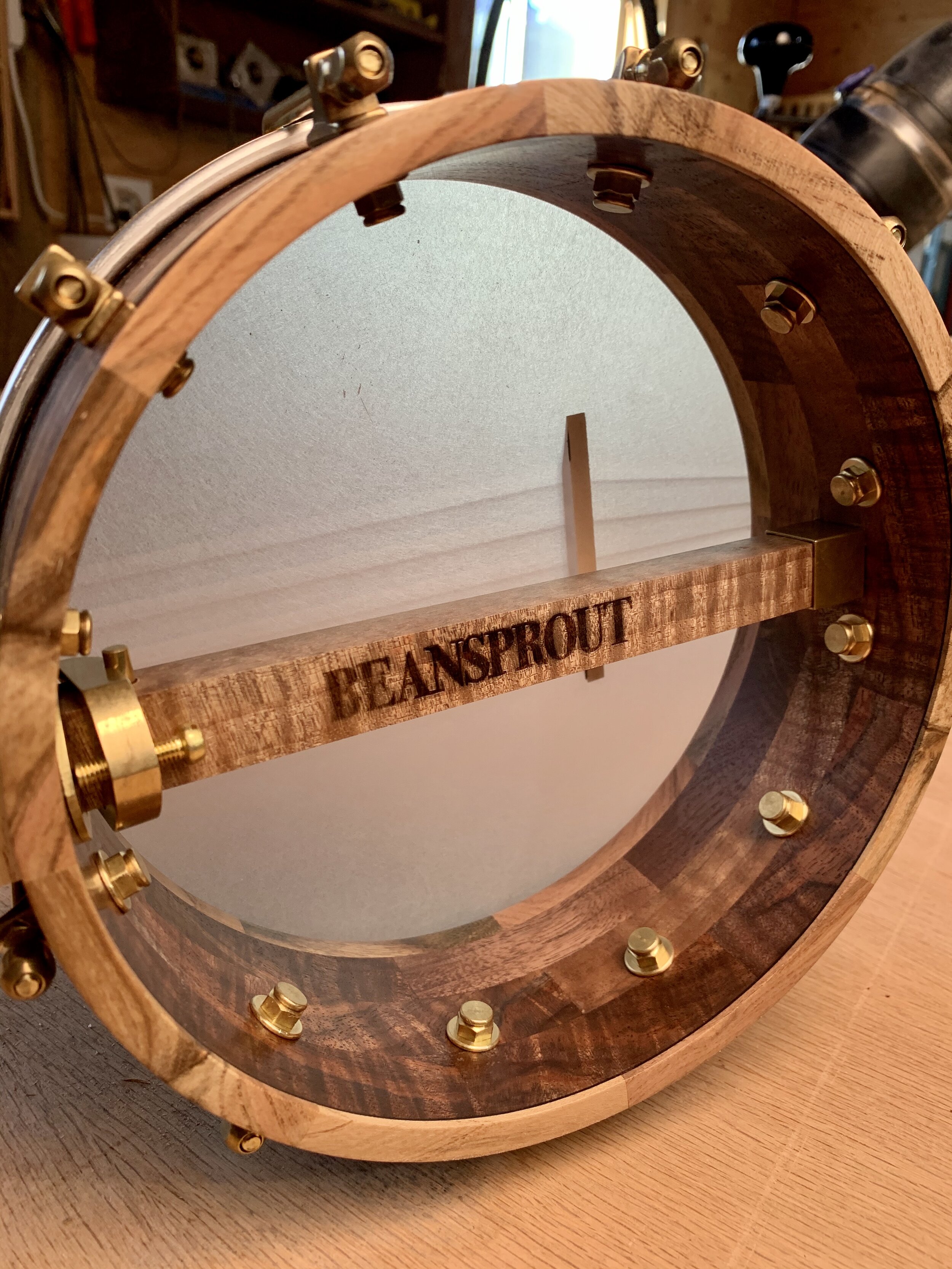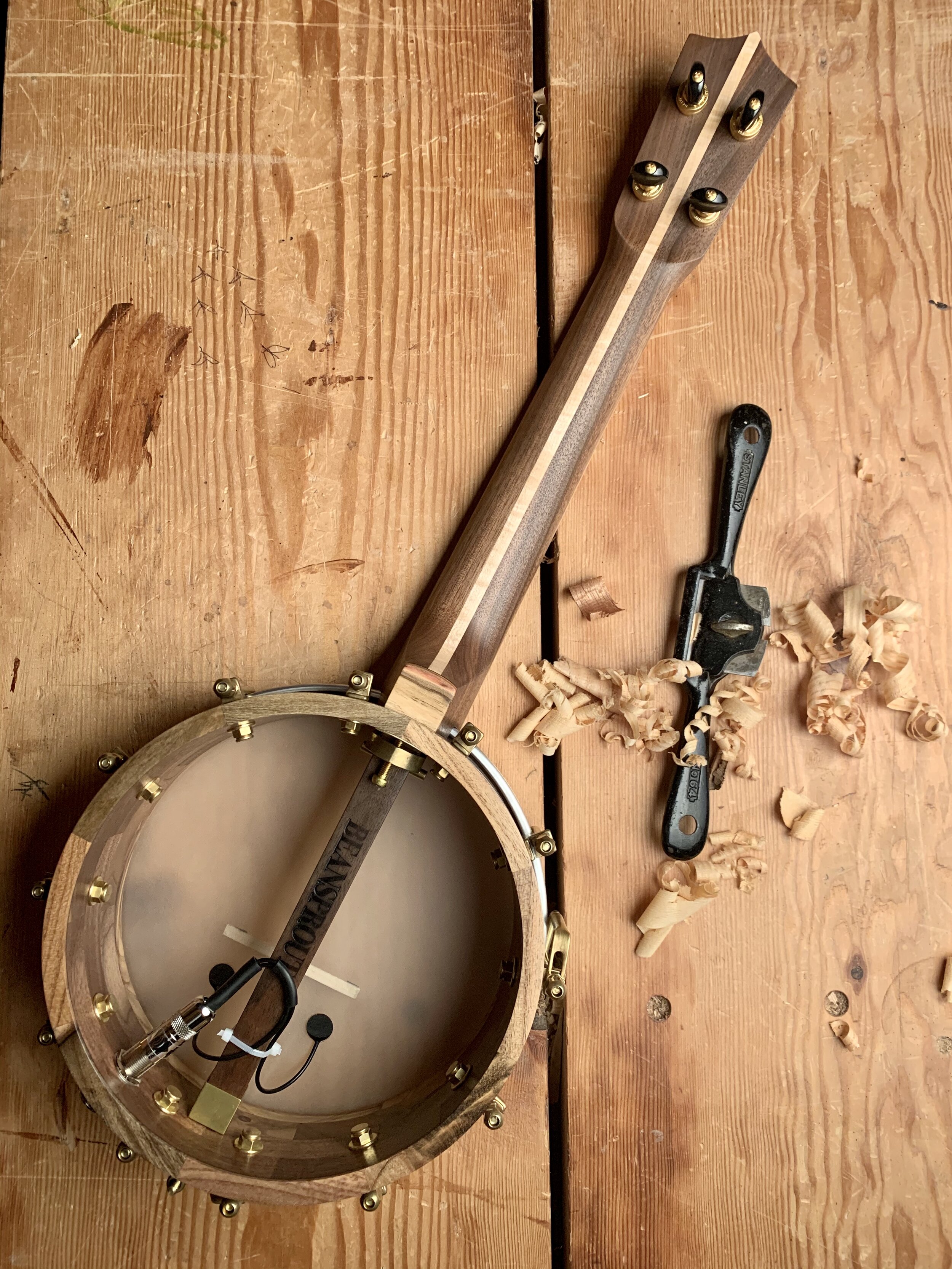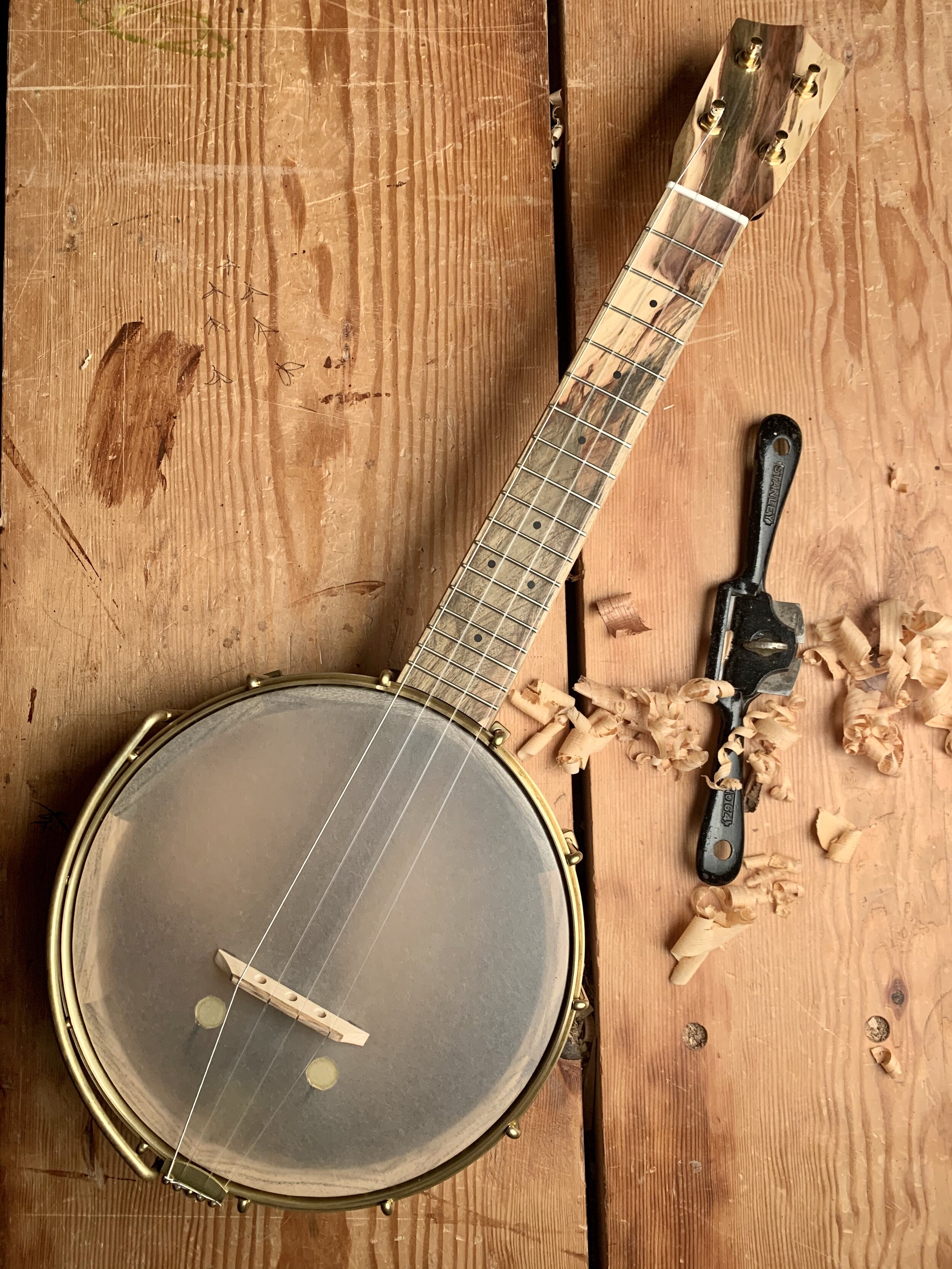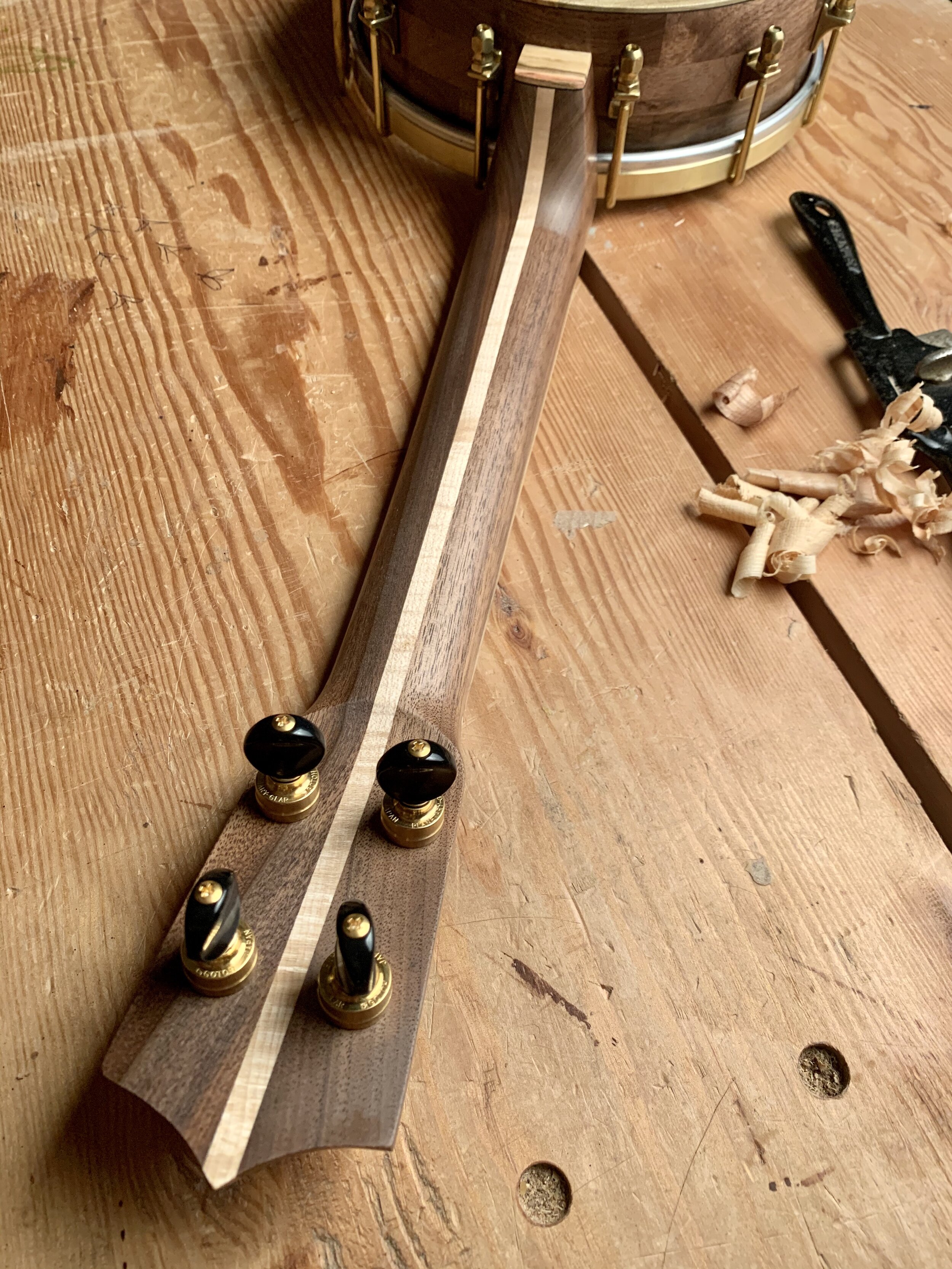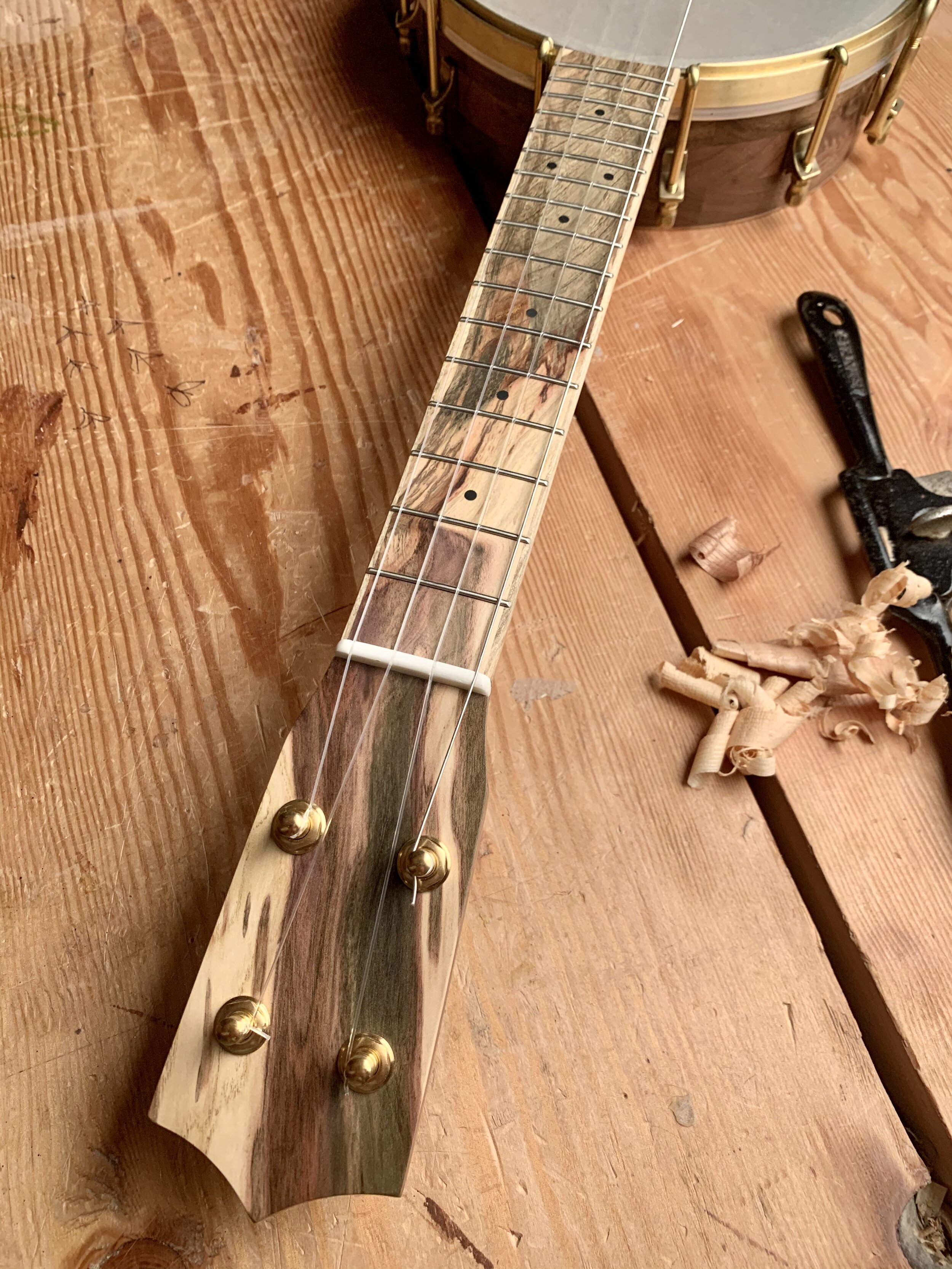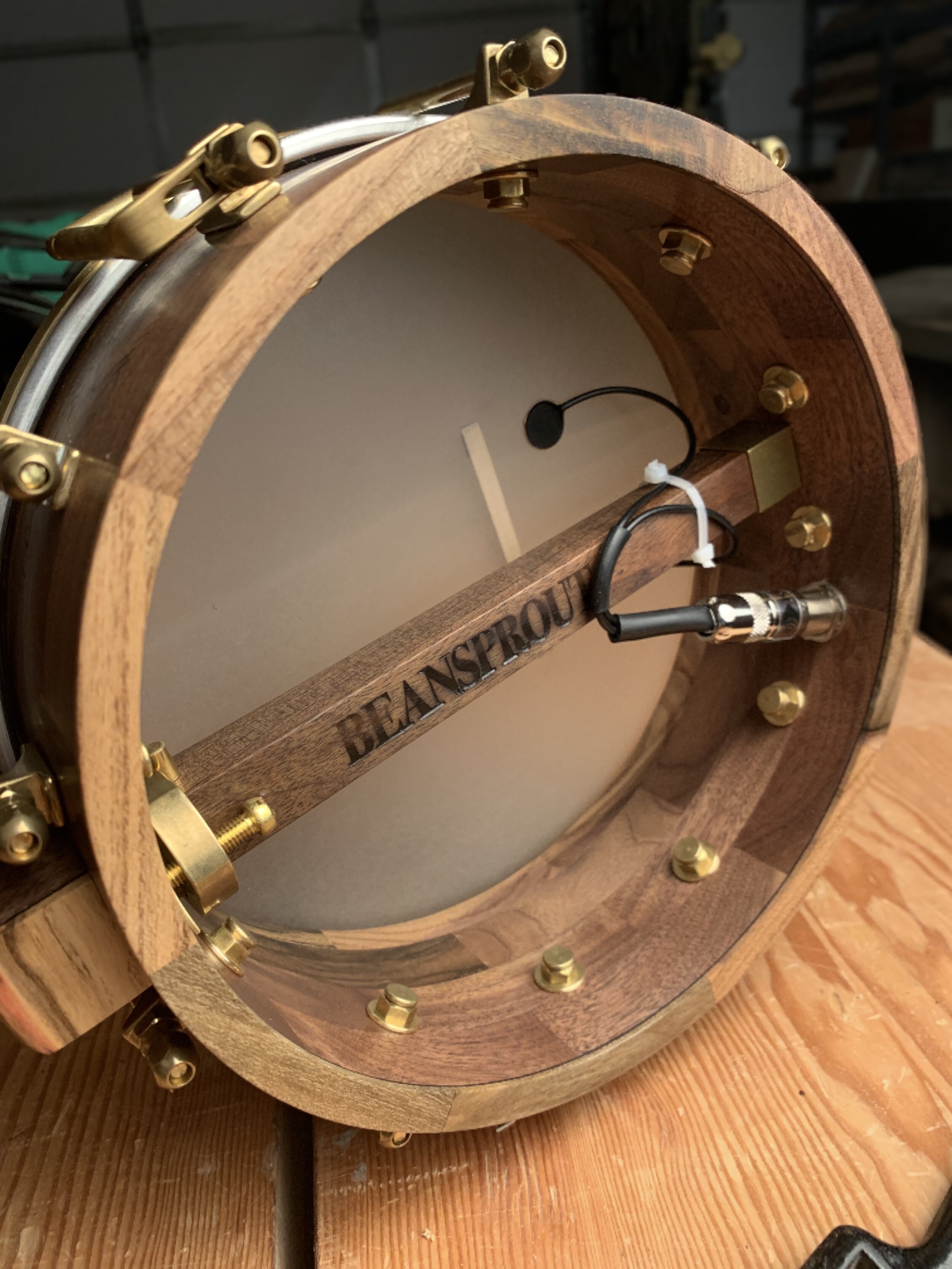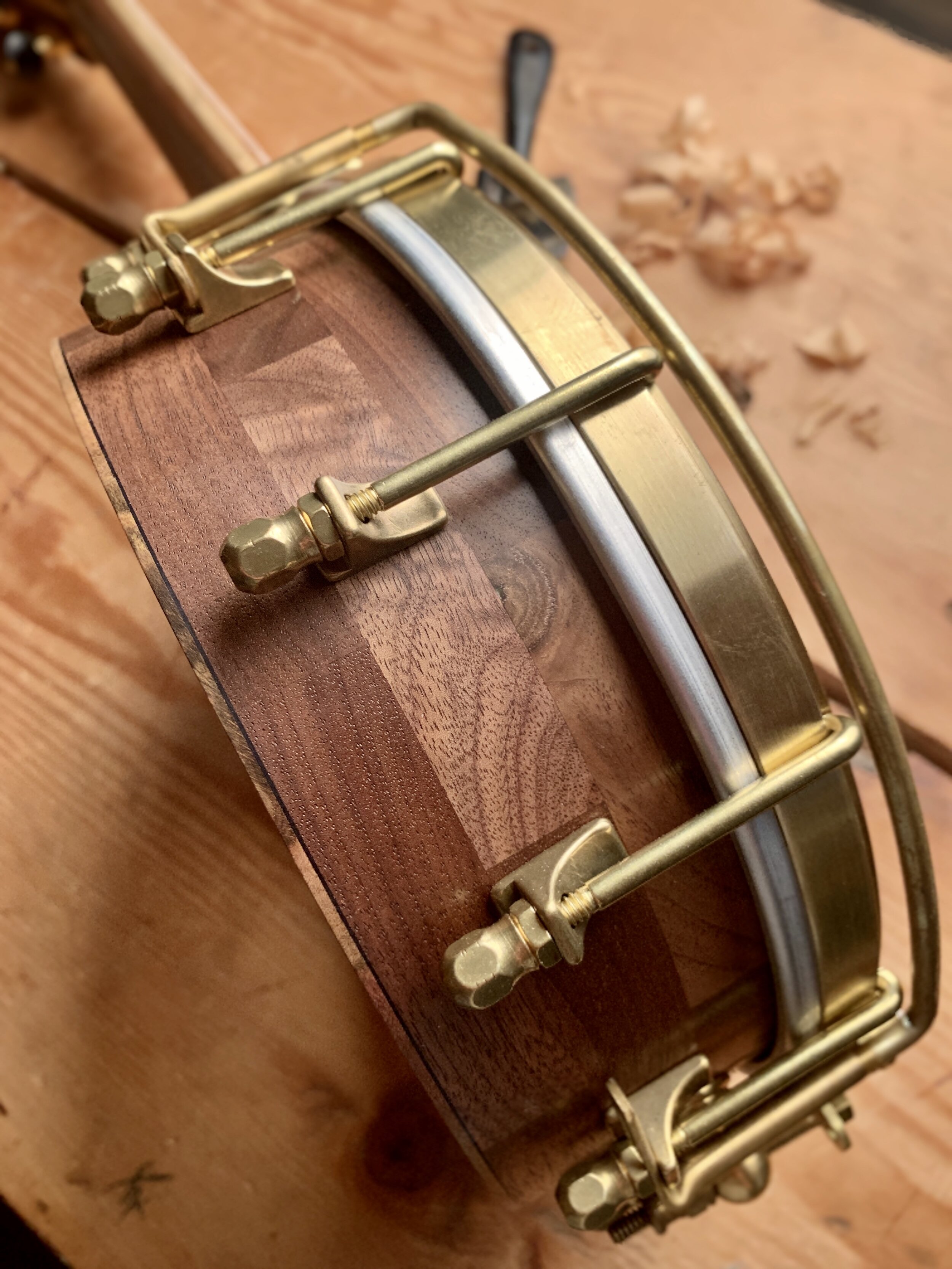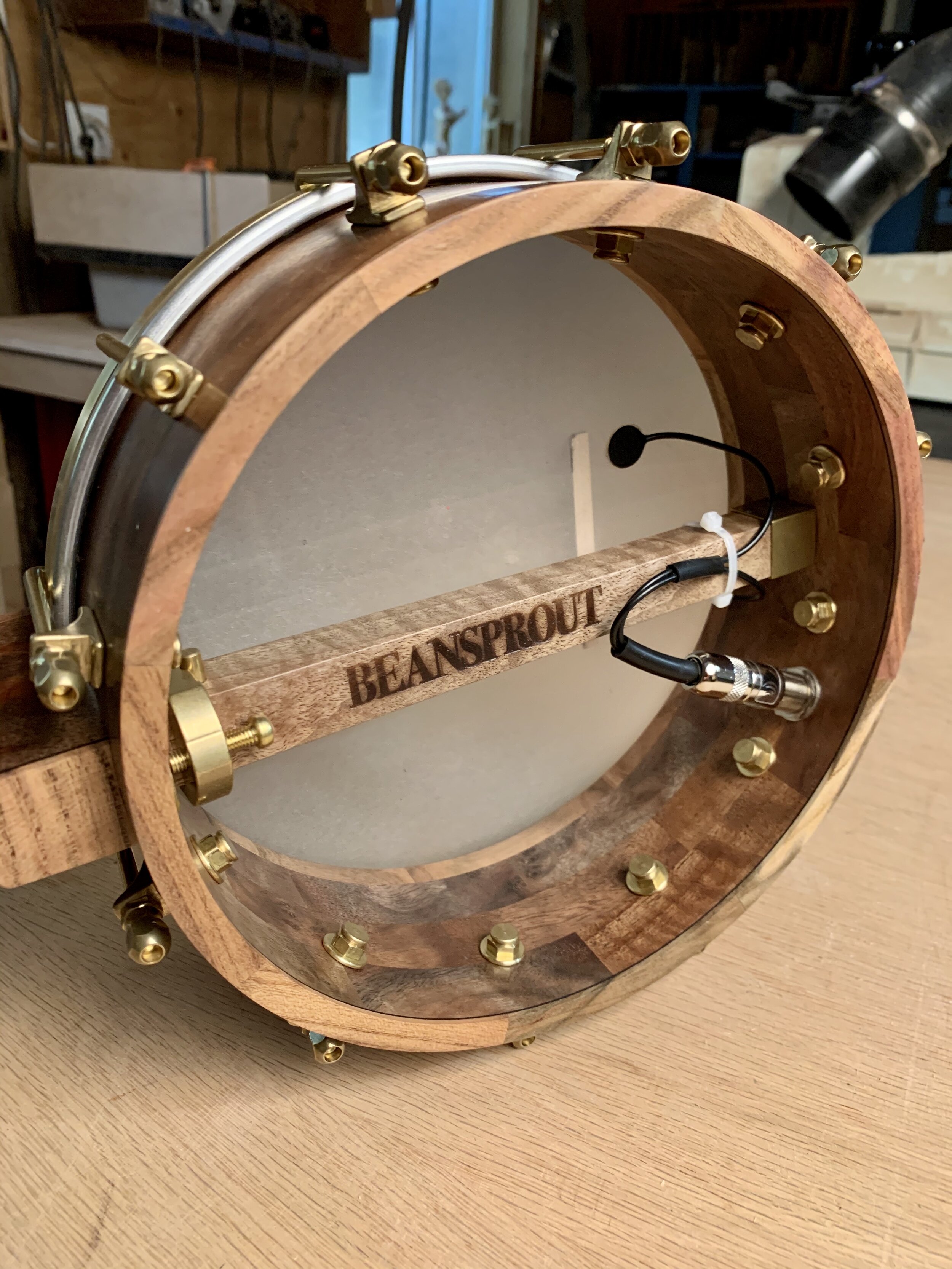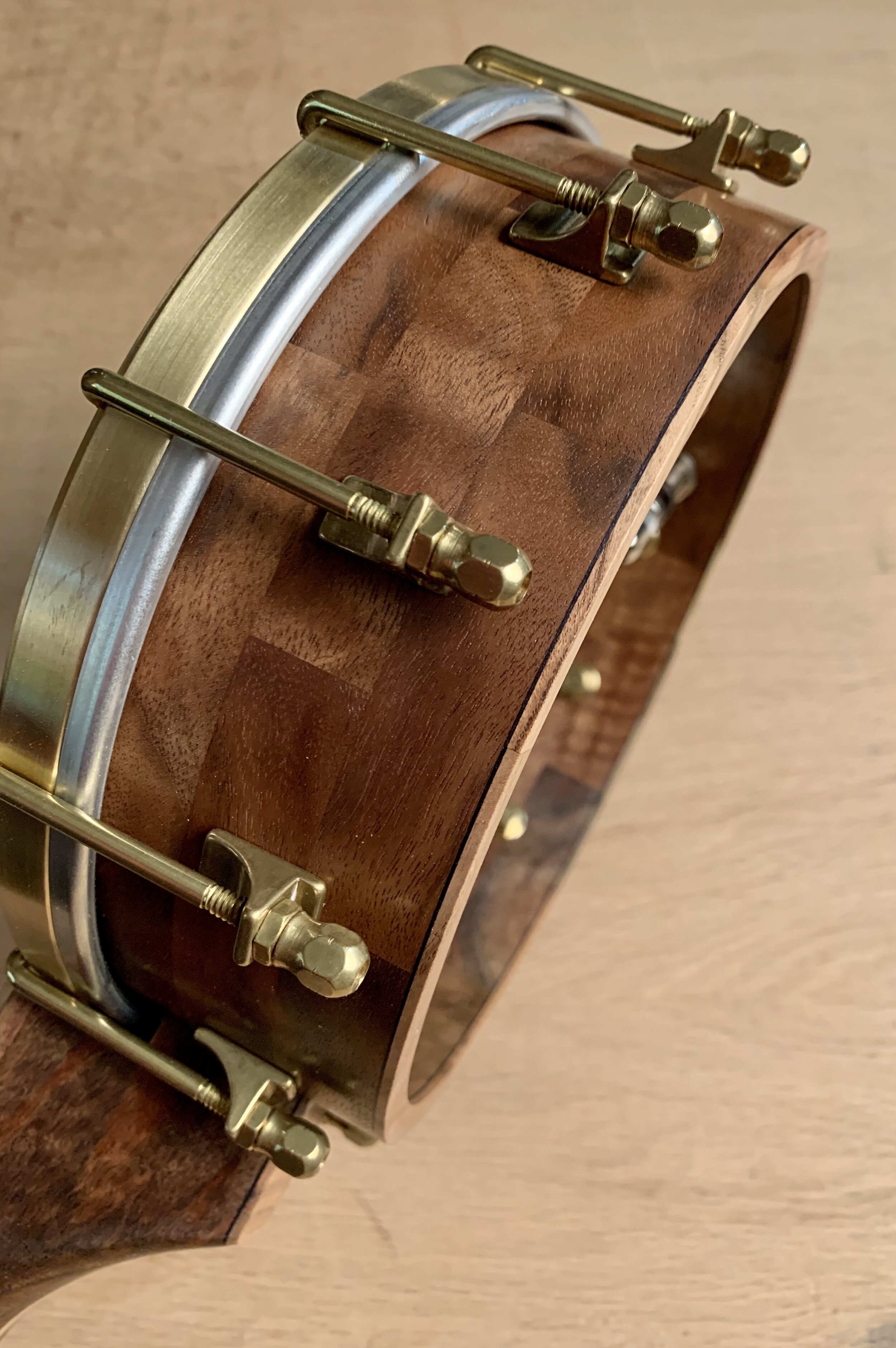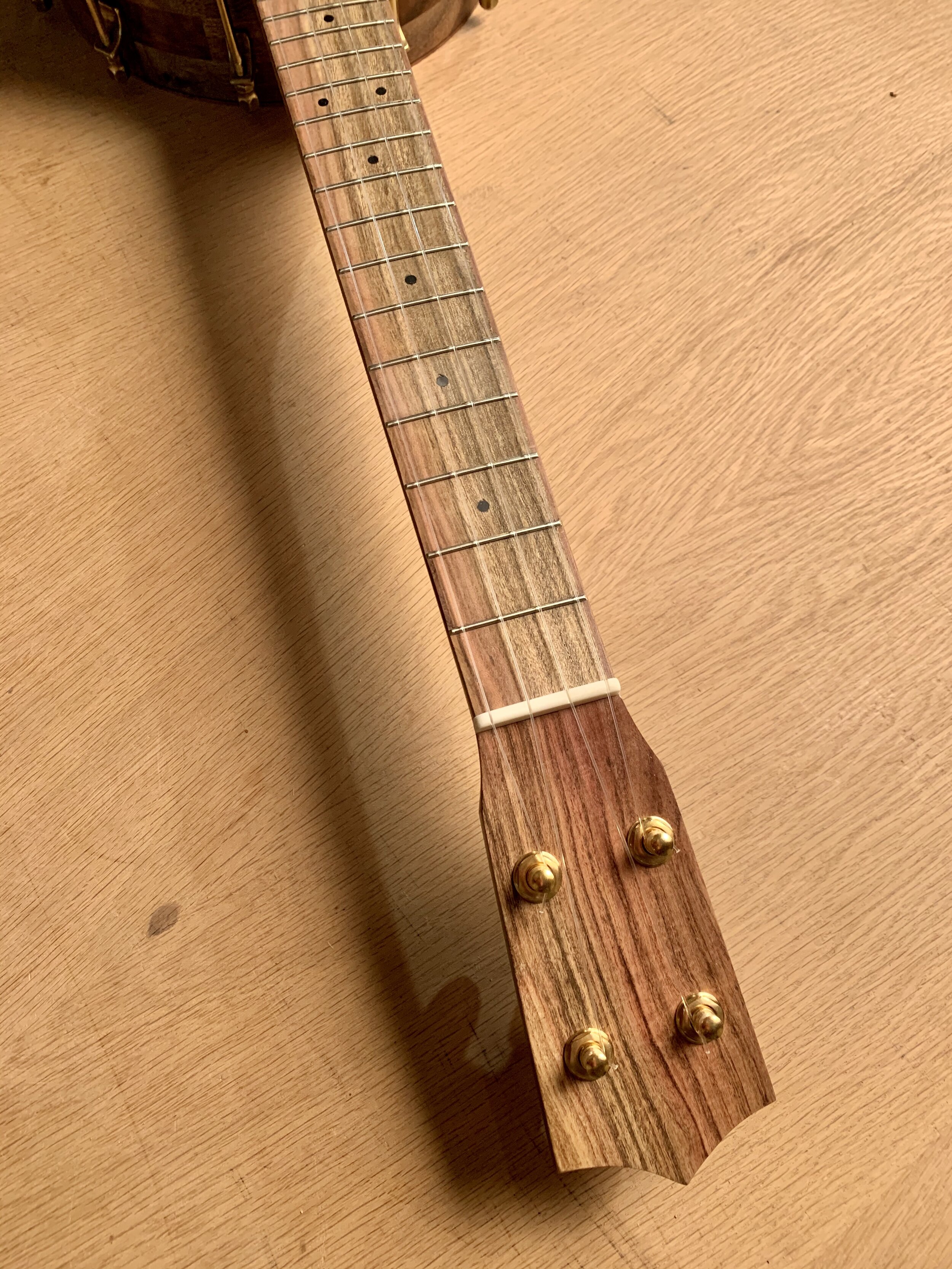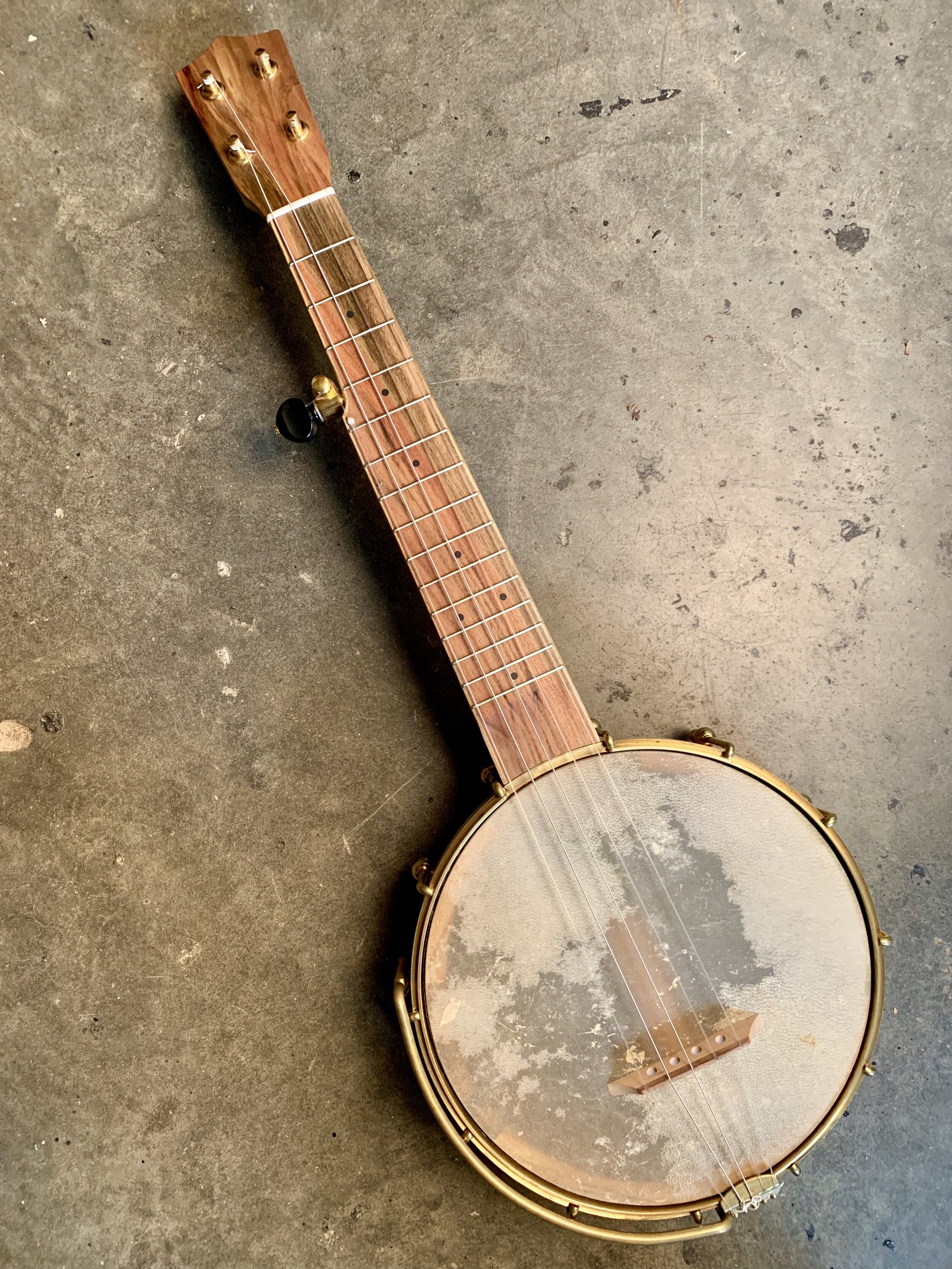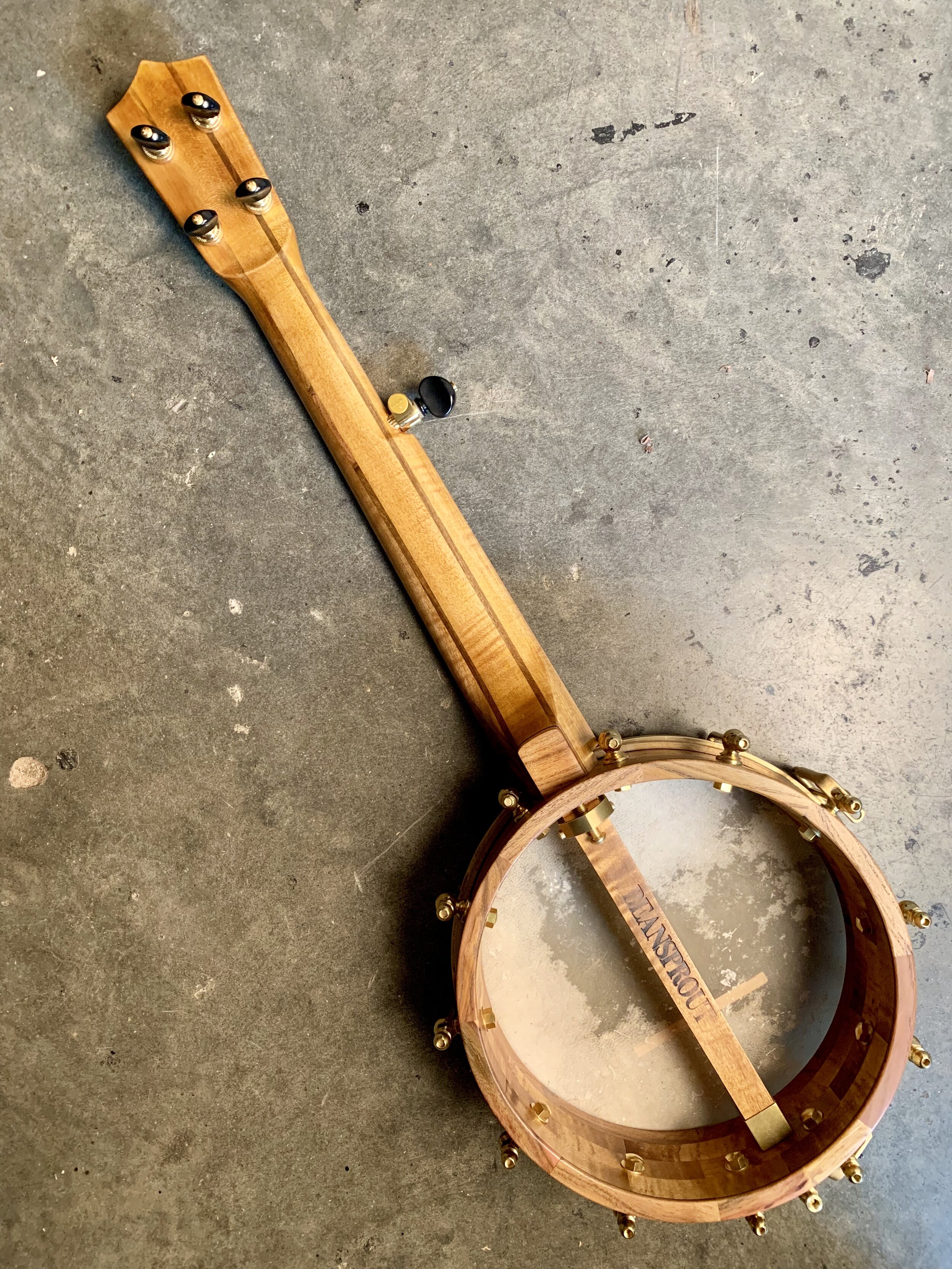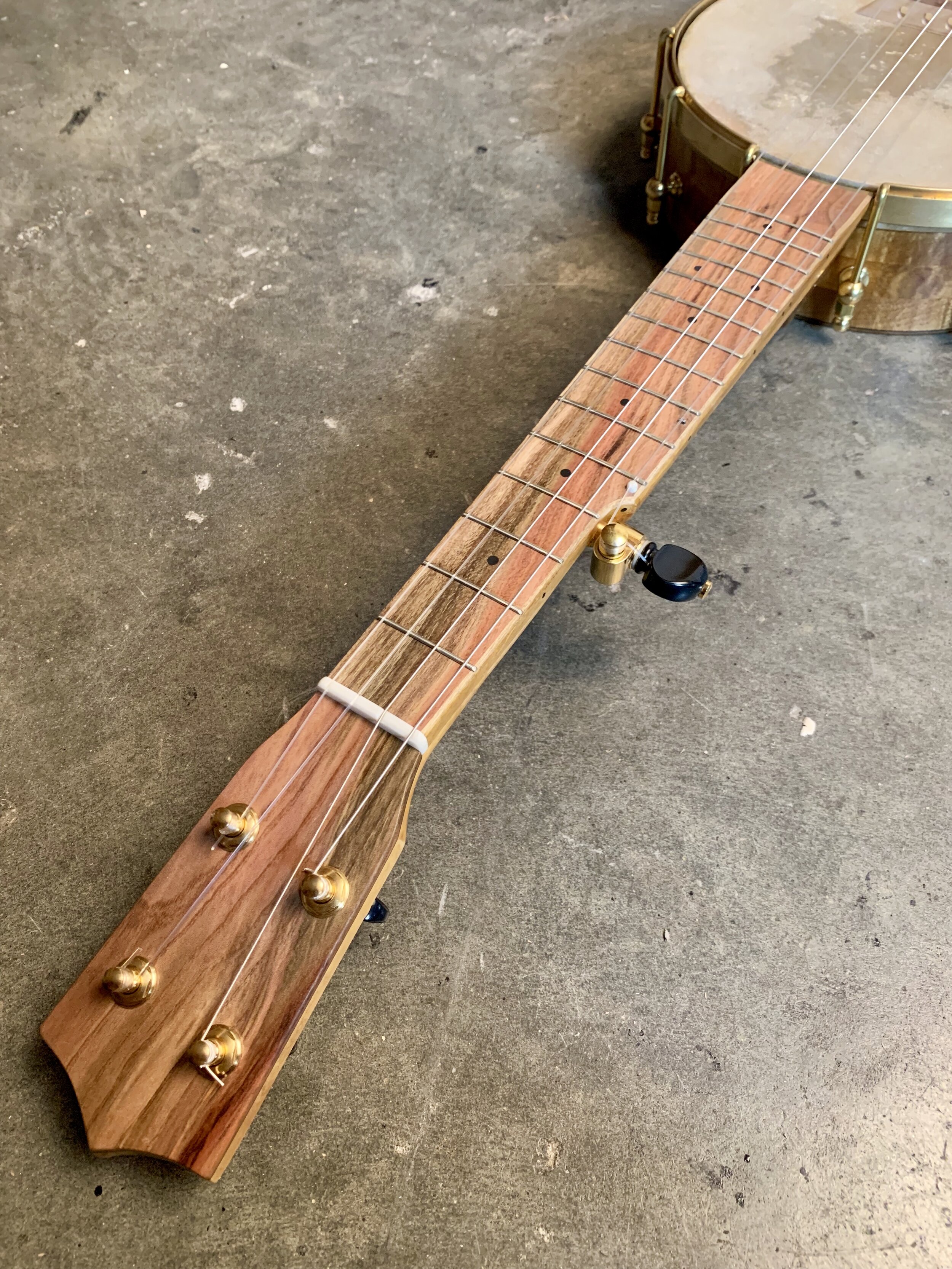
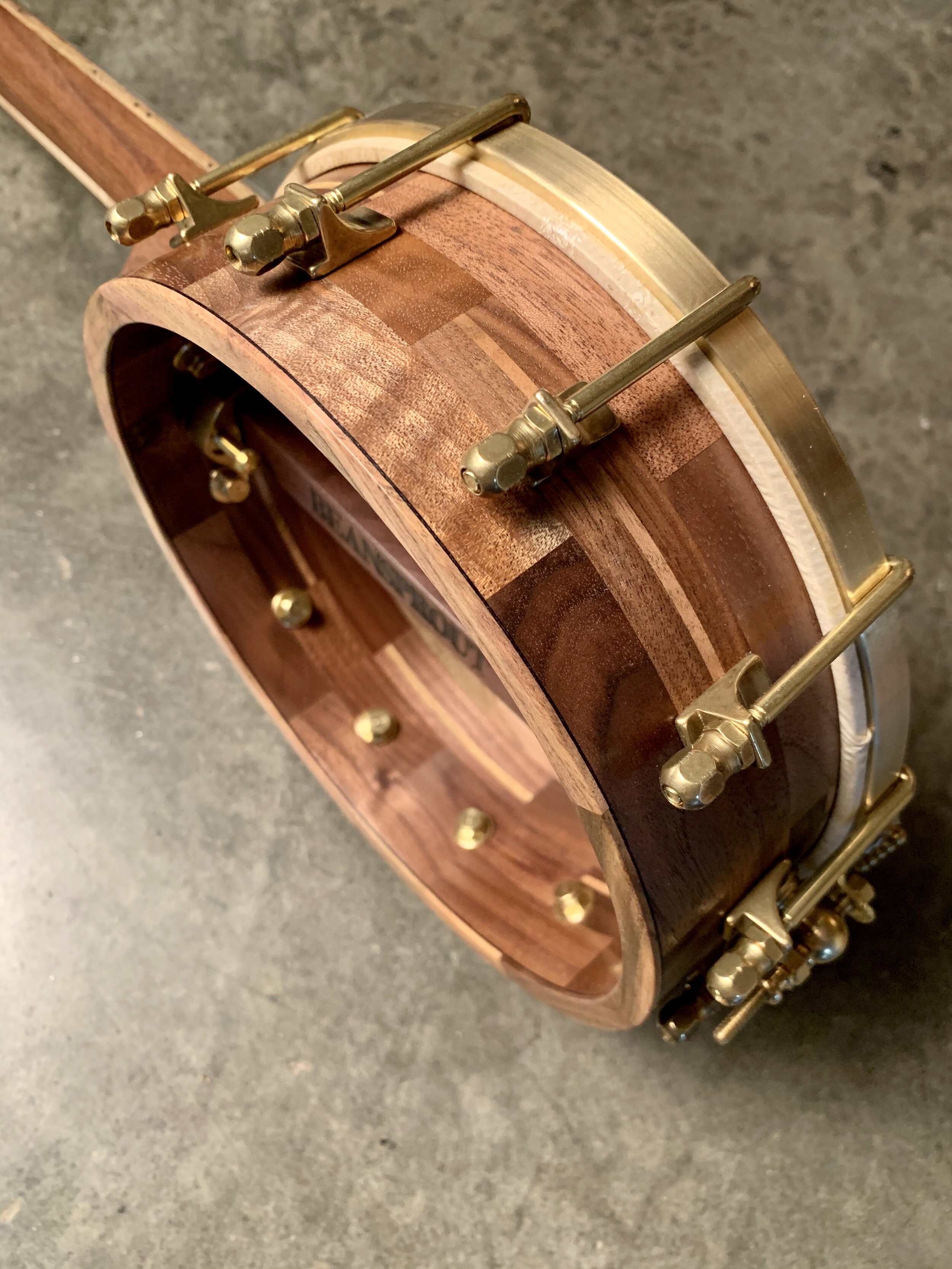
#433- Walnut and Pistachio Mini Five String Banjo

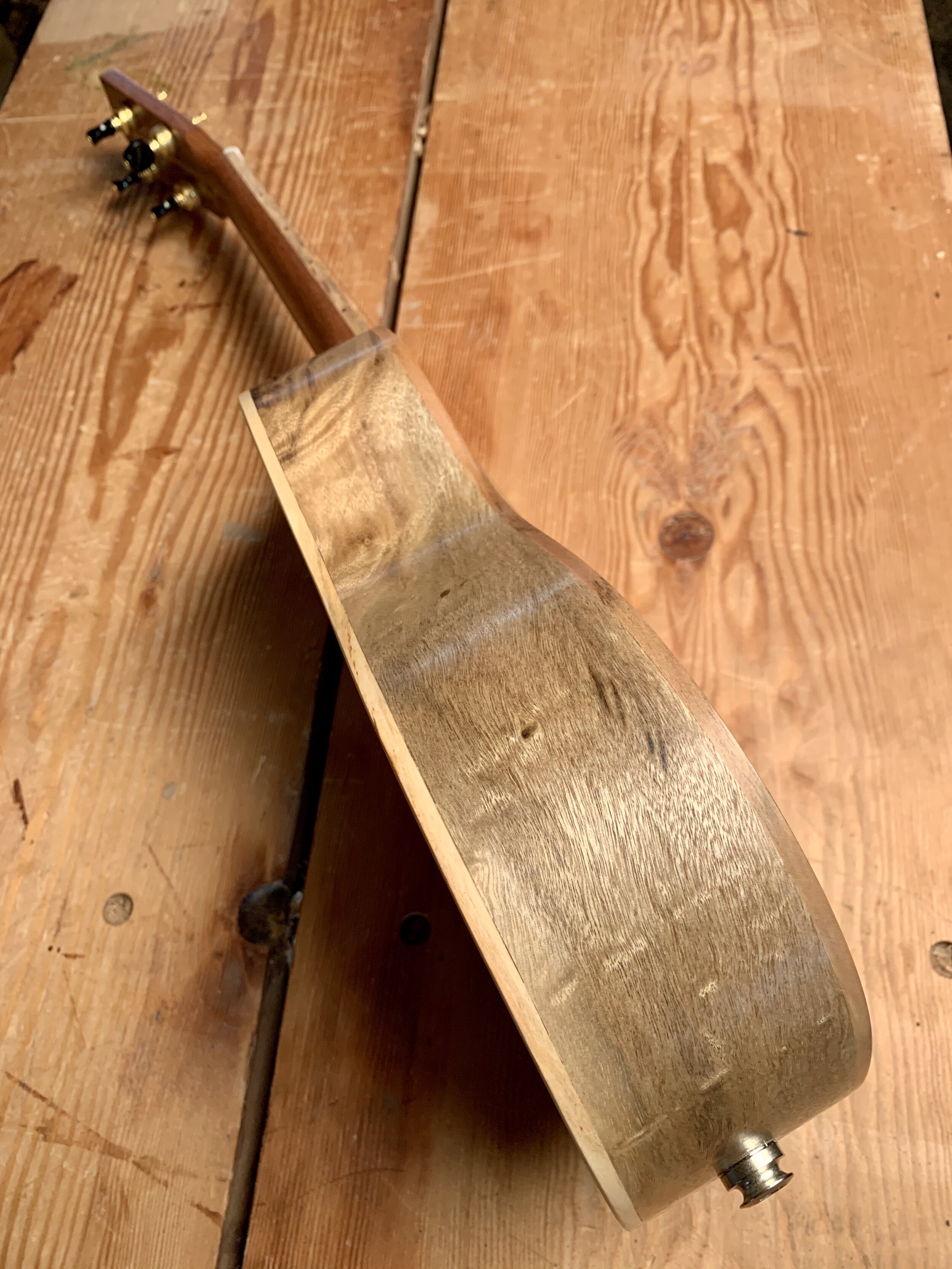
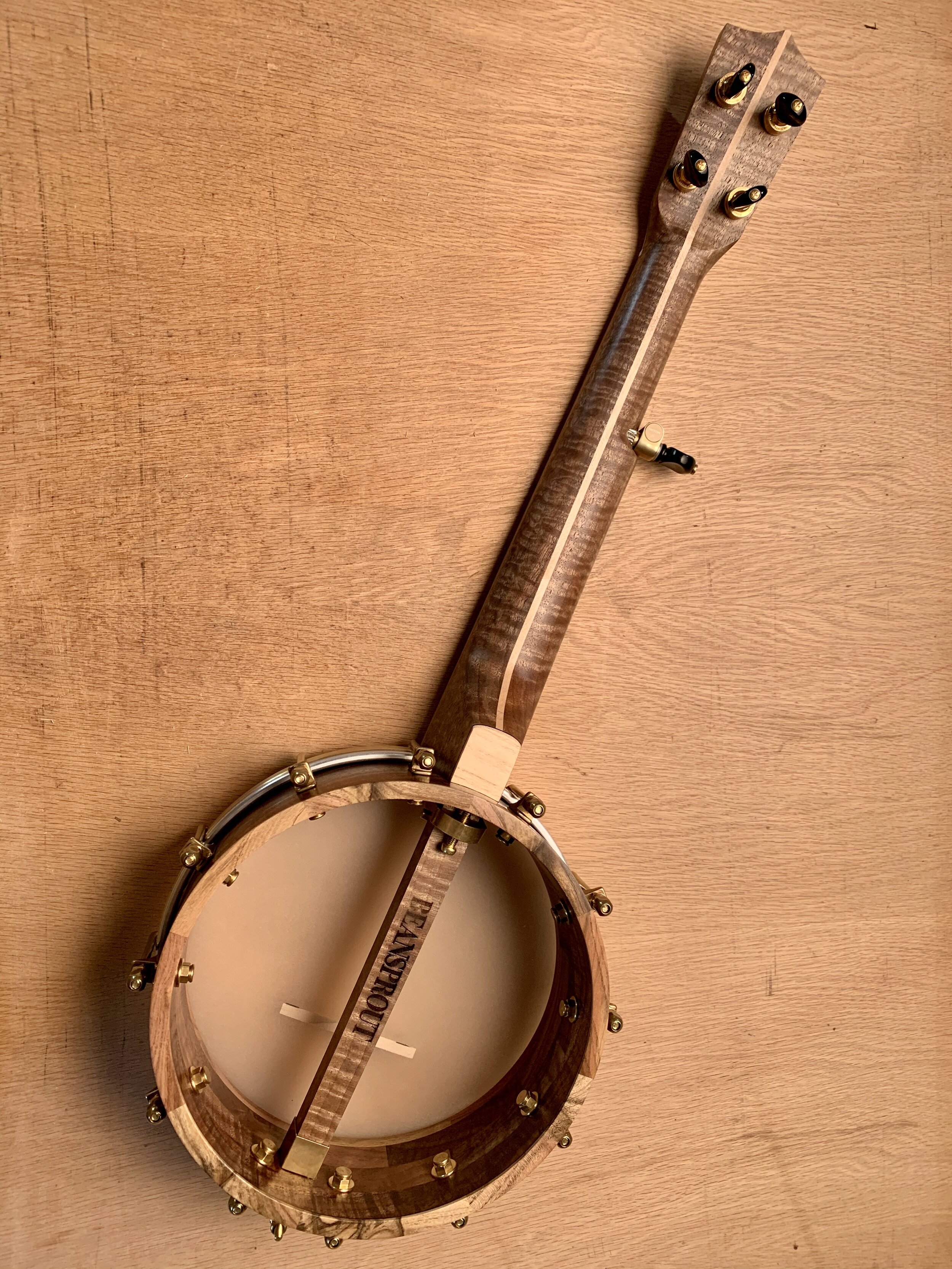
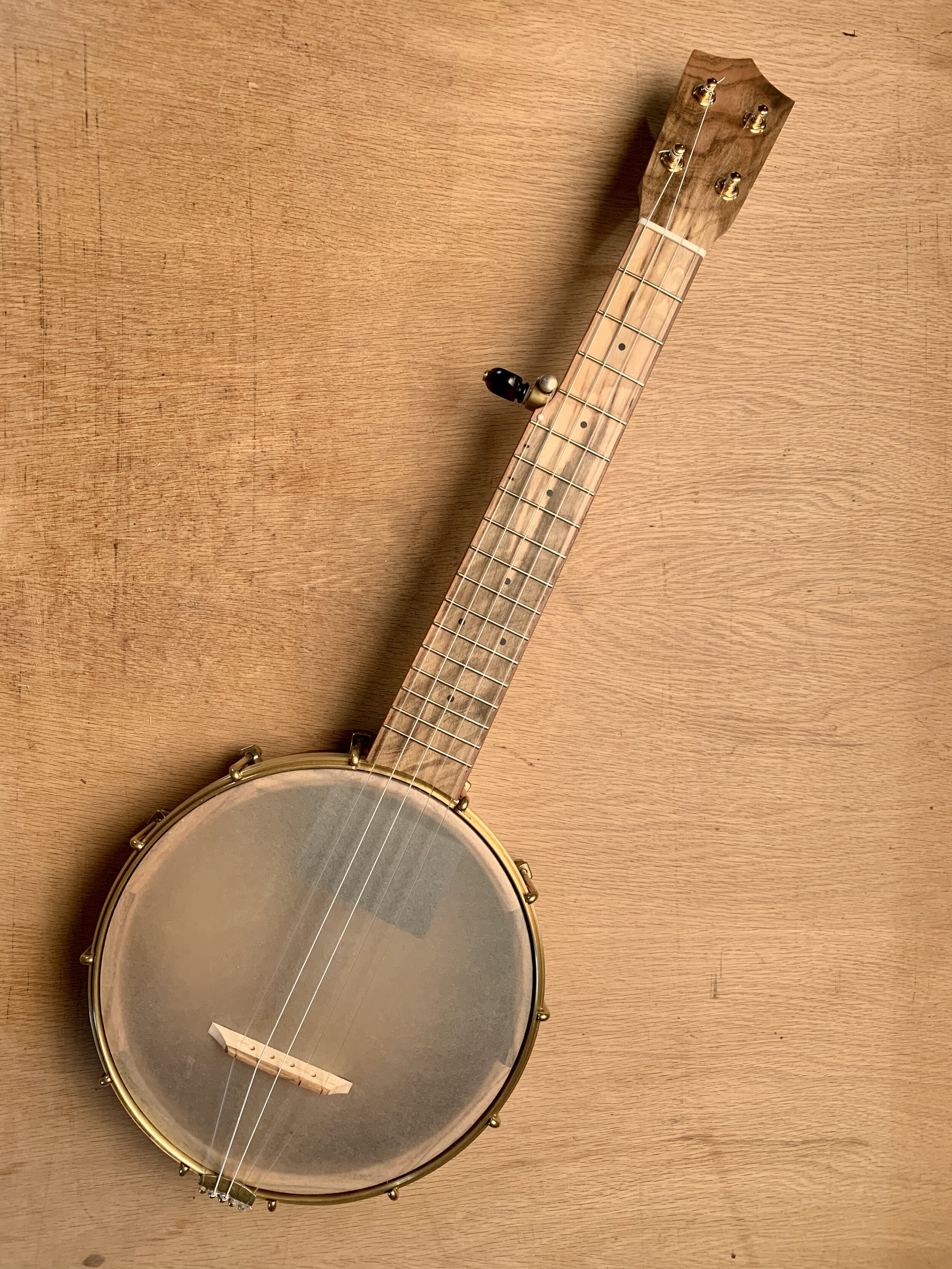
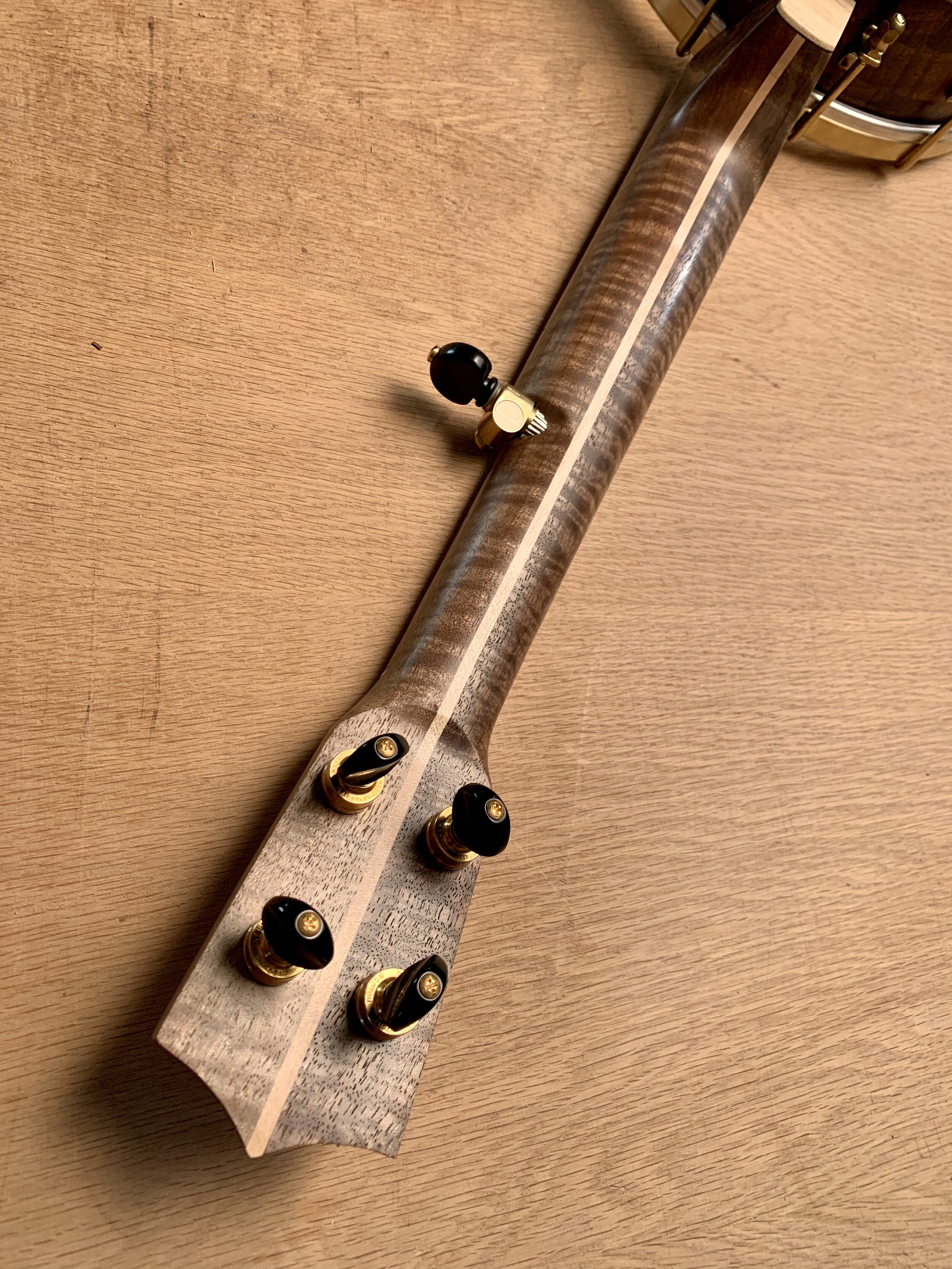
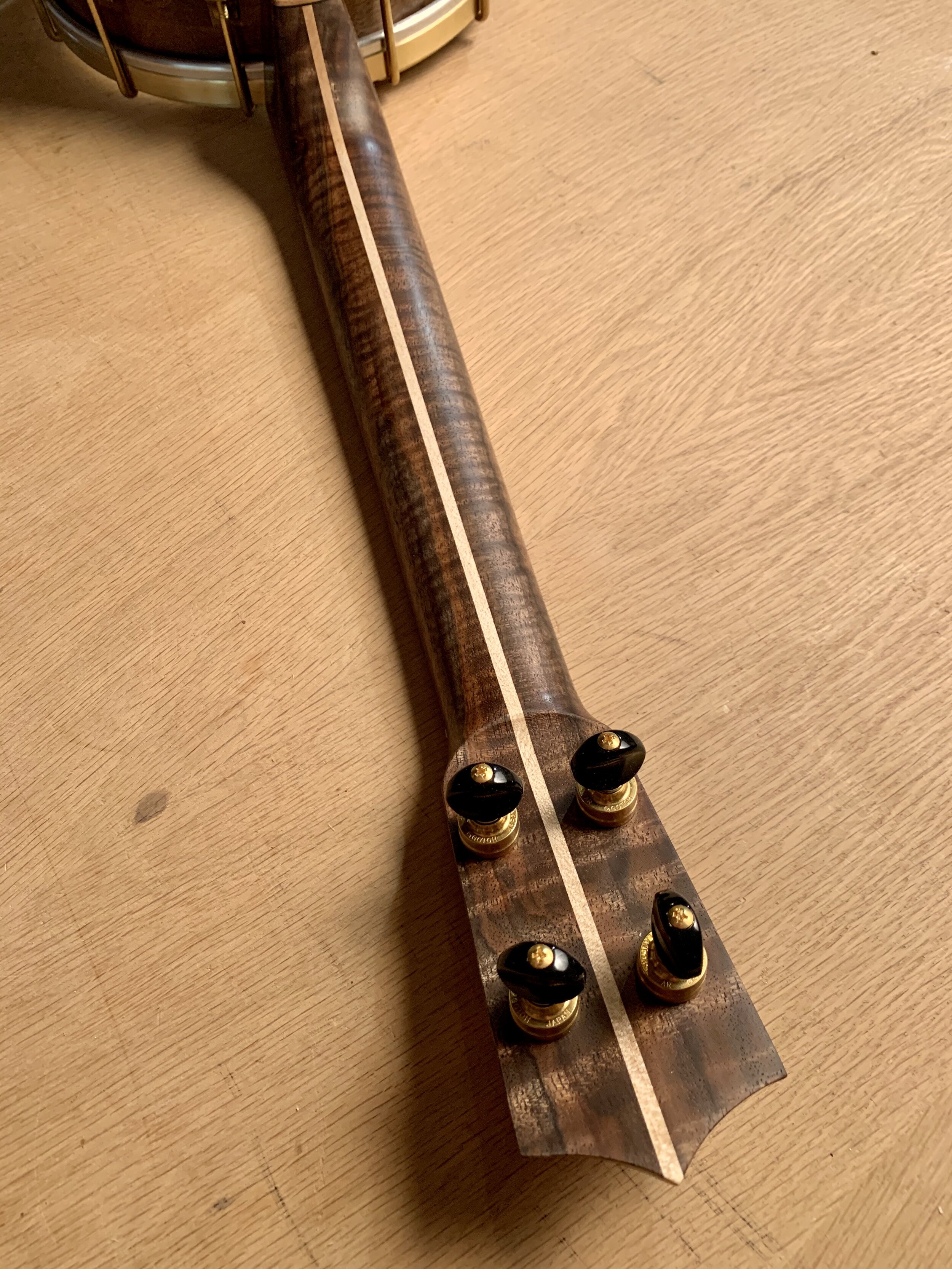
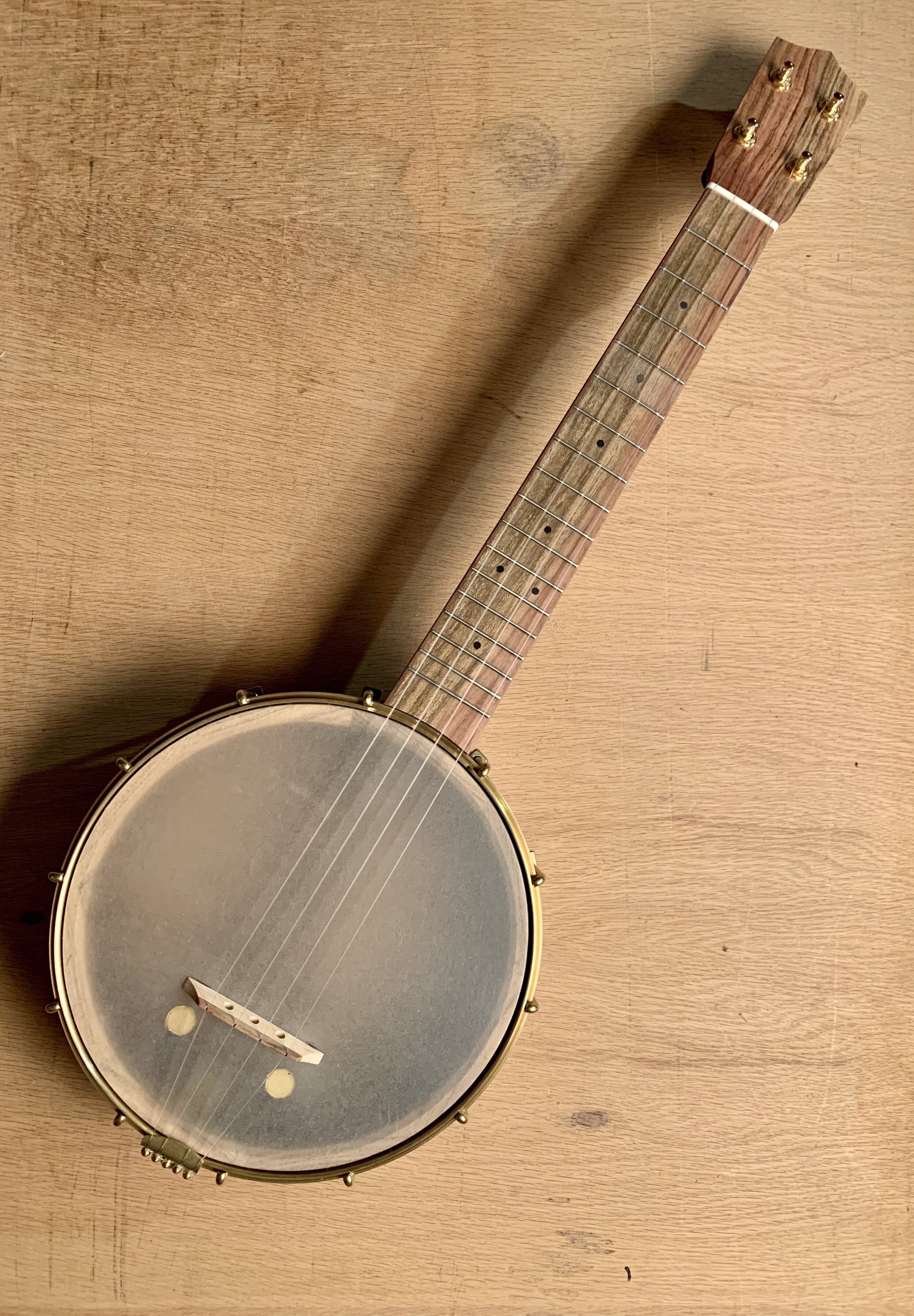
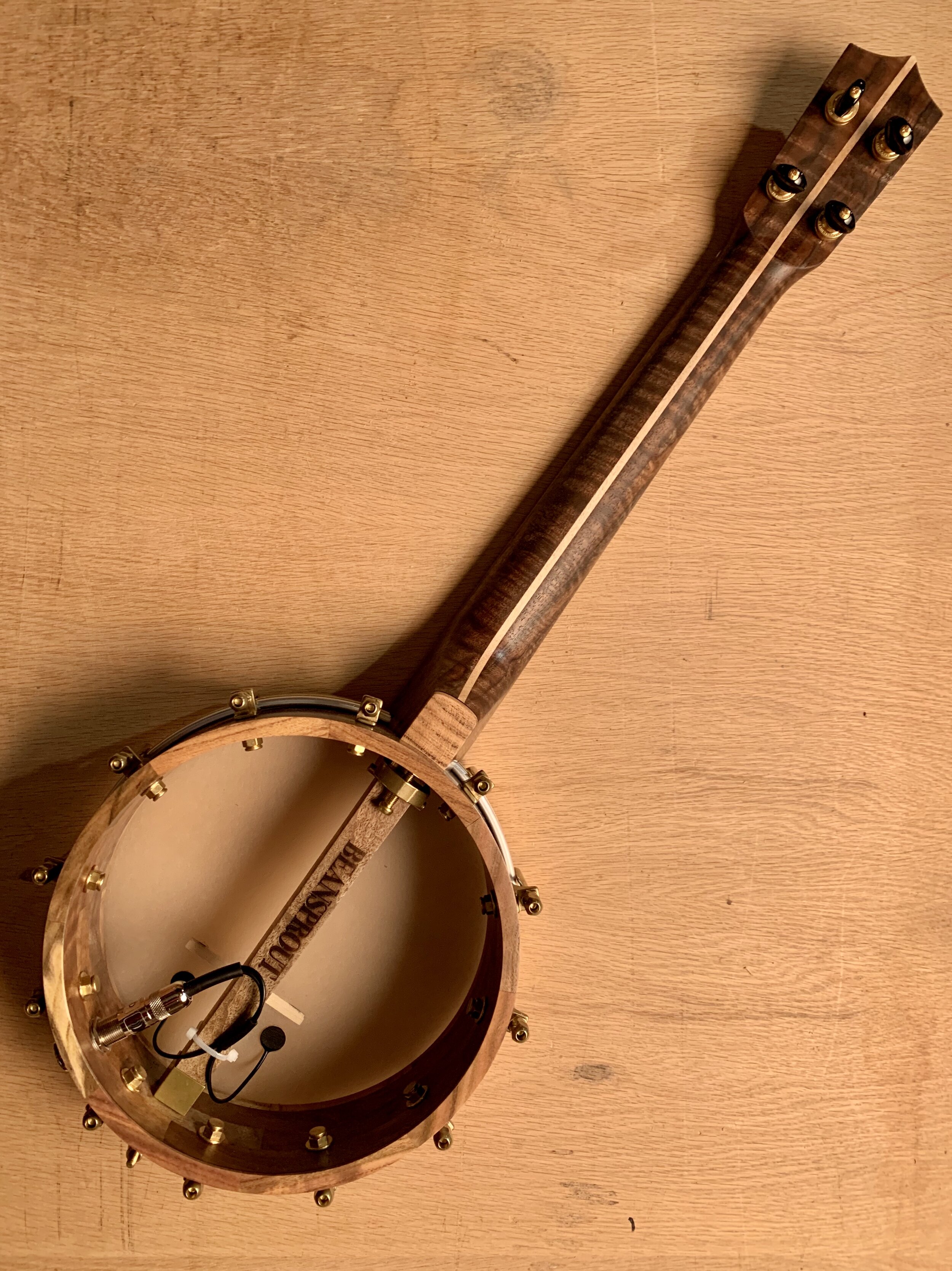
A busy wood shop, even if it has just one worker, has a constant flow of materials and products. Even though I have a pretty big shop, organizing this flow is tough. When it’s done right, it minimizes wood waste, keeps work spaces clear, provides good stock for instruments, supplies other artists with stock, feeds the wood stove and mulches they garden. A good example of reducing waste are these “mosaic” style block rims. Instead of using clear walnut stock for the rim, I save and process all the laminated scraps left from making the necks. It probably takes 5 banjos before I’ve got enough for one of these rims. Because the stock is laid out randomly, I never know how they will turn out, which I love. The walnut for the neck on this banjo comes from an orchard in Missouri, harvested by a customer’s grandfather. The pistachio comes from California orchards.
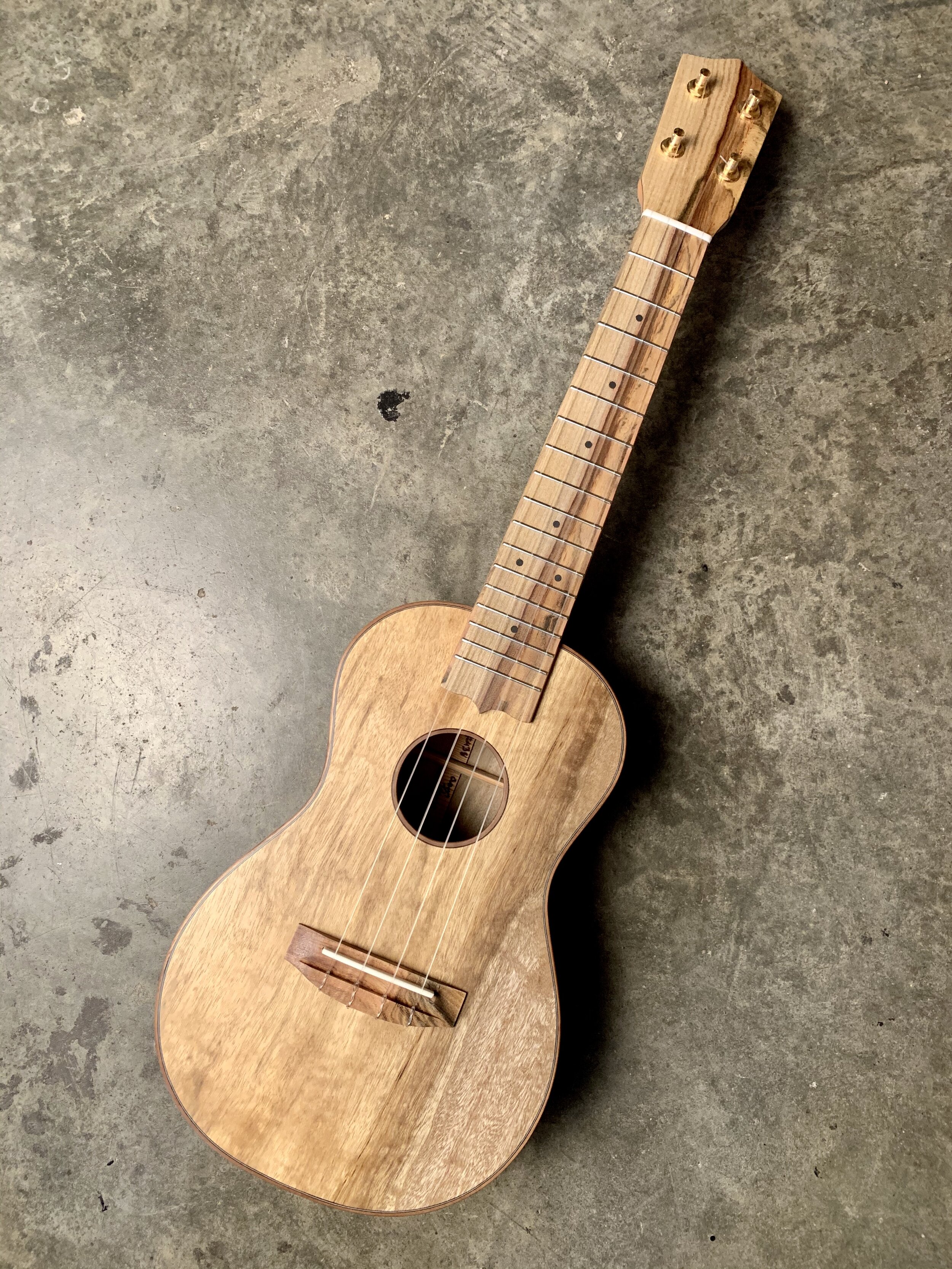
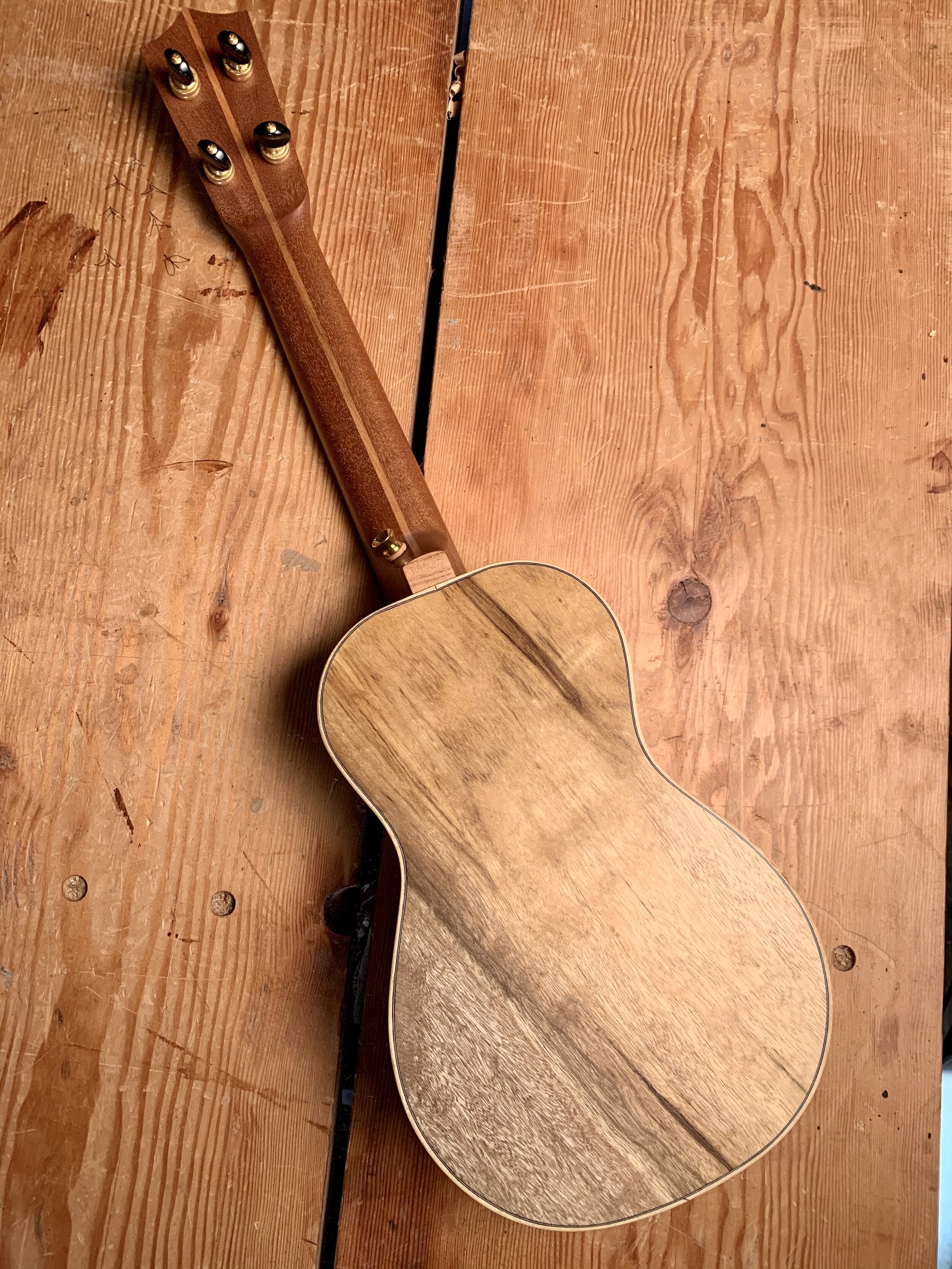
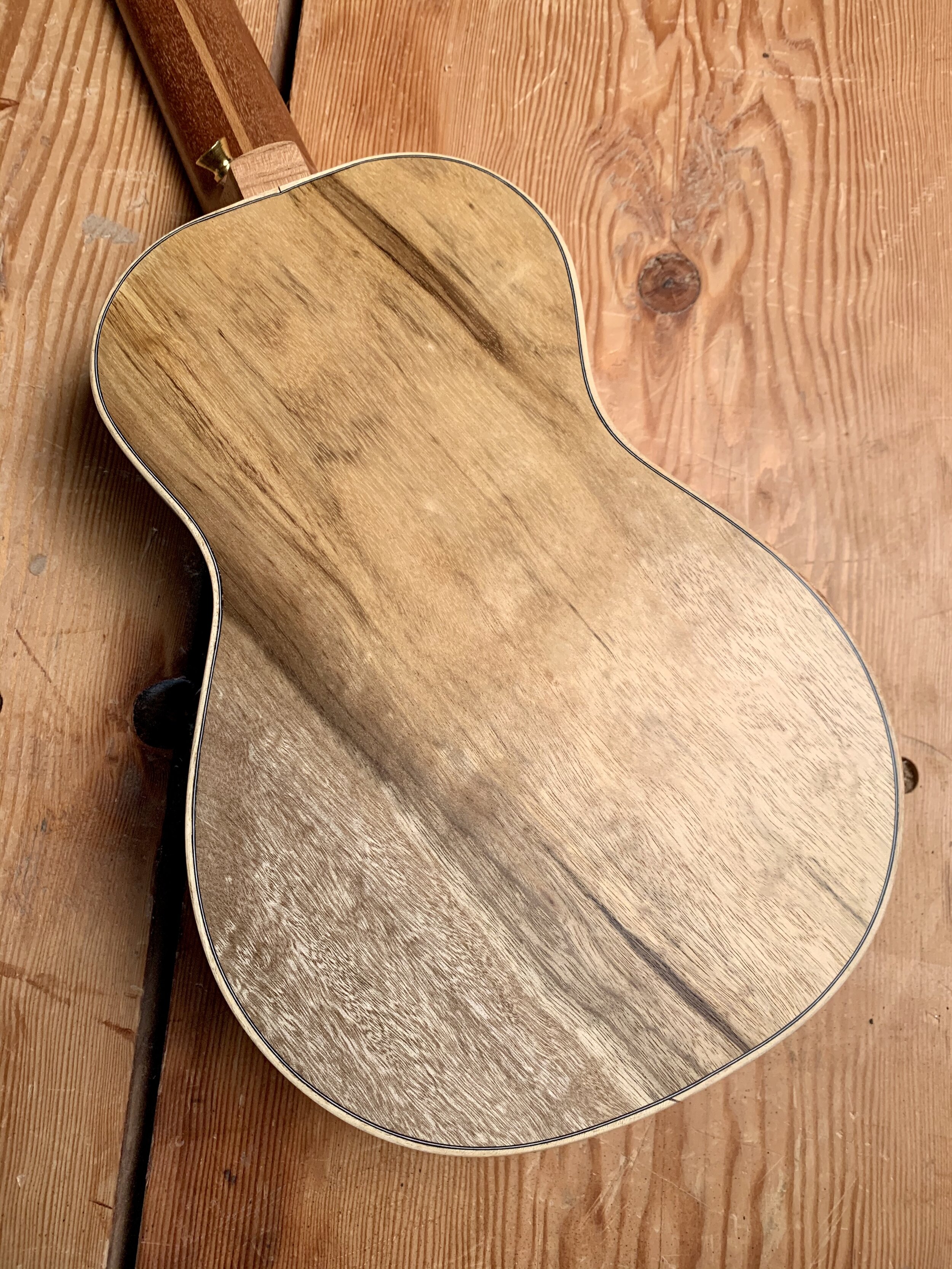
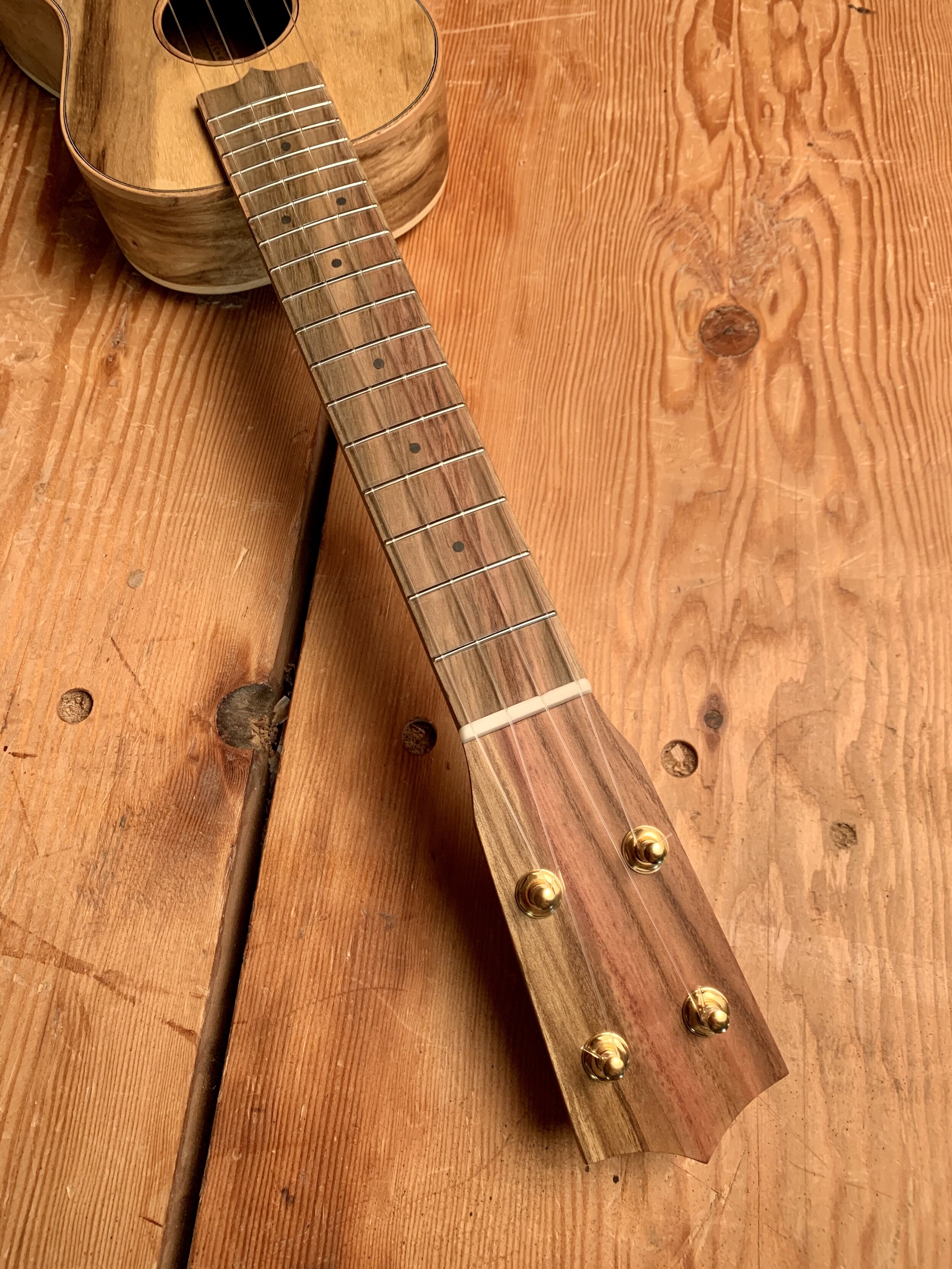
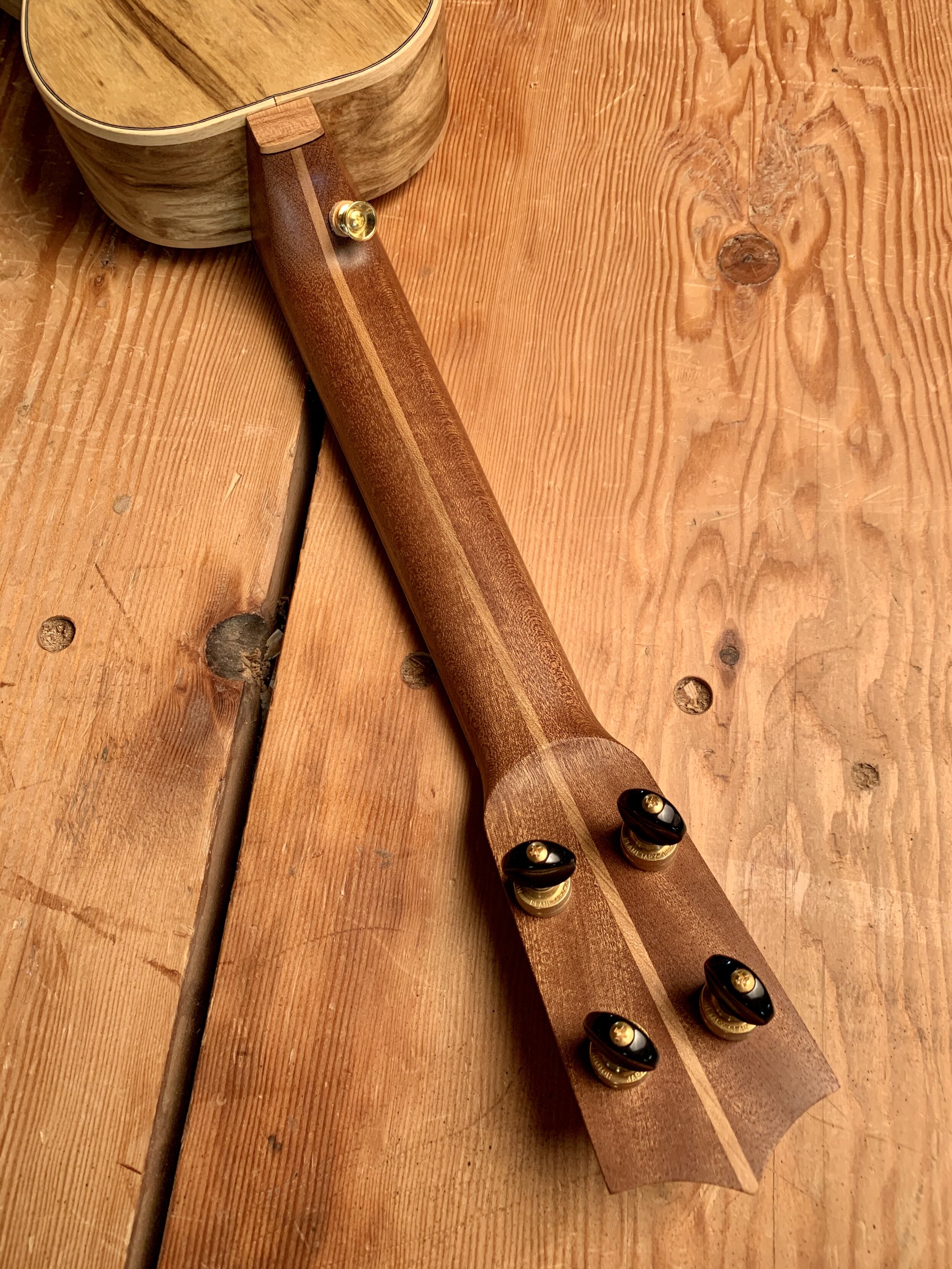
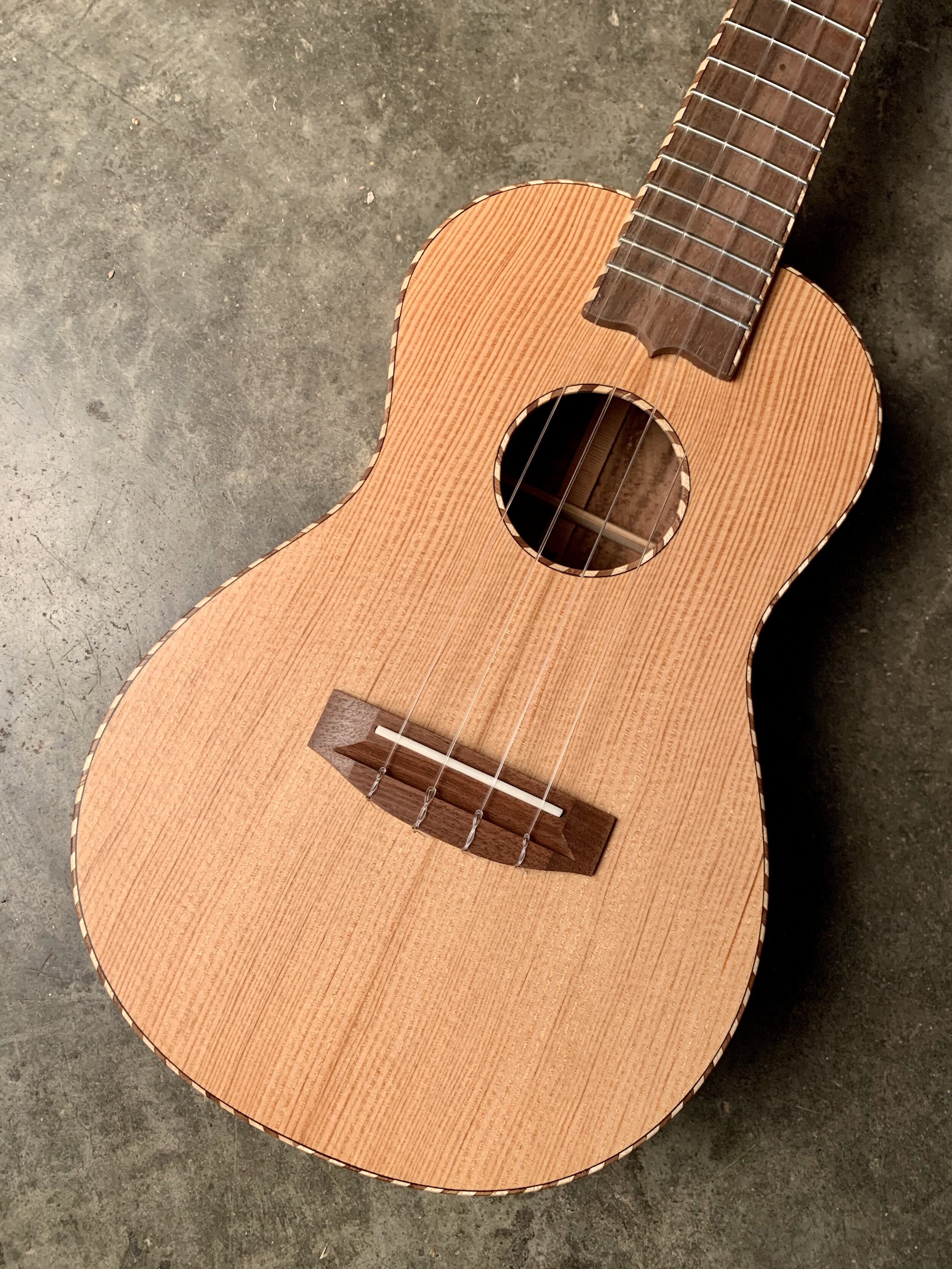
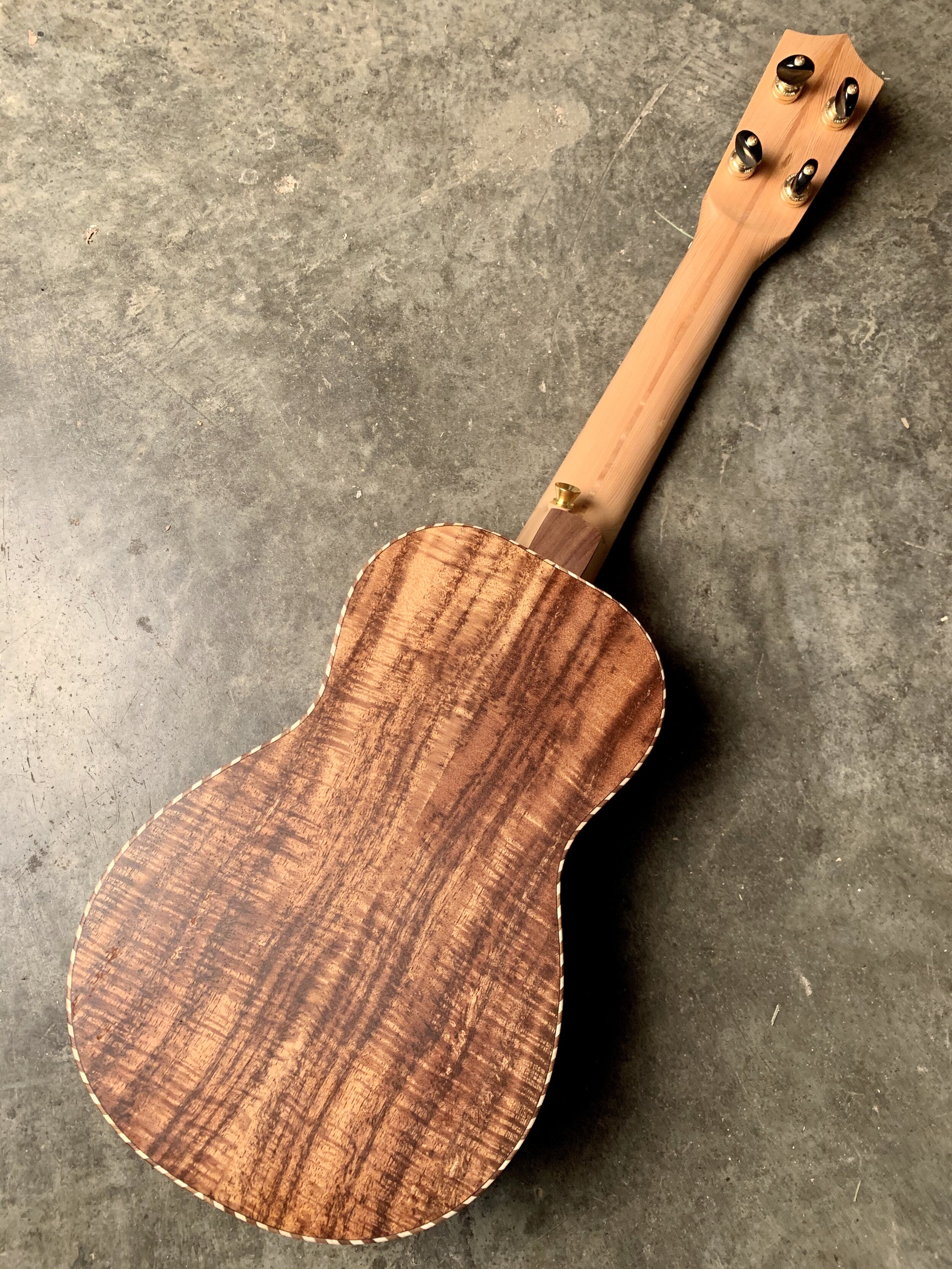
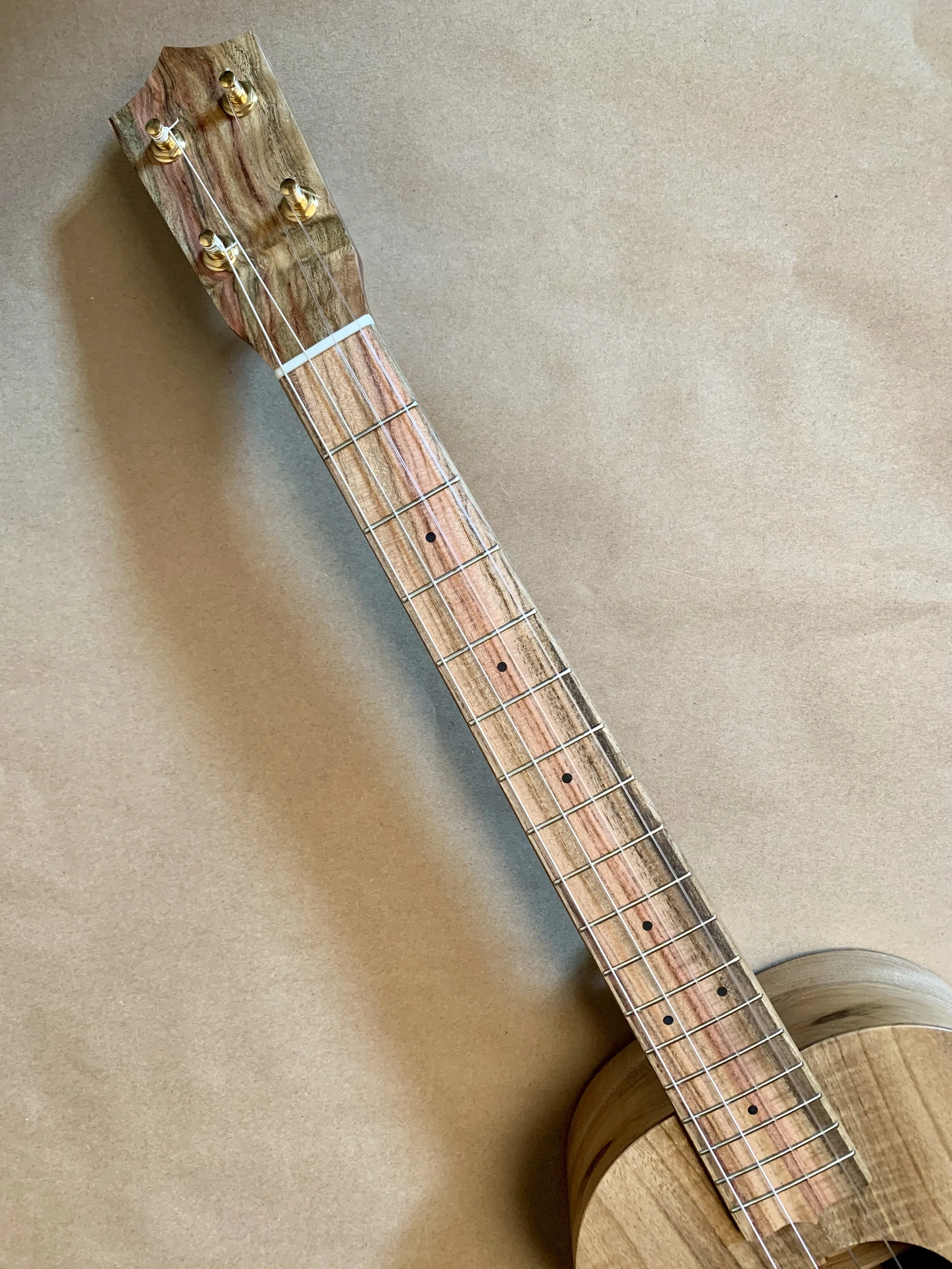
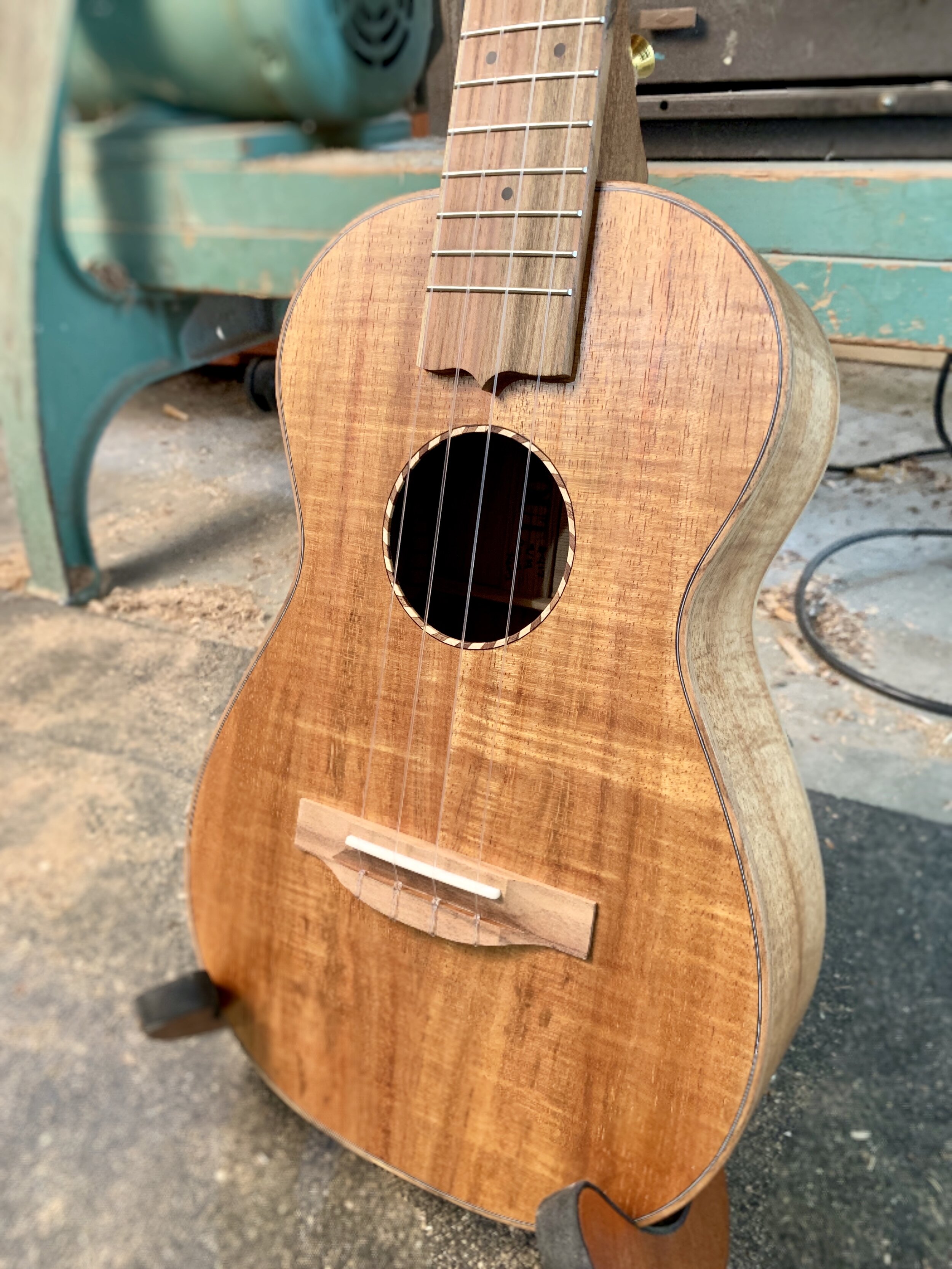
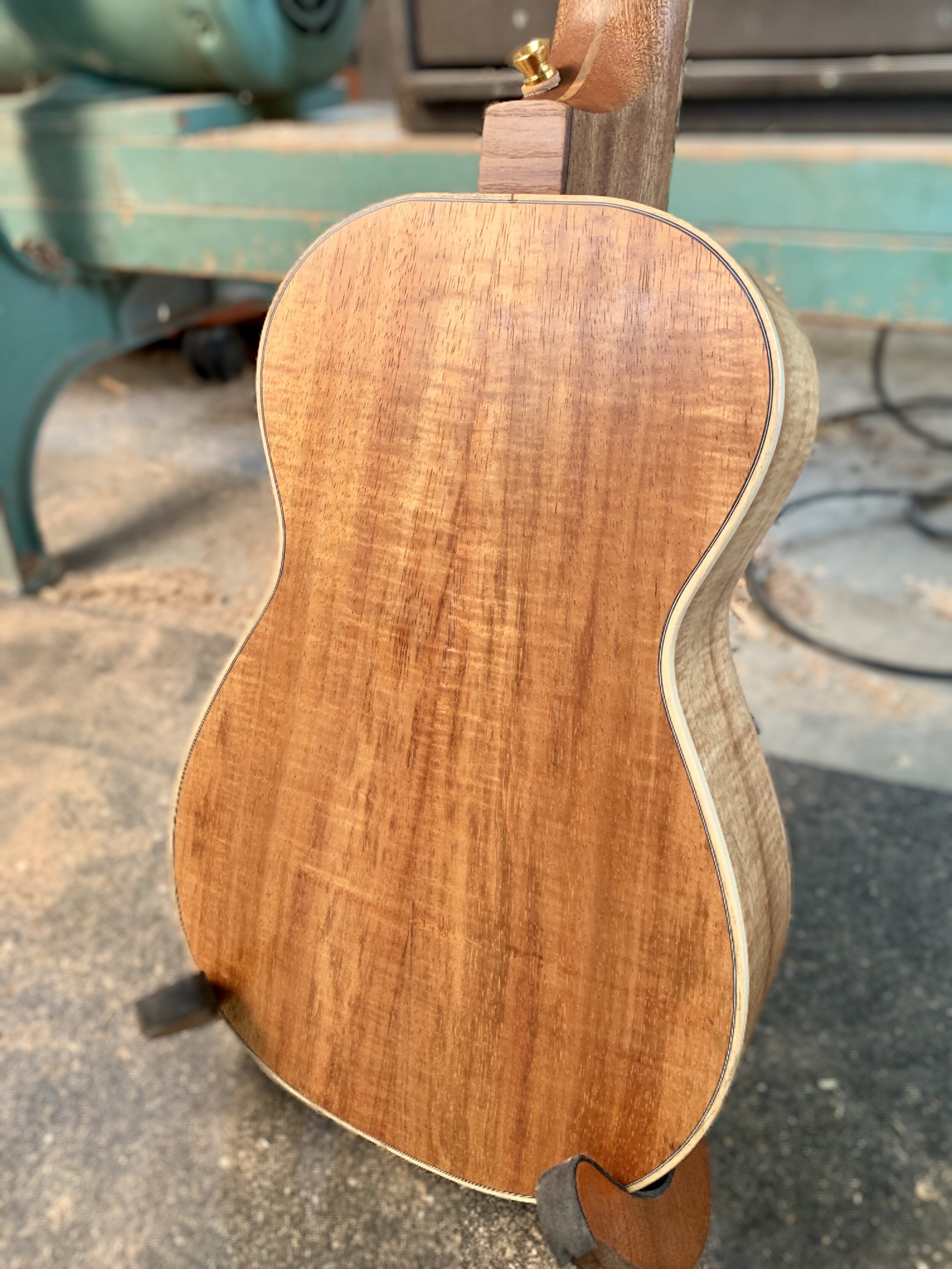
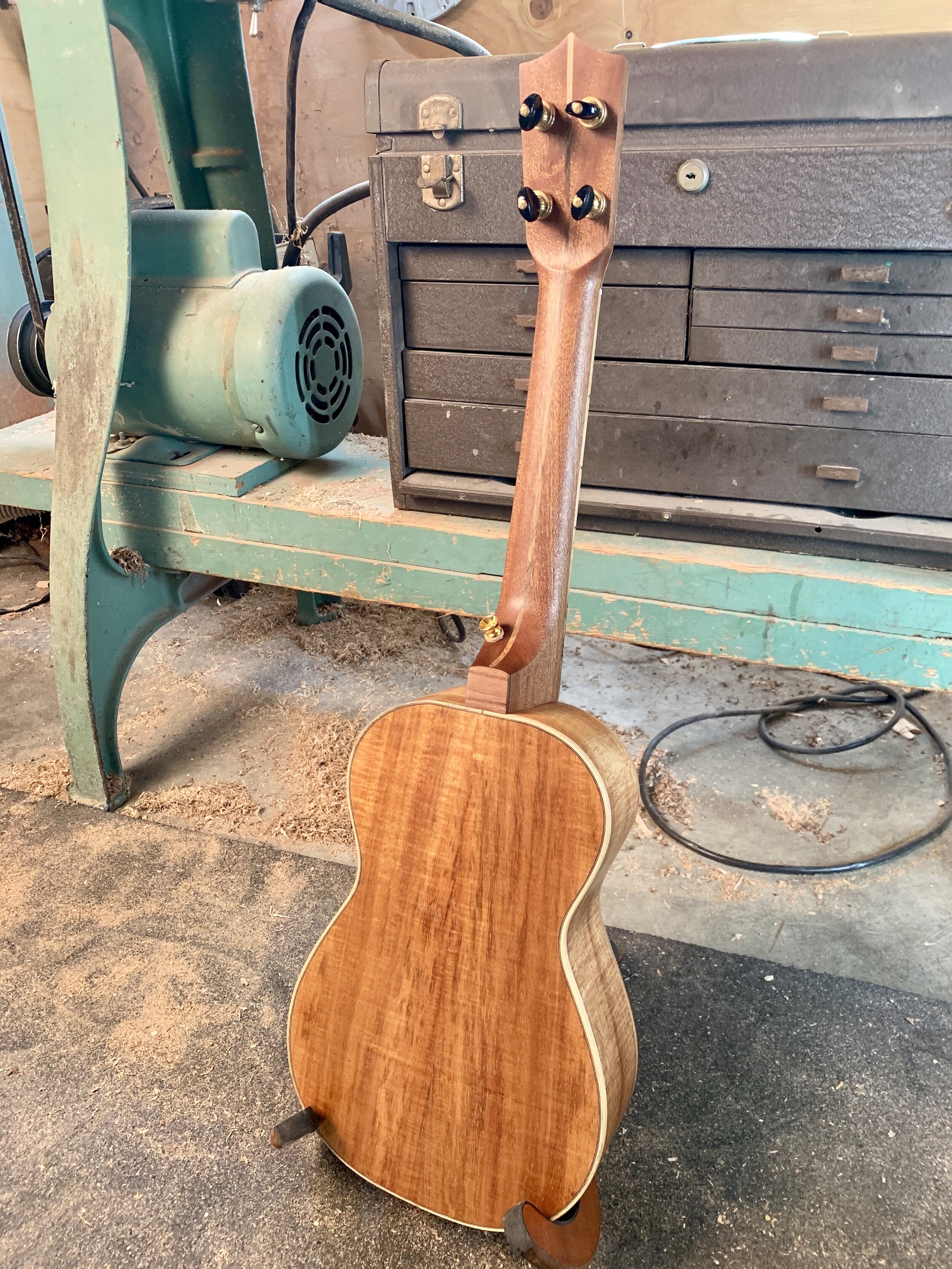
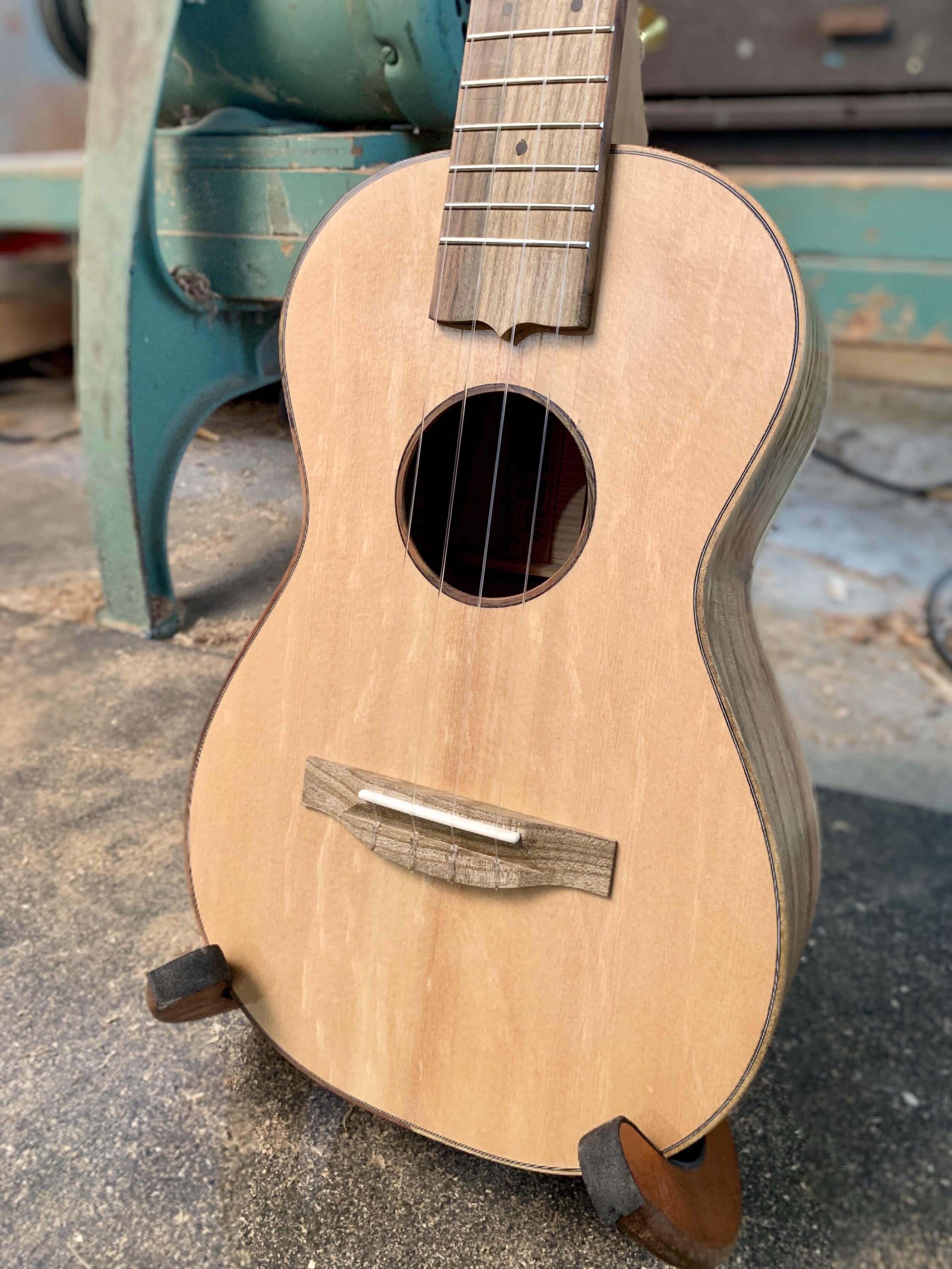
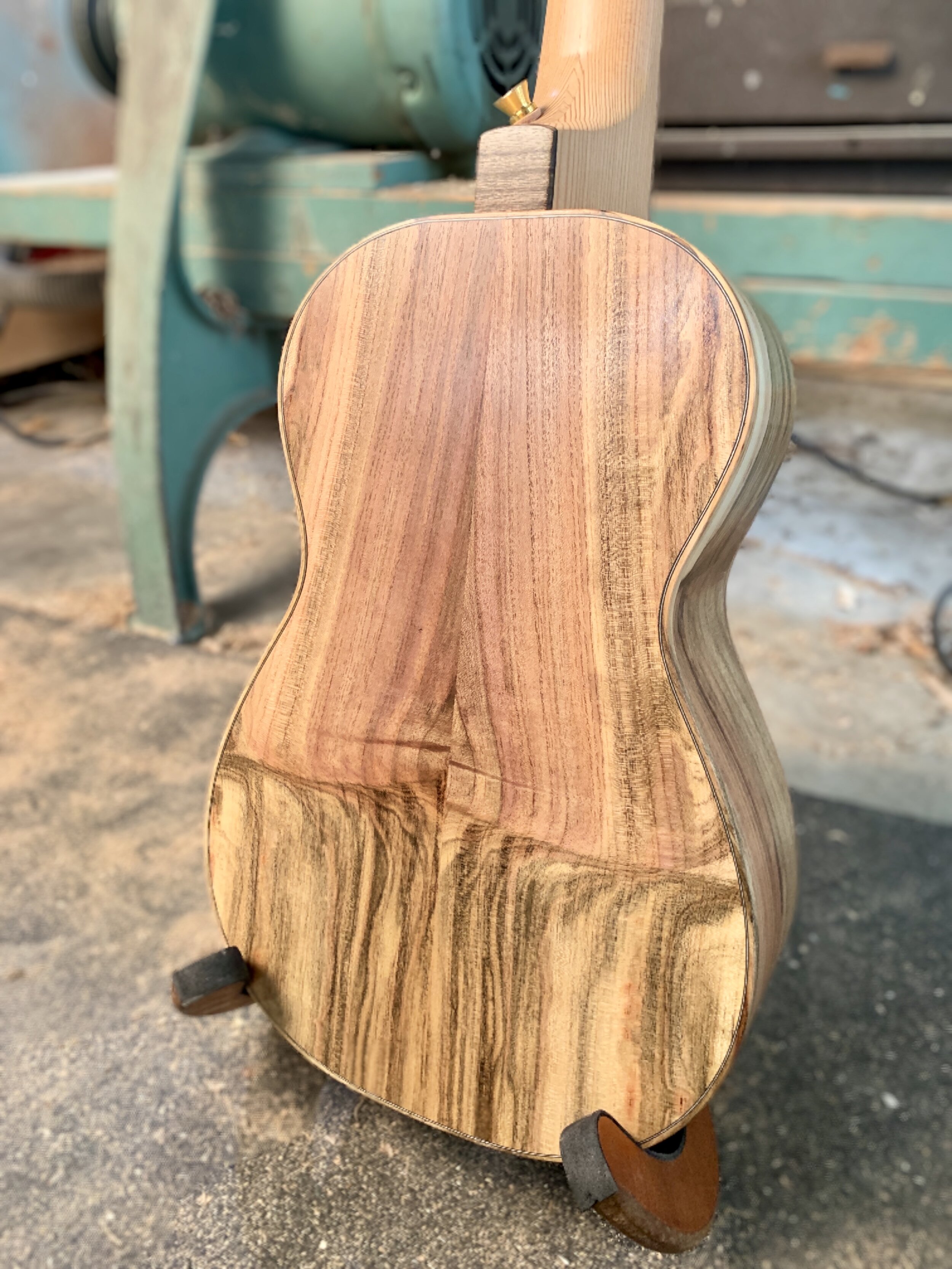
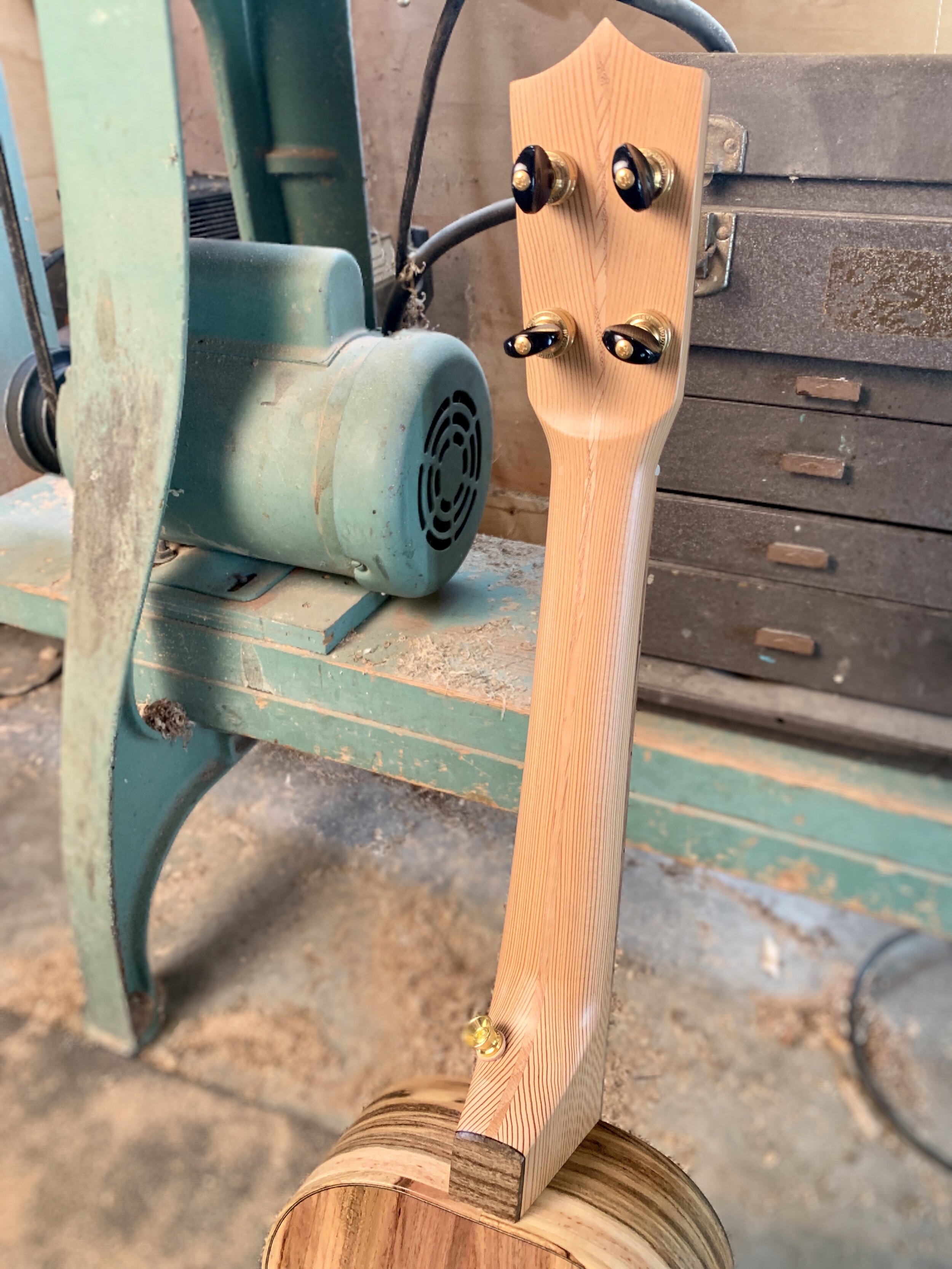
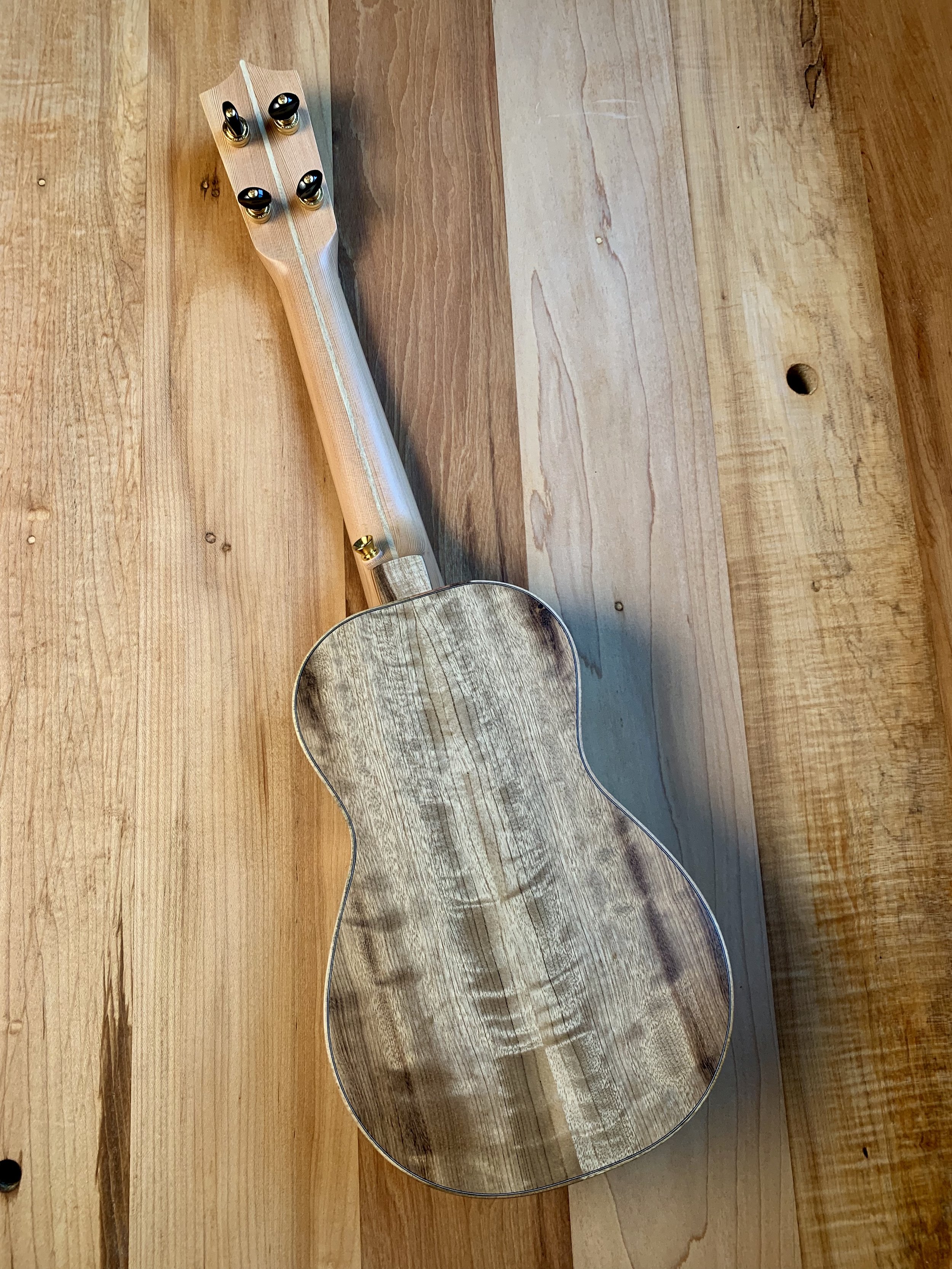
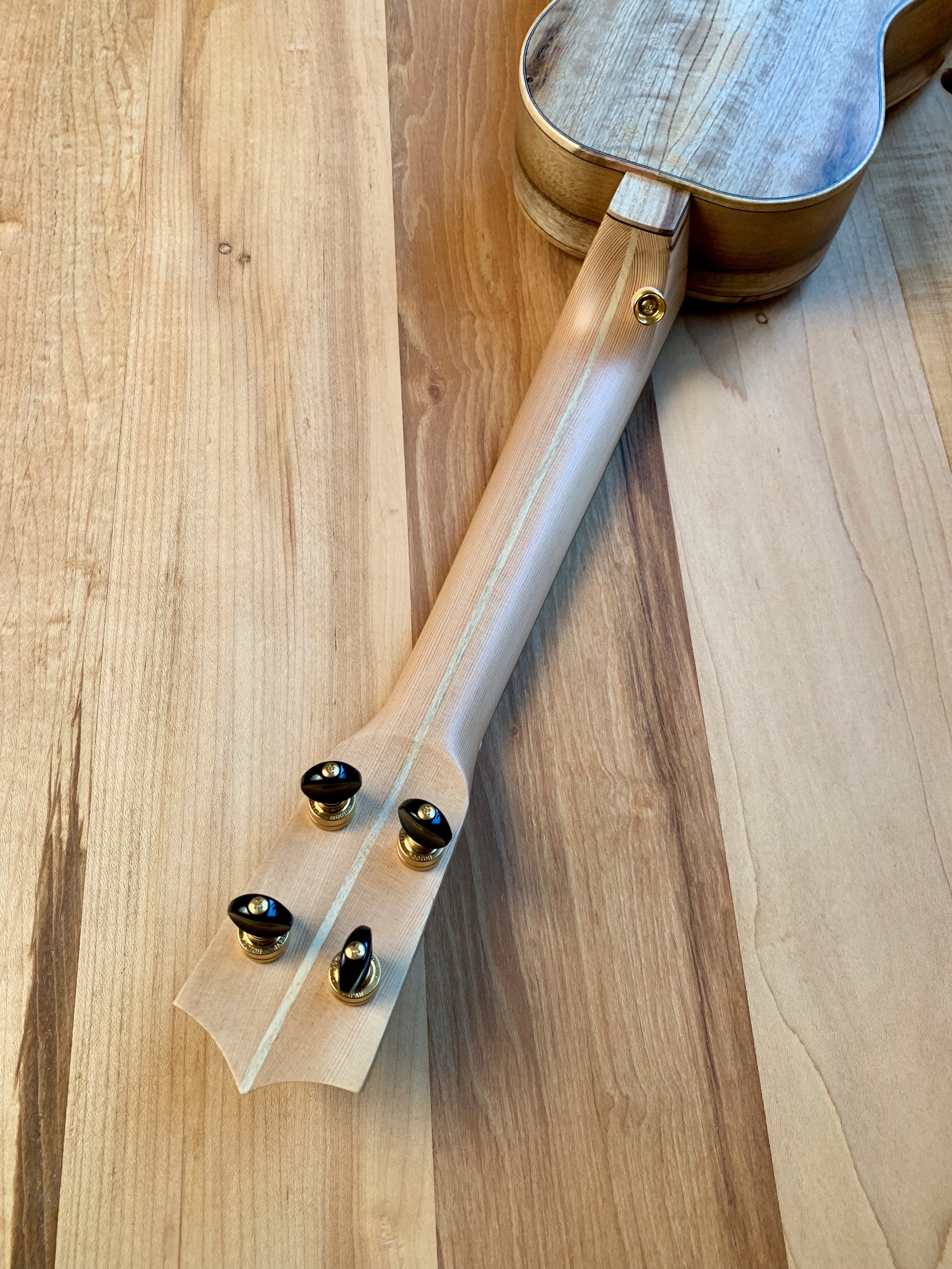
#438- Myrtle Alto Ukulele

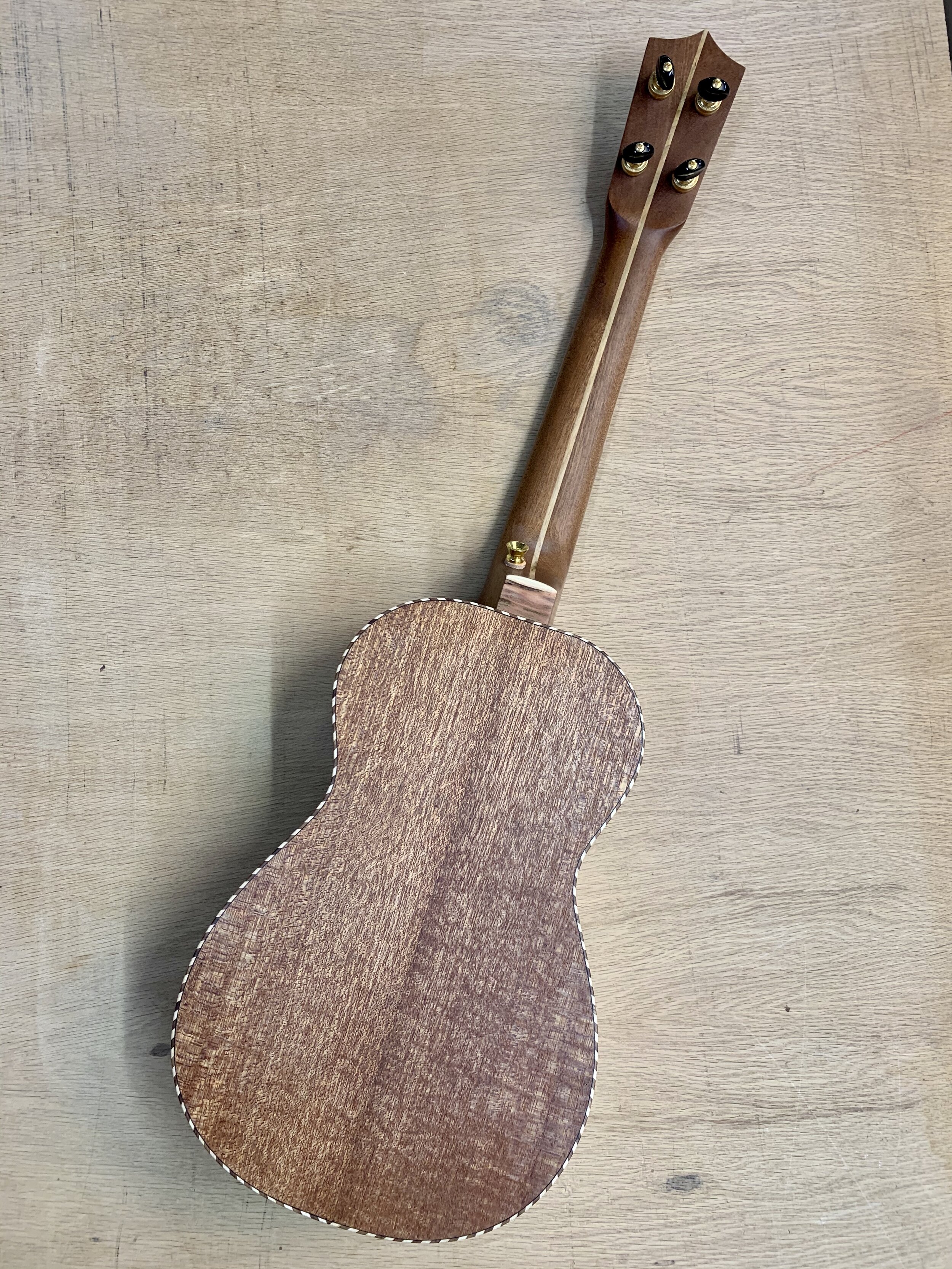
This ukulele is for Andreas, who runs the site ukulelezeit.de. He was attracted to the wild grain, muted color palette and natural imperfections of the Wabi-Sabi aesthetic. These Myrtle alto ukuleles with asymmetrical tops and backs fit the bill and have turned into a “signature” model for Beansprout. I picked a Douglas Fir neck for him that had a beetle hole and some beautiful bark inclusions that was salvaged from a barn in The Dalles, OR. The Oregon Myrtle for the body came from the Carpenter Ant stash in Portland. The pistachio fretboard, headplate and bridge come from California orchards. I liked this one so much that I spent awhile today practicing the song “John Henry” for our new cd on it. “I’ll die with my hammer in my hand” seems appropriate to making handmade ukes for a living!

#437- Spruce and Maple Alto Ukulele

For four years now, our friends Lizann and Ken have offered access to their family wood stash in Portland (which we nicknamed the Carpenter Ant stash). Their generosity knows no bounds and we really value the relationship. The tools and wood we have gathered from them (most marked with a “K” or “KLS” for Ken’s initials) have truly kickstarted Beansprout and laid a long term foundation for our family. When she ordered this alto, I had just sliced a quilted maple board that I knew would look amazing for the back and sides. The next time I went to their place, I found this spruce top in a pile of shop scraps. It had her name penciled on it, as Ken had set it aside for a uke for her! The last piece of the puzzle was to pull a cutoff from the building of my work bench for her neck. It was fir from her shed, of course. It feels right to have this uke neck and my workbench connected in this way. The Pistachio fretboard and headplate come from California Orchards, but the rest is from the Carpenter Ant stash. This uke celebrates music, craft, community and friendship, thanks for supplying all, Lizann and Ken.

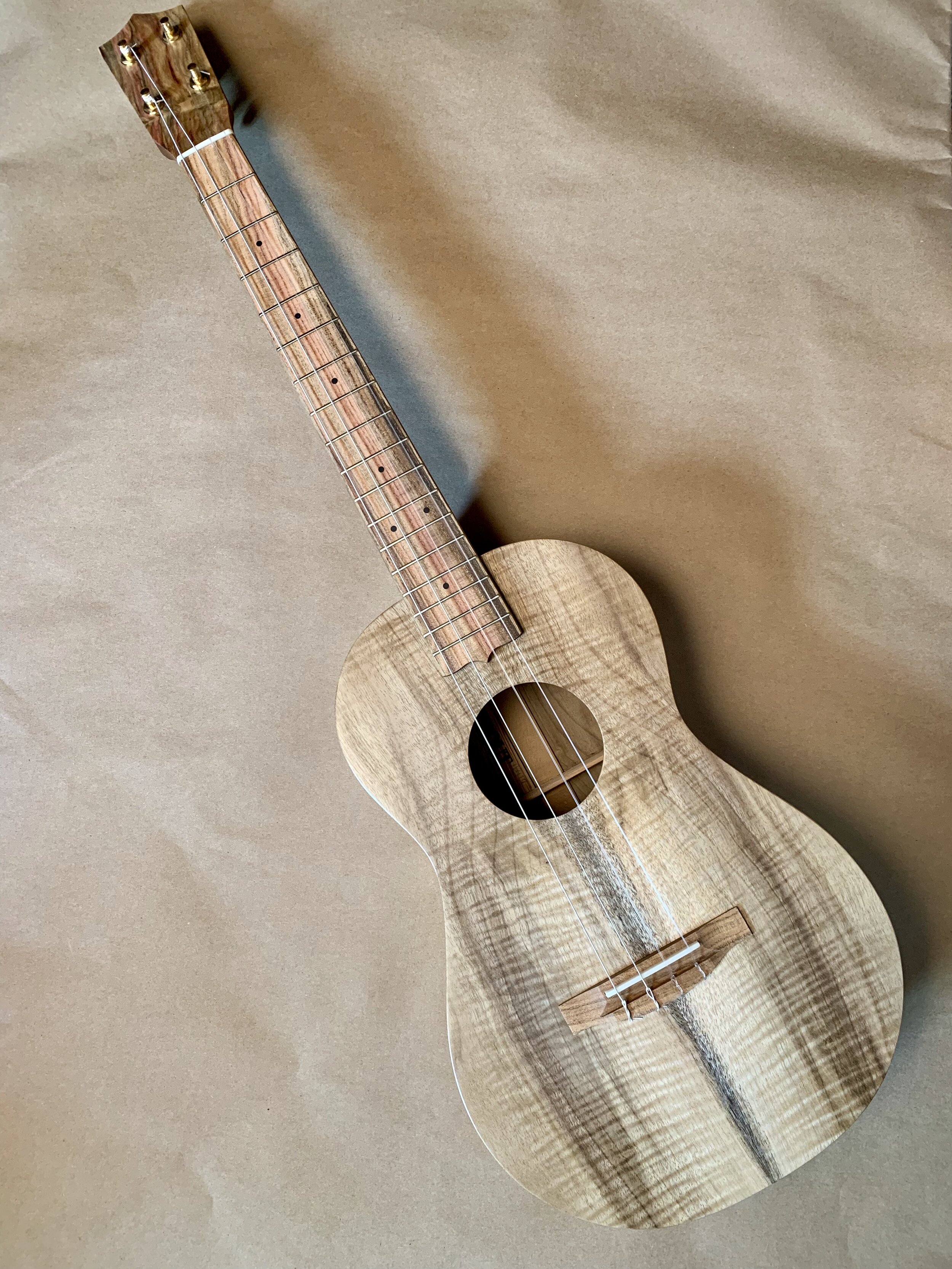
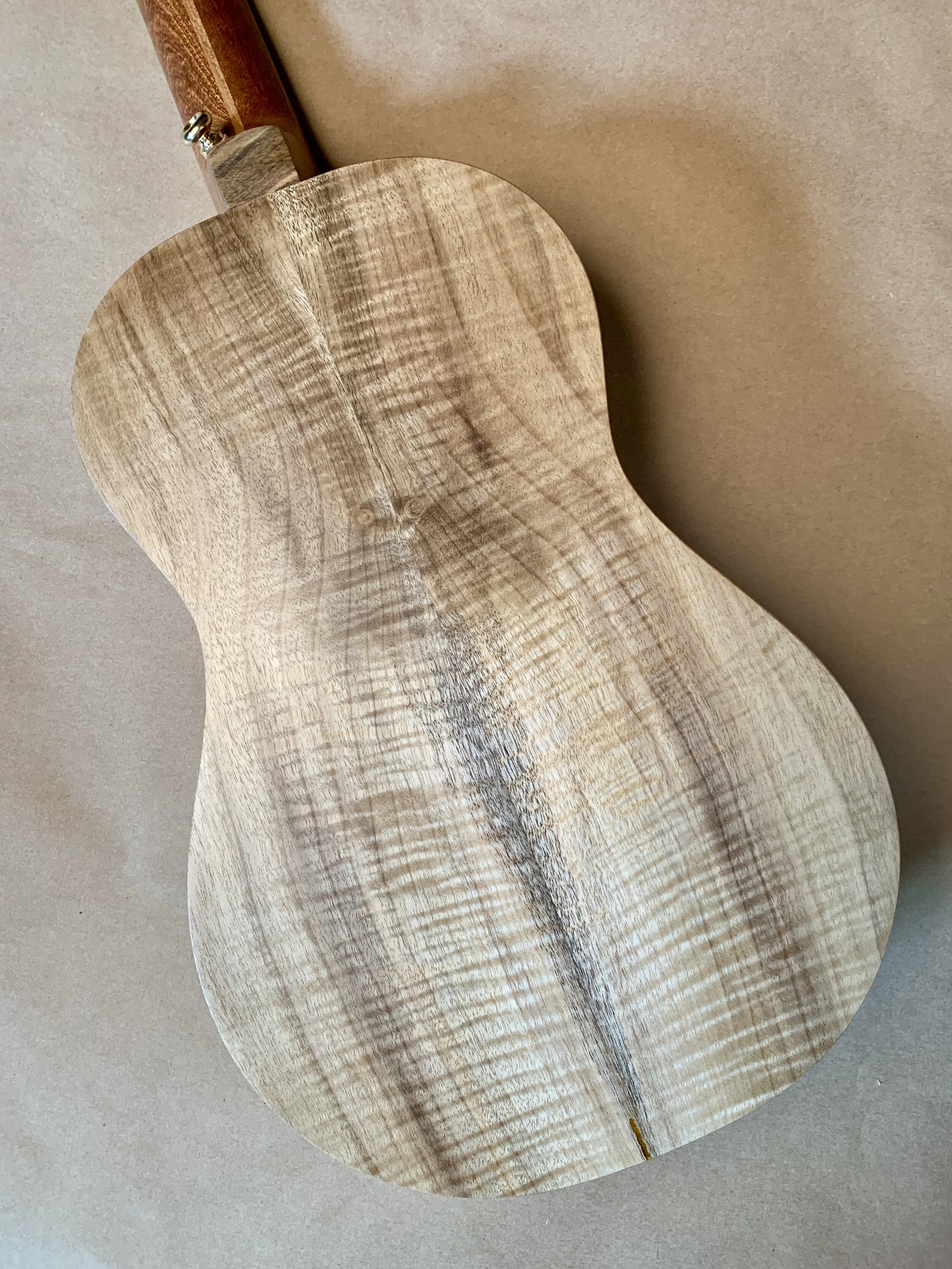
#441- Mastergrade Myrtle Tenor Ukulele

Folks often ask us to define “Mastergrade.” Well, it is an arbitrary term and each wood species gets treated differently. In the case of Myrtle, it follows the same terminology as Koa. There is straight grain, curly and Mastergrade. For me, Mastergrade means that it not only has consistent curl all the way across the set, but it also has a unique color or grain variation that sets it apart. Yes, I know that some folks use an “A” through “AAAAA” system, but I think that gets a little tedious. I just kind of know a Mastergrade set when I see it!

For this uke, Nan wanted a really special set of Myrtle and then asked me to decide if it should have rope binding or something simpler. It could be too busy for some folks, but I think this Myrtle with rope was a no brainer. The Oregon coast Myrtle and the California pistachio come from woodfromthewest.com and the neck is made from a piece of wormy fir that was salvaged from a barn in The Dalles, OR. It is lightly built but feels solid, with a bright but balanced tone. I heard from Nan that this uke is likely going south for the winter, safe travels!

nan441.jpg

#445- Curly Myrtle Scout Ukulele

As a player, I appreciate the small size and cheerful tone of the Scout. As a musicologist/historian, I appreciate the Scout’s reference to the Washburn Camp ukulele of the 1920’s. As a builder I appreciate the Scout as a small scale meditation on skill and perfection. Its simple design allows me to focus on my building techniques with an unusual keenness. That might be reason enough to continue building them, but I am lucky that there is also a small demand for them. It seems that we all benefit from the humble Scout. This curly Myrtle was saved from the scrap bin at Mya-Moe, the persimmon fretboard and headplate comes from Steven, a builder from Indiana and the fir neck is from an old floor board.

#428- Sycamore Alto Ukulele

This instrument is for a friend, student and loyal customer named Stephanie. She has been one of our best supporters for many years and I’m happy to get this ukulele in her hands! Sycamore seems to be a humble wood, but it makes for a balanced tone, a lightweight instrument and shows fine grain and detail up close. This sycamore, as well as the mahogany neck, came from the Carpenter Ant stash in Portland. They were originally milled for grandfather clock cases. The pistachio comes from California orchards.

My beautiful Alto arrived late yesterday. What a gorgeous instrument. And the sound is wonderful, bright, but not too bright. Really rings when finger picking. And clawhammer sounds good too.

The attention to detail is what slays me. How everything matches and blends in the wood. That fretboard looks so cool up against the sycamore.

I was up at 6 am, playing a few tunes before breakfast. Just to make sure it sounded as great today as it did yesterday.

Thanks for the beauty and joy you bring my way.

S.S.

#427- Walnut and Pistachio Five String Banjo

Since I only make a handful of these per year, it sort of feels like my pace of progress is slow. But, I am quite pleased with the results. The combination of walnut and pistachio woods, the calf skin head and my custom non-steel string set make for a unique sound. It is dark and haunting, but pops and growls when you dig in. The Oregon walnut comes from Goby in Portland and the pistachio comes from California orchards. Here are the stats for the banjo nerds:

-11” walnut and pistachio block rim with calfskin head.

-25.5” scale length with truss rod in the walnut neck.

- 1/2” bridge with just over 1/8” string height at 12th fret.

-Gotoh tuners, fifth string spike, frailing scoop and Rickard brass hardware

I wanted to thank you for this banjo. It’s a work of art. Also, sounds so sweet, especially in D tuning (to me anyway) and the sustain- wow. I love it. Congrats on some great craftsmanship.
- J.S.

#431- Myrtle Alto Ukulele

Since we re-started Beansprout, I have enjoyed making what I want, but also paying attention to what seems most popular with customers and fans. I’m willing to lead towards what seems to be making an impact while staying true to my aesthetic and values. These Myrtle alto ukuleles made with one piece tops and backs have turned into a “thing” and I’ve been happy to go along with it. They have a great Wabi-Sabi vibe to them with the asymmetry, natural flaws/features and a muted natural color palette. The Myrtle body and mahogany neck are salvaged from scraps from a furniture maker and the pistachio is from California orchards.

Let me just start by saying a big thank you to everyone who had a hand in the order. My instrument, the alto myrtle ukulele #431, arrived safely last Friday. I had very high expectations for it, and I am happy to say that it is has exceeded those high expectations in nearly every way!

It is very easy for anticipation to ruin something like this. The months of waiting can lead you to build up the idea of the thing so much in your own mind that the thing itself can never live up to it. My beansprout is, hands down, the most beautiful physical object I have ever held in my own two hands. The look the feel, the sound; basically every aspect of this instrument continues to amaze and fascinate me. Your care, dedication, and craftsmanship are evident in every aspect of it. Even now, several days later, I can’t quite believe that it is real and that it is really mine!

I did have some reservations about it when I ordered it. I really love the concert scale was skeptical about your in-between “alto” scale. Now that I have played it, I think you may be right. This is basically a Goldilocks size; it is just right. The slight radius makes it the most comfortable fretboard I have ever had the pleasure of playing and the neck profile is the best I have ever held.

The sound is also unparalleled in my experience. Beautiful tone, great sustain, and wonderfully balanced.

Thank you, from the bottom of my heart for creating such a beautiful instrument.

- A. L.

#425- Curly Walnut Mini Five String Banjo

To be honest, I never really expected these mini five string banjos to take off like they did. Also, I never expected that the lower G tuning to be the most popular as well. Not that I’m complaining! This one has amazing curly walnut from Goby in Portland and pistachio from California orchards. It is so vibrant that it feels like it might leap out of my lap while I’m playing. It’s a good balance of the loud volume and rich tone that I shoot for.

Hello Aaron Nicole and Henry. I finally got to meet #425. The blend of woods used to create its shape and form are surely wonderous. Being a novice player I was nervous at first to listen and feel its unique sound. In time I will get to know it dearly. Thank for making my experience with Beansprout Musical Instruments a very happy one.
- S. B.

#426- Walnut and Pistachio Concert Banjo Ukulele

When customers order an instrument from us, they get an opportunity to choose between a few options. There are also some design decisions that are generally up to me. This means that although I make many of the same model, the small variations make it interesting. In this case, David wanted a 1.5” nut width, a pickup, an arm rest and a low g stringing. I had a great time picking some solid, straight grain, Ozark grown black walnut and pairing it with one of the most unique pistachio fretboards I have ever seen. These small variations make it interesting for me and provide a unique banjo for the customer.

You’re a craftsman and certainly don’t need my review, but let me say, thank you, thank you, thank you. The instrument is absolutely incredible. I was a professional drummer for years, and ukulele/banjolele is a mid-life new instrument for me. I keep buying and selling, and I was starting to become discouraged about the possibility of being able to find a concert scale uke that plays in tune with dynamic range and full tone across the spectrum, but yours does all that and more. Among other things, the sound is just incredible. Warm, full, not harsh, but pronounced. Before it arrived, I assumed I’d play it without the foam, but I’m actually liking what the foam does with the tone.

The feel of the neck is also the best I’ve felt on any uke. I’m so glad I chose a 1.5” nut, and your neck shape seems just right.

Aesthetically, the instrument is gorgeous and classy. It’s good you took photos because you won’t see this one up for sale. I’m keeping it.

The only problem I can see is that it makes my other banjo ukes pale in comparison, but I think I can live with that just fine. I may have to sell them and make another deposit with you at some point in the future.

Thank you again for what you do. It has a lot of meaning and brings a lot of joy.

D.L.

#424- Curly Walnut Tenor Banjo Uke

I get this curly walnut from Goby in Portland, who specialize in urban forestry and salvage of walnut trees in the Willamette valley of Oregon. Its dramatic curl and rich color palette make it truly special stuff. The pistachio fretboard and trim come from California orchards. Carlos needed a K&K pickup and a wider fingerboard for his tenor scale banjo uke. With Gotoh tuners and fluorocarbon strings, it has a rich but bright tone, great intonation and easy playability. It’s a great musical tool, use it!

#430- Curly Mahogany Tenor Ukulele

This tightly curled mahogany comes from the Carpenter Ant stash in Portland and was likely cut for Lizann’s grandfather to make clocks. I immediately recognized it as the old Cuban mahogany that many early 20th century instrument makers prized. This board is also special because it contains dozens of tiny pin holes from some sort of beetle. It is fun to fill them but leave them as an up close decorative feature. The neck is African mahogany, salvaged from a furniture maker. The pistachio is from California orchards. It’s all wrapped up in old style rope binding. A classic look and sound!

#429- Curly Myrtle Alto Ukulele

I was lucky enough two years ago to find some boards that were wide enough to make alto ukuleles with one piece tops and backs. They make for asymmetrical and wavy looking instruments and have become popular with customers. This one looks and sounds great and I’m happy to send it to Cindy so she can make her own music with it. The Myrtle is salvaged from a furniture maker, the Douglas fir neck is made from old floorboards and the pistachio comes from California orchards.

Got my uke today and all I can say is awesome, beautiful!!! Just love it, great workmanship. The shallow C neck is great for me.

Love to stroke it since it feels like silk. Very pleased.

-C. W.

#439- Spruce and Spalted Myrtle Scout Ukulele

Another sweet, democratic and fun Scout ukulele. The top is choice old growth spruce and the back and sides are amazing spalted Myrtle from the Oregon coast. For the fretboard, I am trying persimmon, which I got from another builder. Also called white ebony, persimmon is a great domestic hardwood suitable for luthiery. The neck is old growth Douglas fir, salvaged from some stair treads.

Hello Keim family,
We received our Scout ukulele (#439) yesterday. My wife, Marsha, loves it. She thinks it’s just adorable and I gotta agree. It’s a beauty! And it sounds great too, it really pops! So now I can hardly wait for my tenor uke - I’m on Aaron’s January build list. Thanks again.
- C. P.

#423- The Wayfinder Ukulele

This instrument is not built for a customer, it is built to be passed from player to player over a 2+ year adventure. Making its way around the world, hopefully inspiring music, art and a global communication. It’s not just an ukulele, it’s a long term art project that includes the music, photos and videos it makes as well as entries in a passport book we include with it. This project was inspired by many travelers, including the Polynesian navigators who found Hawaii, the Madeiran woodworkers who brought the ukulele’s ancestors to Hawaii and our many friends who travel the world making music and art. The top and neck are made from Oregon Douglas Fir, which was a prized wood for Hawaiian canoes when it drifted across the pacific. The back and sides are Hawaiian Koa, highly prized by mainland and island luthiers. The rest of the ukulele is made from Oregon Walnut and Maple, including the old fashioned rope binding. Check out the Wayfinder’s website here to keep track of it’s adventures!

#419- Curly Myrtle Baritone Ukulele

At the Carpenter Ant stash, there was a pile of dirty boards that we had to step over every time we picked out wood. Finally, I said “I’m sick of stepping over these. I don’t know what it is, but I’m throwing it in the truck so it’s out of the way.” When I got home, I planed an edge and realized it was Myrtle! Thank you very much. It turns out this particular Myrtle set is far fancier than I anticipated, it’s almost Mastergrade. It looks great neatly presented with no binding and rosette, a straight grain pistachio fretboard from California orchards and a mahogany neck salvaged from the scrap heap at a furniture maker’s shop. It is loud but mellow, a perfectly balanced baritone.

#417- Clockmaker’s Koa Tenor Ukulele

This ukulele includes some very traditional components which were fun for me to work with. First, it has a mahogany neck, which is common on classic ukuleles. I normally don’t use much tropical wood, but this mahogany was scrap from a furniture maker’s shop. Also, the body is made from Koa, which has been a favorite of luthiers looking for a traditional ukulele sound. To put my spin on it, I wrapped it up in Pistachio from California orchards. The Koa is Clockmaker’s Koa from the Carpenter Ant stash in Portland. These boards were set aside decades ago by Lizann’s grandfather for making clock cases. I am blessed to use it for musical instruments today.

#416- Bearclaw Spruce and Pistachio Tenor Ukulele

This tenor ukulele is on its way to Switzerland, which got me thinking about my job as a curator of wooden bits, destined to be combined into an object that then makes music. The spruce is salvaged old growth from Alaska, the amazing grafted pistachio comes from California orchards and the old growth Douglas fir was pulled out of a pig barn in The Dalles, OR. I then labor to make them fit together in the most functional and beautiful way that I can, send it off and hope that it lands in good hands. Bon voyage.

#418- Curly Maple Mini Five String Banjo

Most folks seem to want a “stock” model from me with maybe one change or upgrade. Gene had a vision though and it was fun to try to help him reach it while staying within my own limits and boundaries. Curly maple from the Carpenter Ant stash, lightly stained with amber and extra round over shaping on the edges. He also wanted ball shoe hardware (from Brooks Masten), a frailing scoop, a fifth string hook to change tunings, a goat skin head and a brass arm rest. In the end it turned out great and I have been having fun playing it in the shop. I hope it lives up to his vision! The simple but subtly beautiful pistachio cake from California orchards.

#422- Curly Myrtle Alto Ukulele

I love selecting curly, multi color Myrtle because it matches so well with the pistachio wood. It makes for a wild design that looks even better close up, as you see the endless detail these woods offer. Even though Myrtle sounds great, I know most folks pick it because of how it looks, which is fine by me. Good thing it has such a balanced tone and nice volume to boot. The Myrtle for this came from a pile of cut offs I inherited from Char before she retired. The pistachio is from California orchards. The fir neck is salvaged from a pig barn in The Dalles.

Just to let you know that the beautiful Myrtle Sisters (422 & 410) arrived yesterday in Point Roberts as promised, and we drove down to Point Roberts this morning to pick them up, and we are all at home now in Steveston and VERY HAPPY.

They are beautiful and sound wonderful and we thank you very much. We had them delivered to a package pick up service. It was thrilling to open the box and see how stunning they are. But then we tried them out in the waiting room and people came out of the back room to hear what the beautiful music was all about! (Invited us to come back every day and play. And we aren’t even that good. Yet.) We’re both really looking forward to getting to know them.
- M. W.