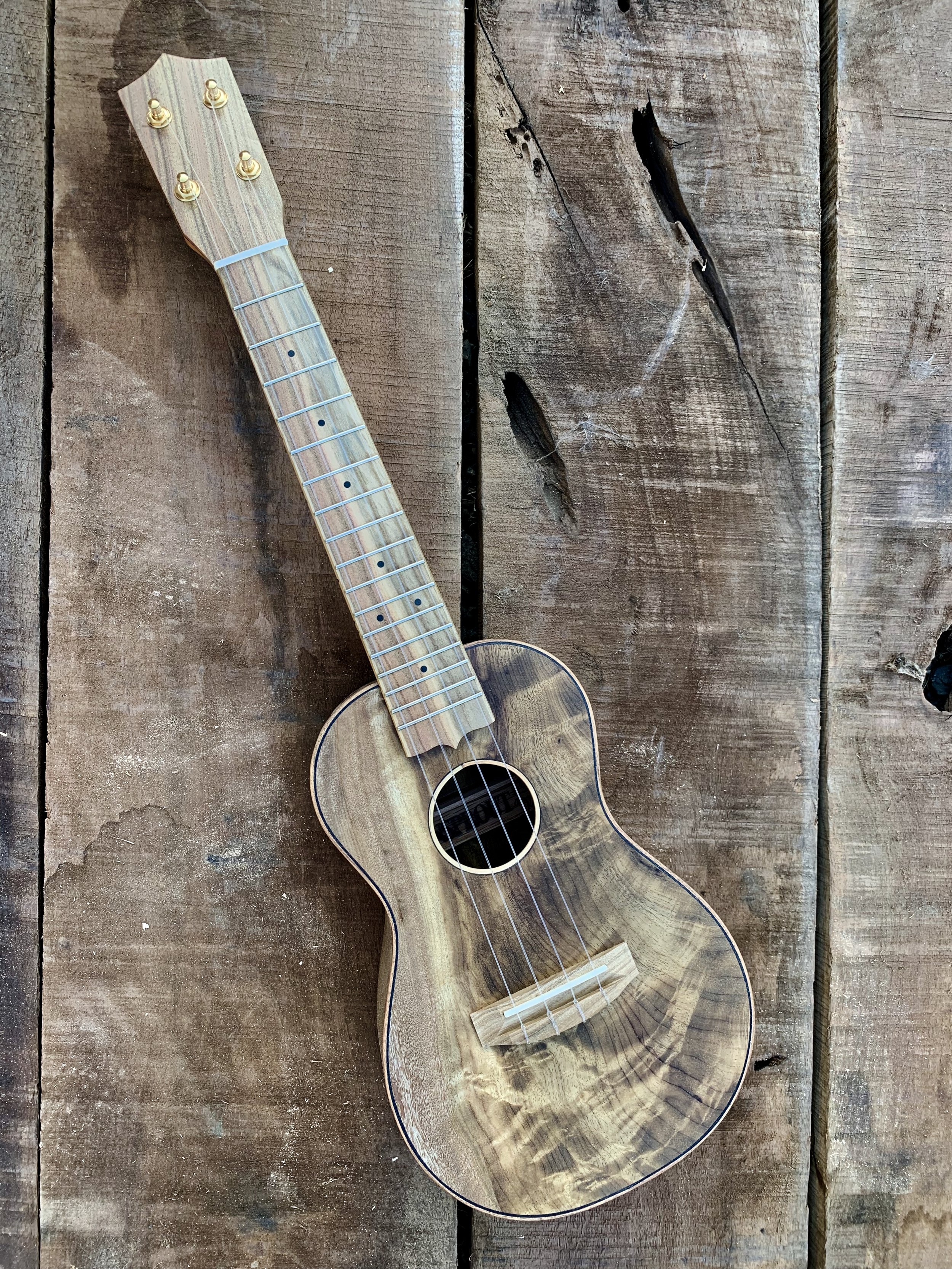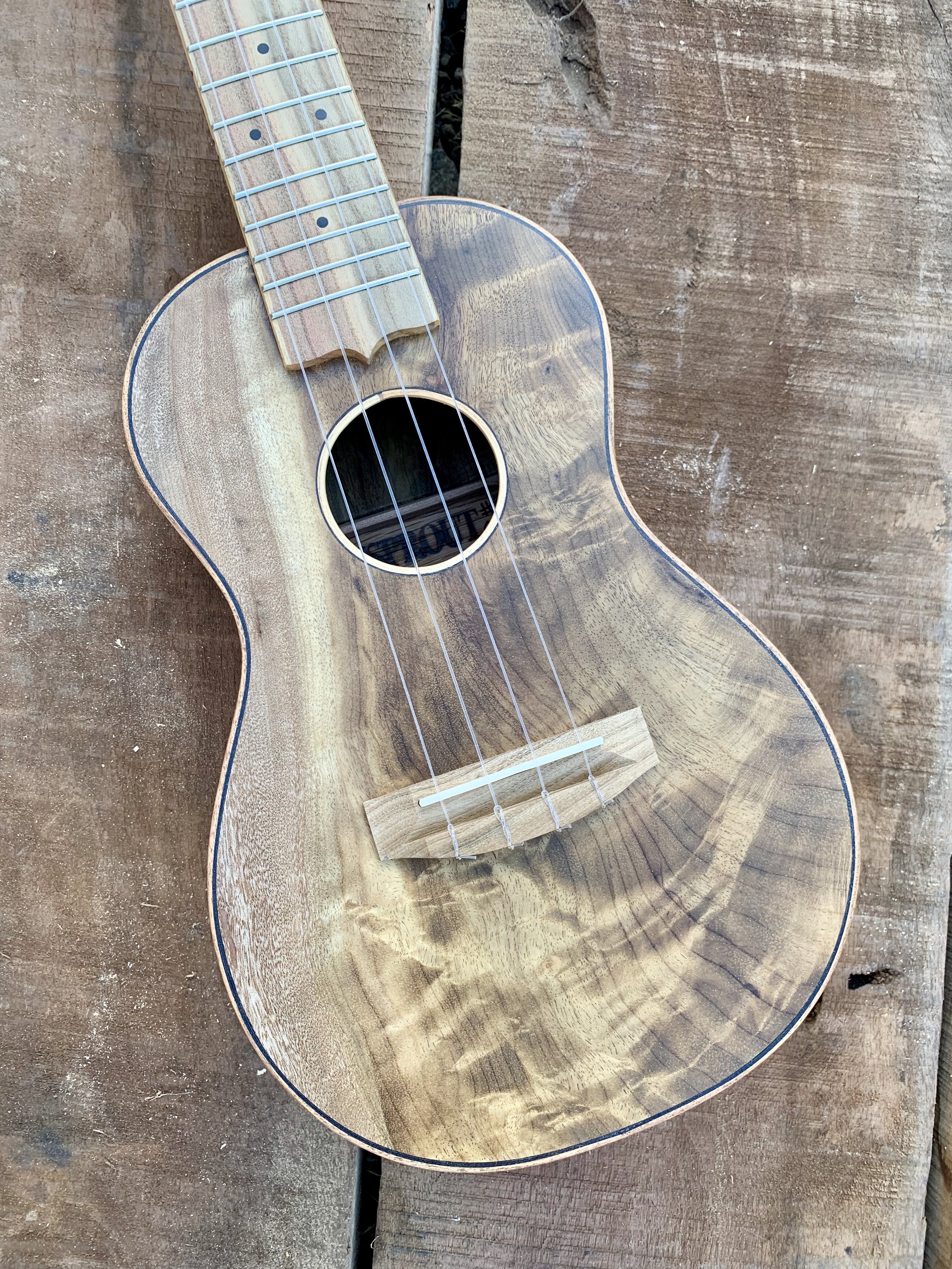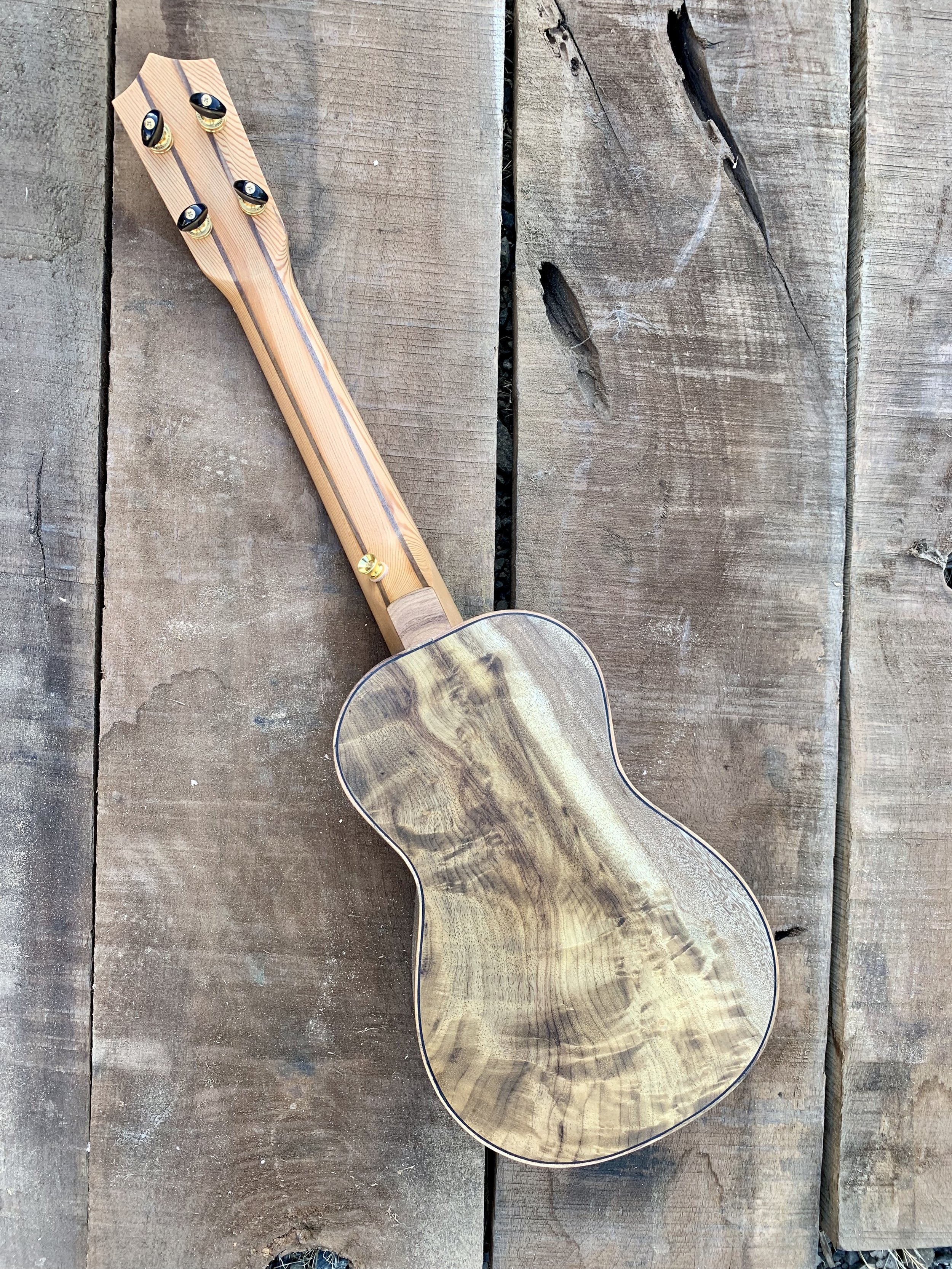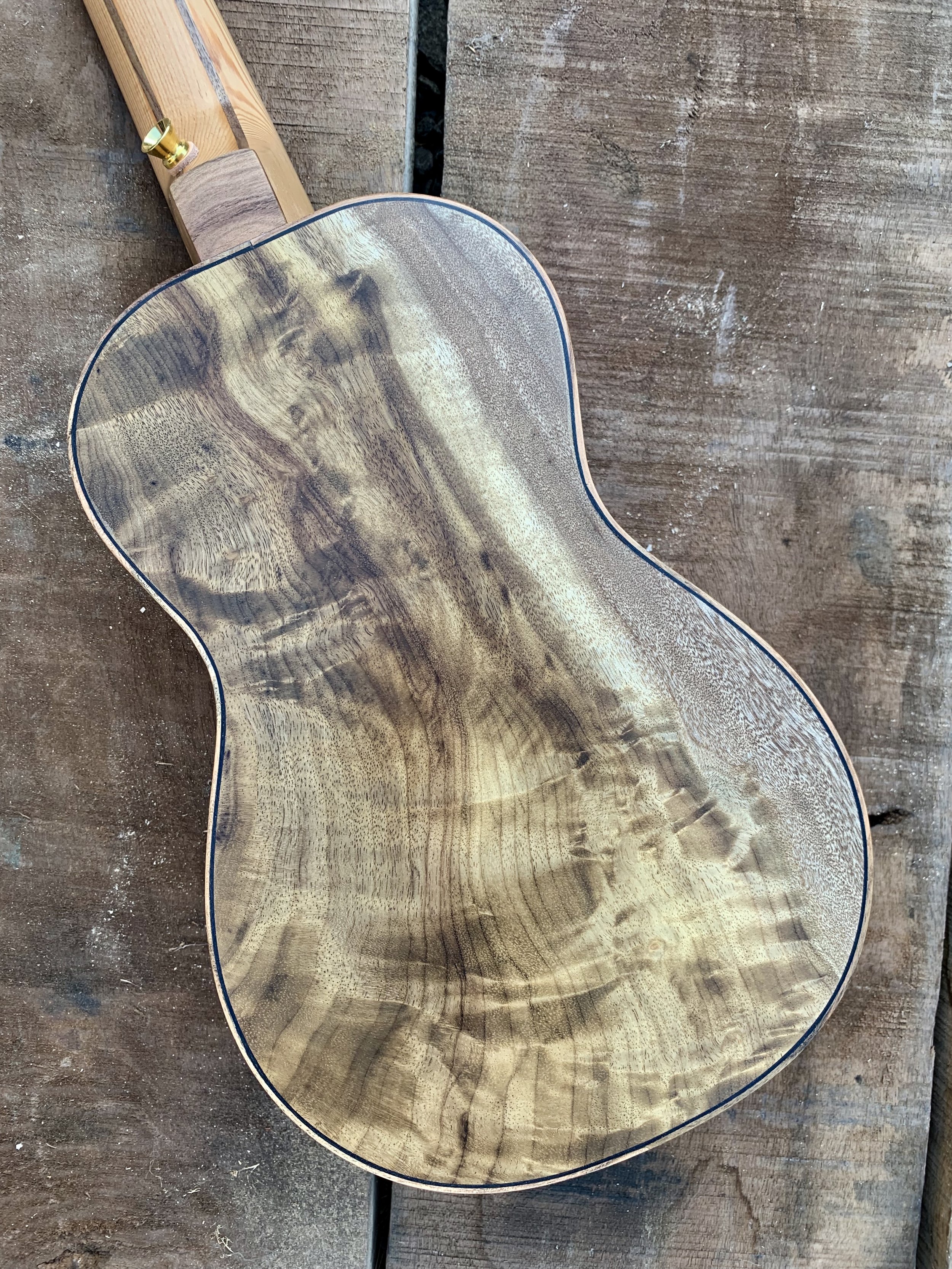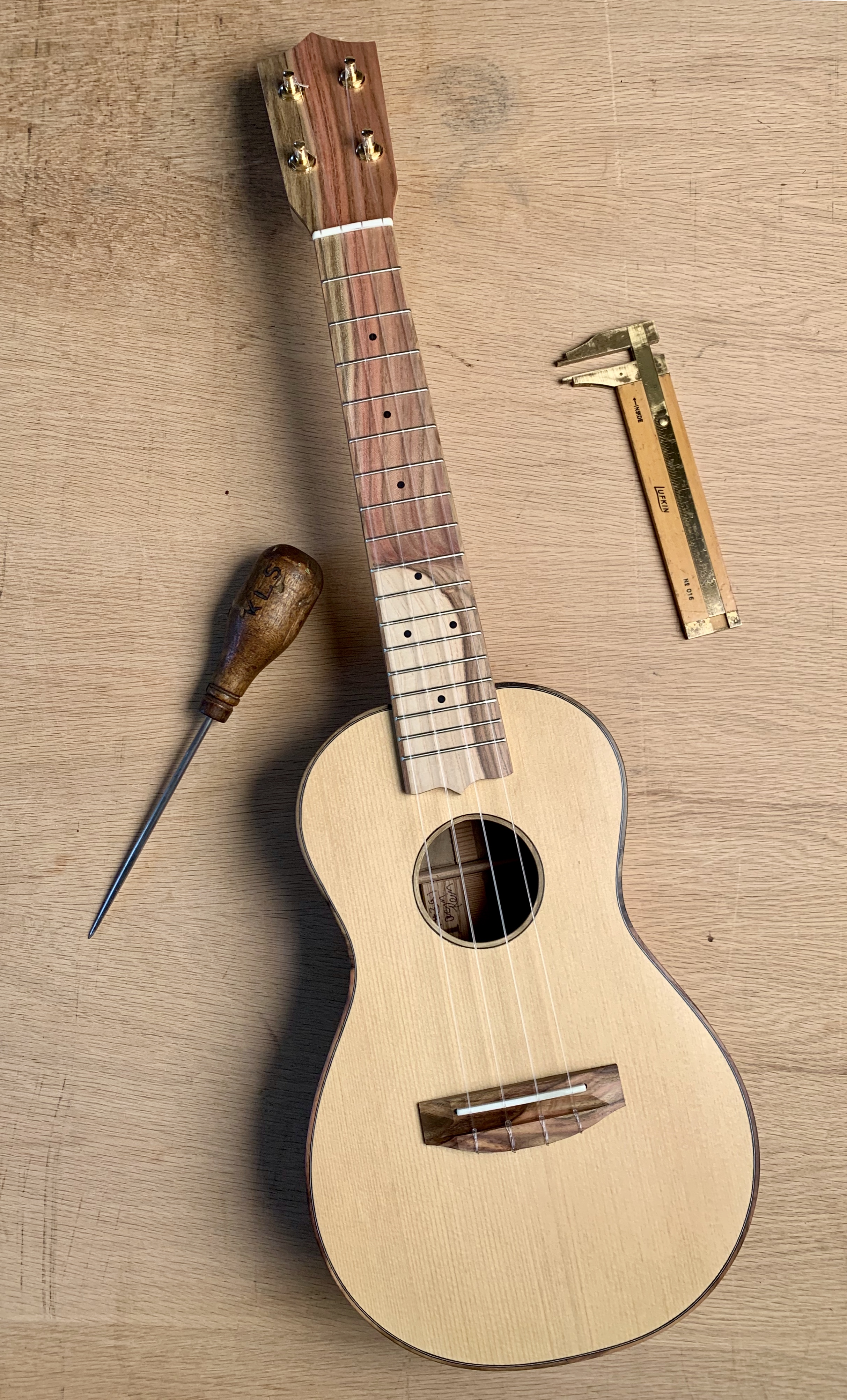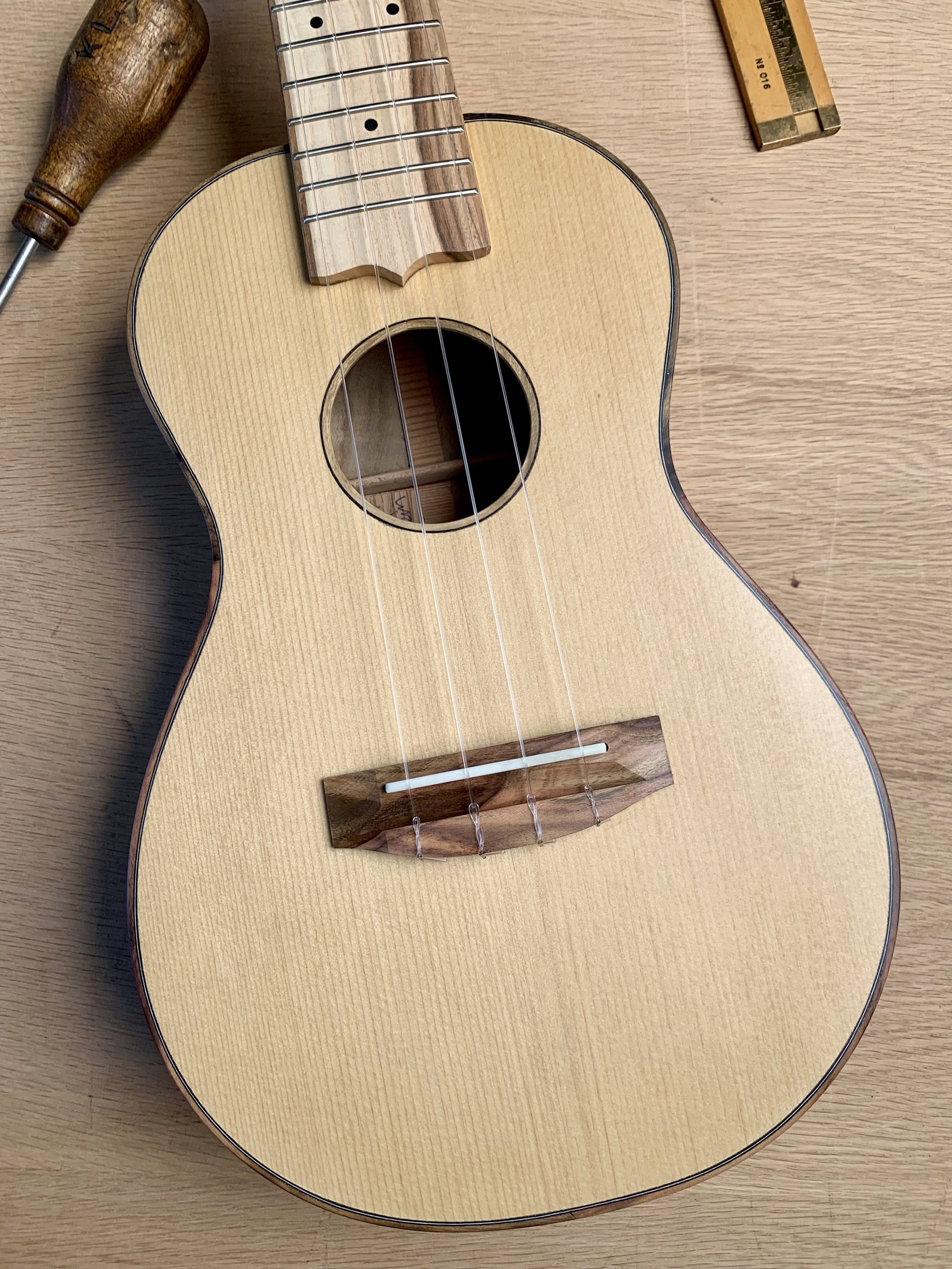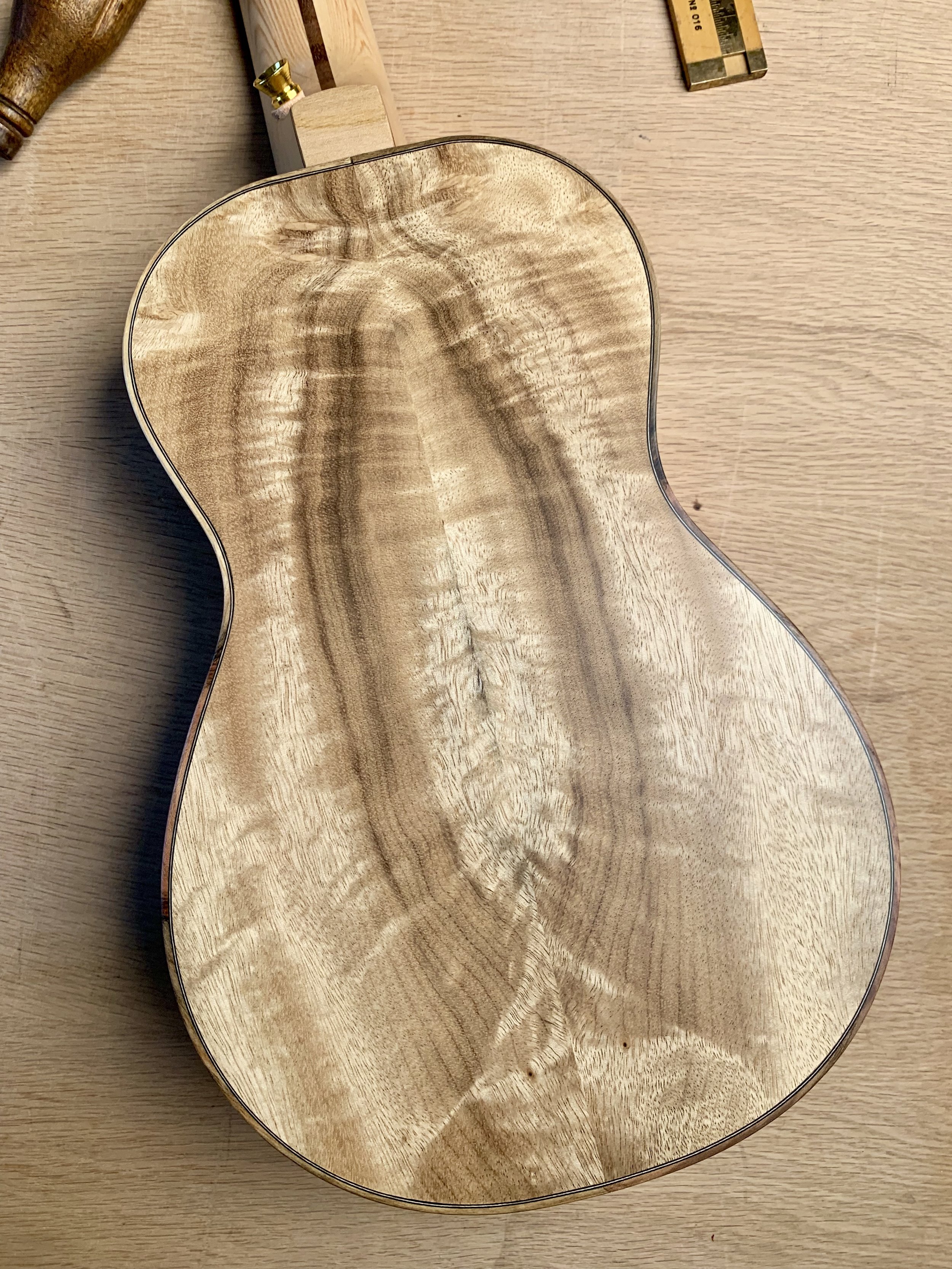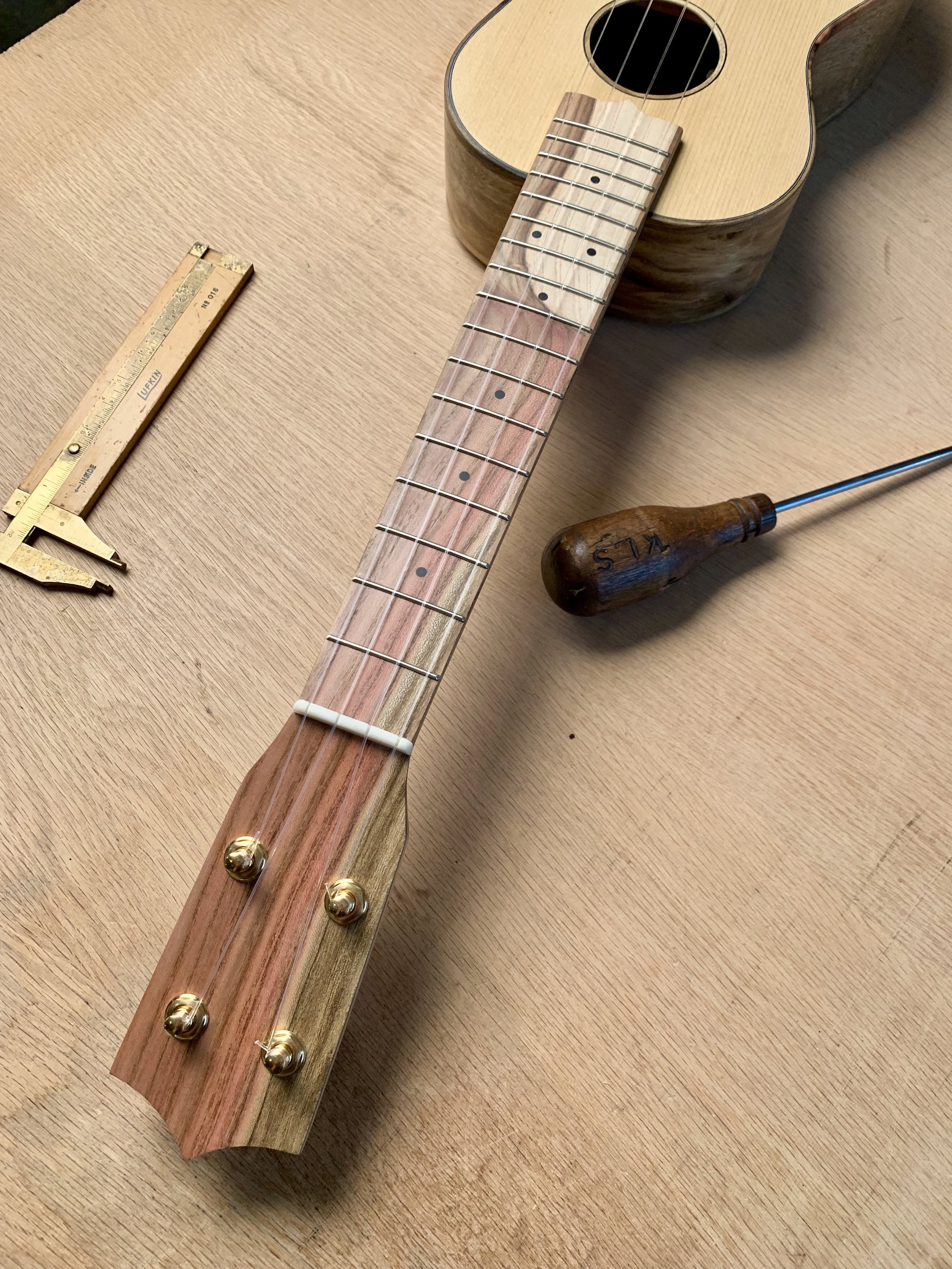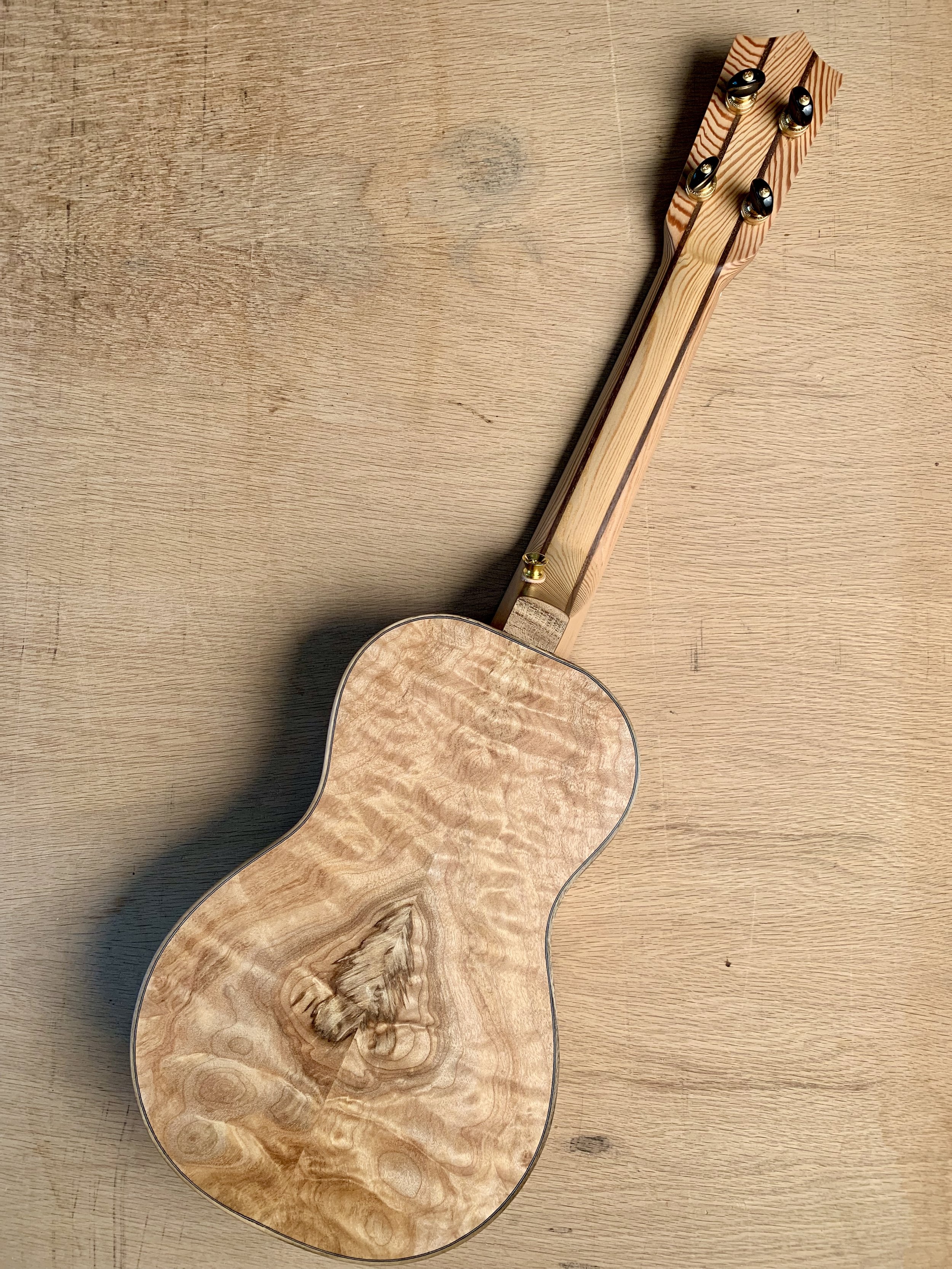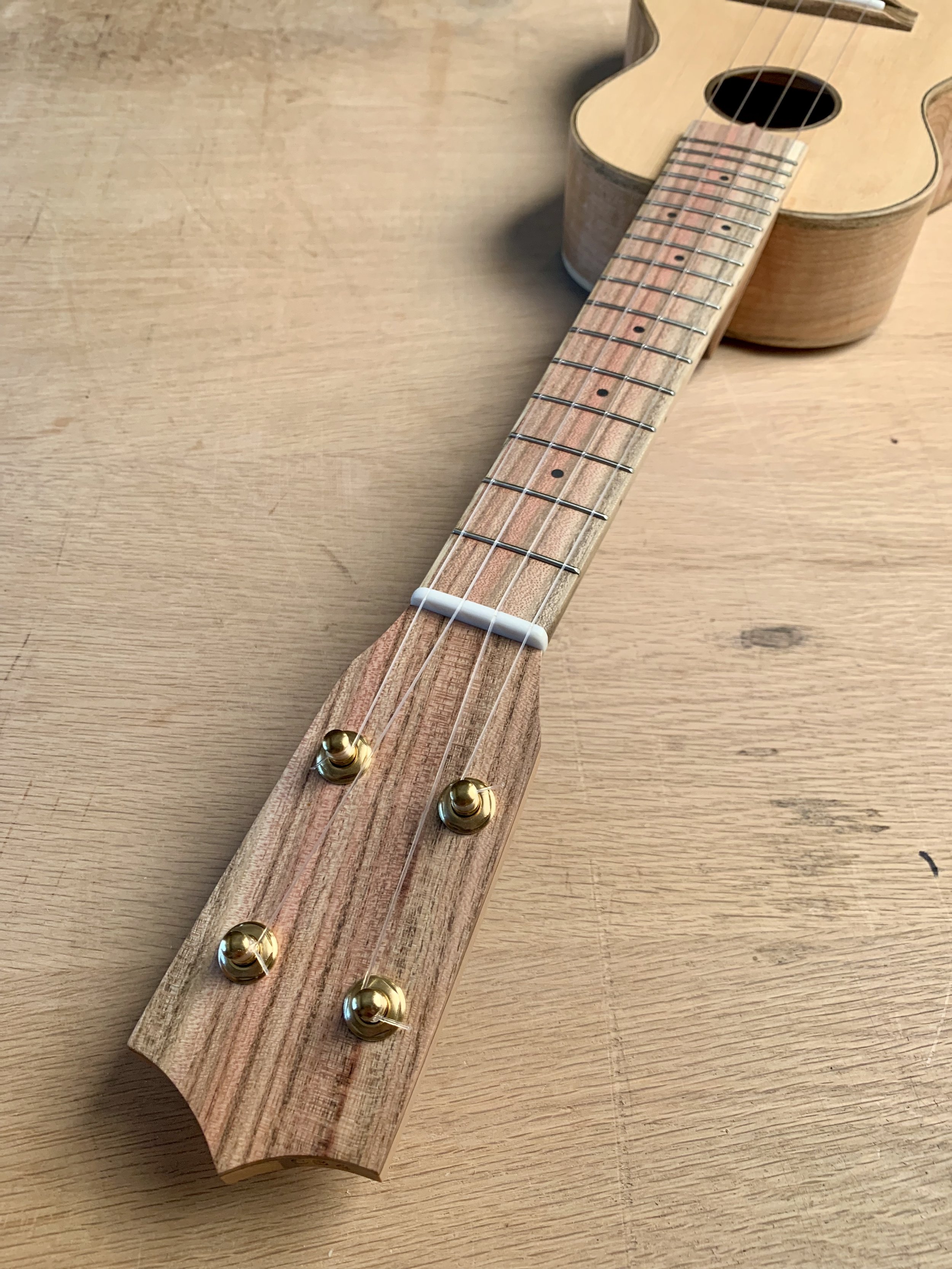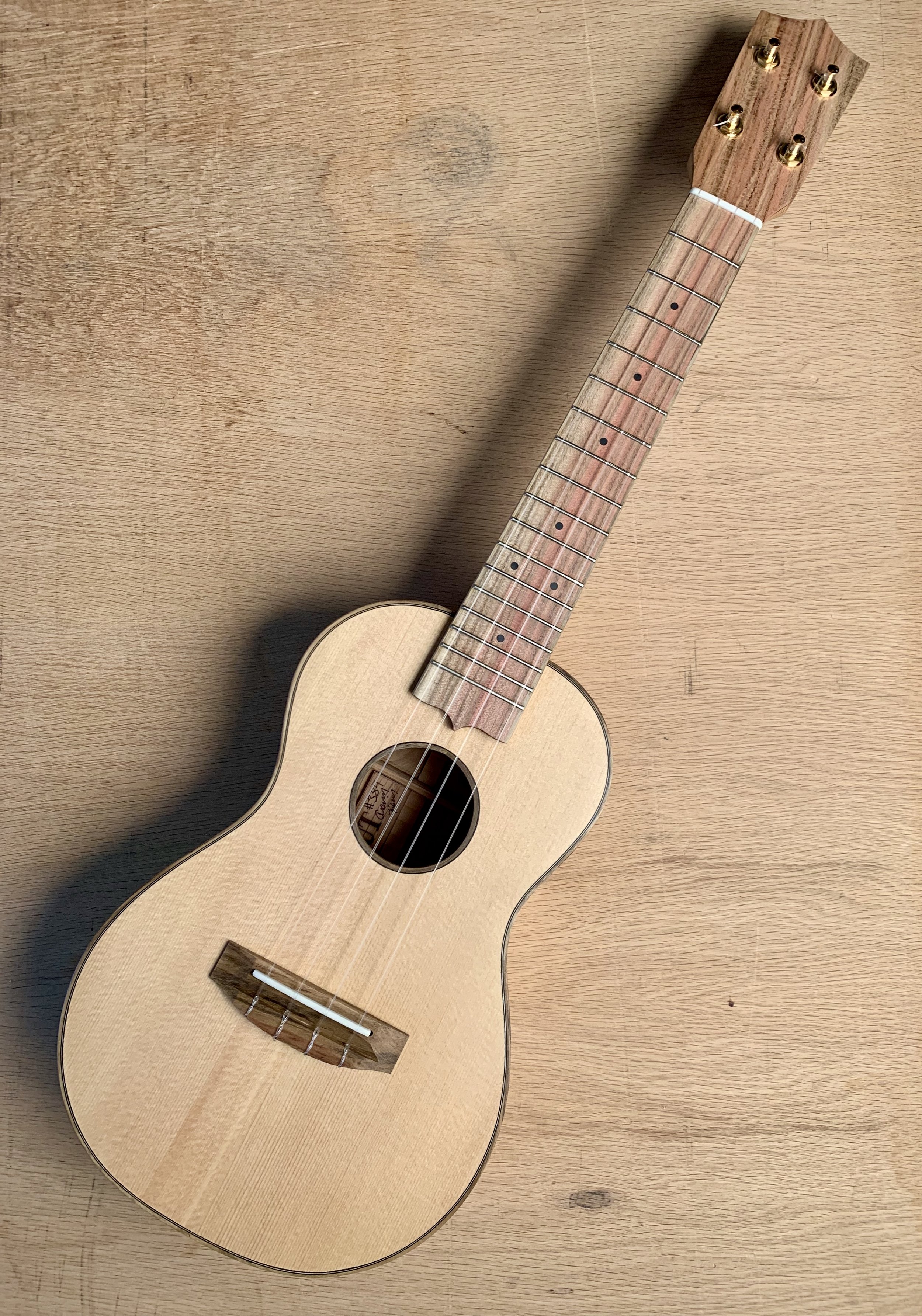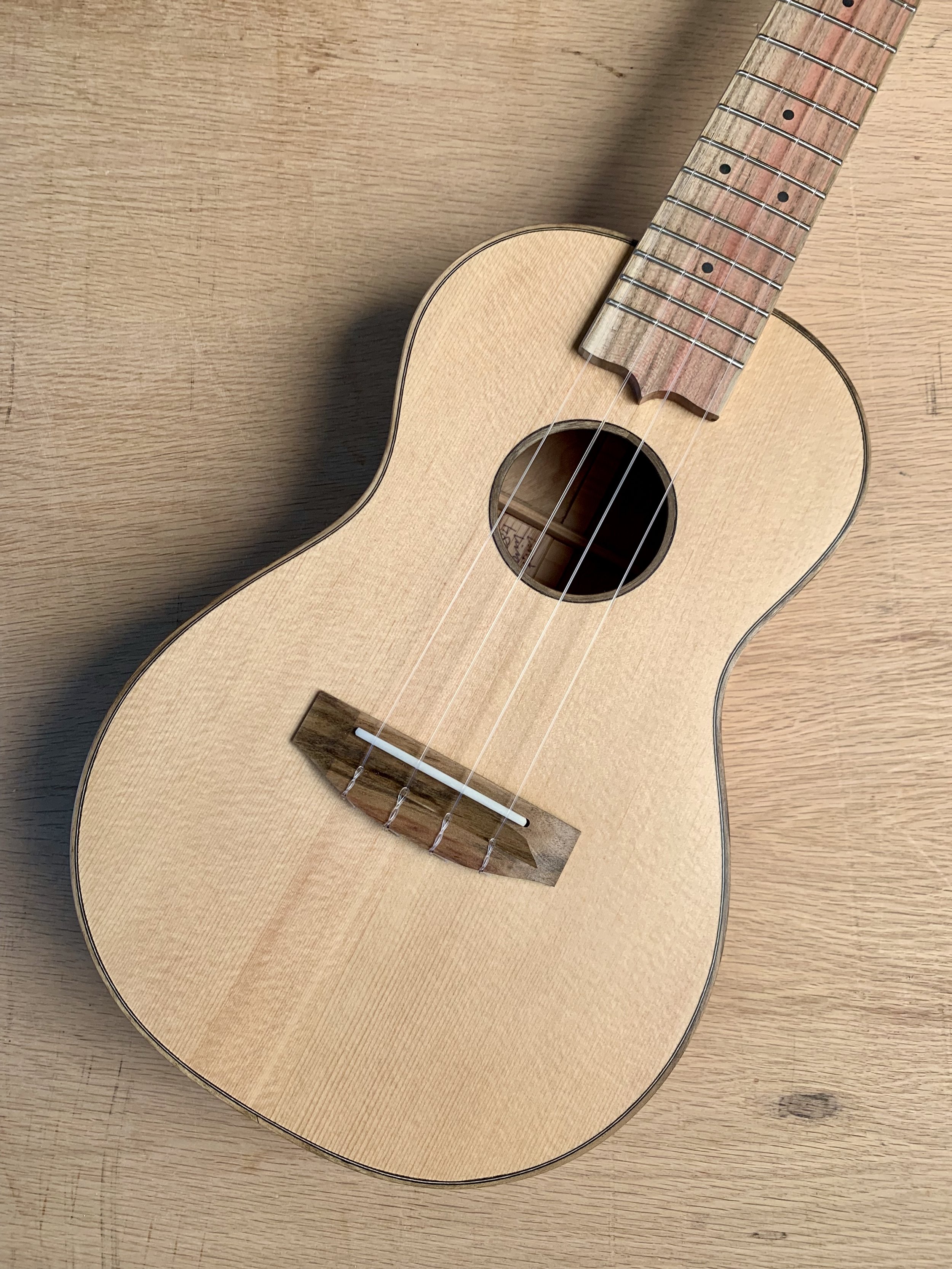
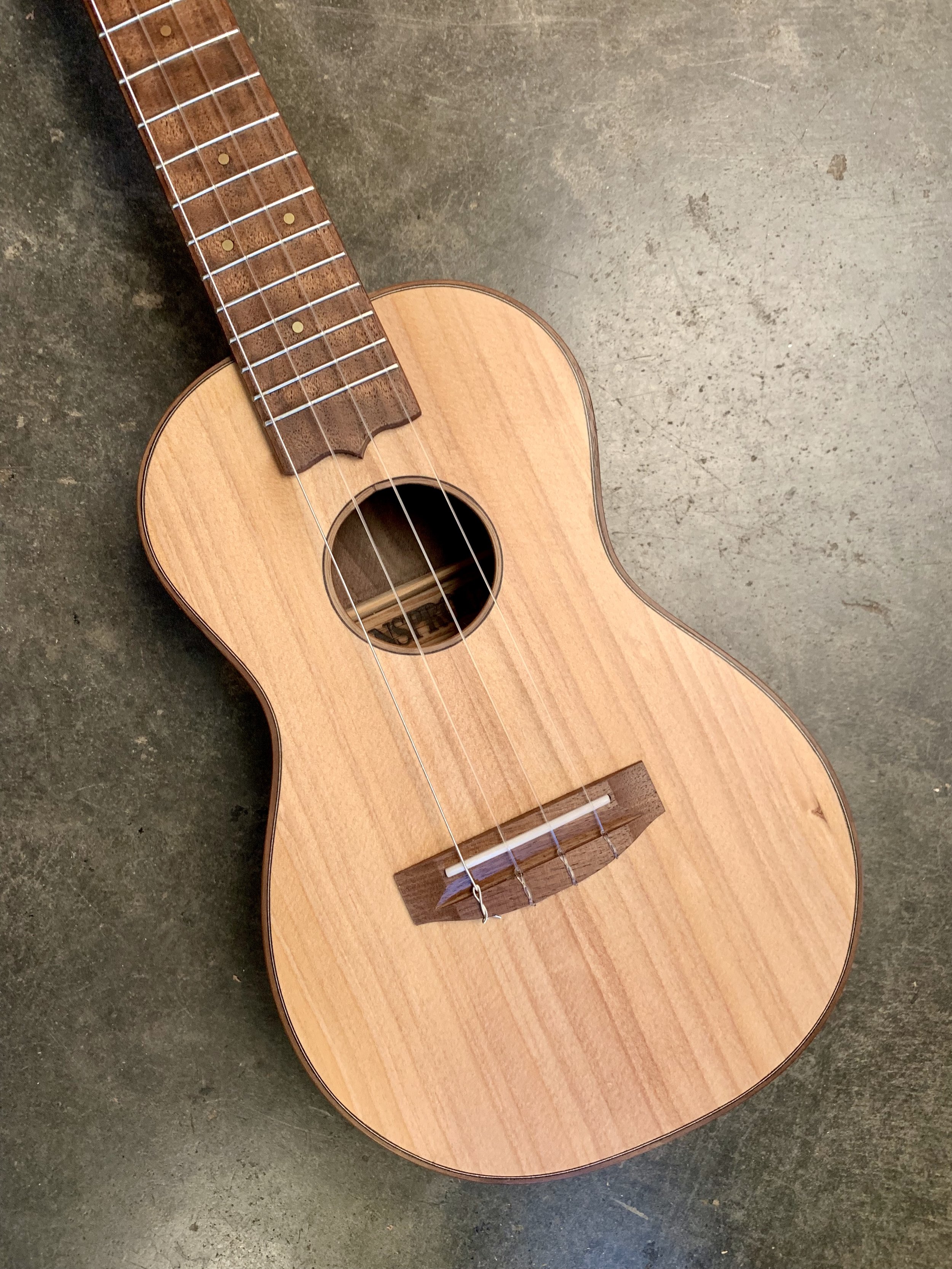
#388- Spruce and Walnut Alto Ukulele

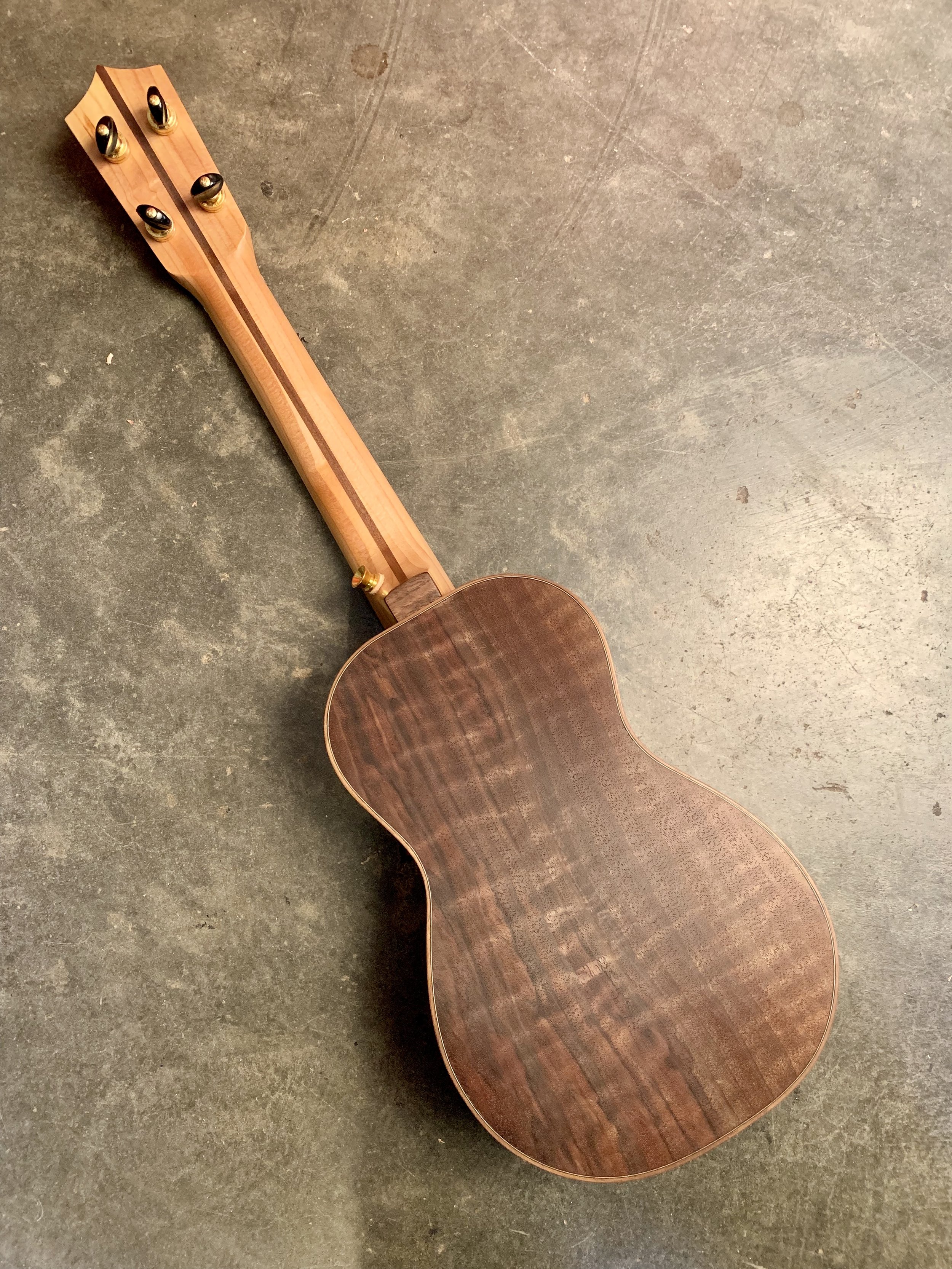
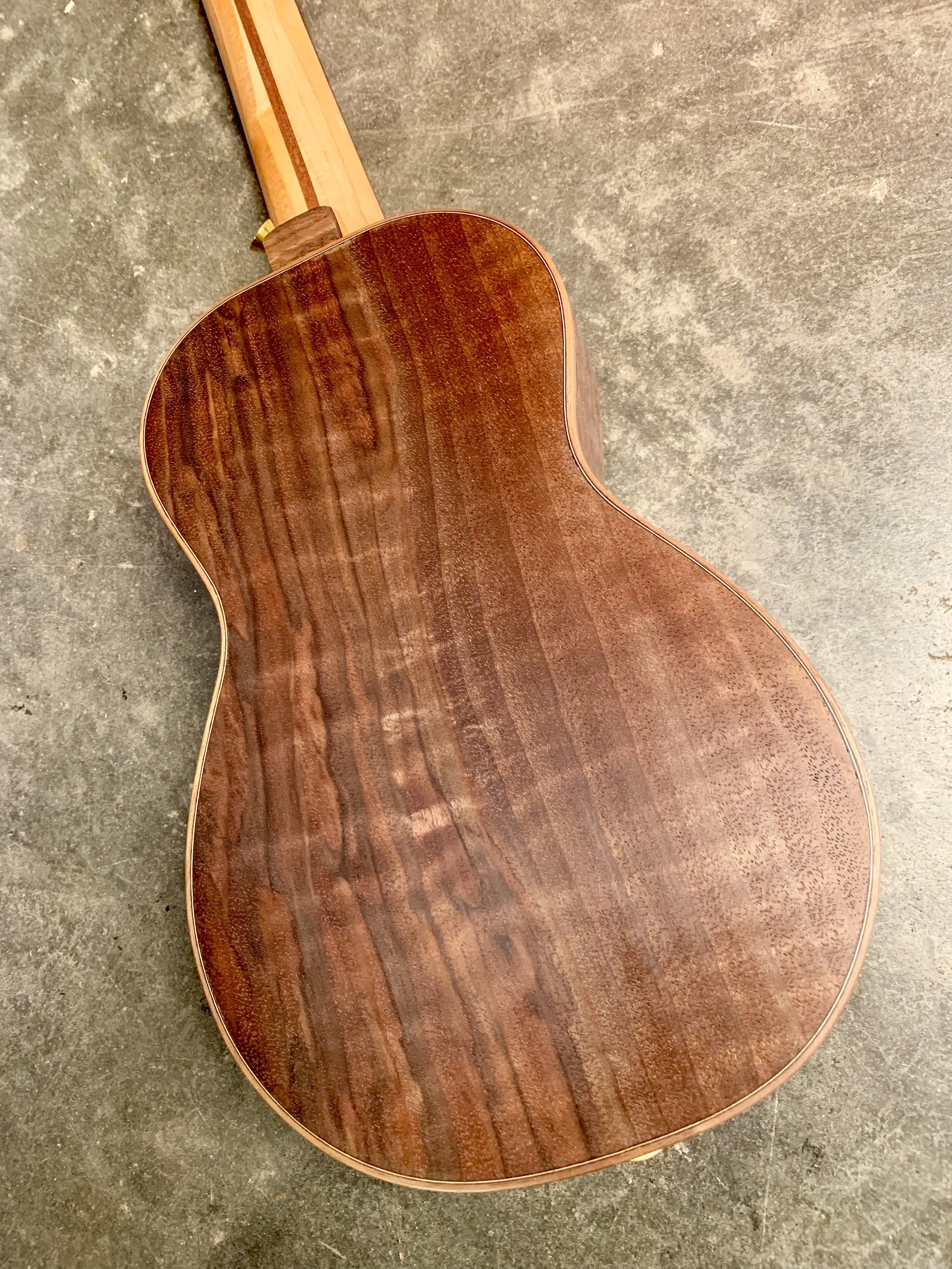
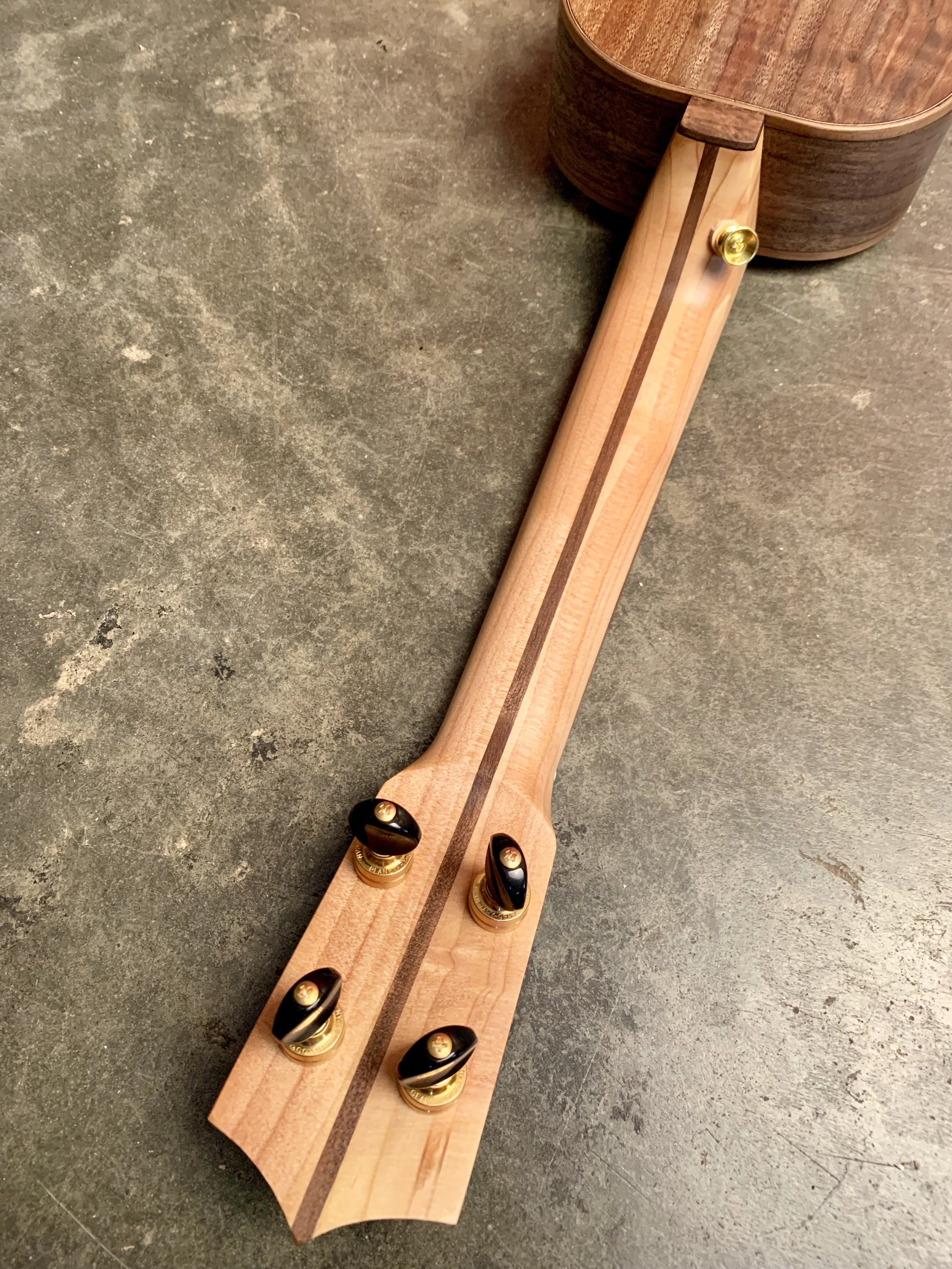
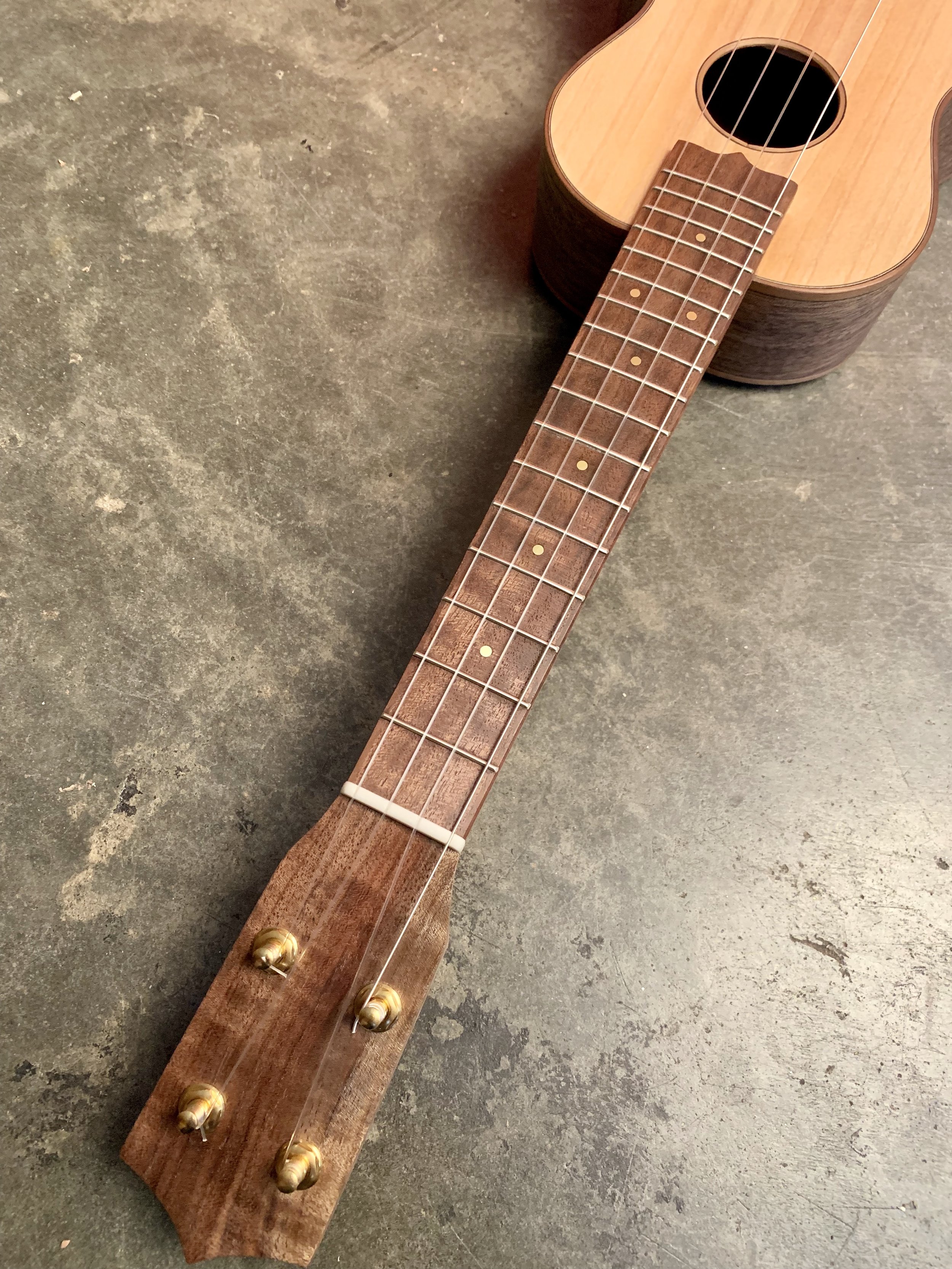
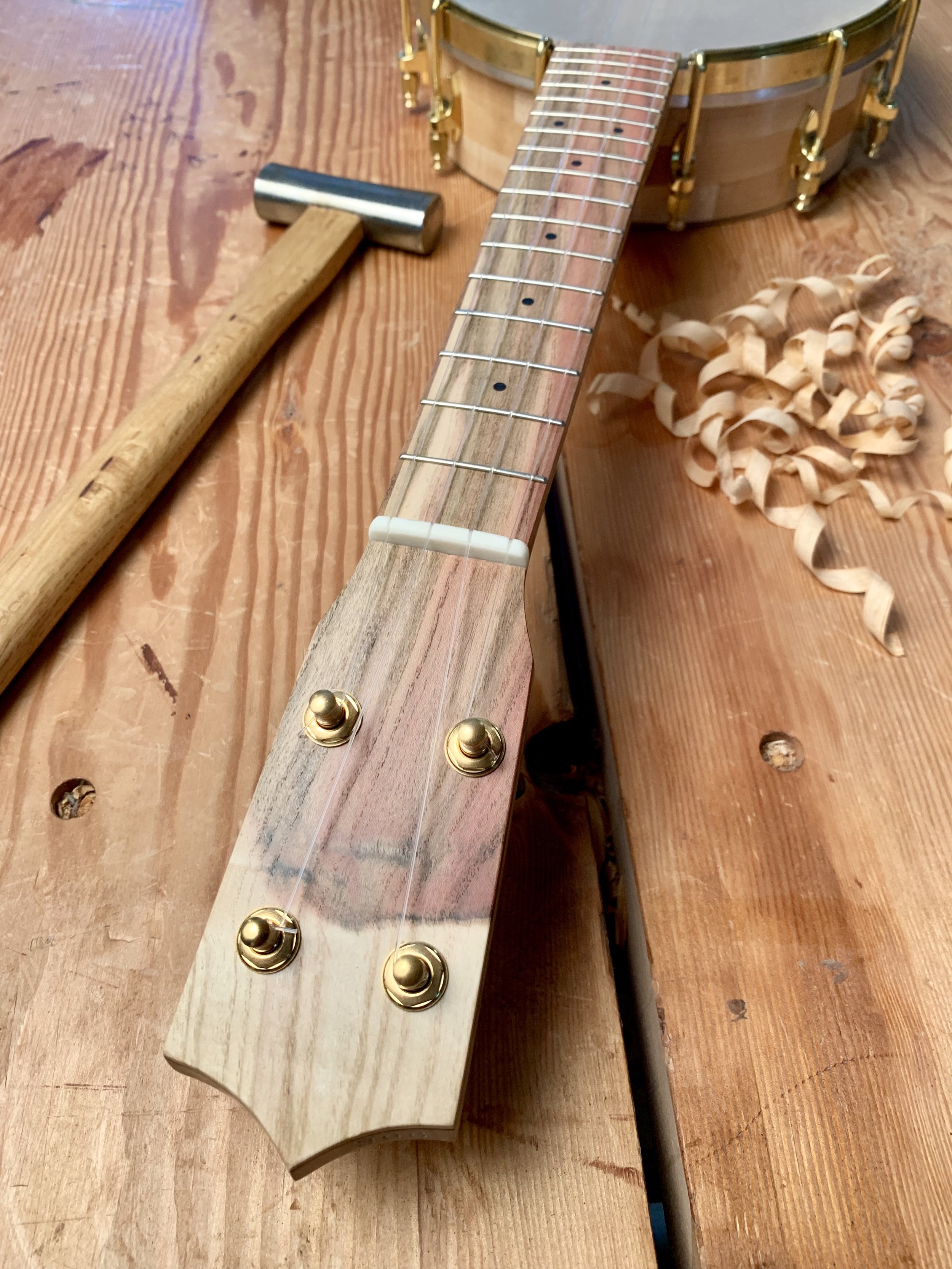
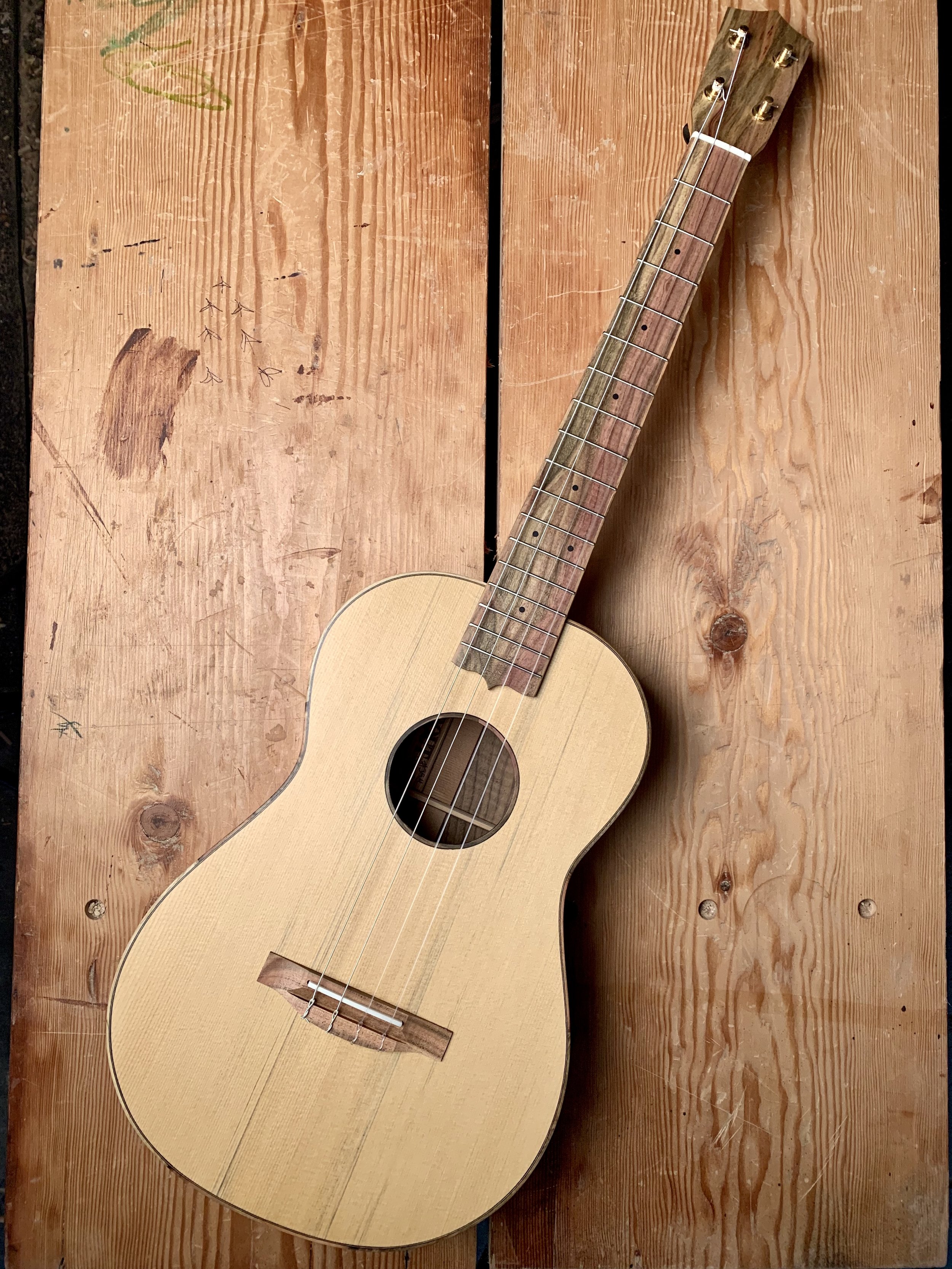
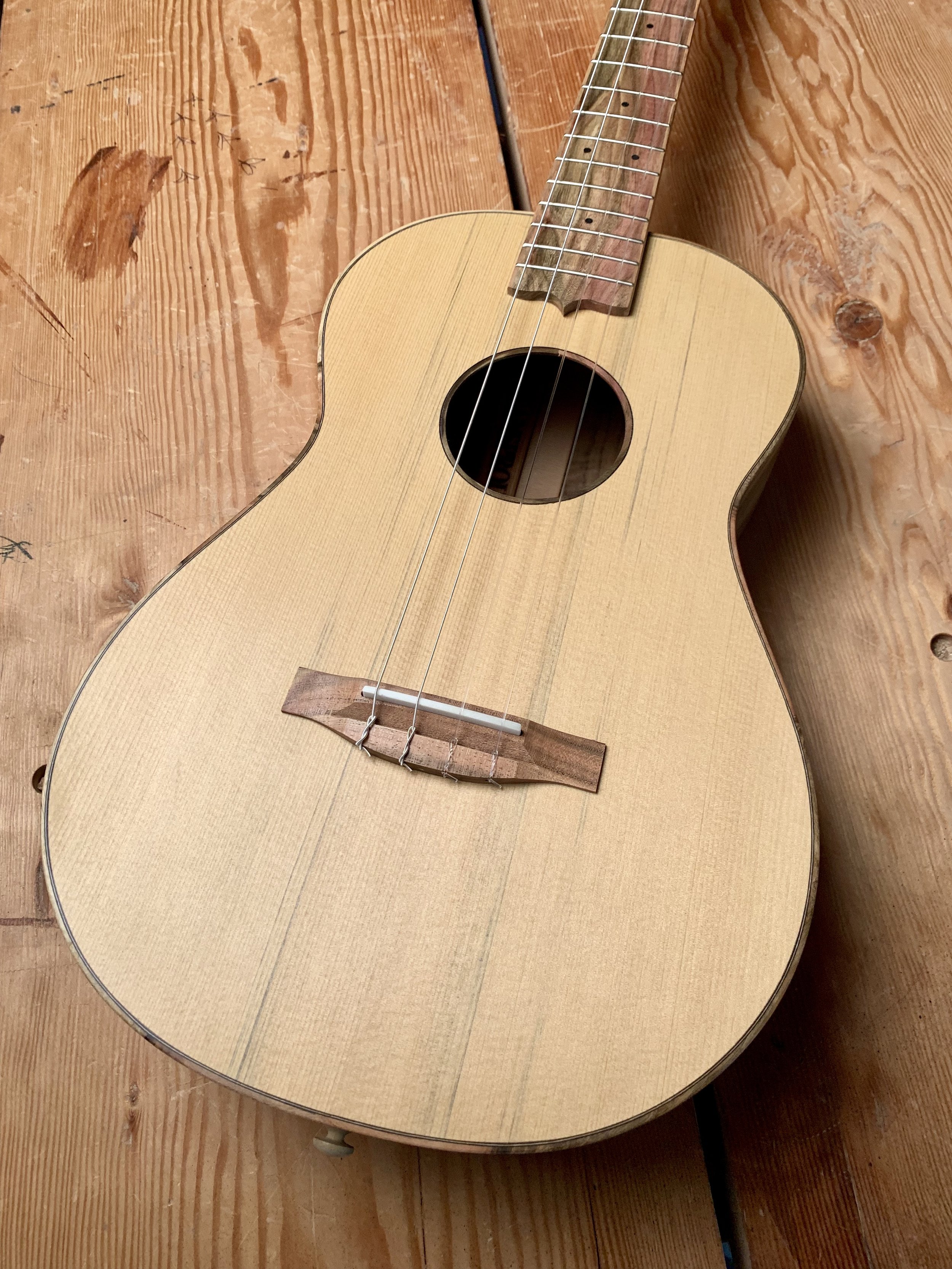
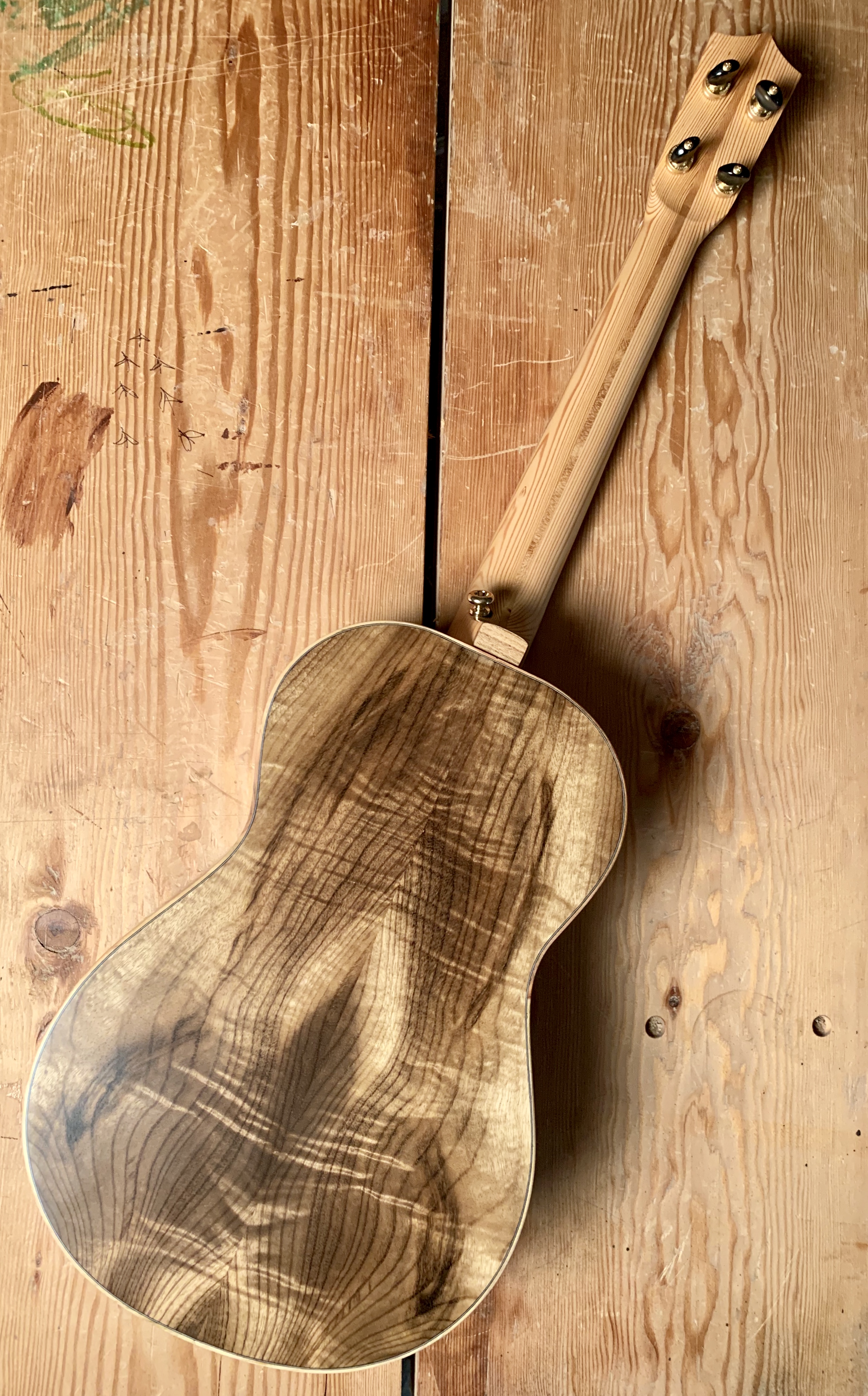
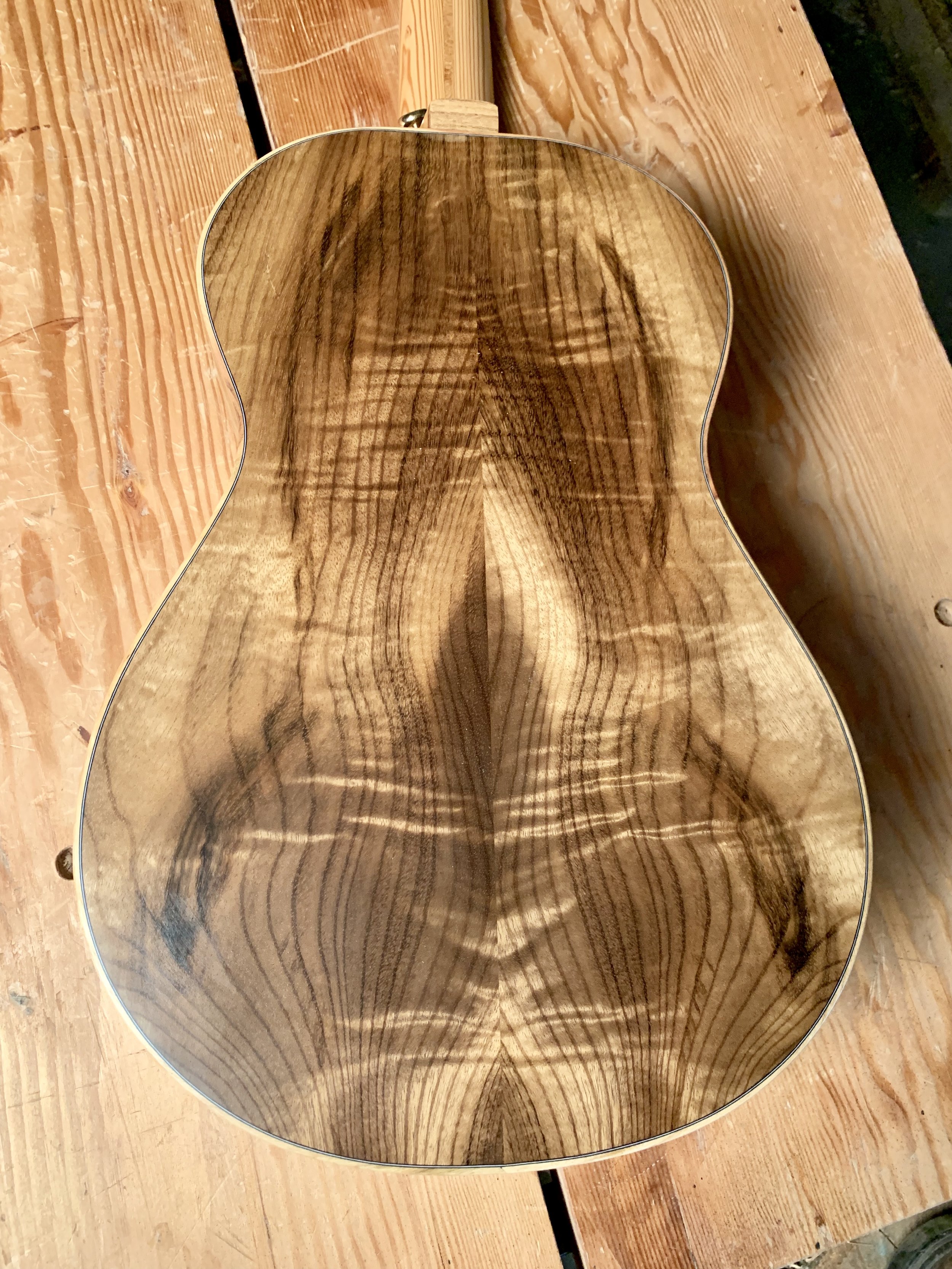
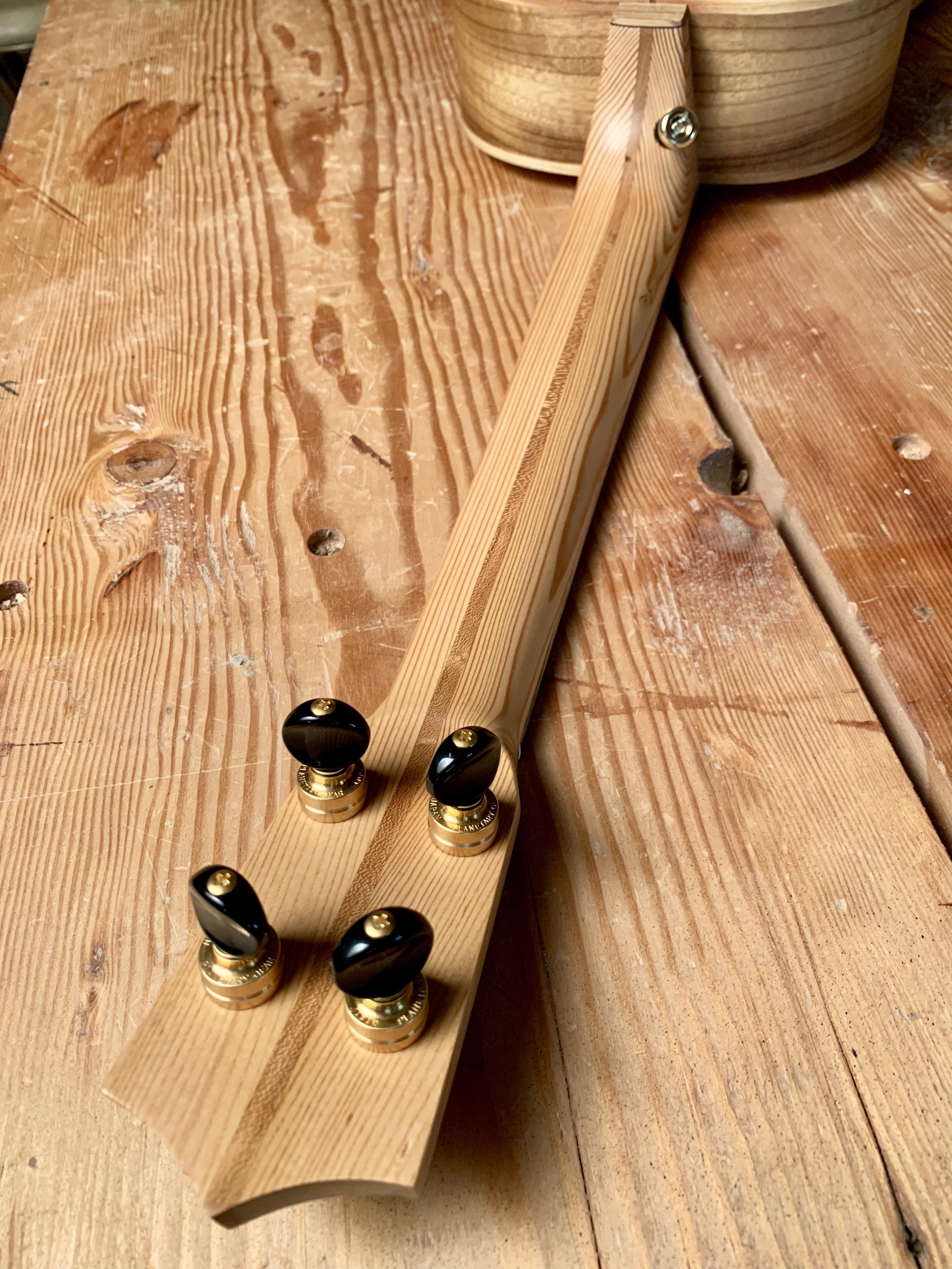
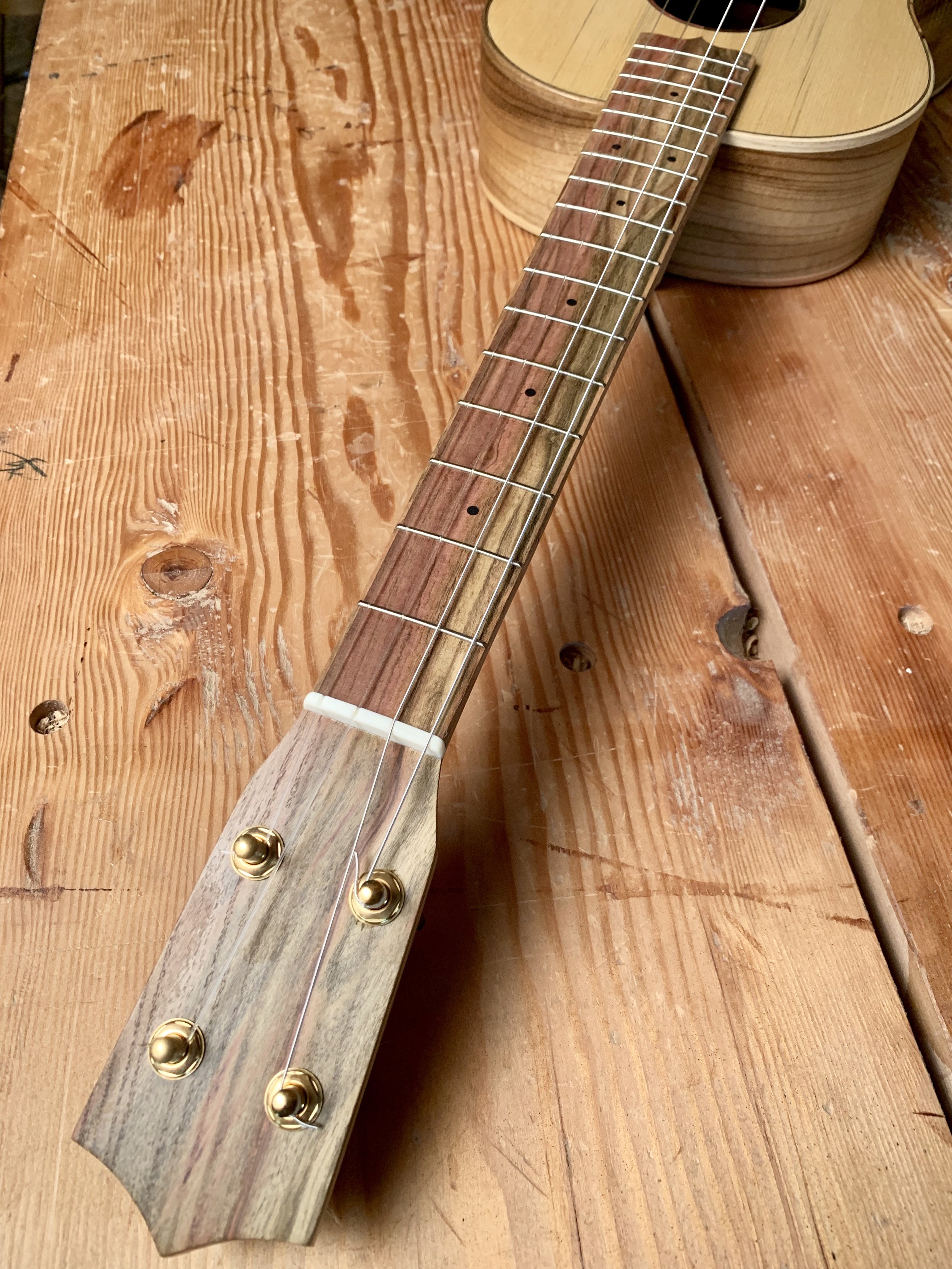
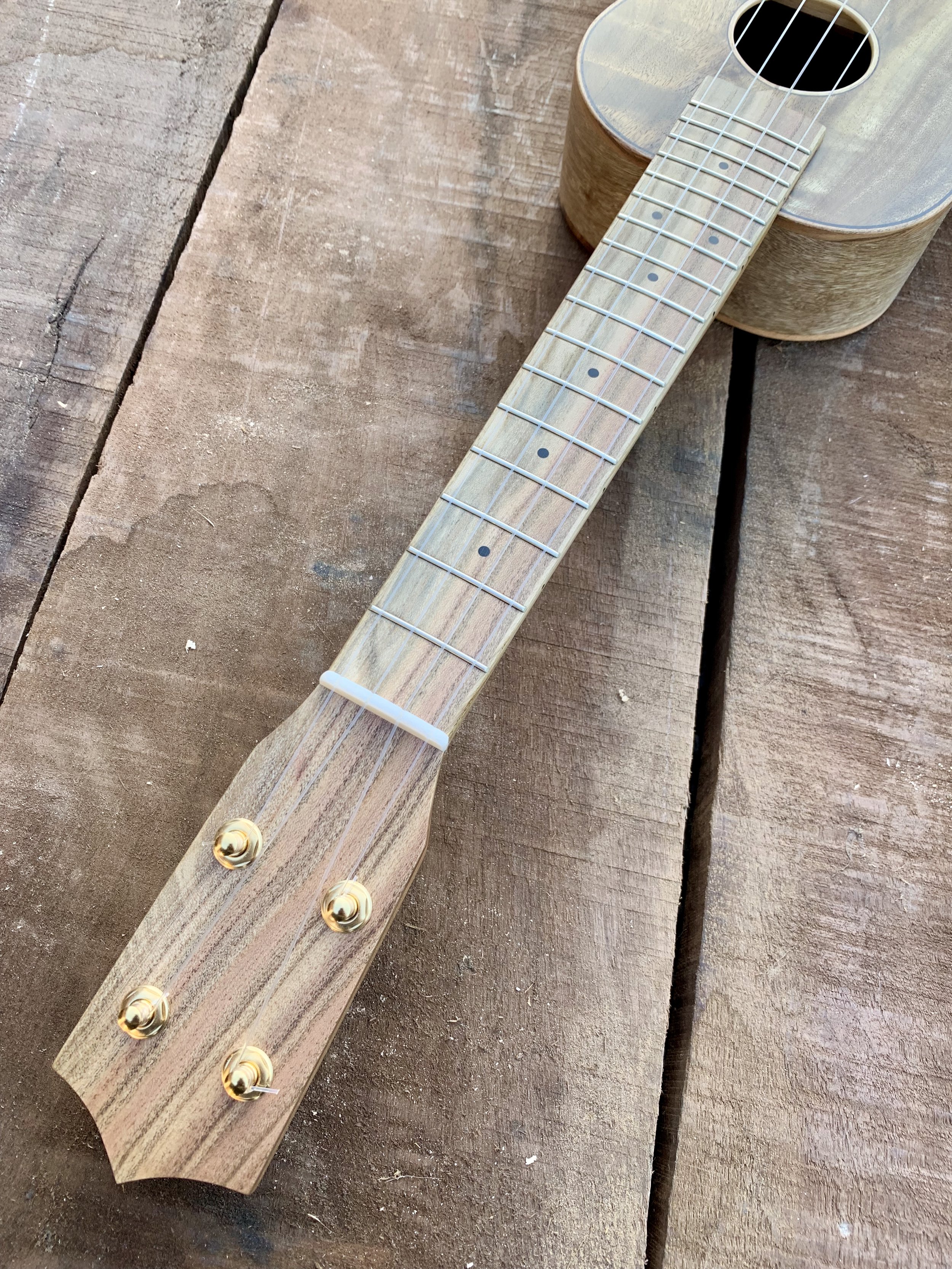
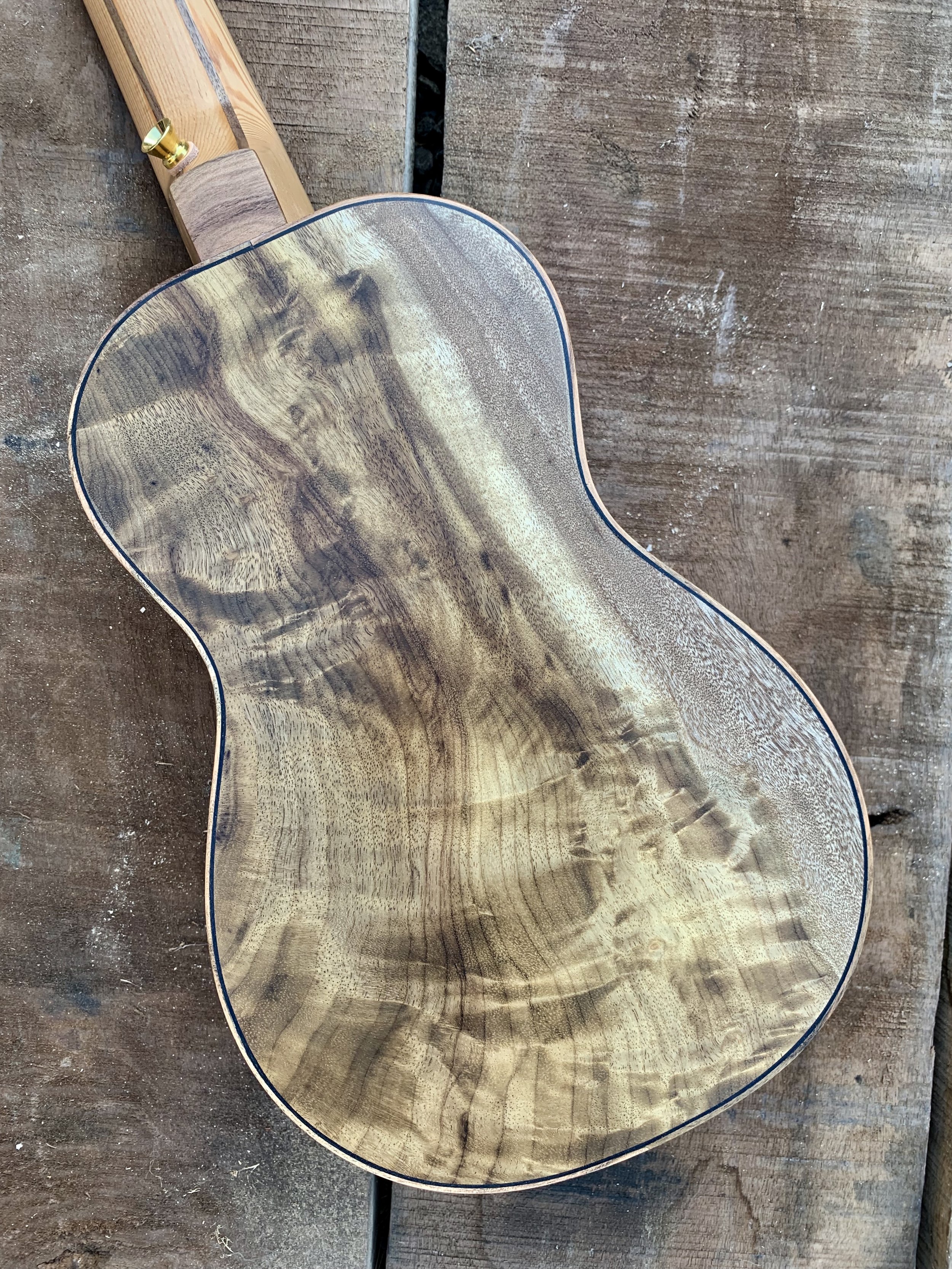
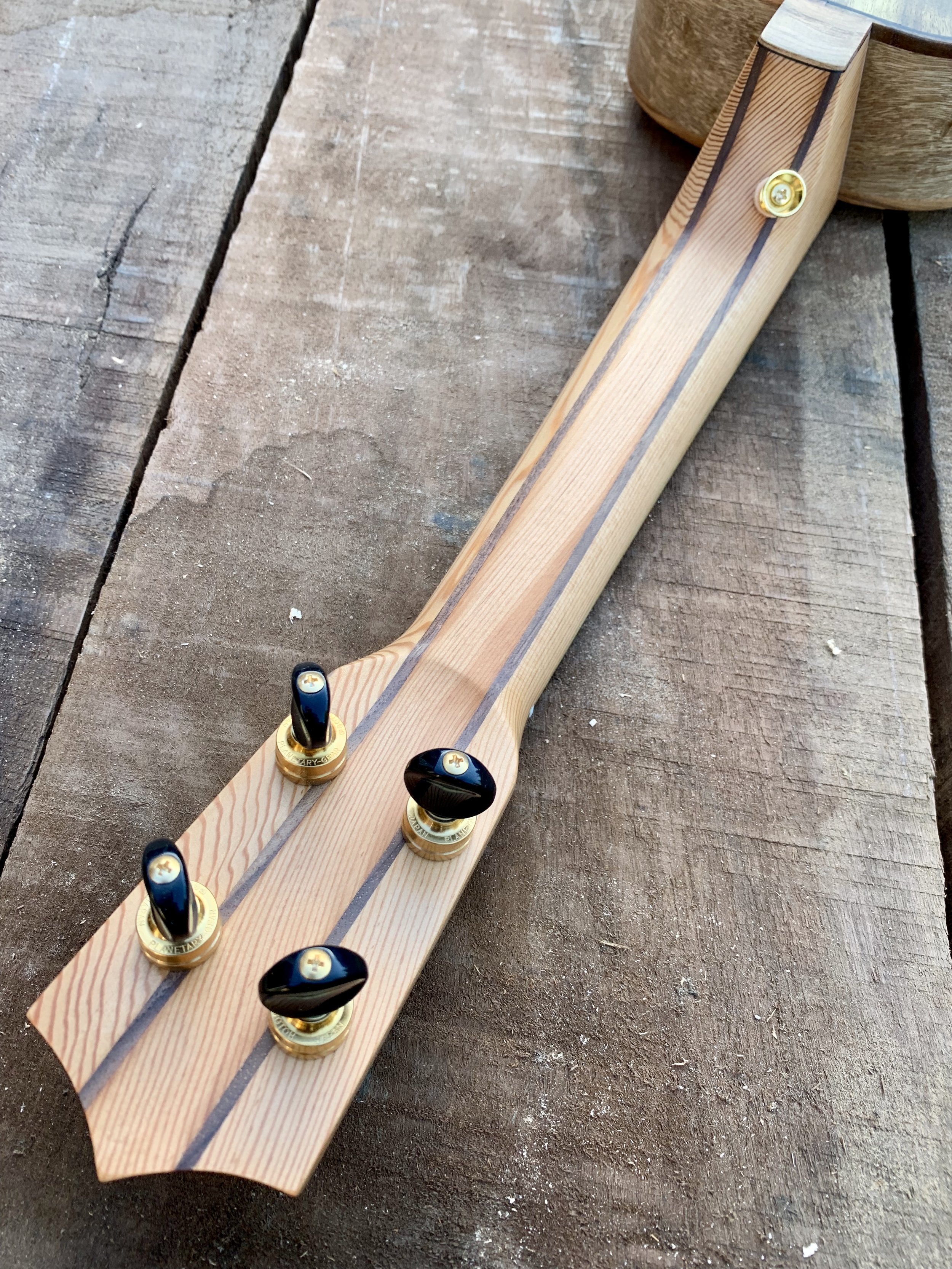
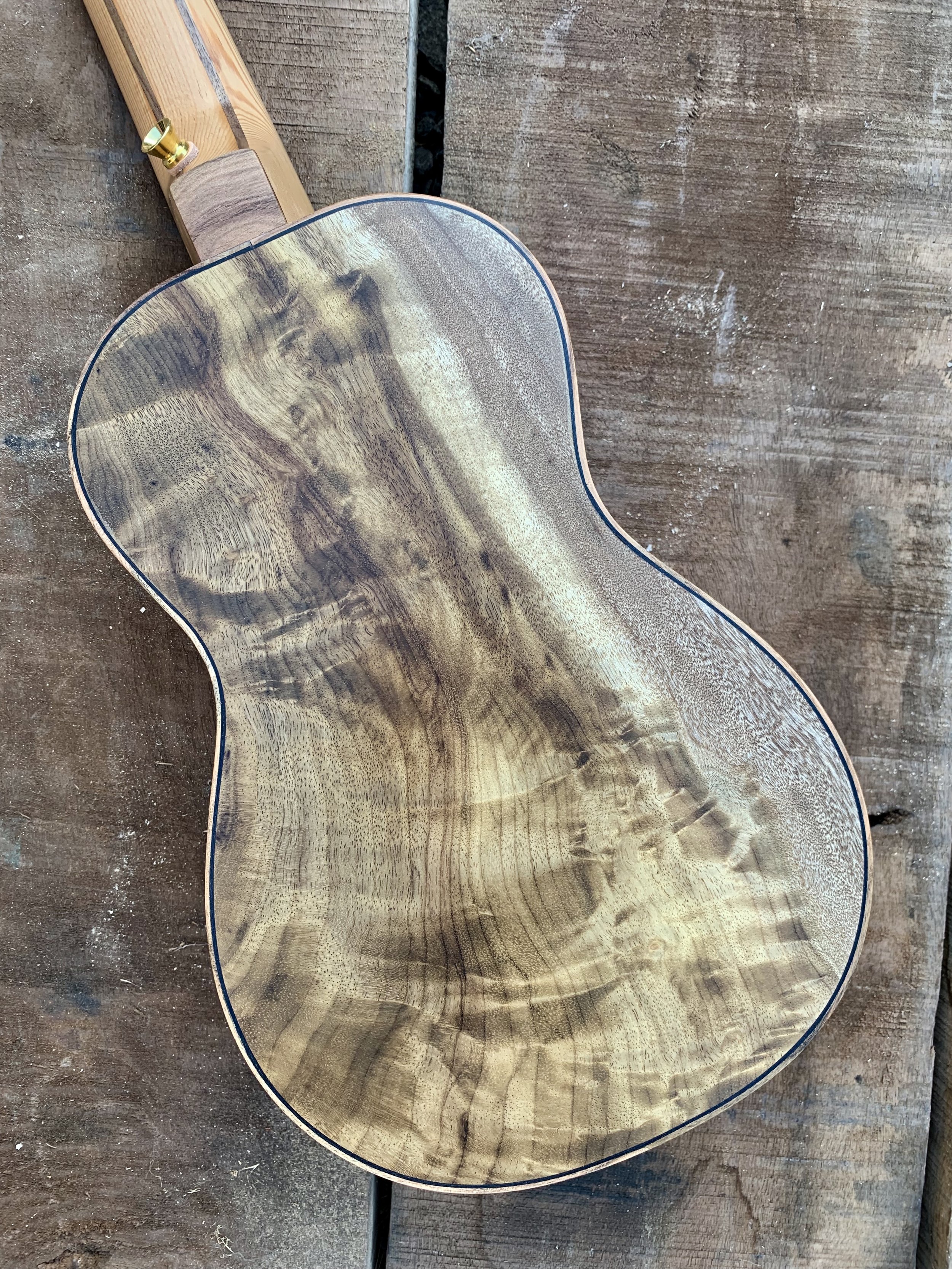
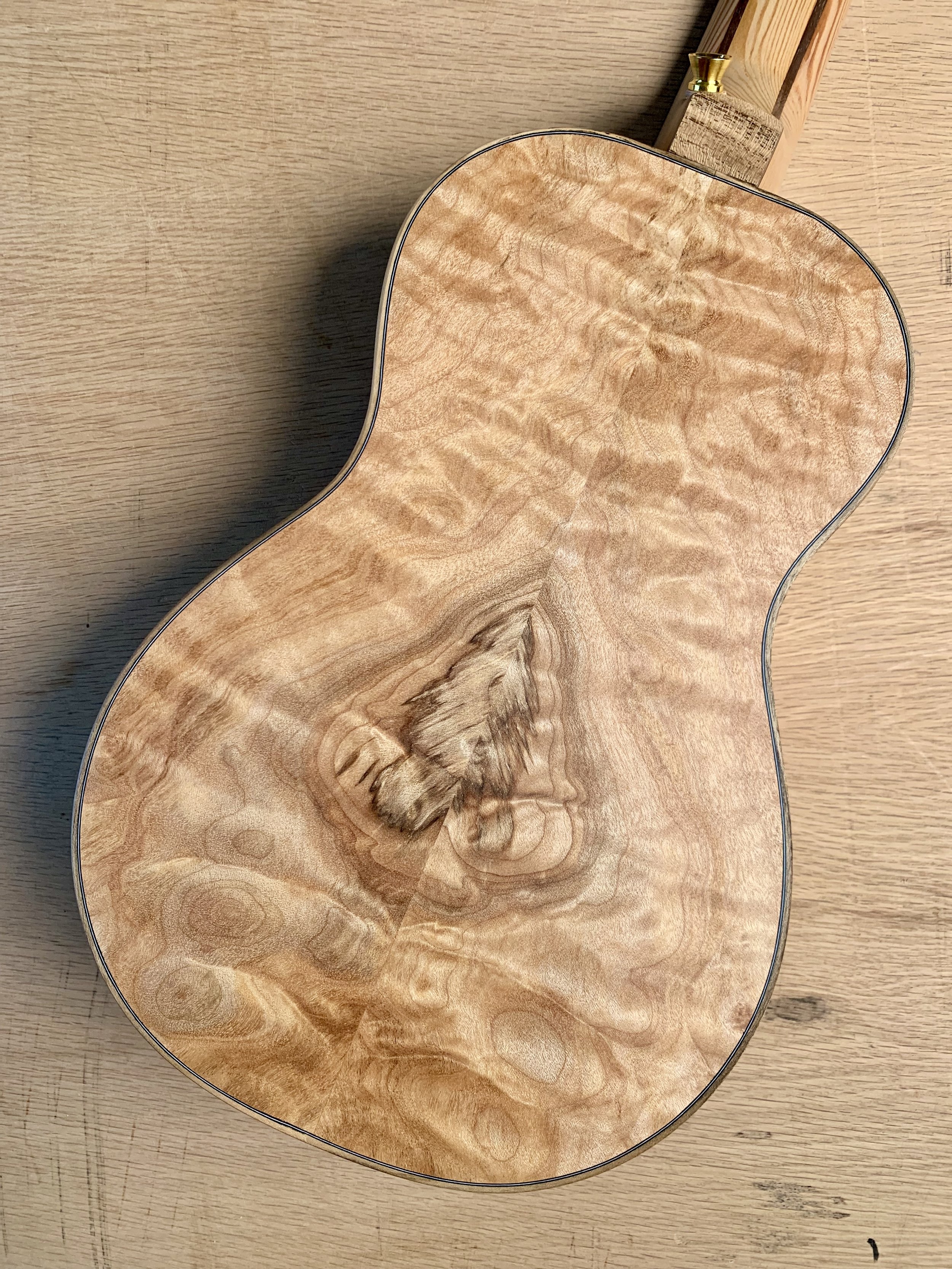
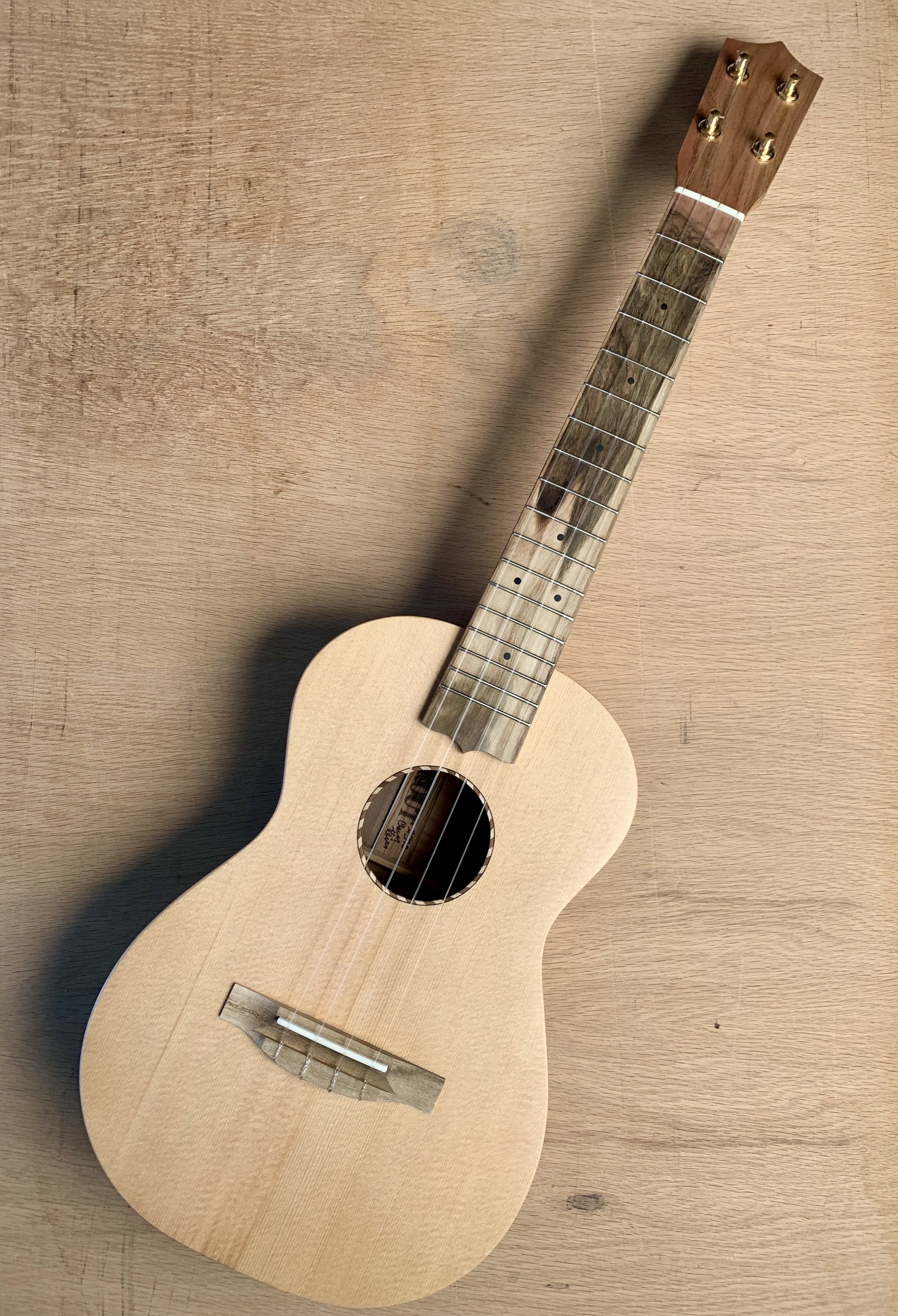
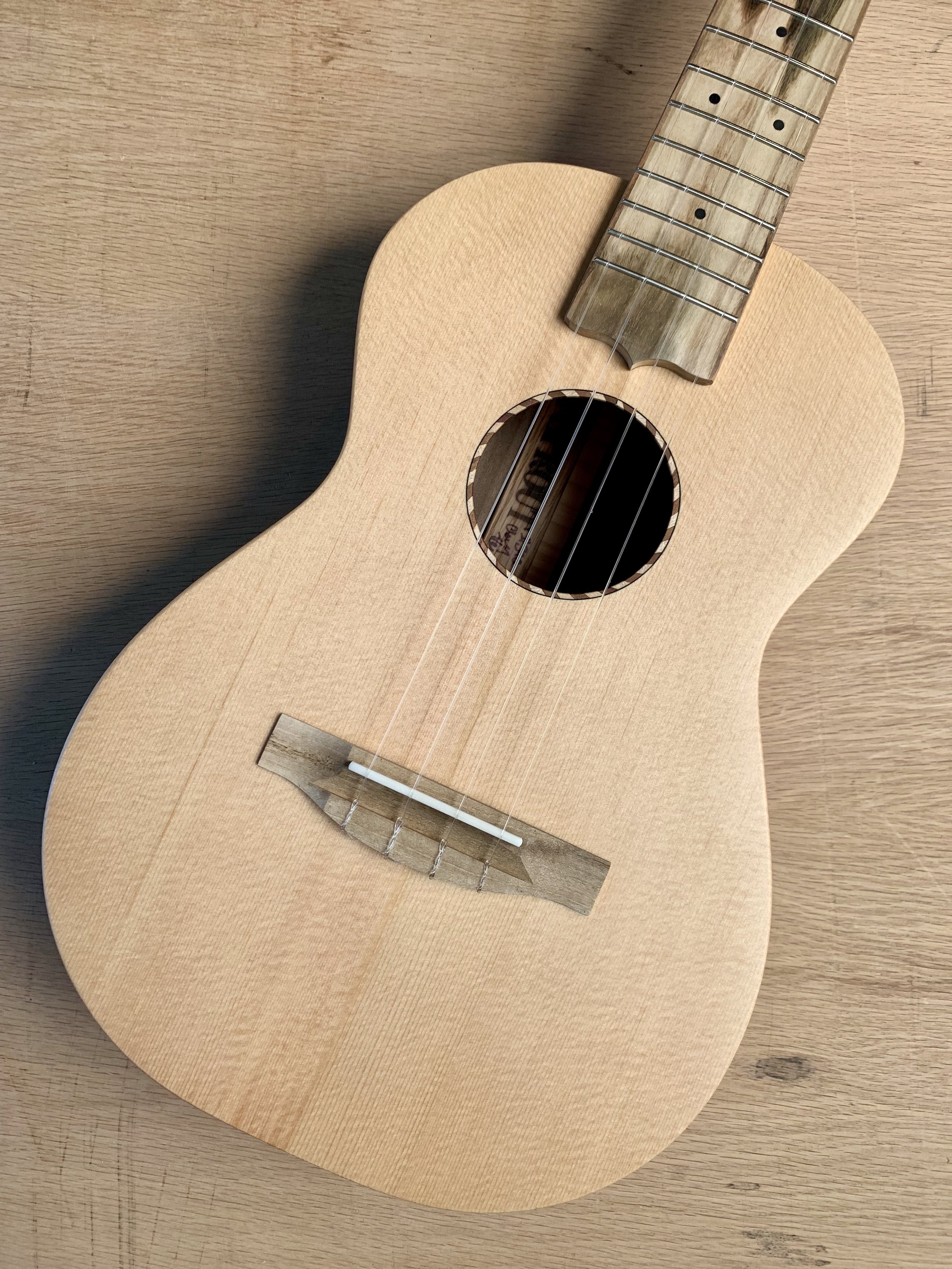
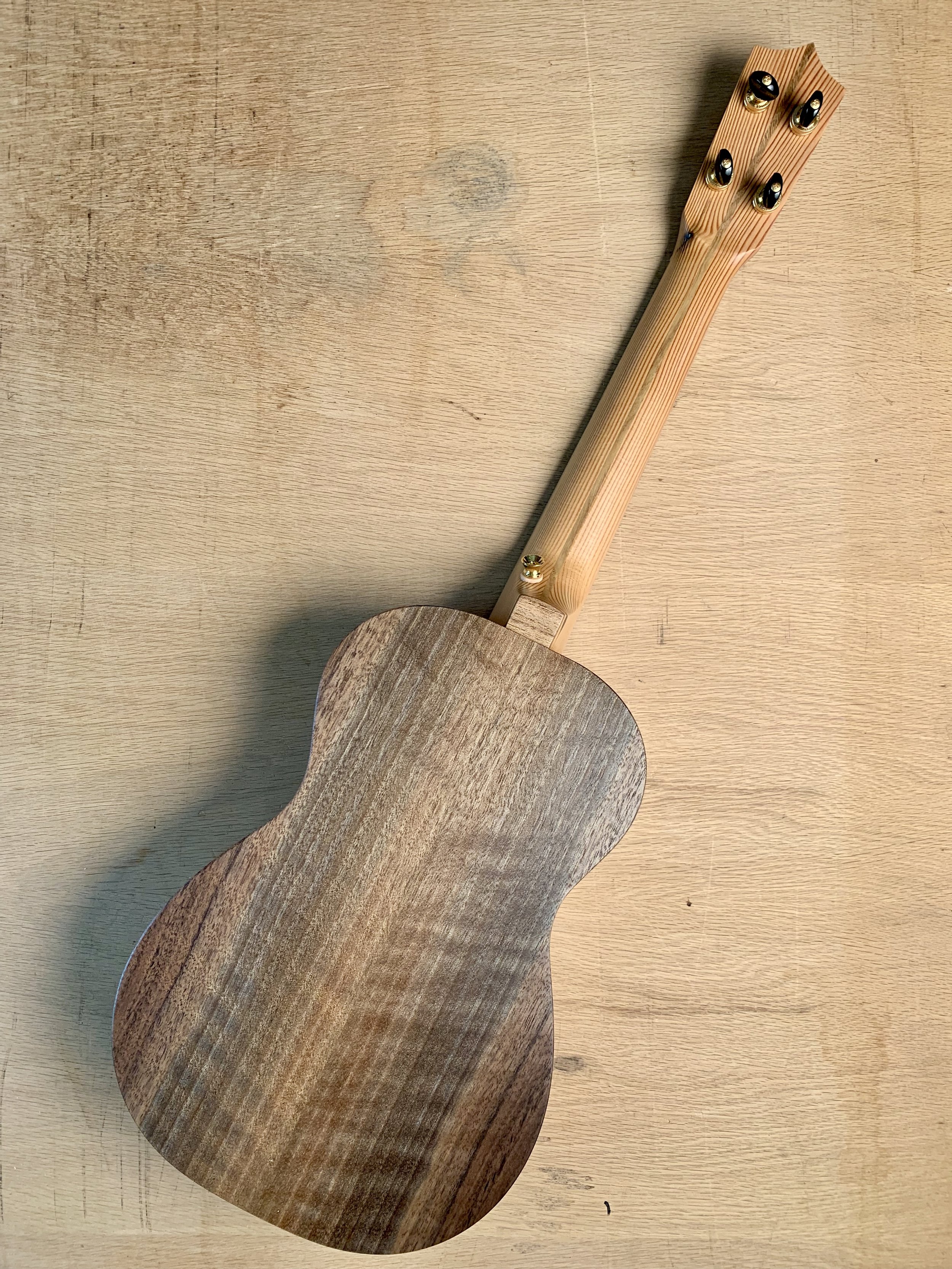
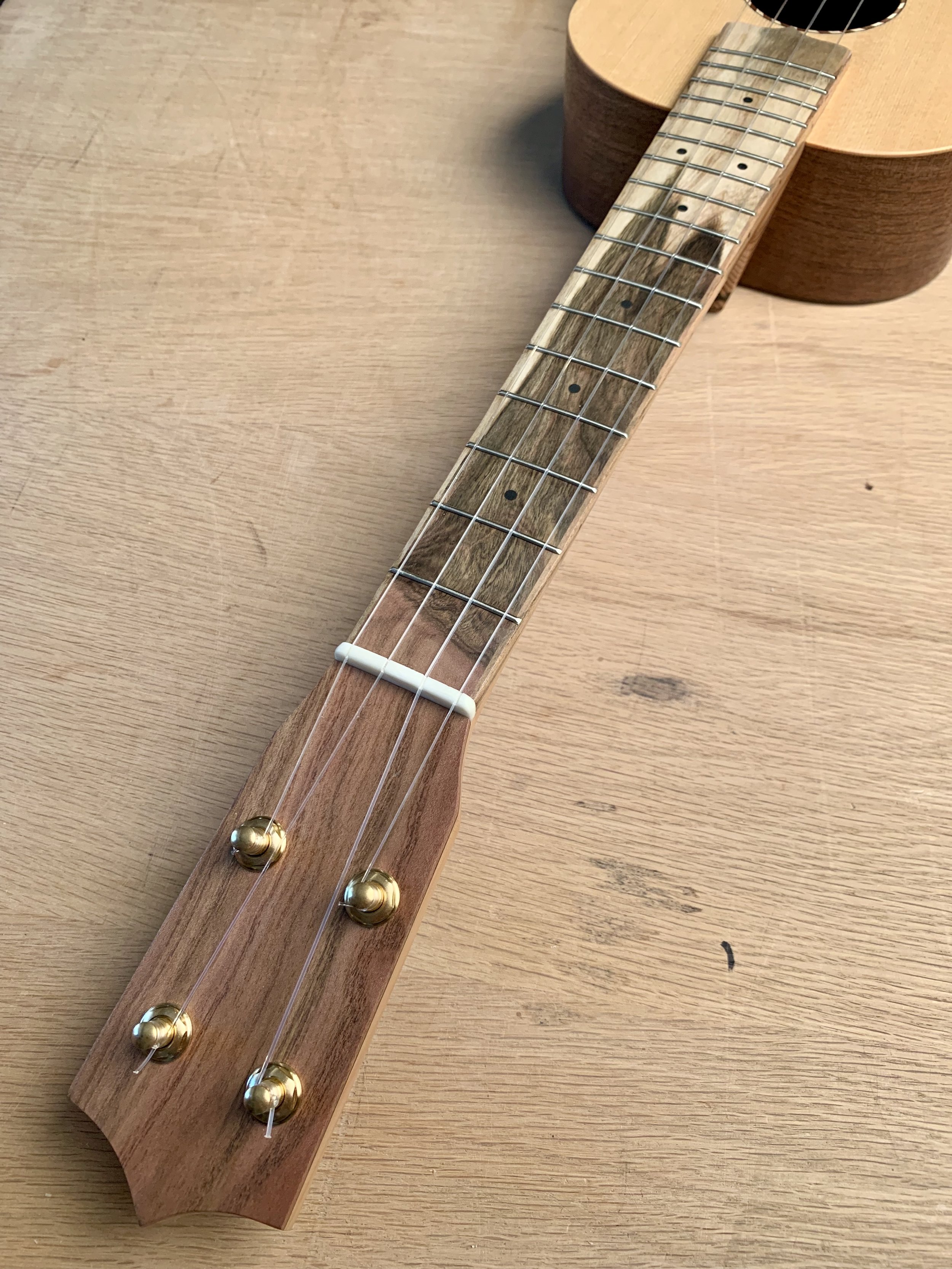
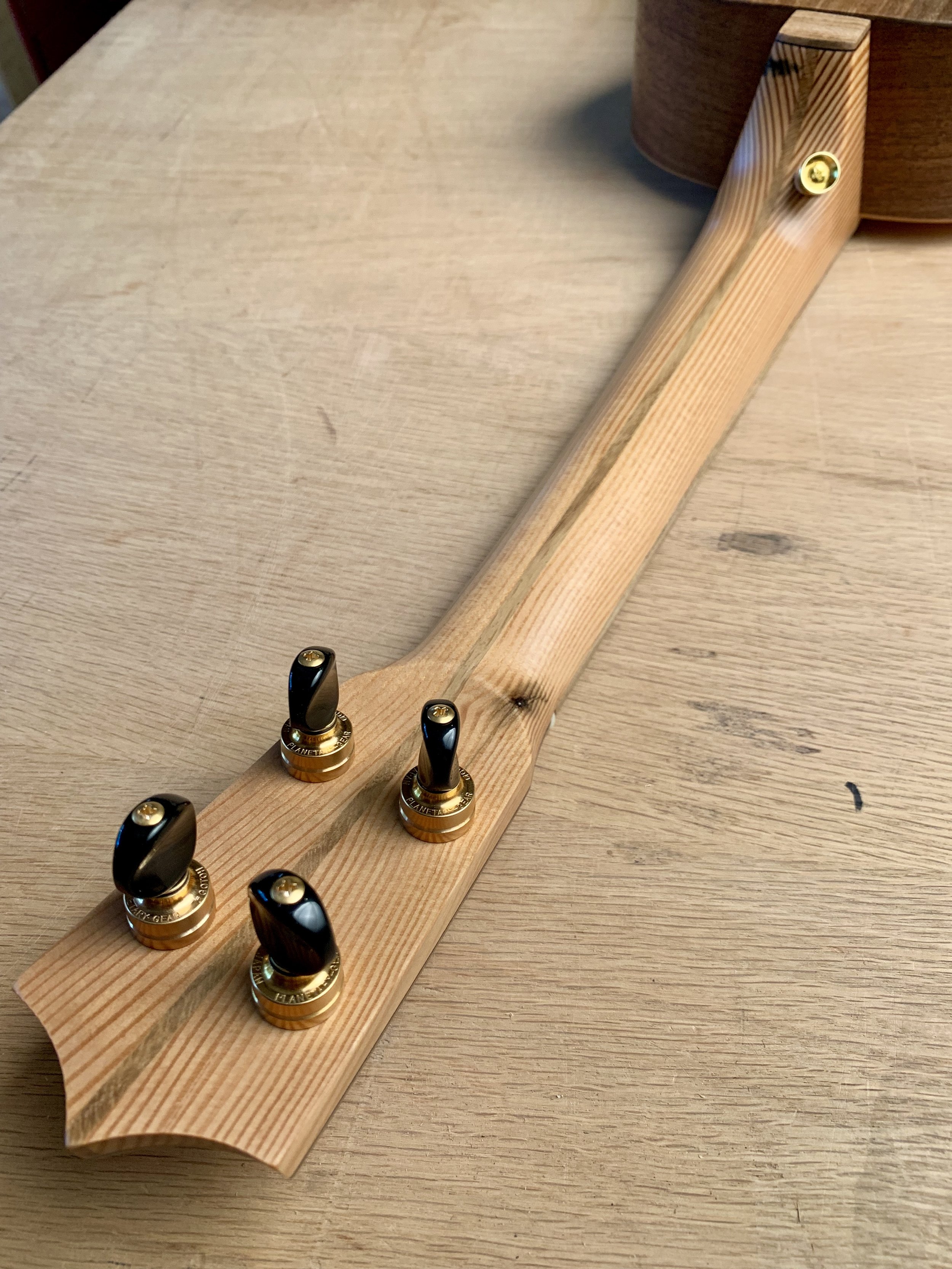
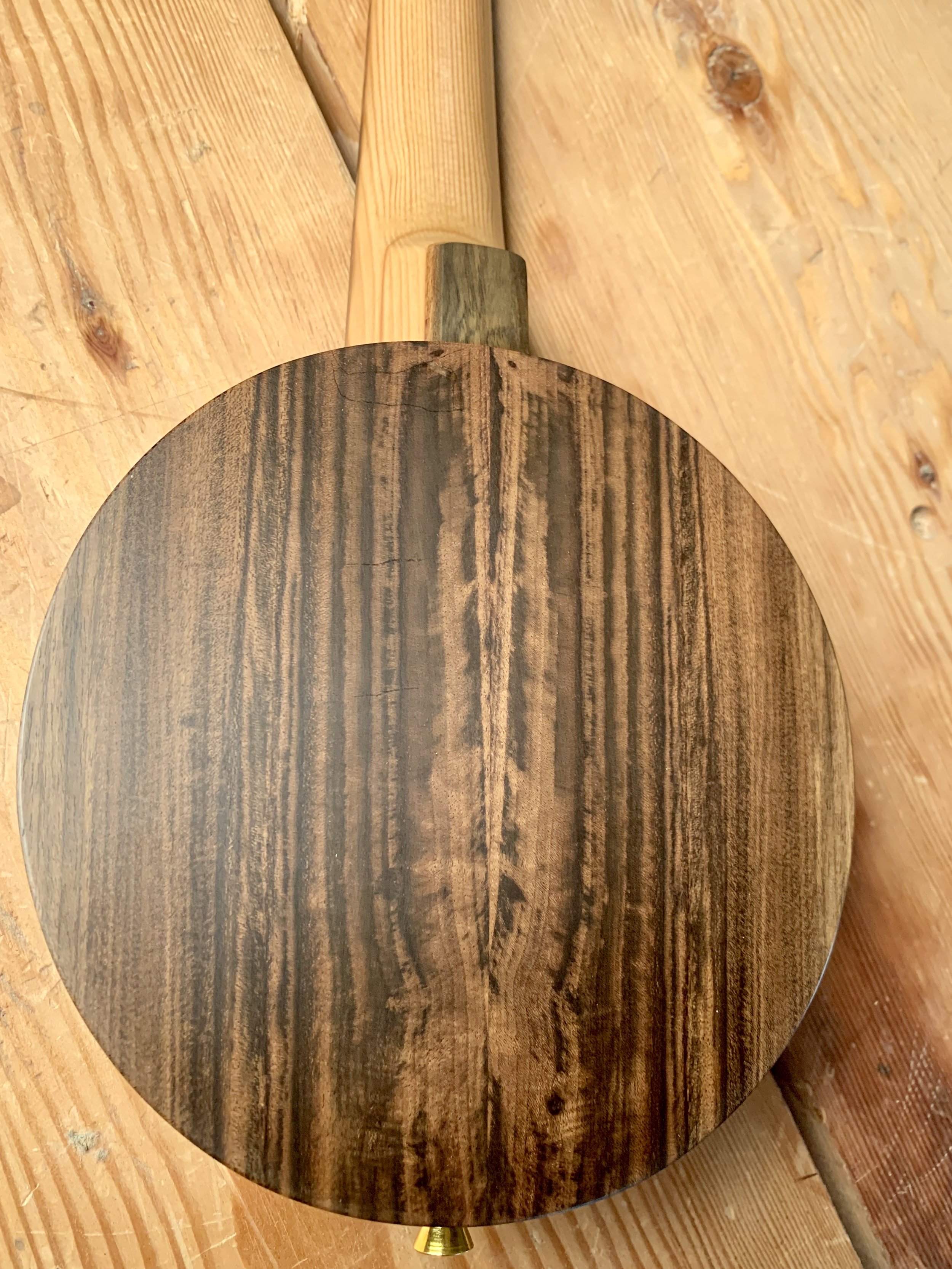
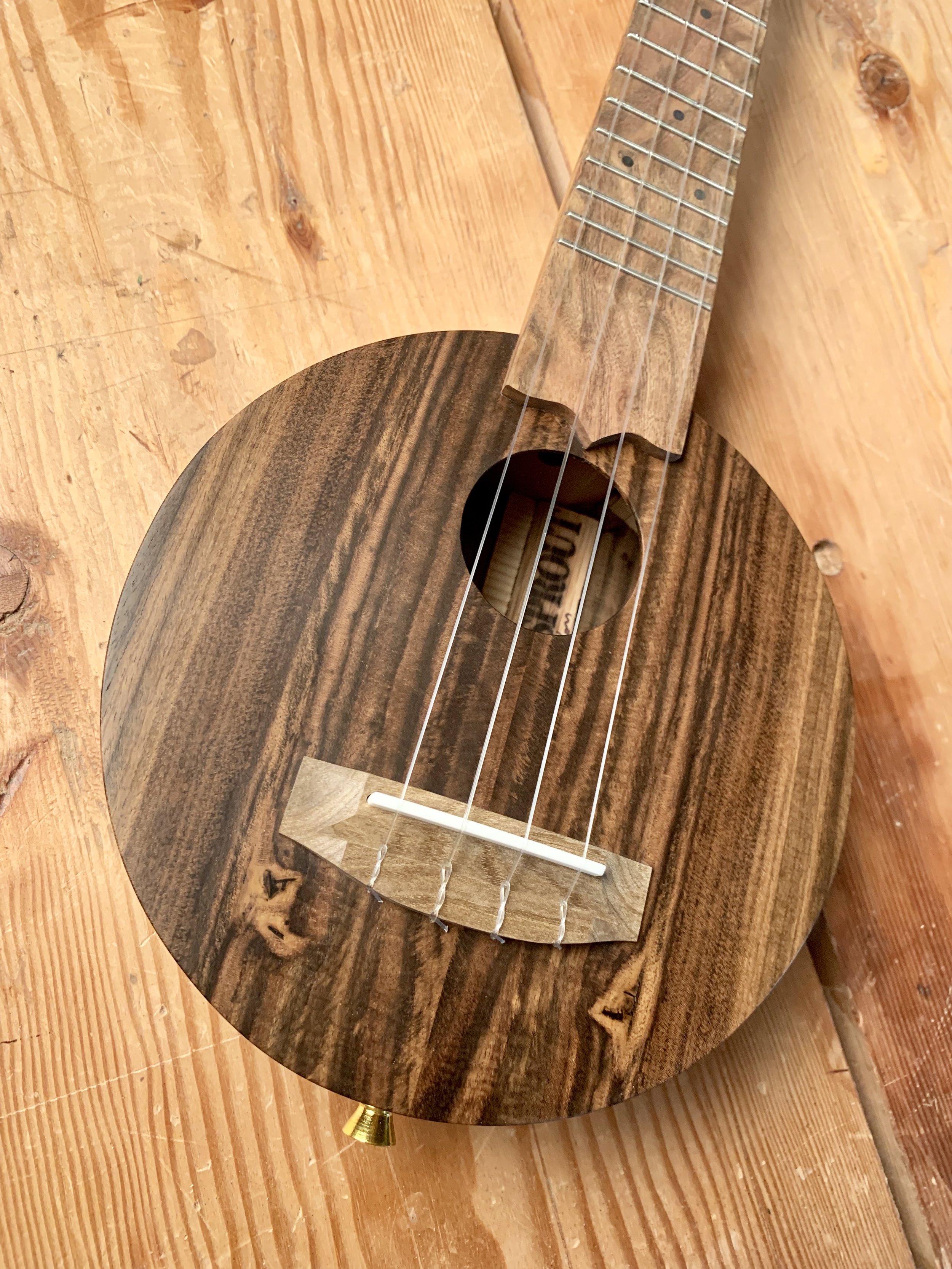
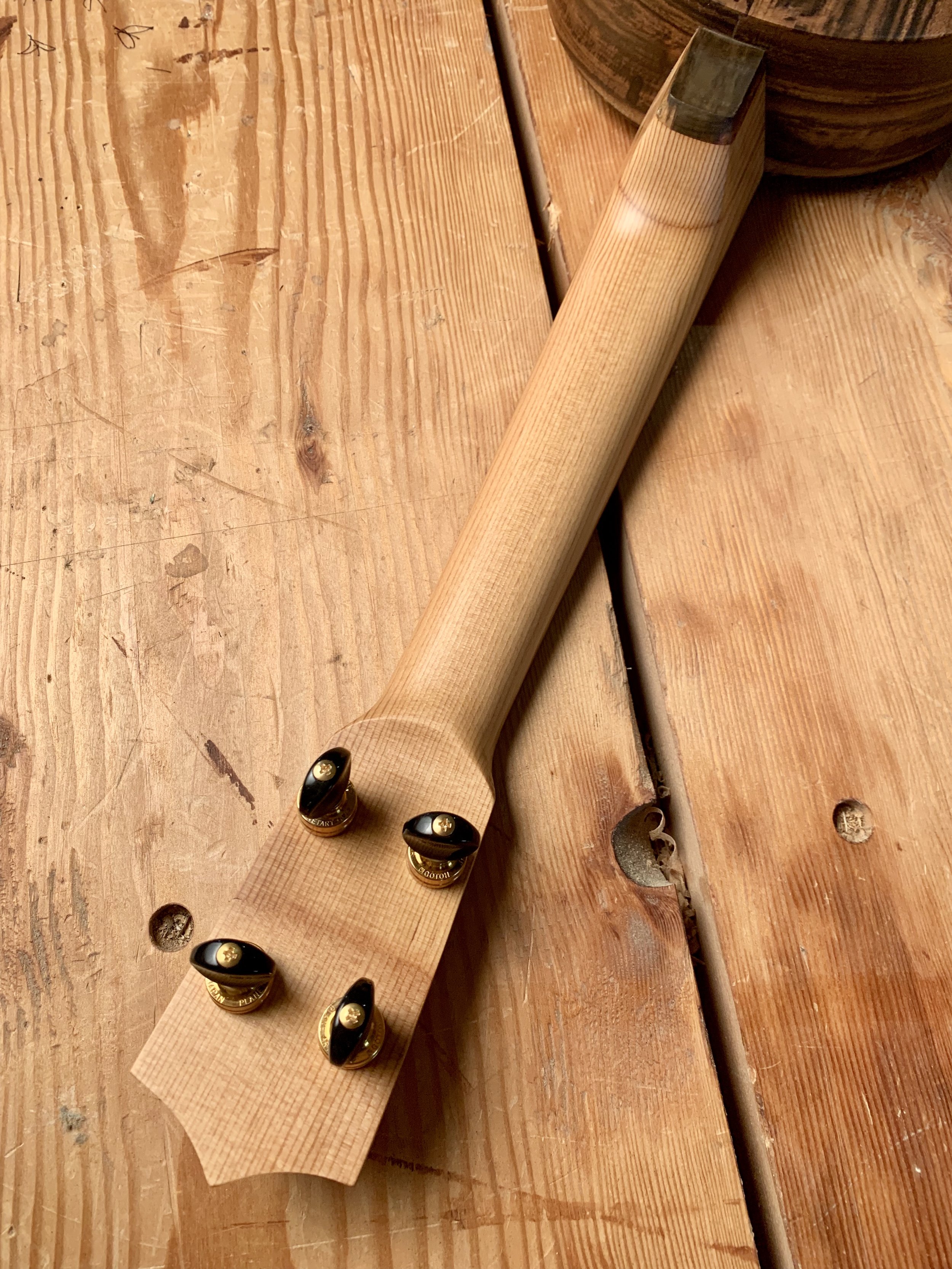
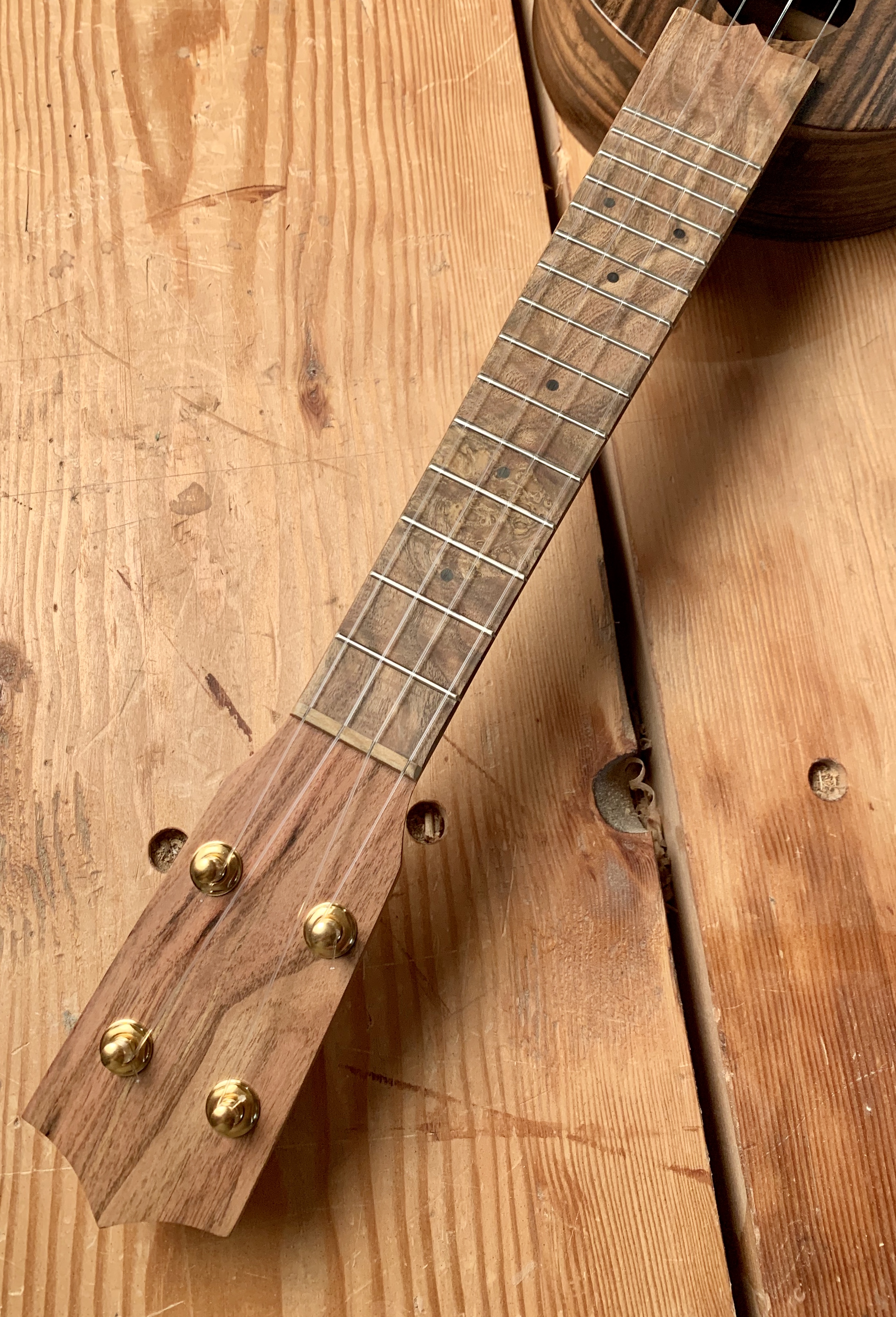
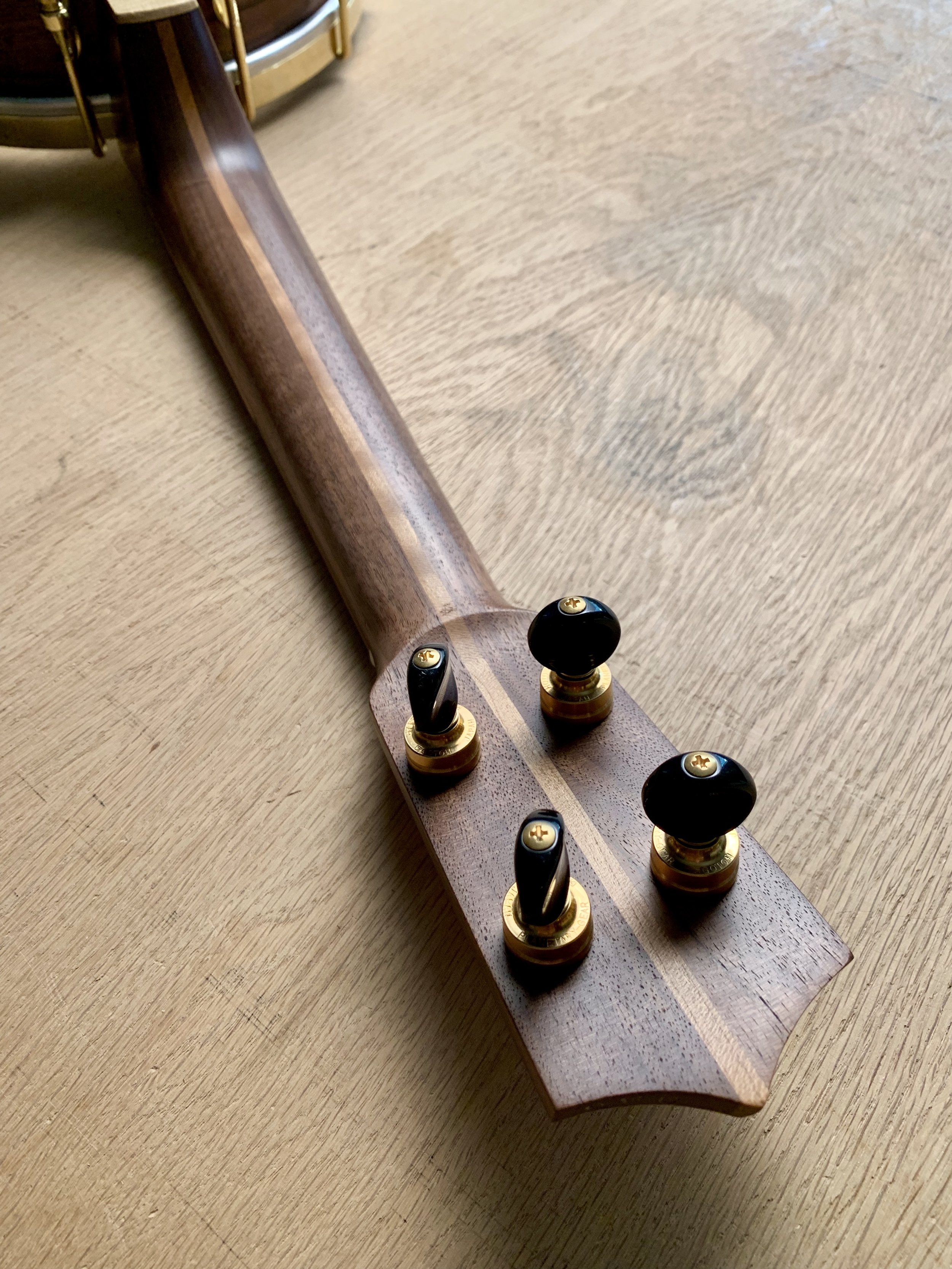
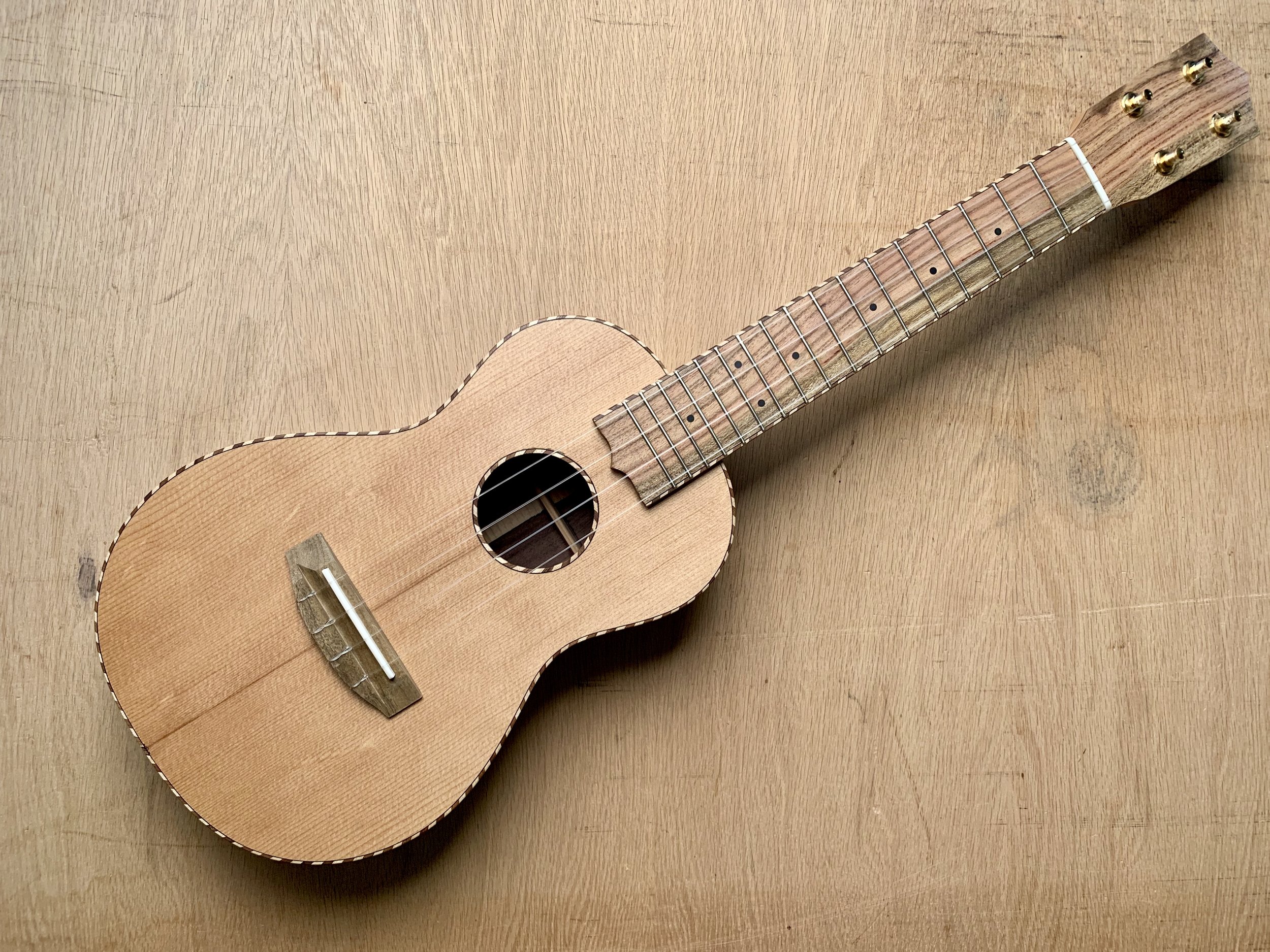
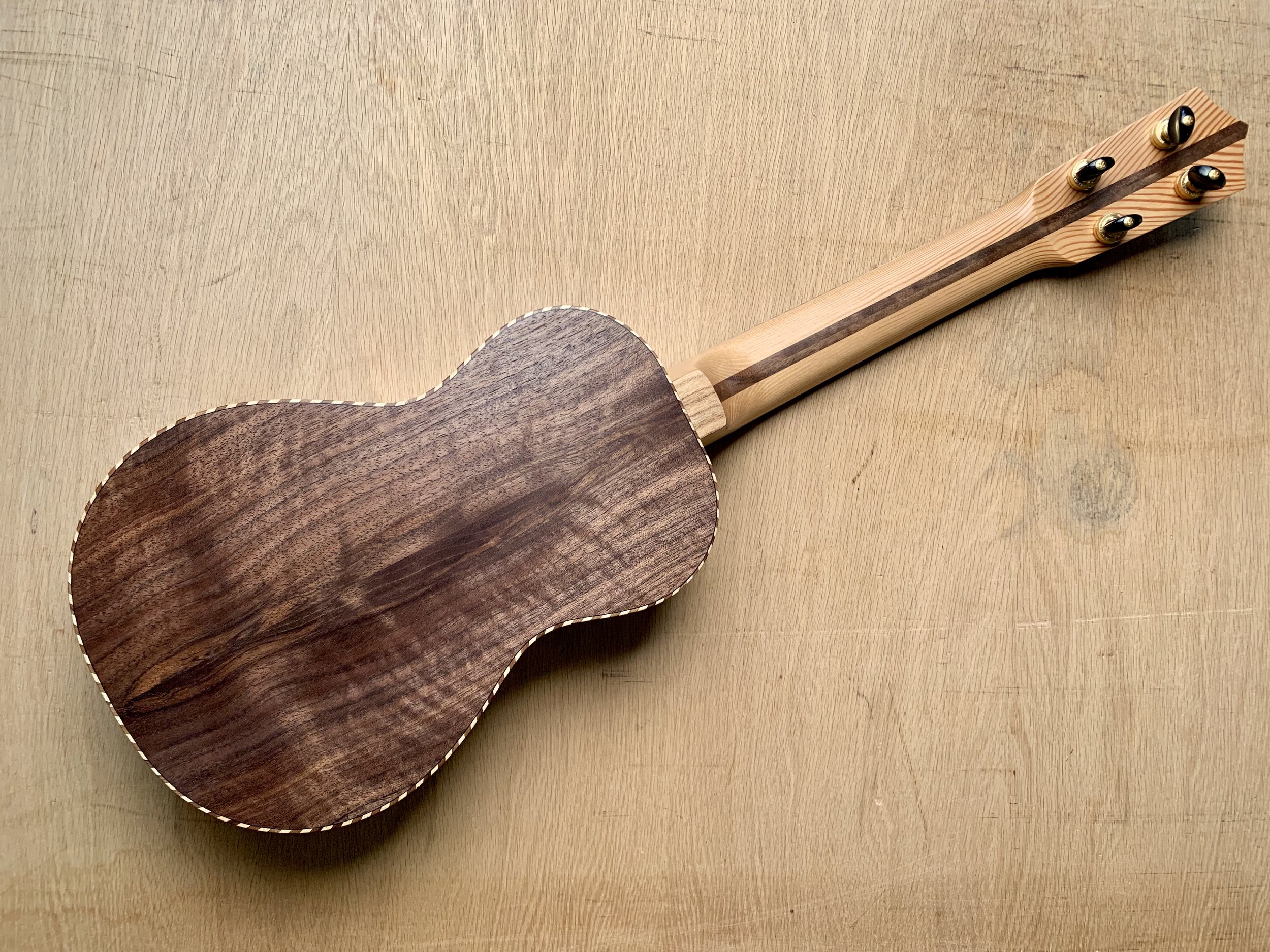
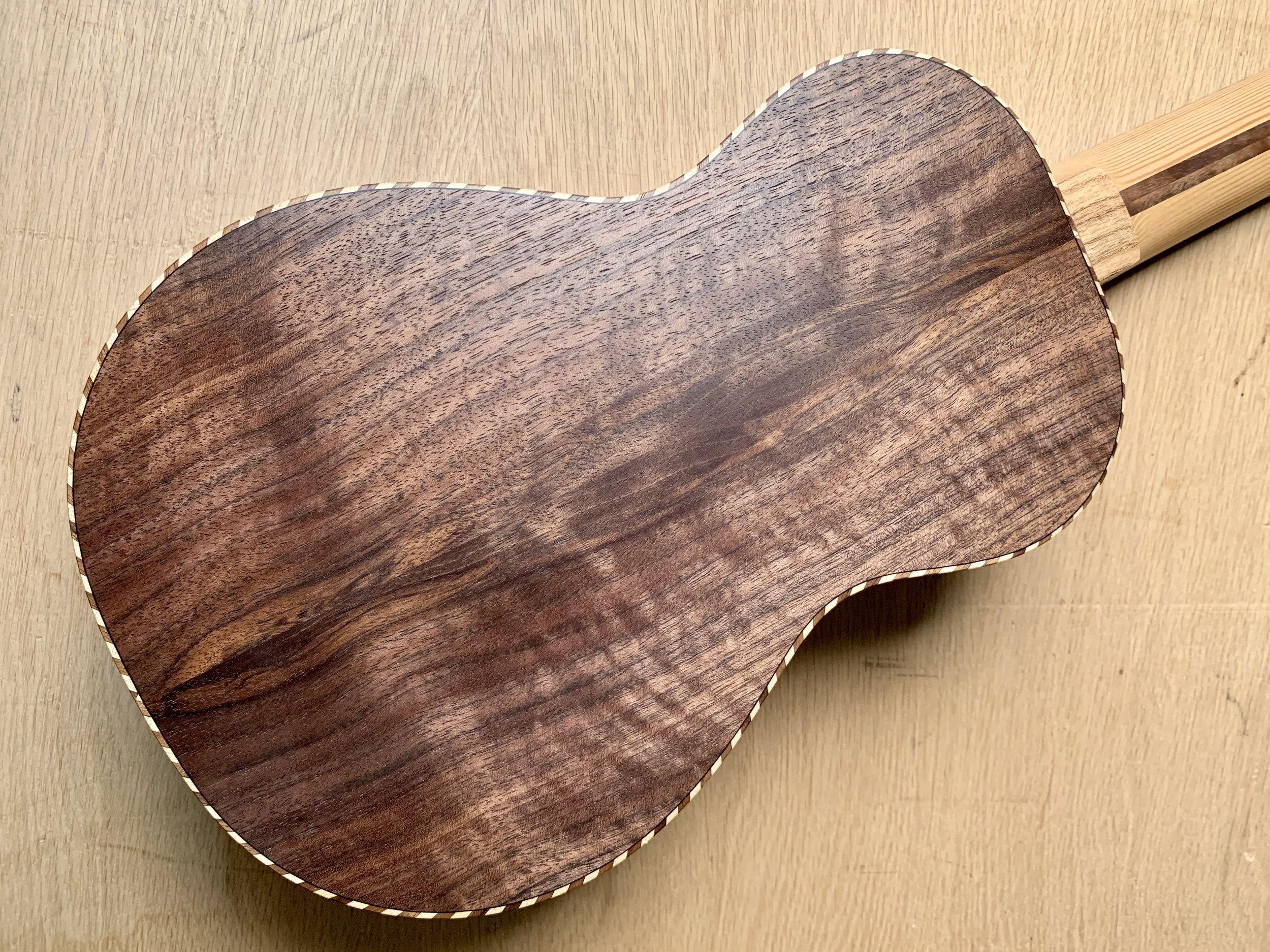
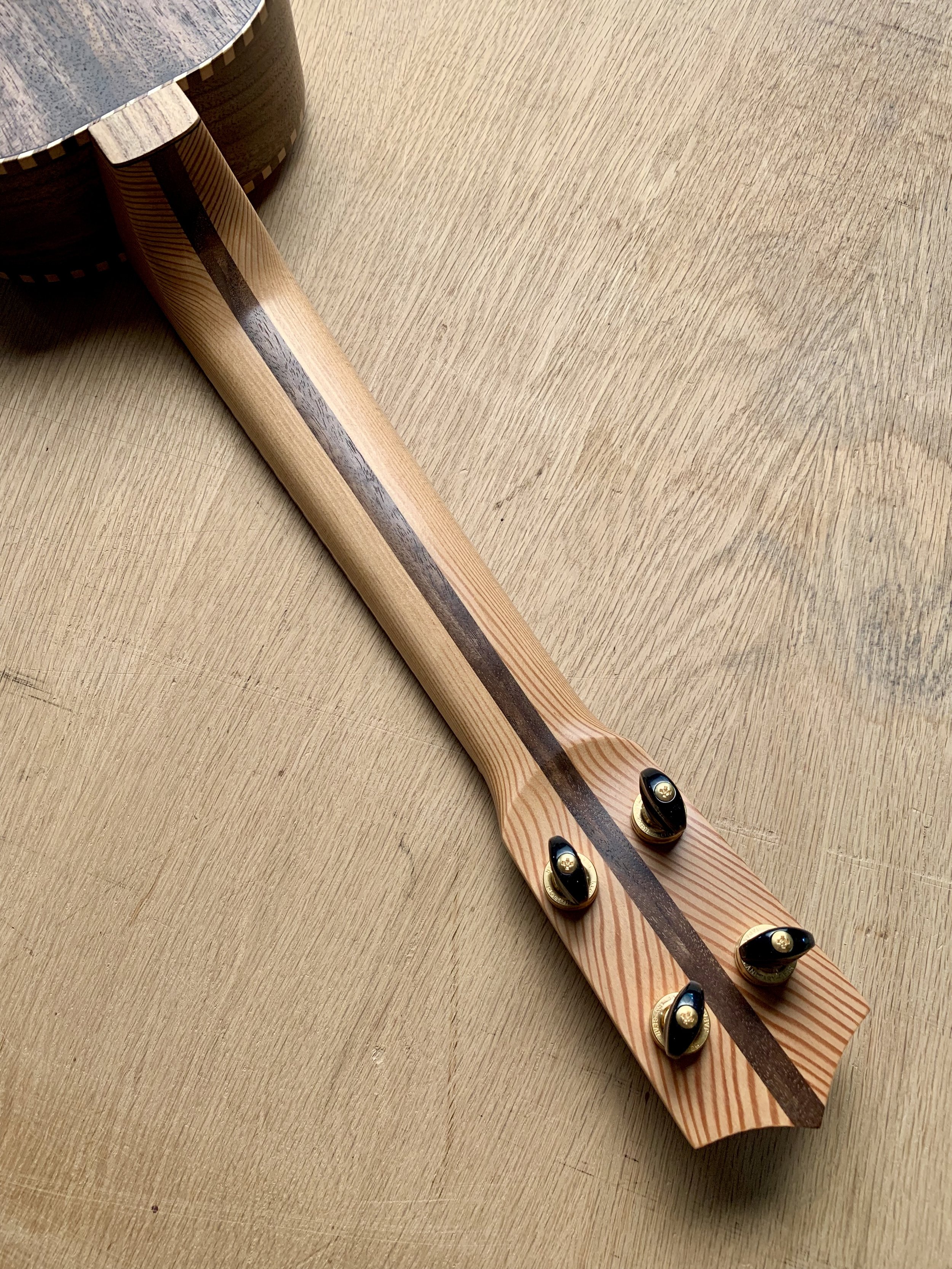
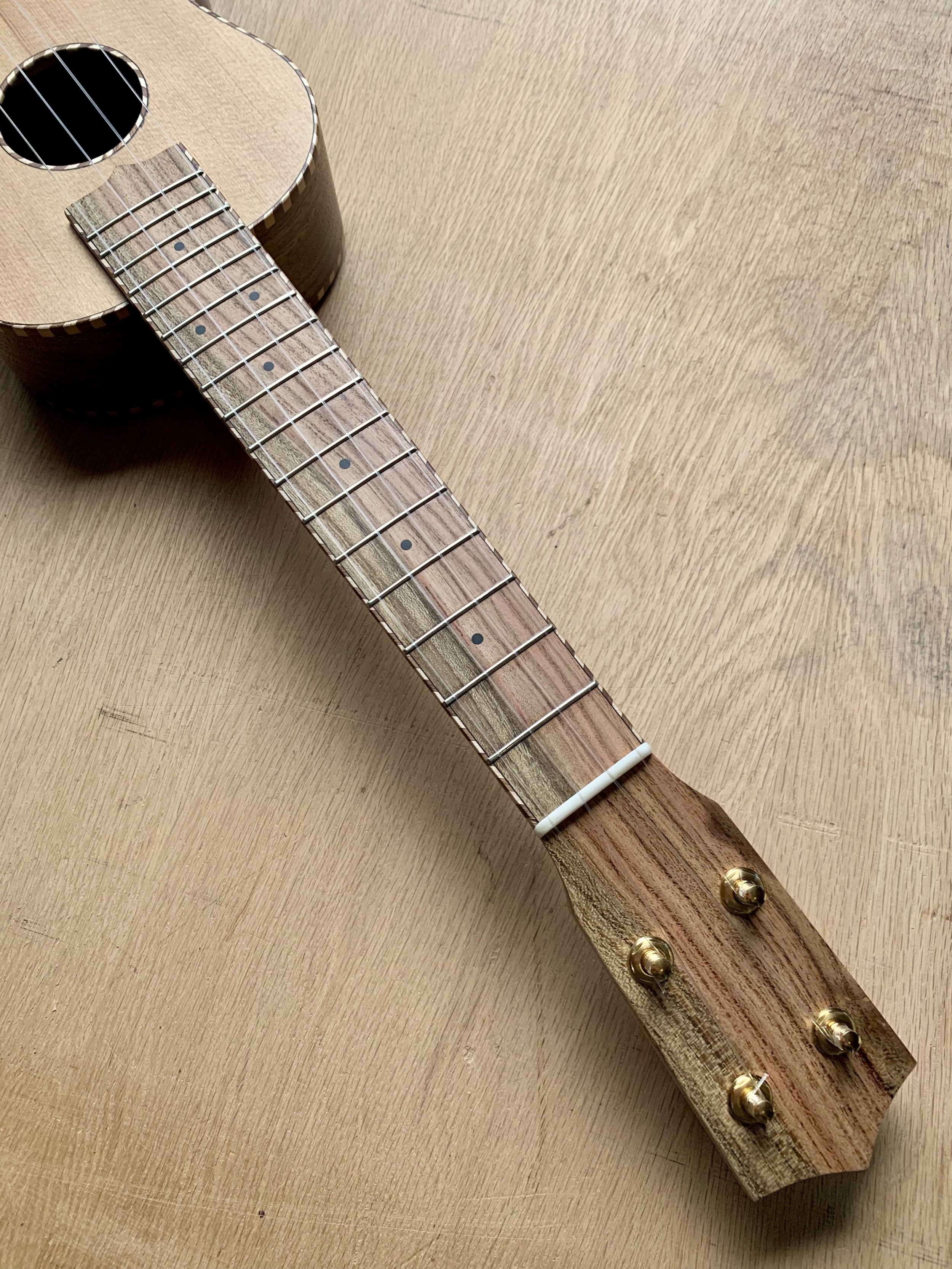
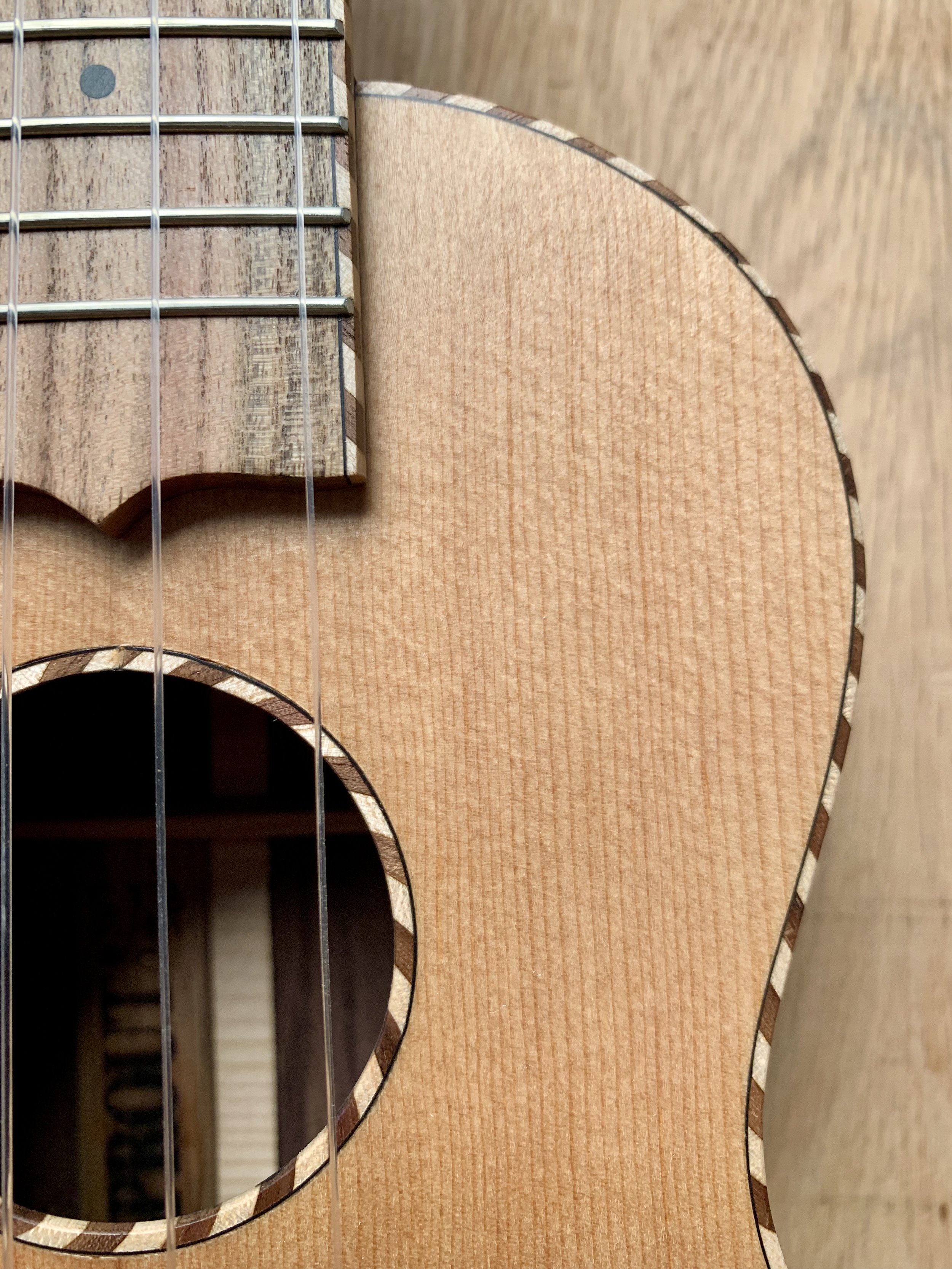
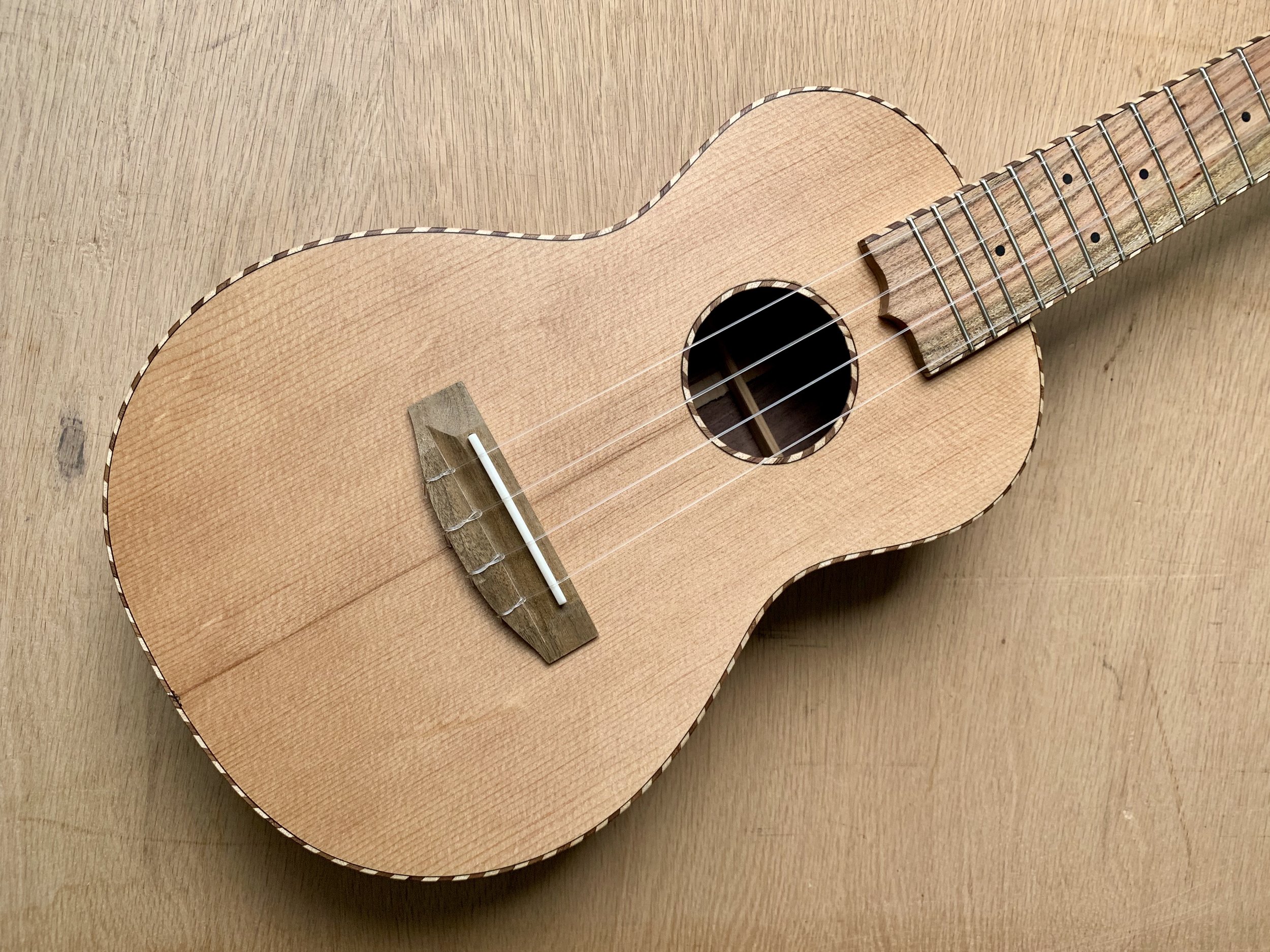
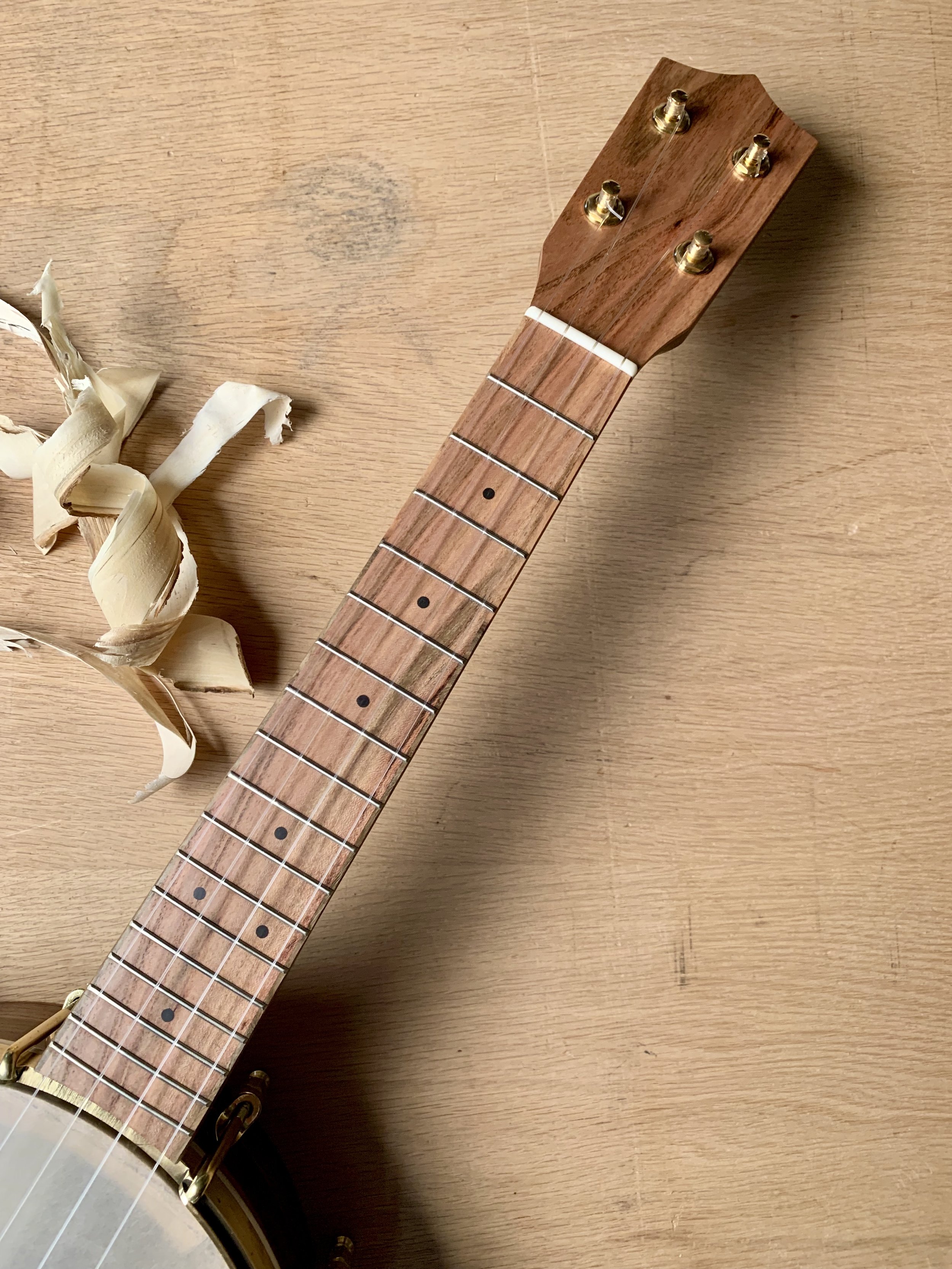
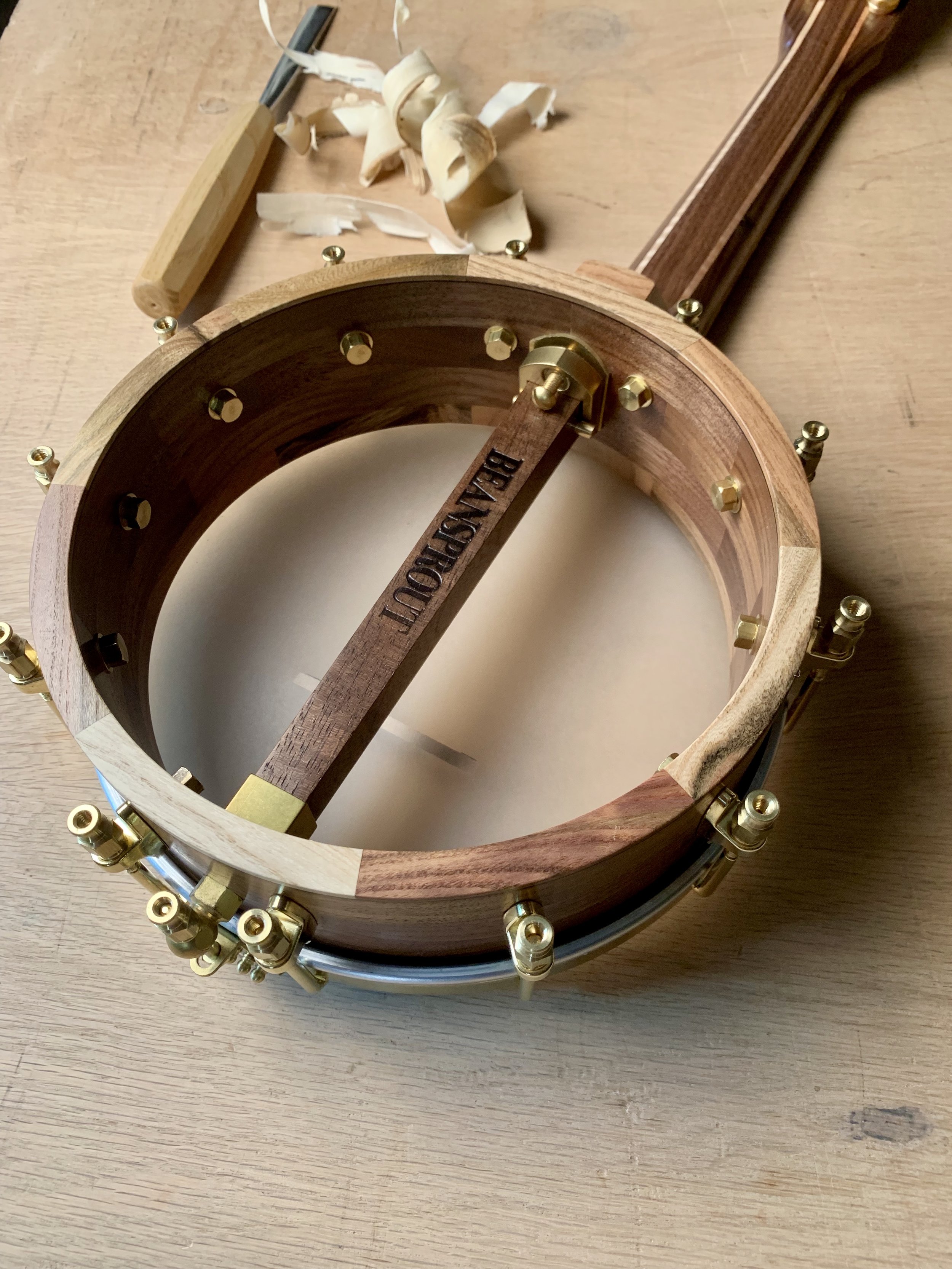
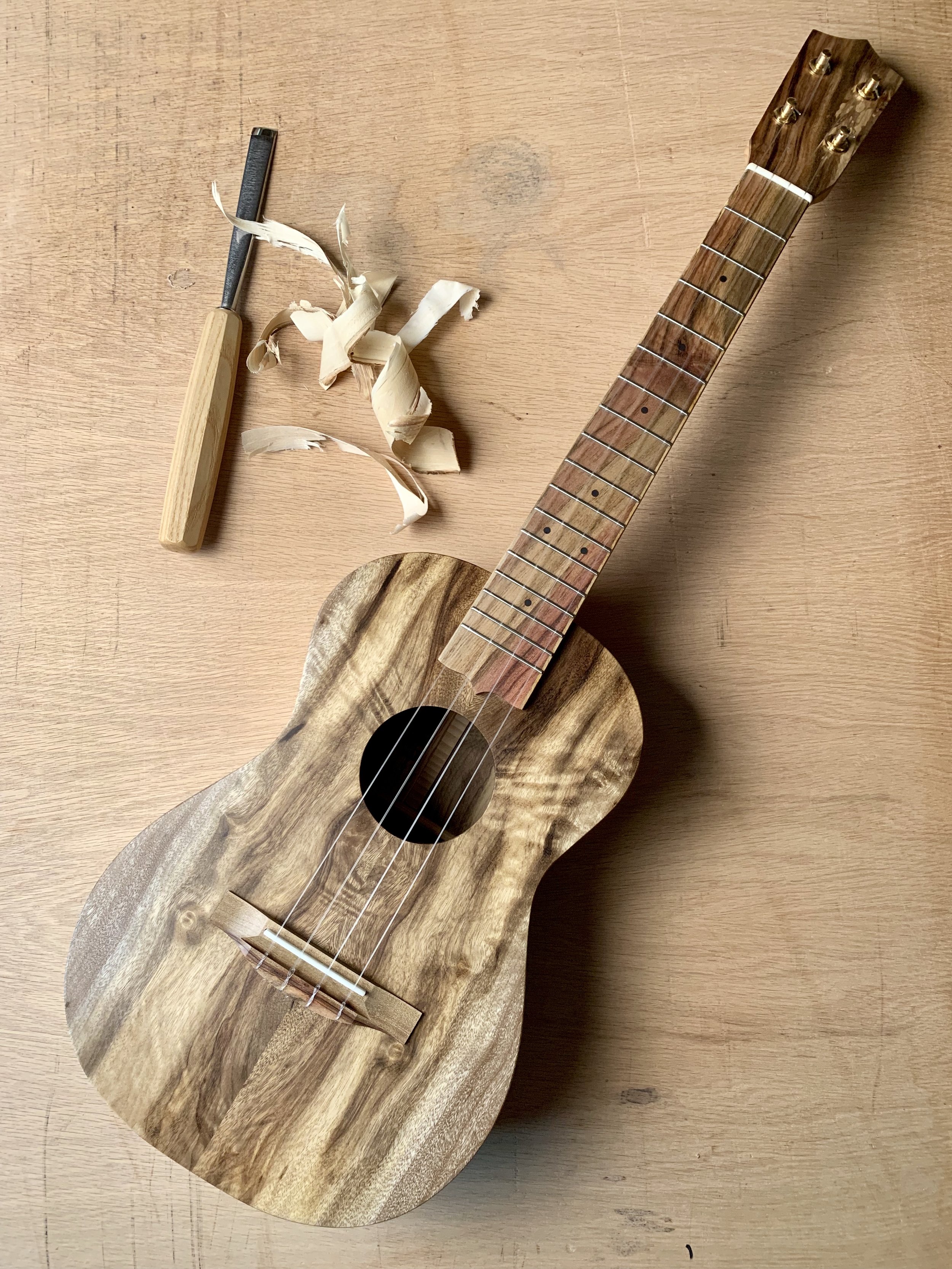
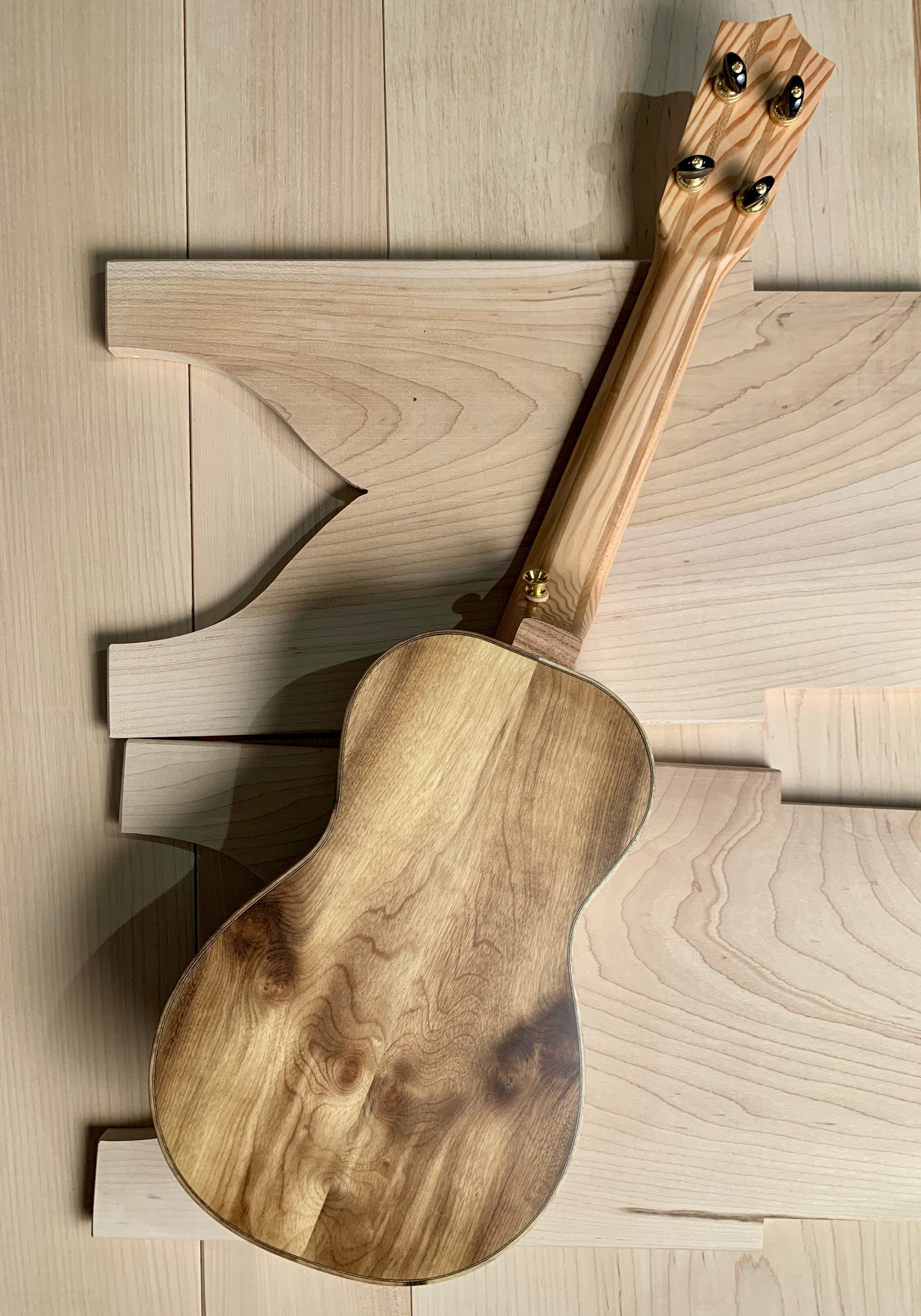
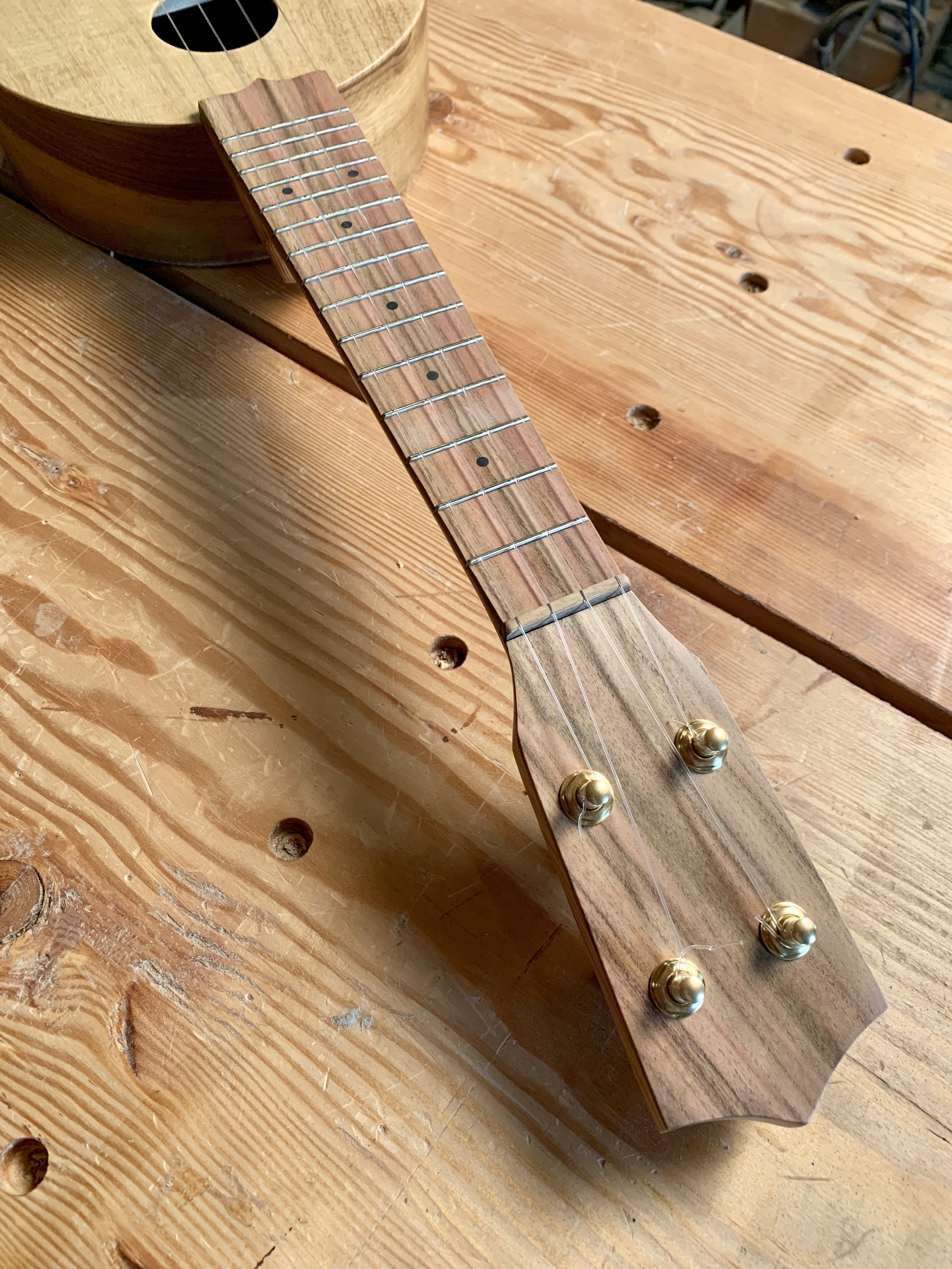
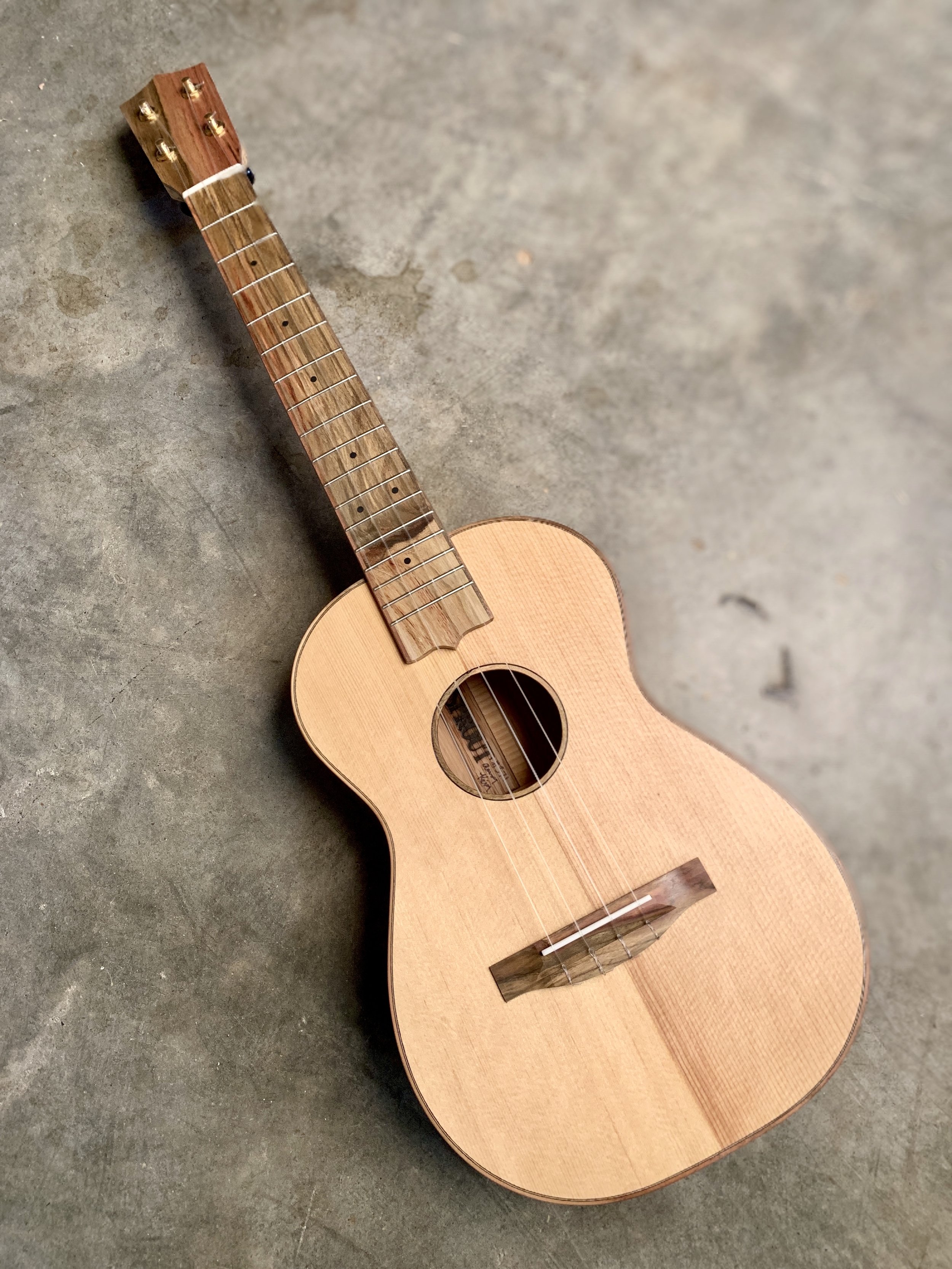
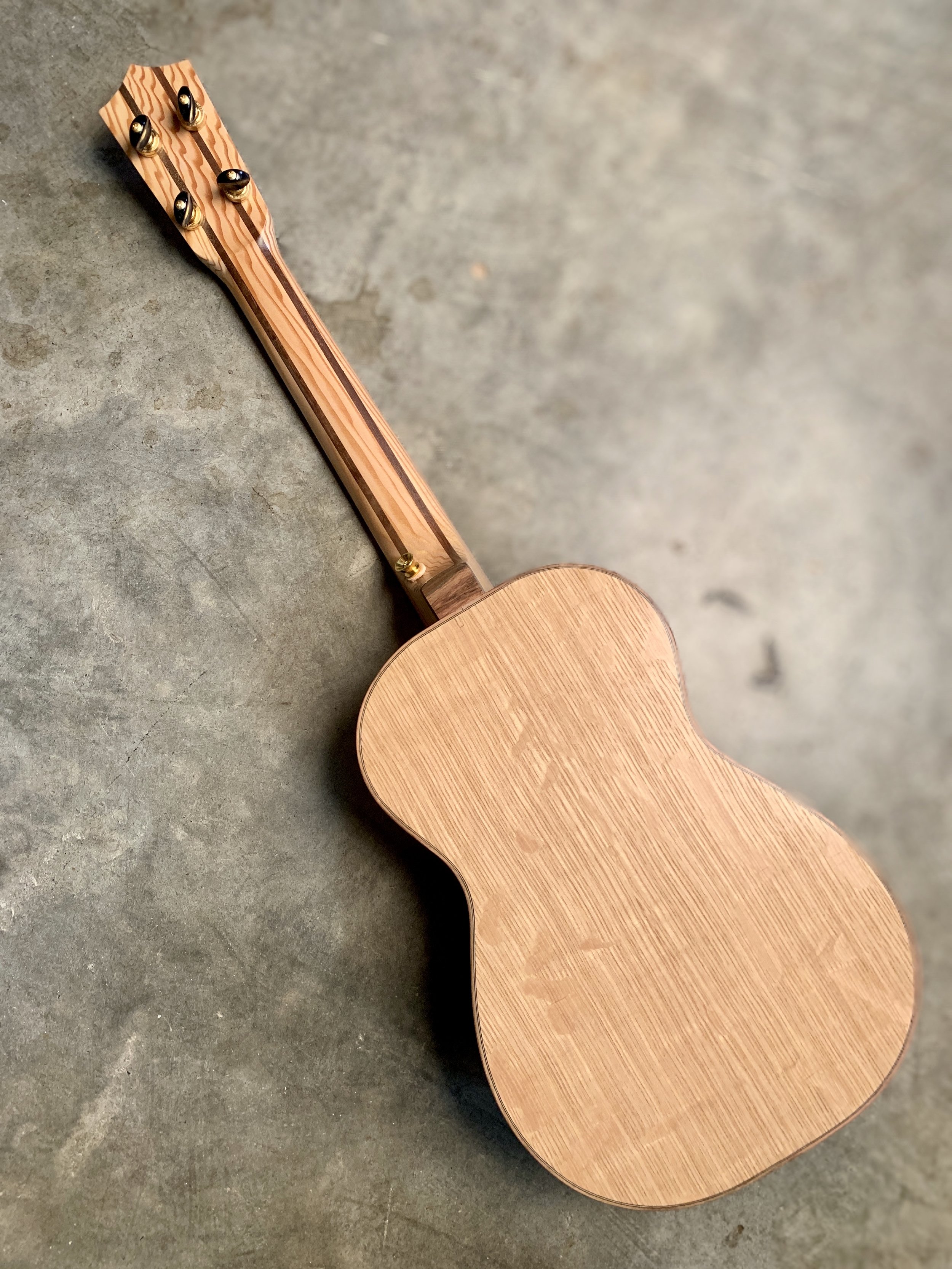
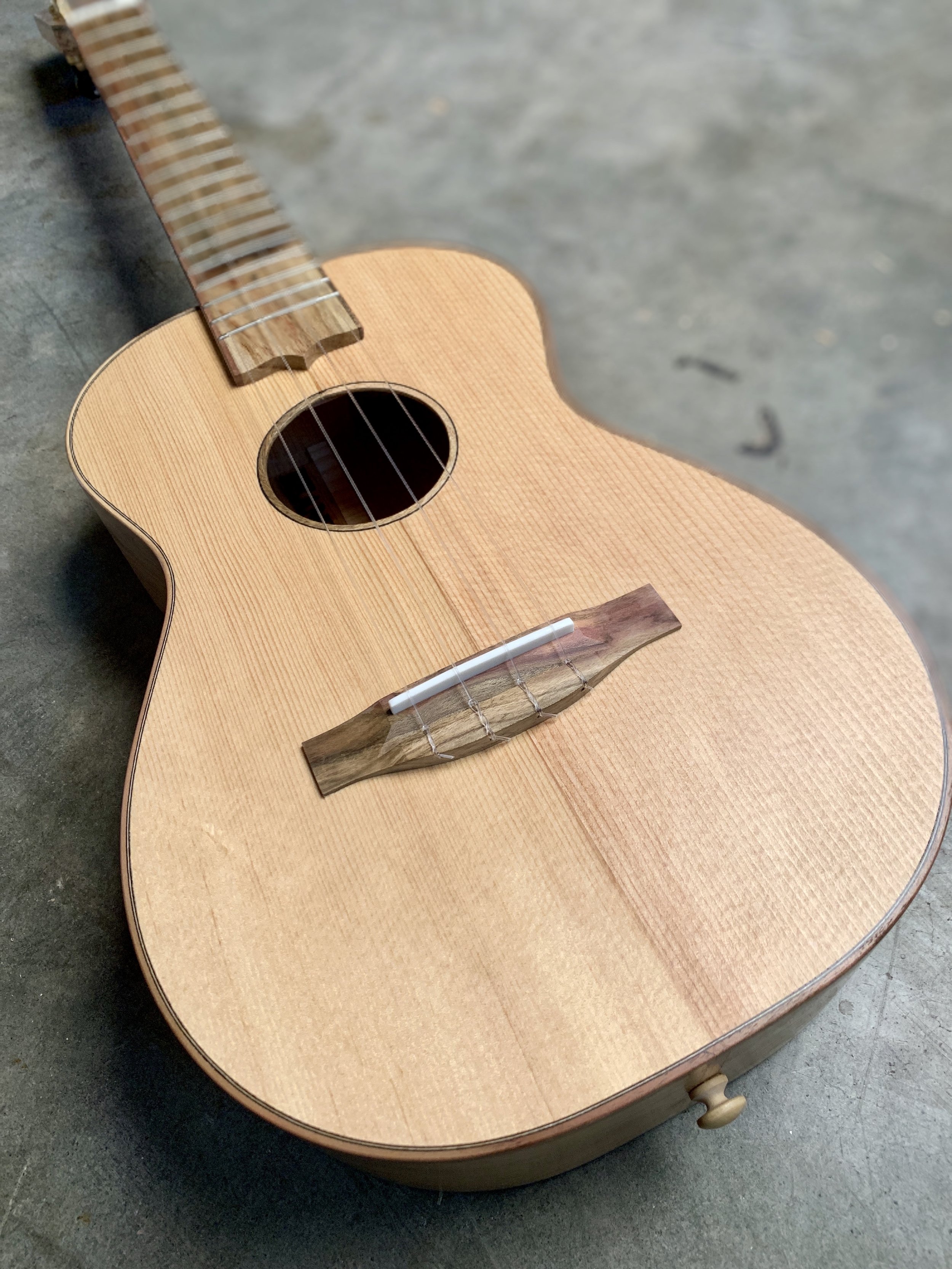
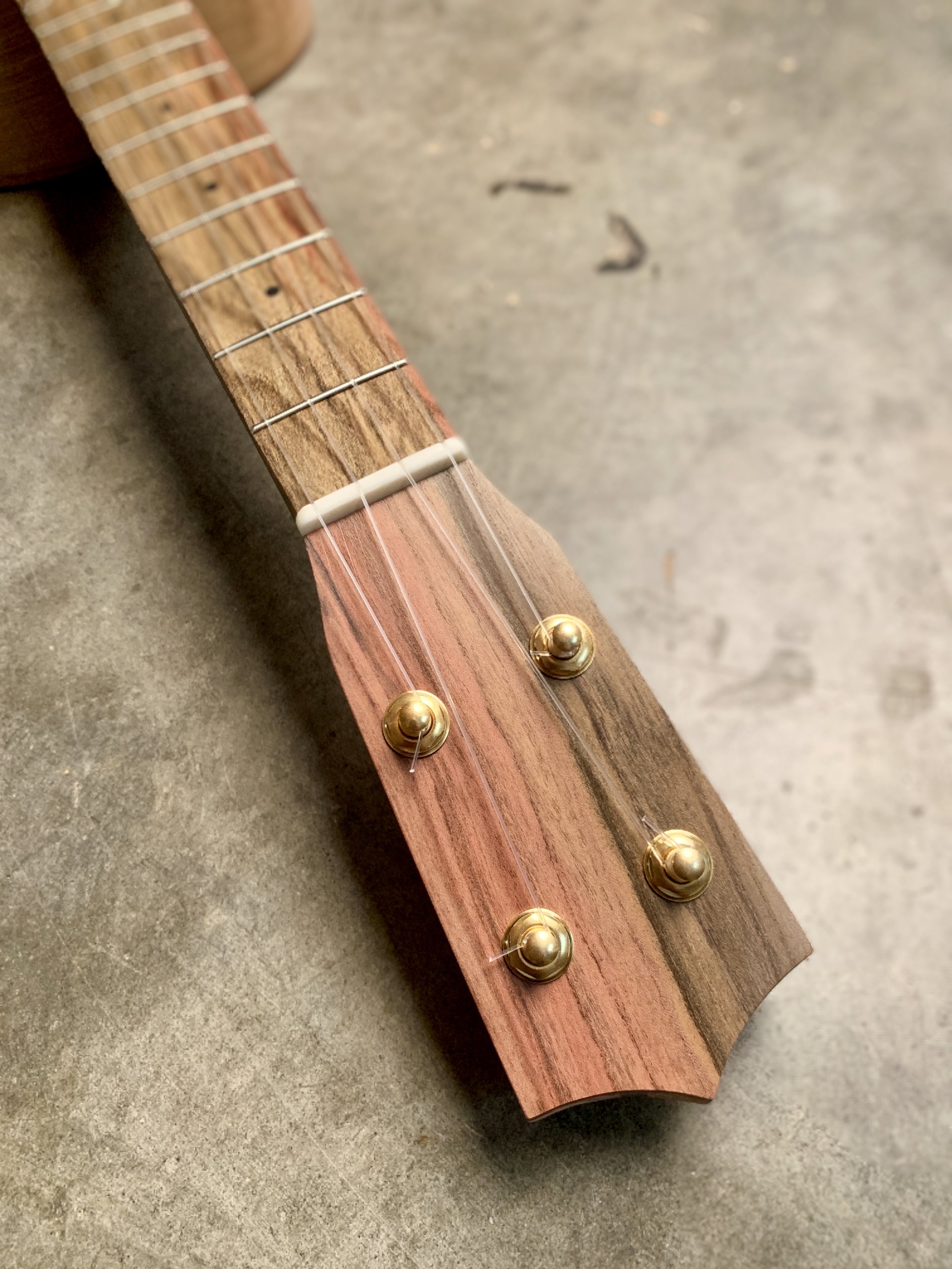
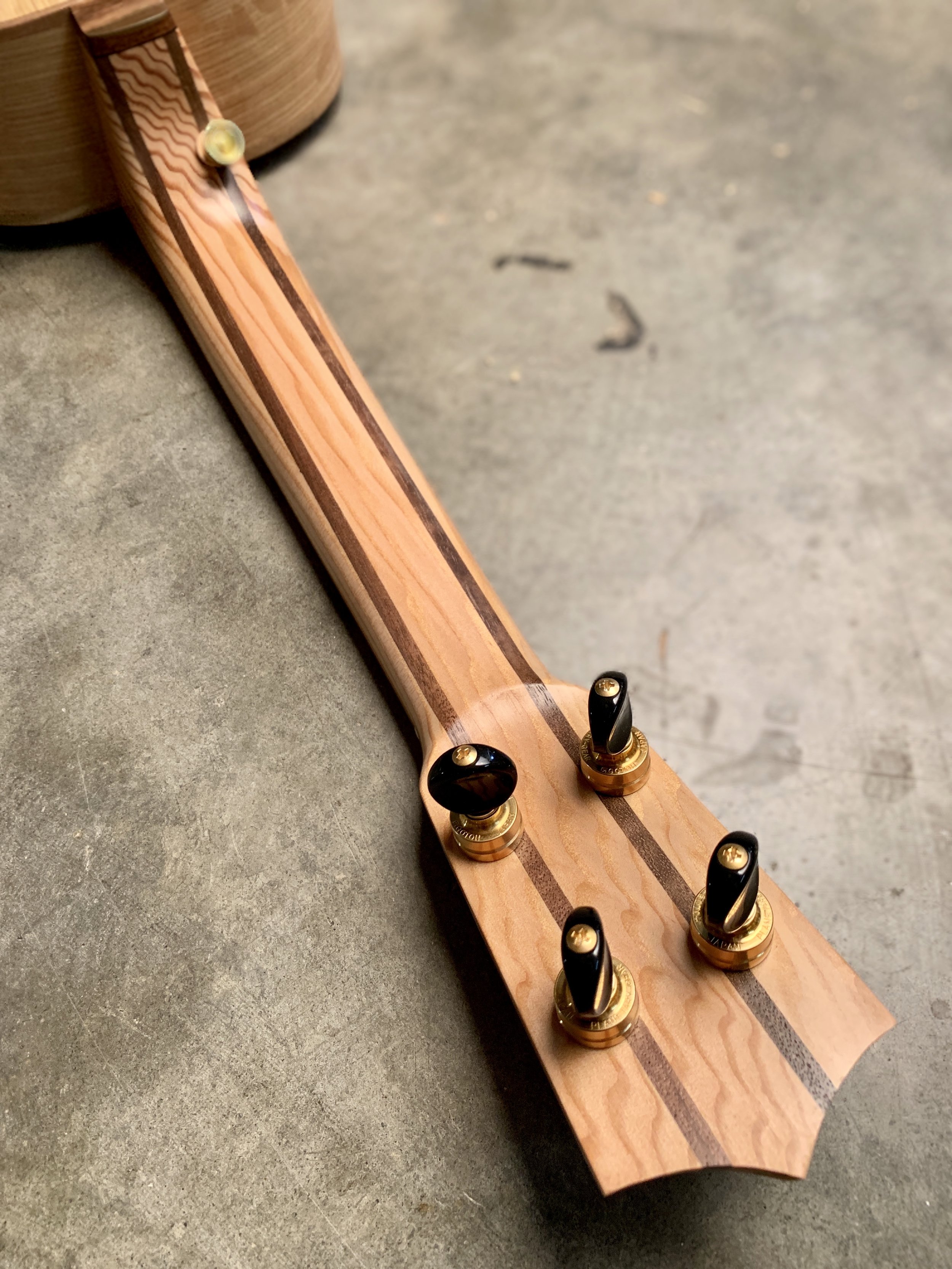
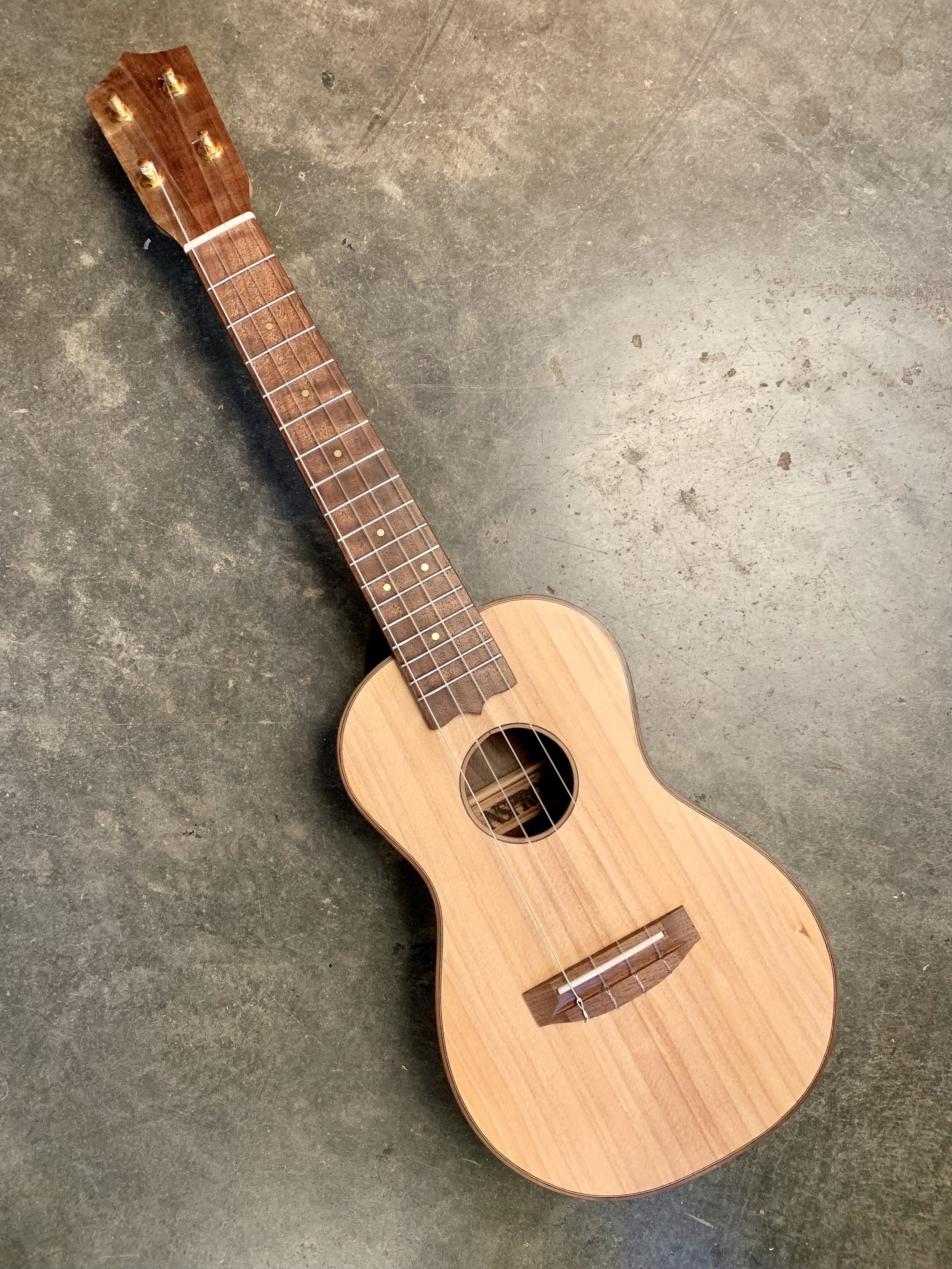
This instrument is for another long time customer and student from Vancouver, WA. We hit upon the challenge of making everything on the ukulele from spruce or walnut. The wide grain Oregon spruce is from Camp Westwind, where we teach music every fall. It behaves much differently than the cold growing Alaskan spruce, but I like it on ukuleles. All the walnut is urban salvage from Goby walnut in Portland, with lots of reds, purples and browns. Overall it is a loud but warm ukulele made from local wood for a good musician. Win.
I am loving my new Beansprout uke! I gave it a good workout this past weekend. It met all my expectations. The tone was warm with plenty of volume, it was easy to play, but the best and most important thing was that it stayed in tune up the neck:)
I also appreciate your amazing skill and craftsmanship. Not only is it a beautiful sounding instrument it is an amazing work of art.
- C. M.

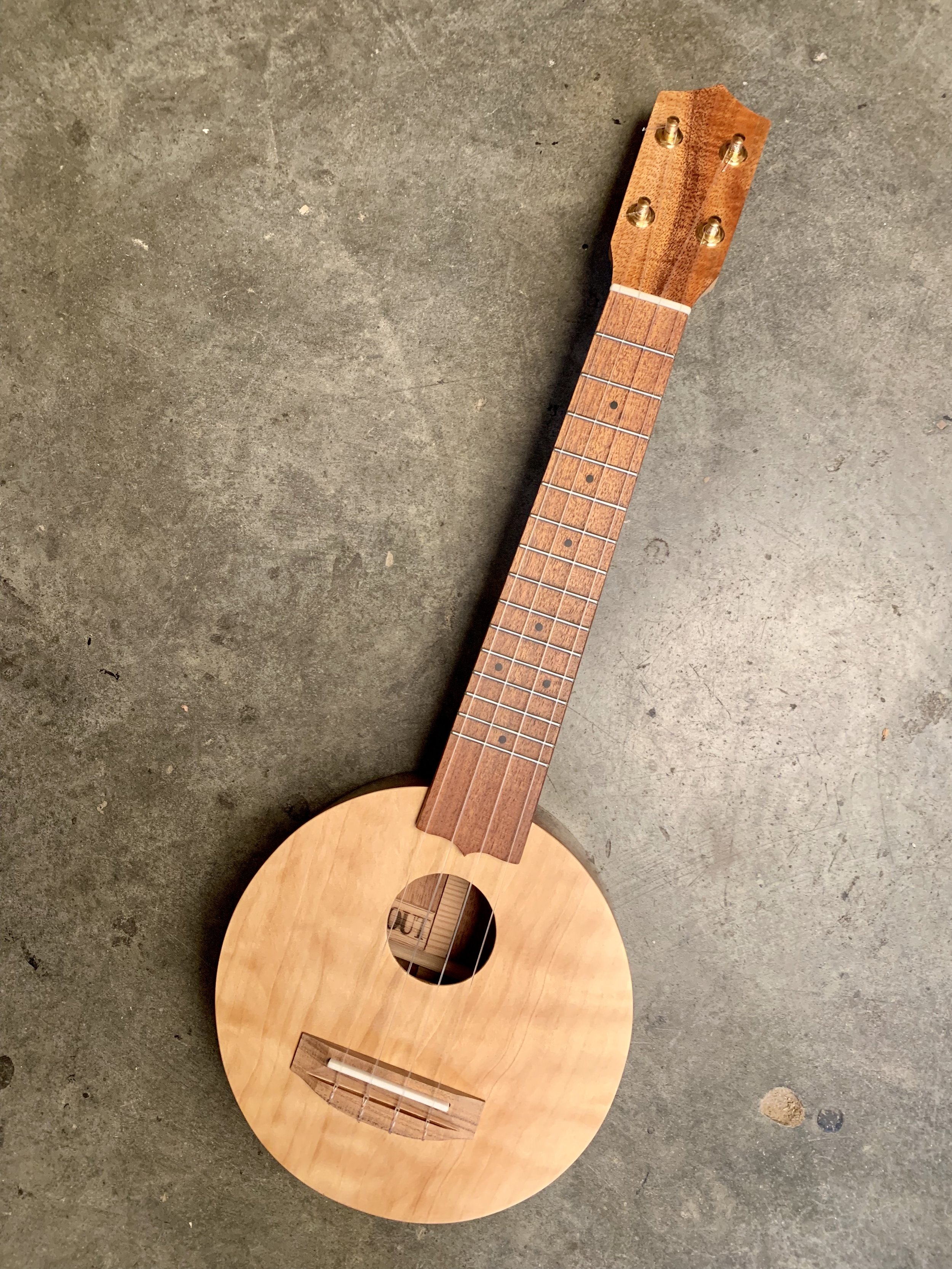
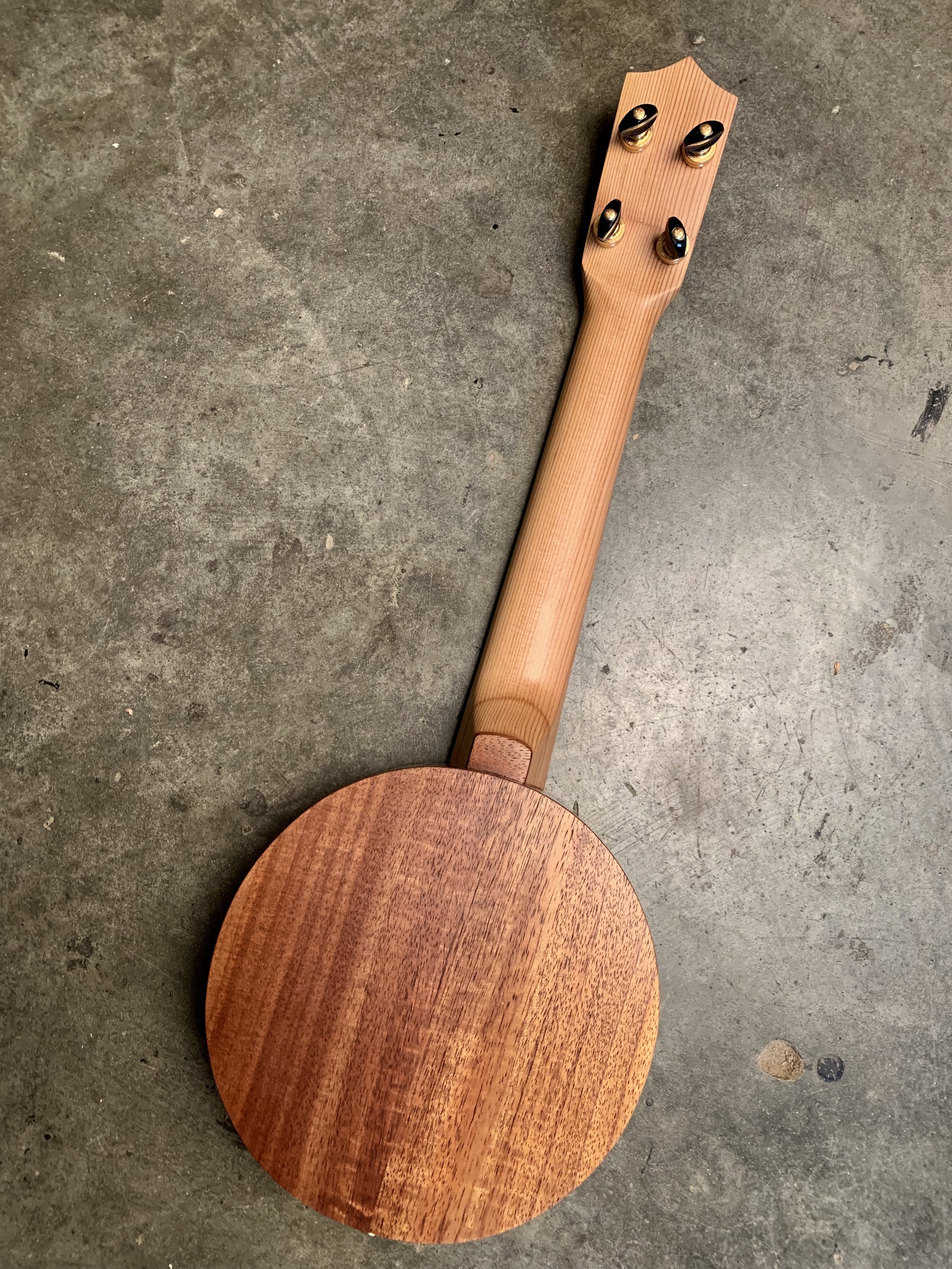
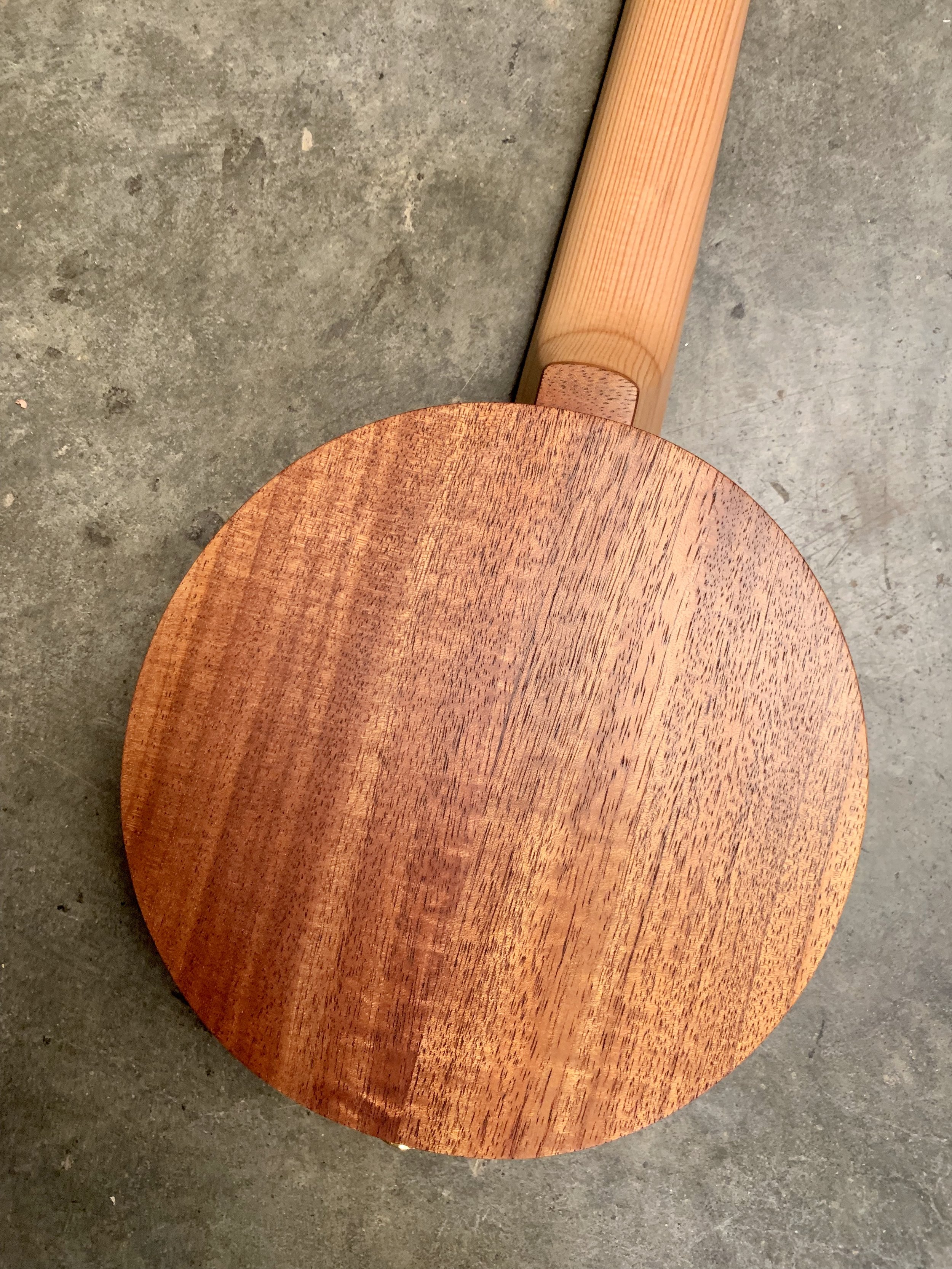
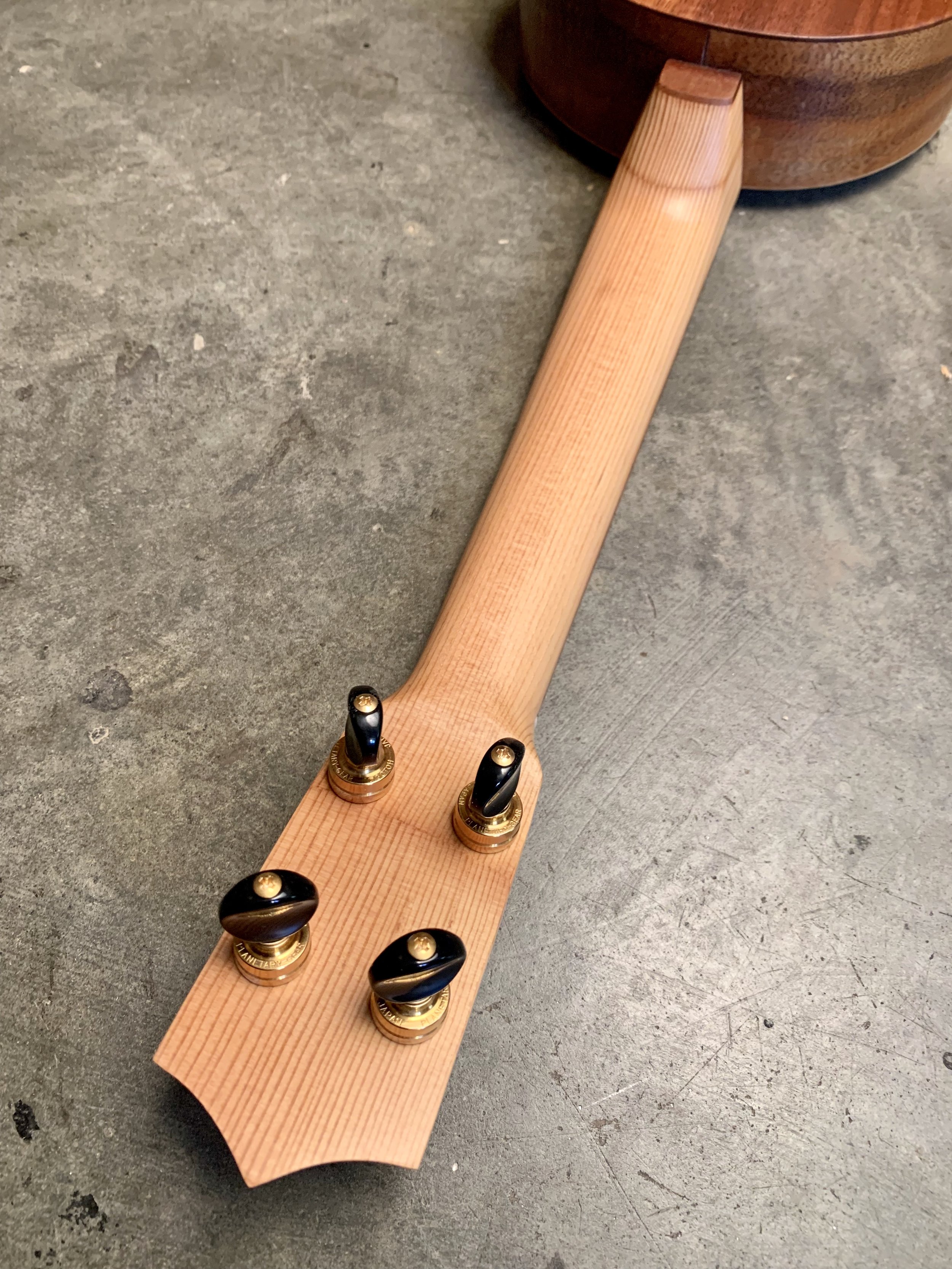
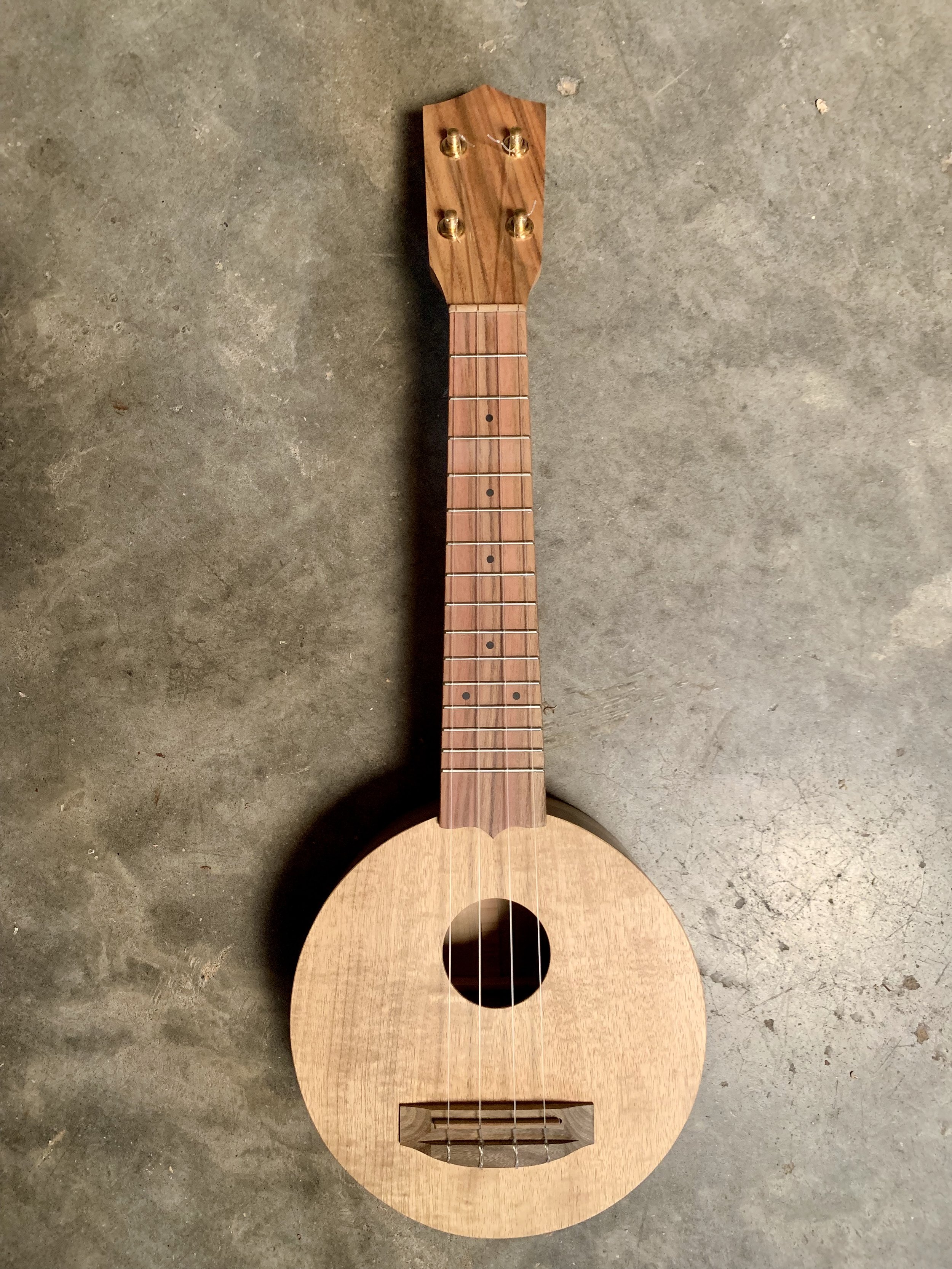
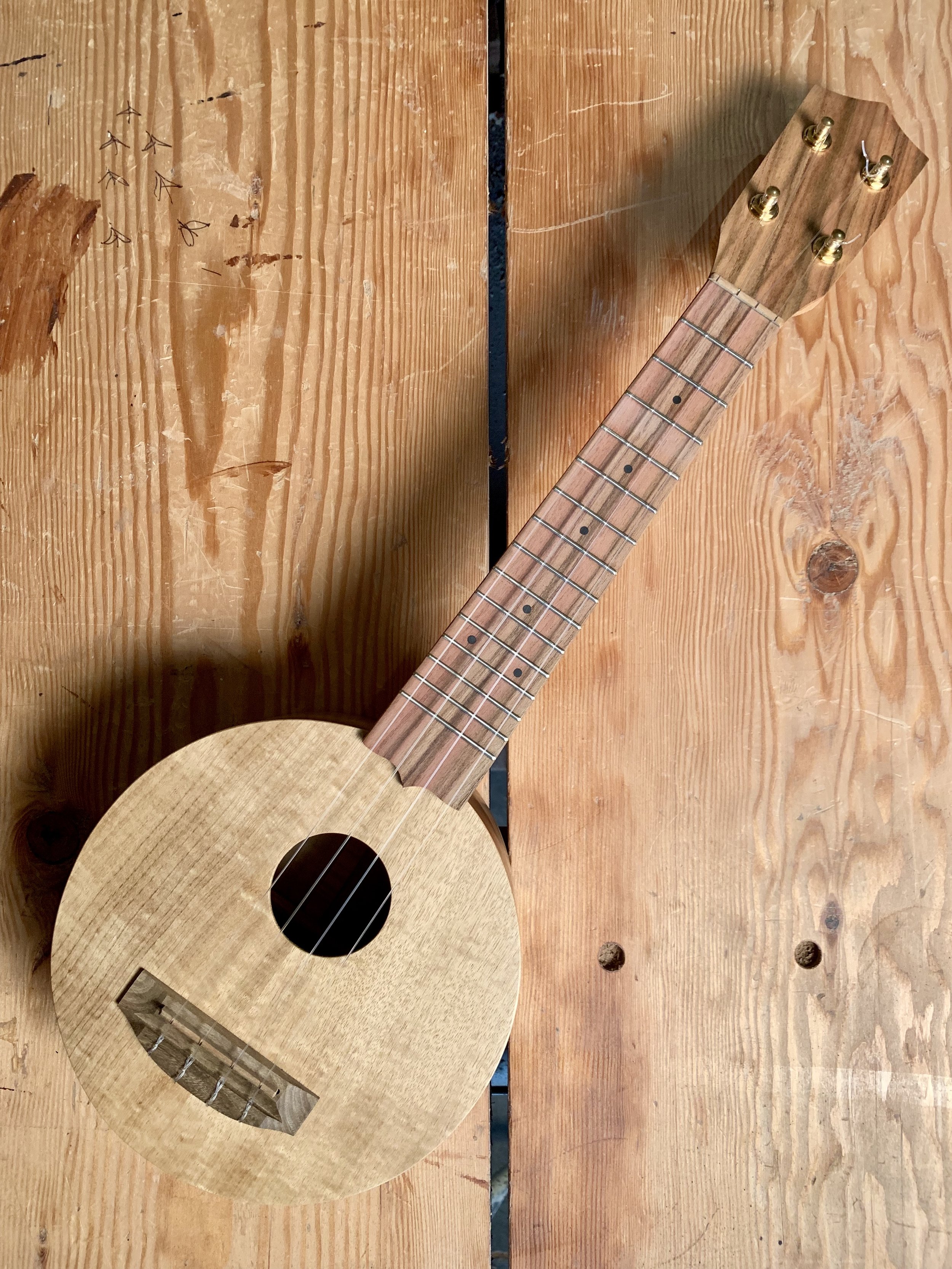
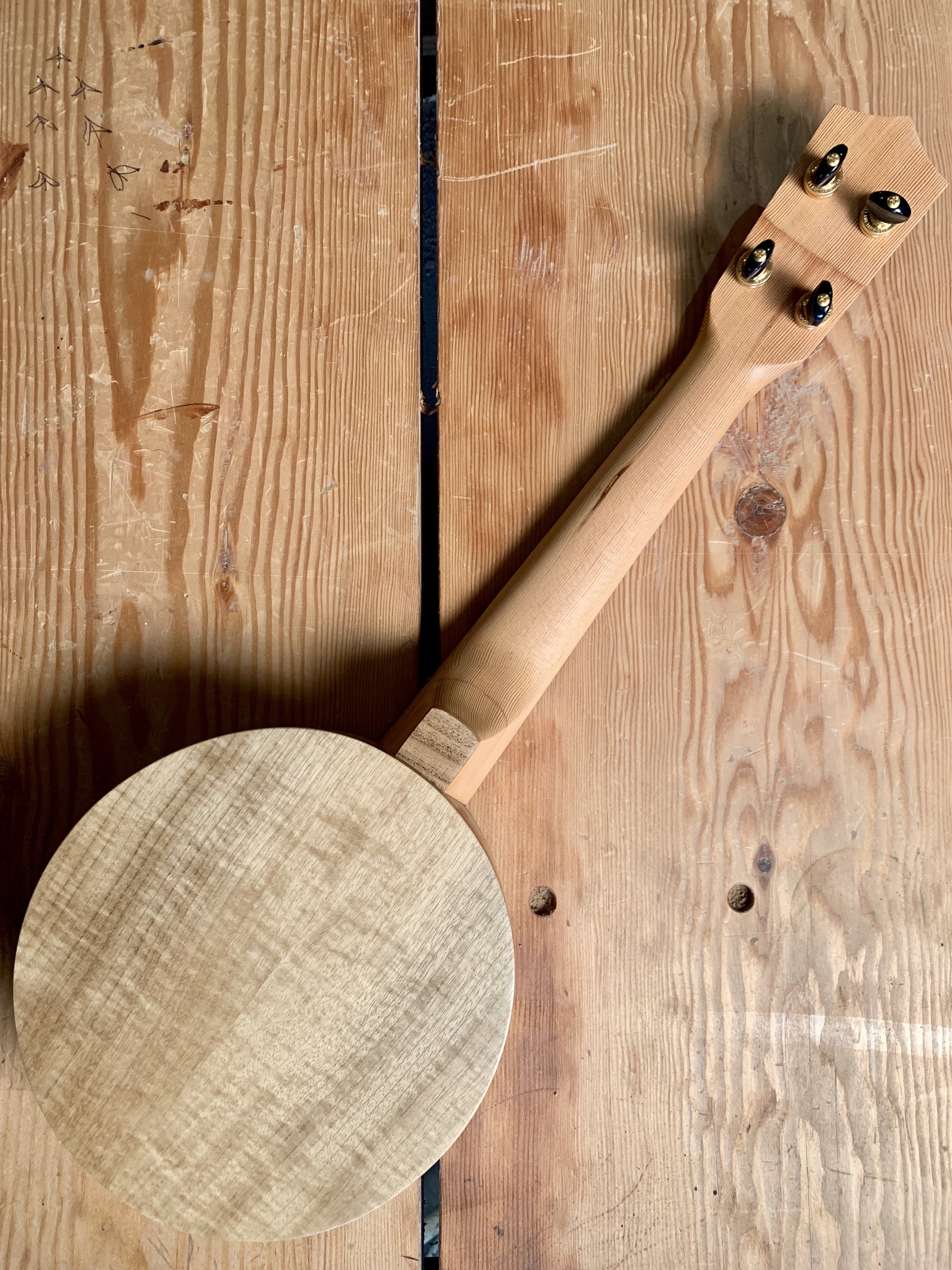
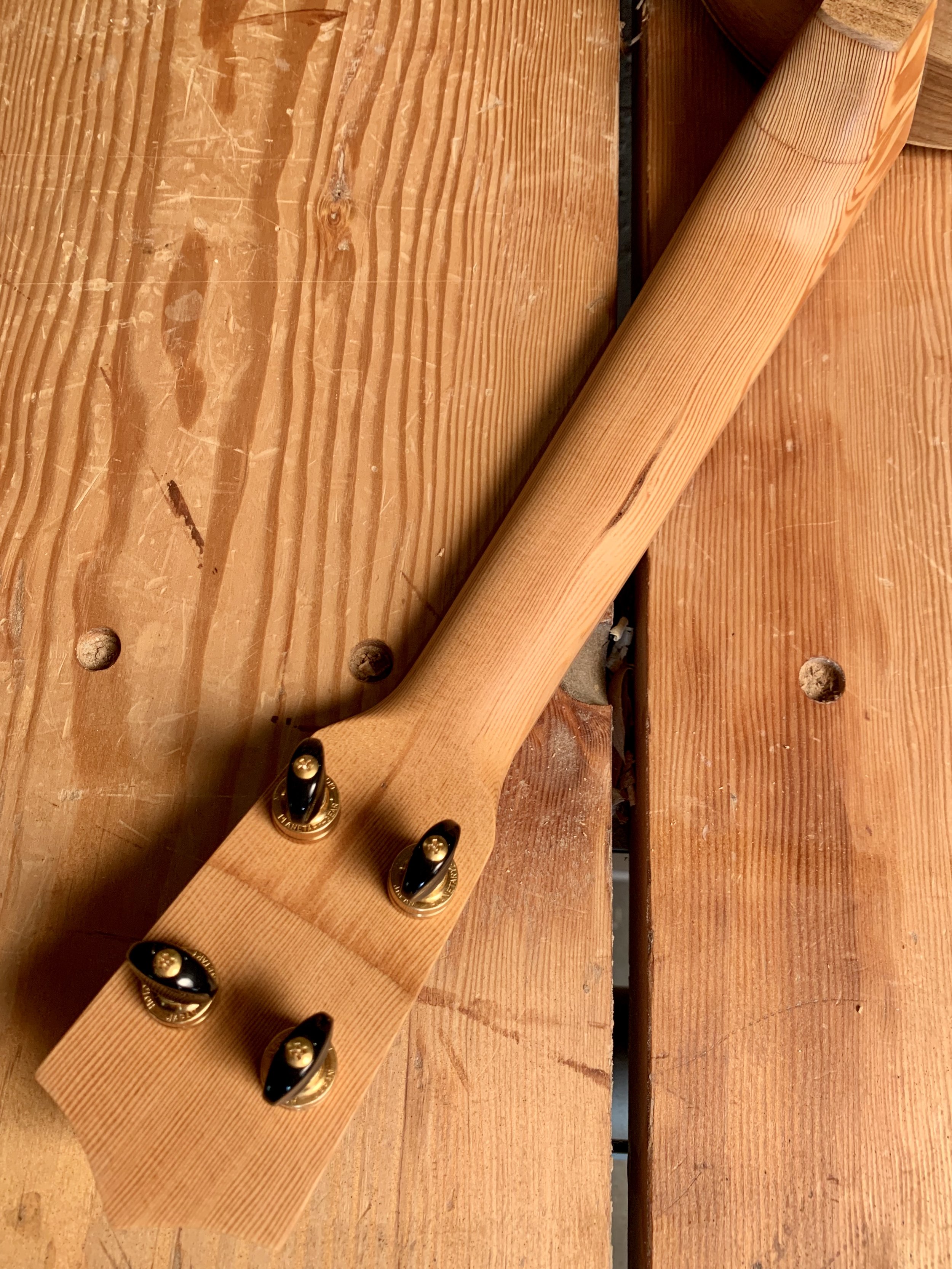
#395- Port Orford Cedar and Clockmaker’s Koa Scout Ukulele

Made from pieces of wood too that are too small for my other ukes, these Scout ukuleles are a way for me to occasionally produce a more “democratic” instrument. It is portable, easy to play, invites conversation, encourages musical community and is affordable for a hand made instrument. I make them whenever I get a few spare hours in the shop. The Koa for this one is from Lizann’s grandfather, who imported it to make grandfather clocks. The Port Orford Cedar and fir are from the Oregon coast.
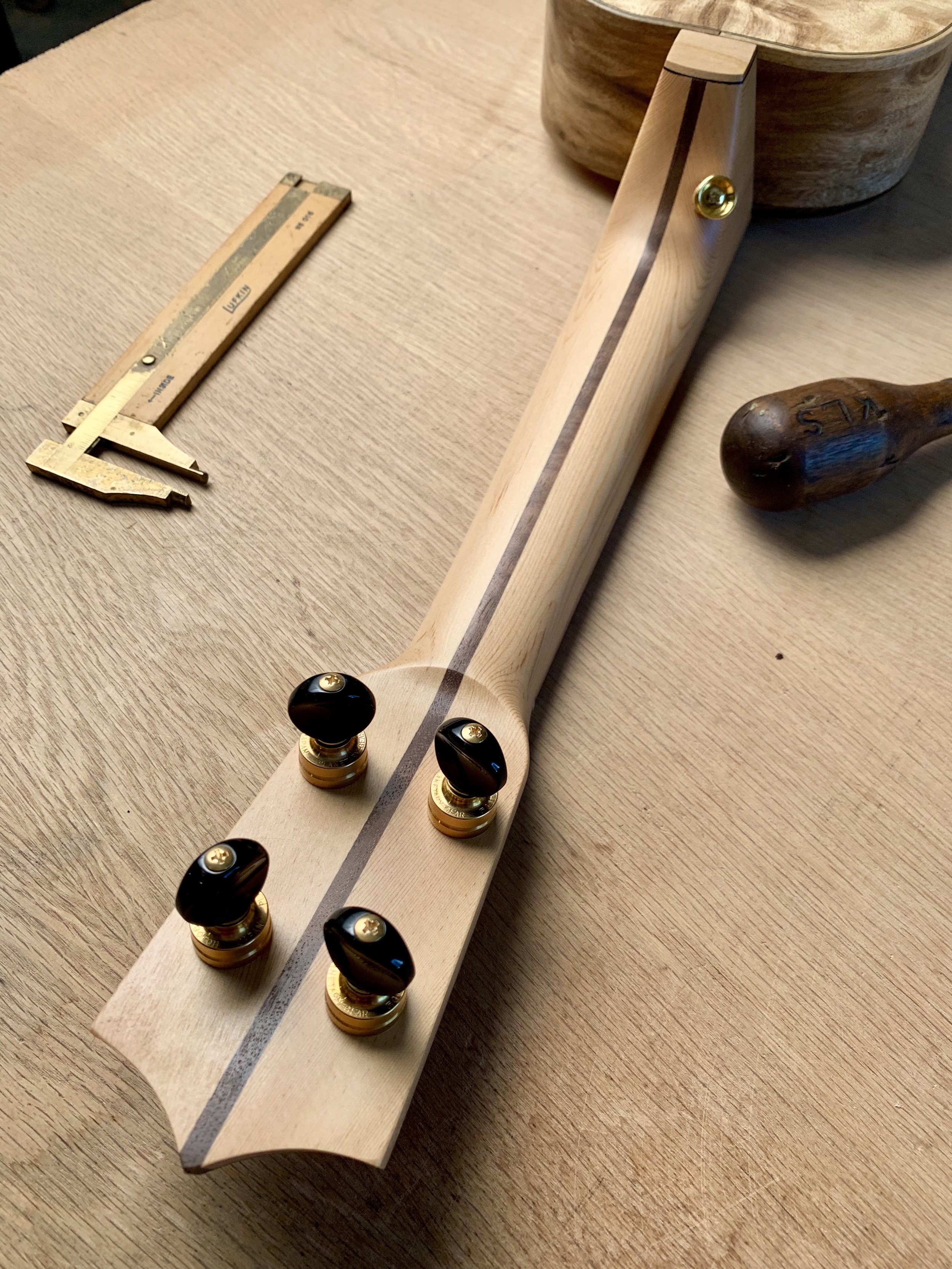
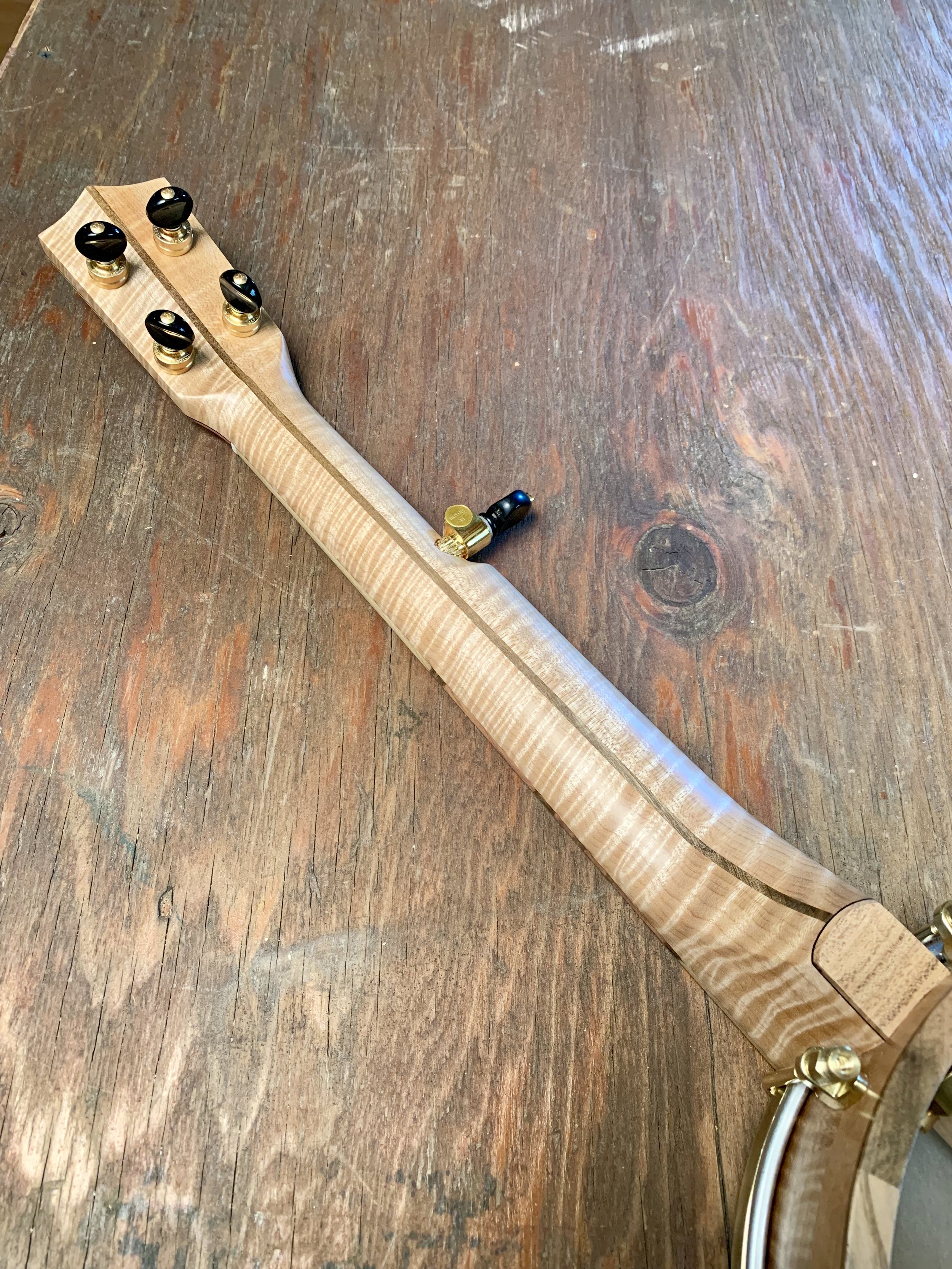
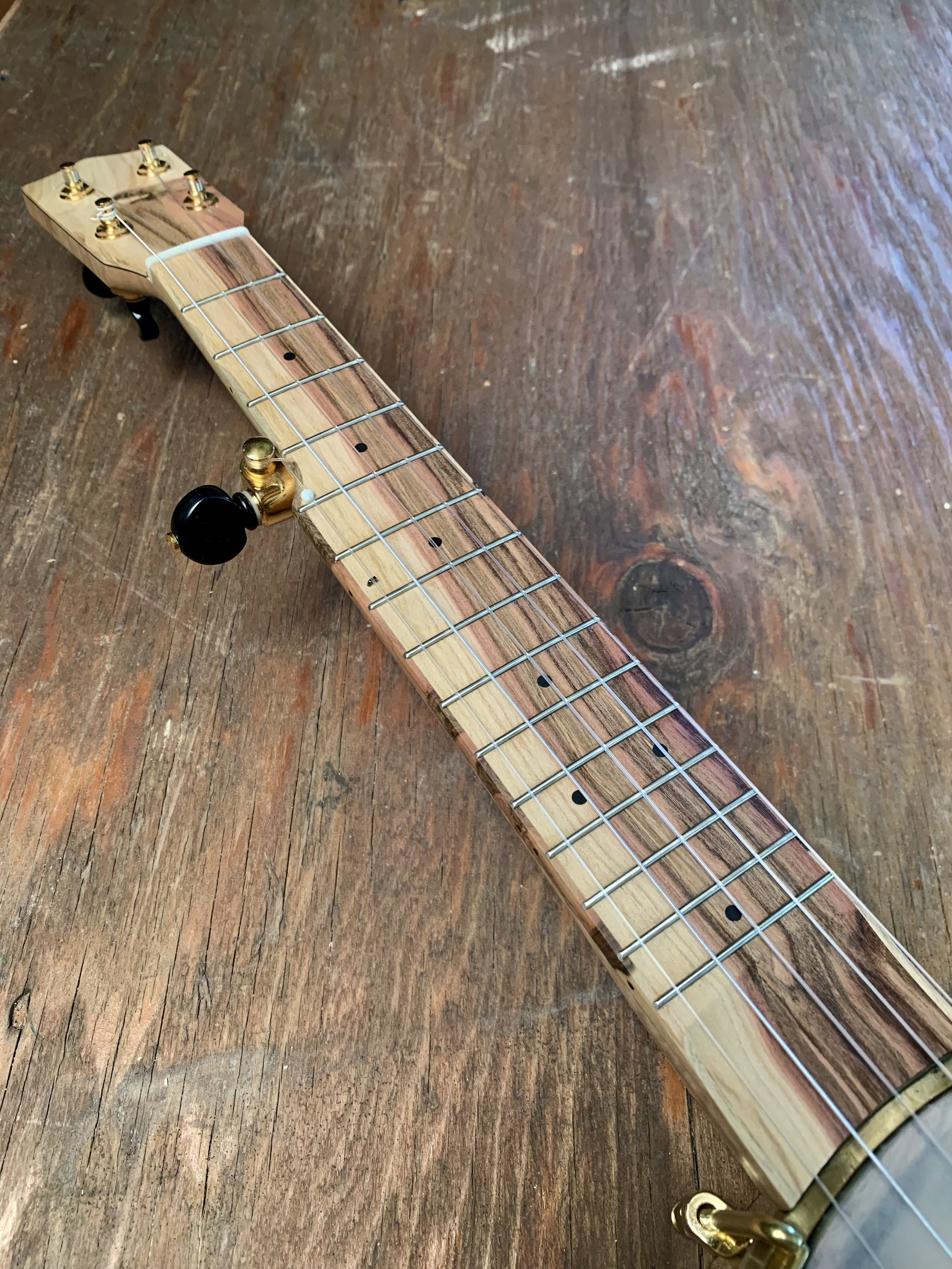
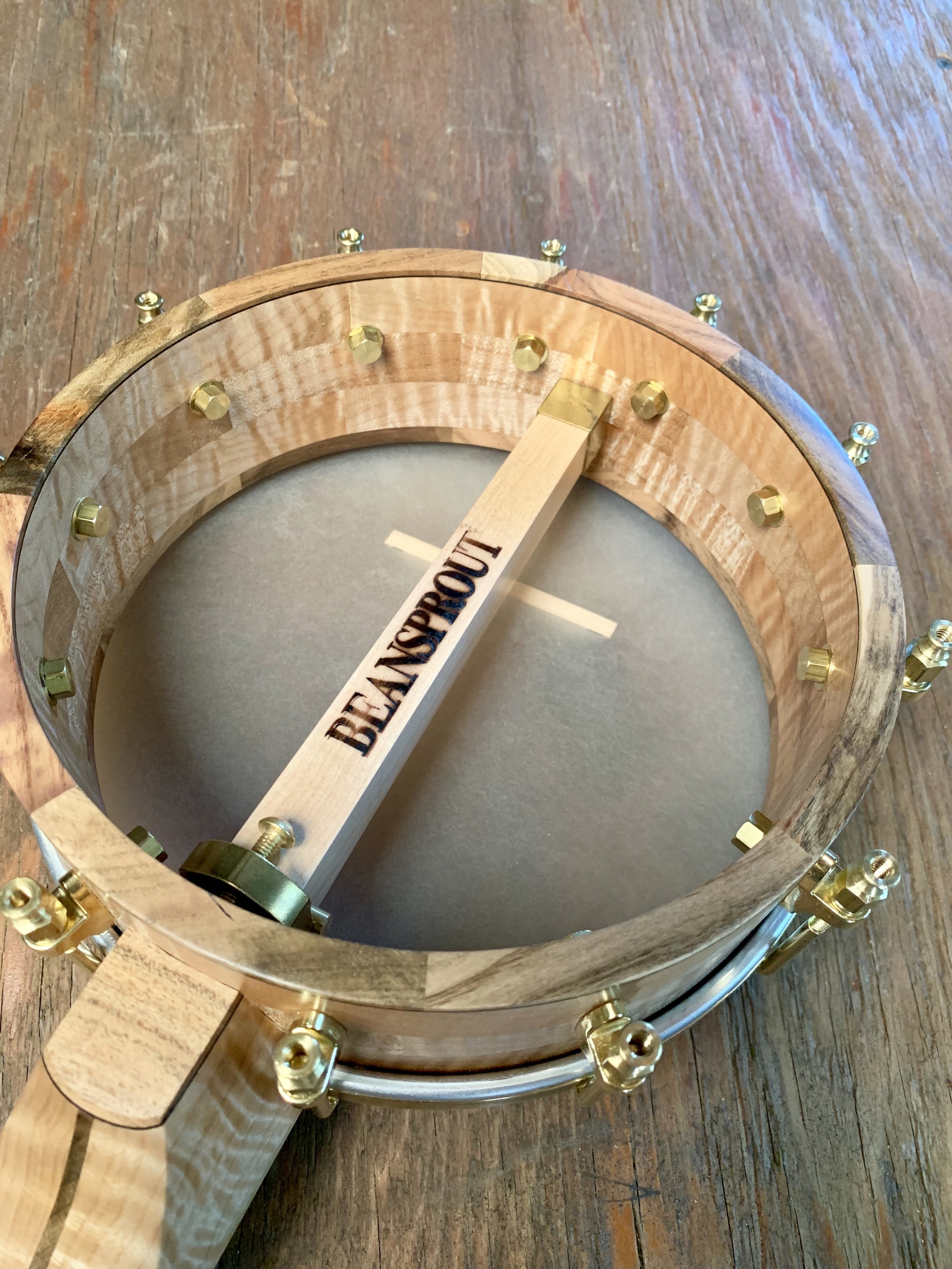
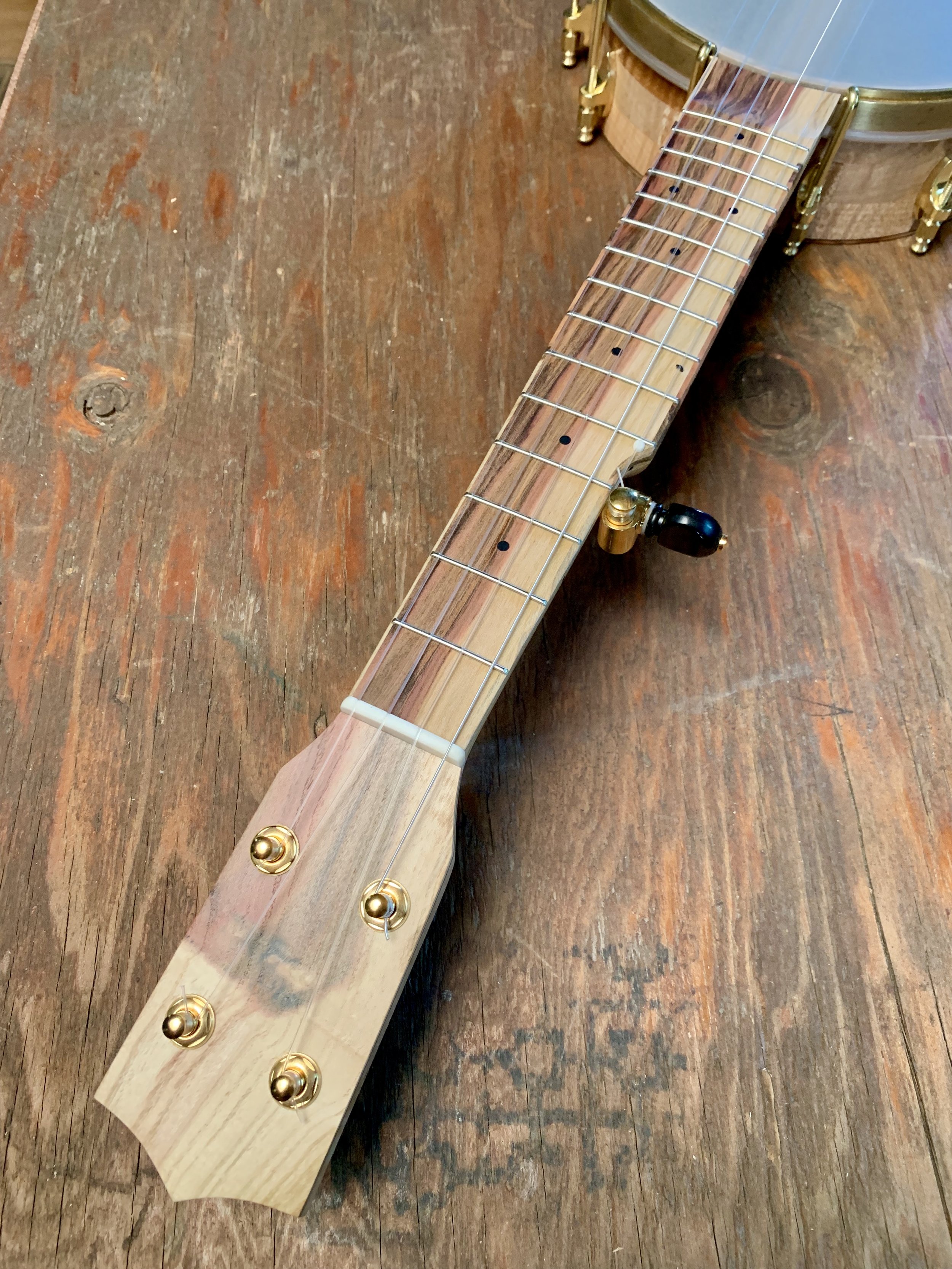
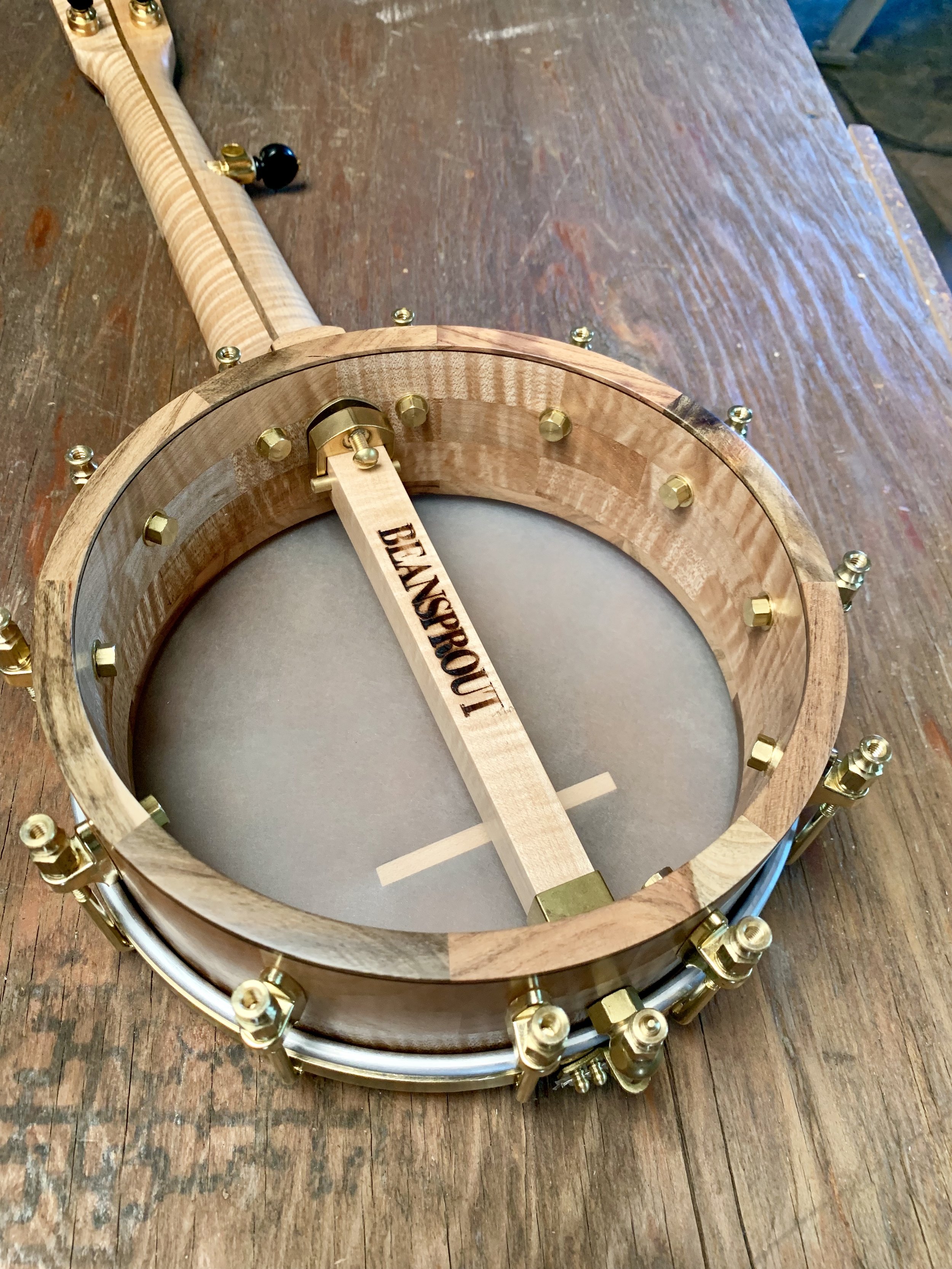
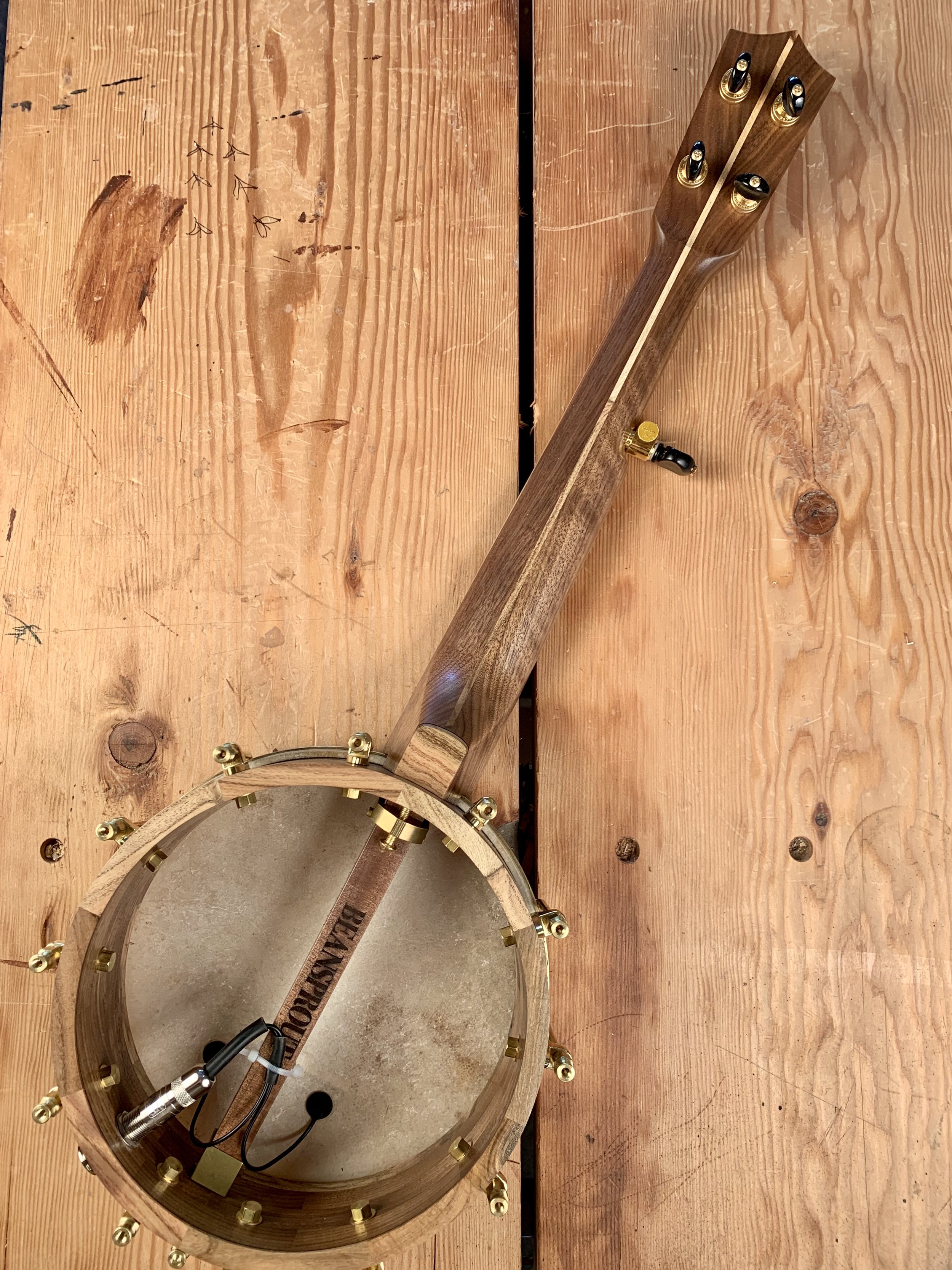
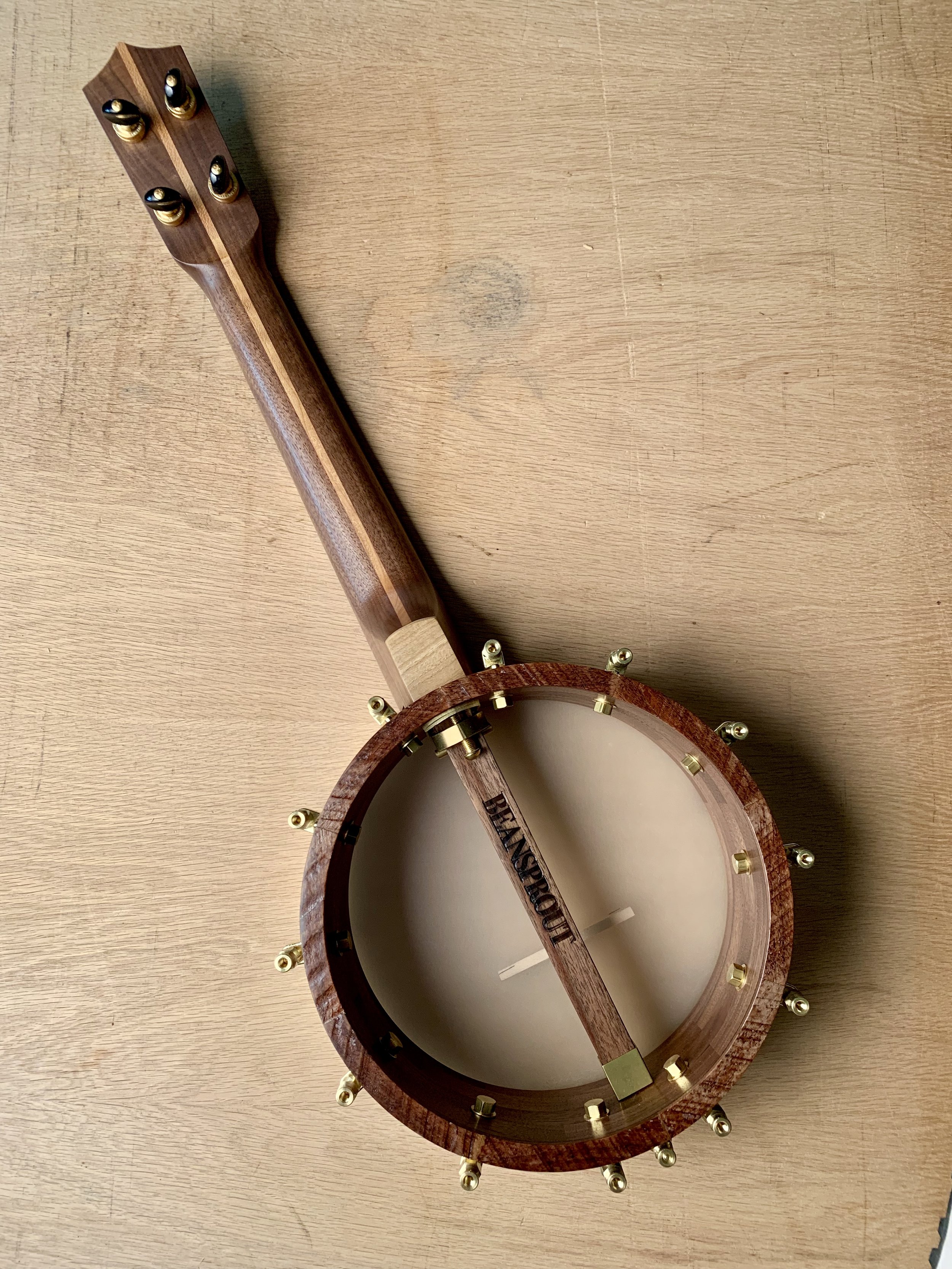
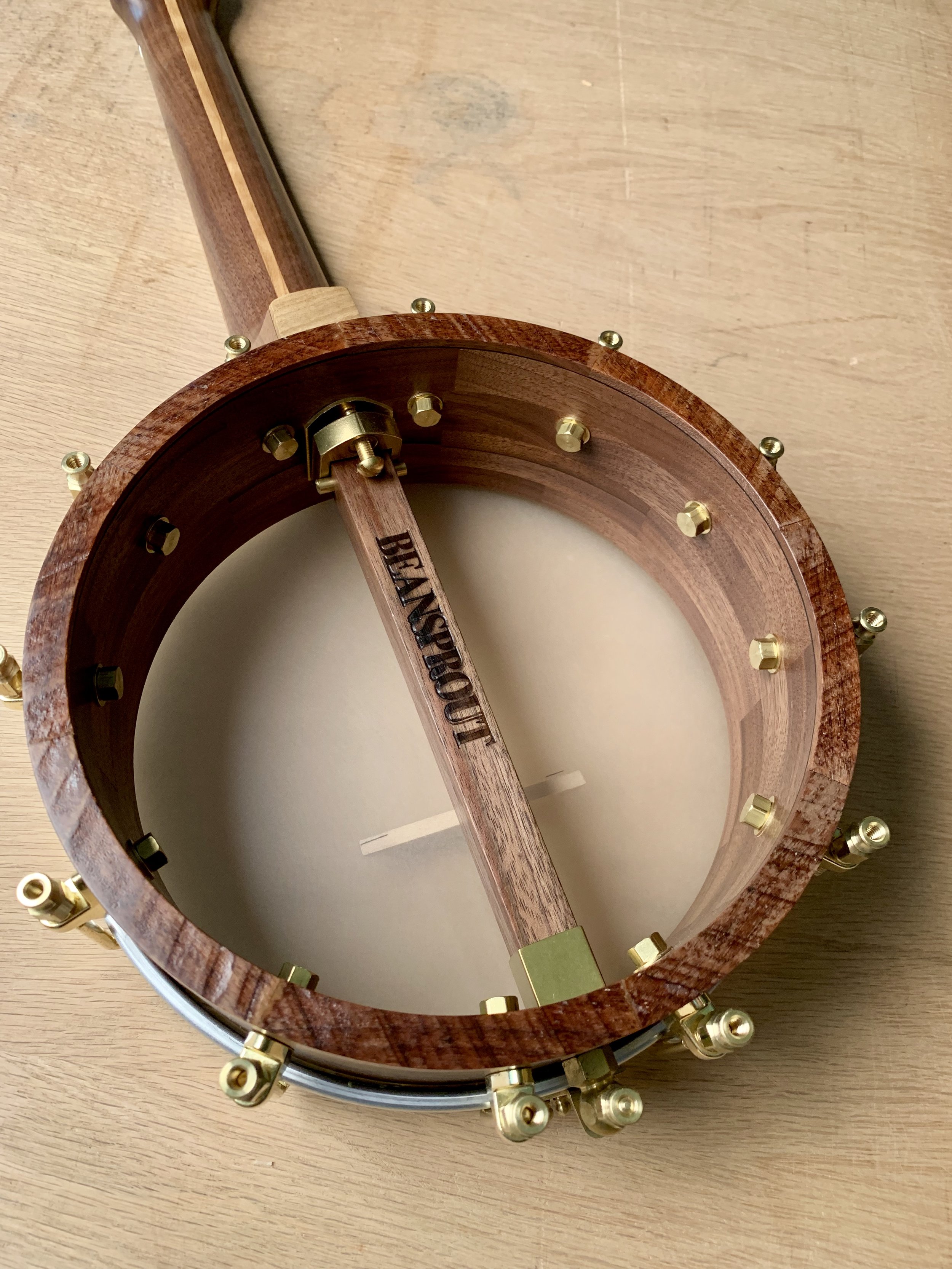
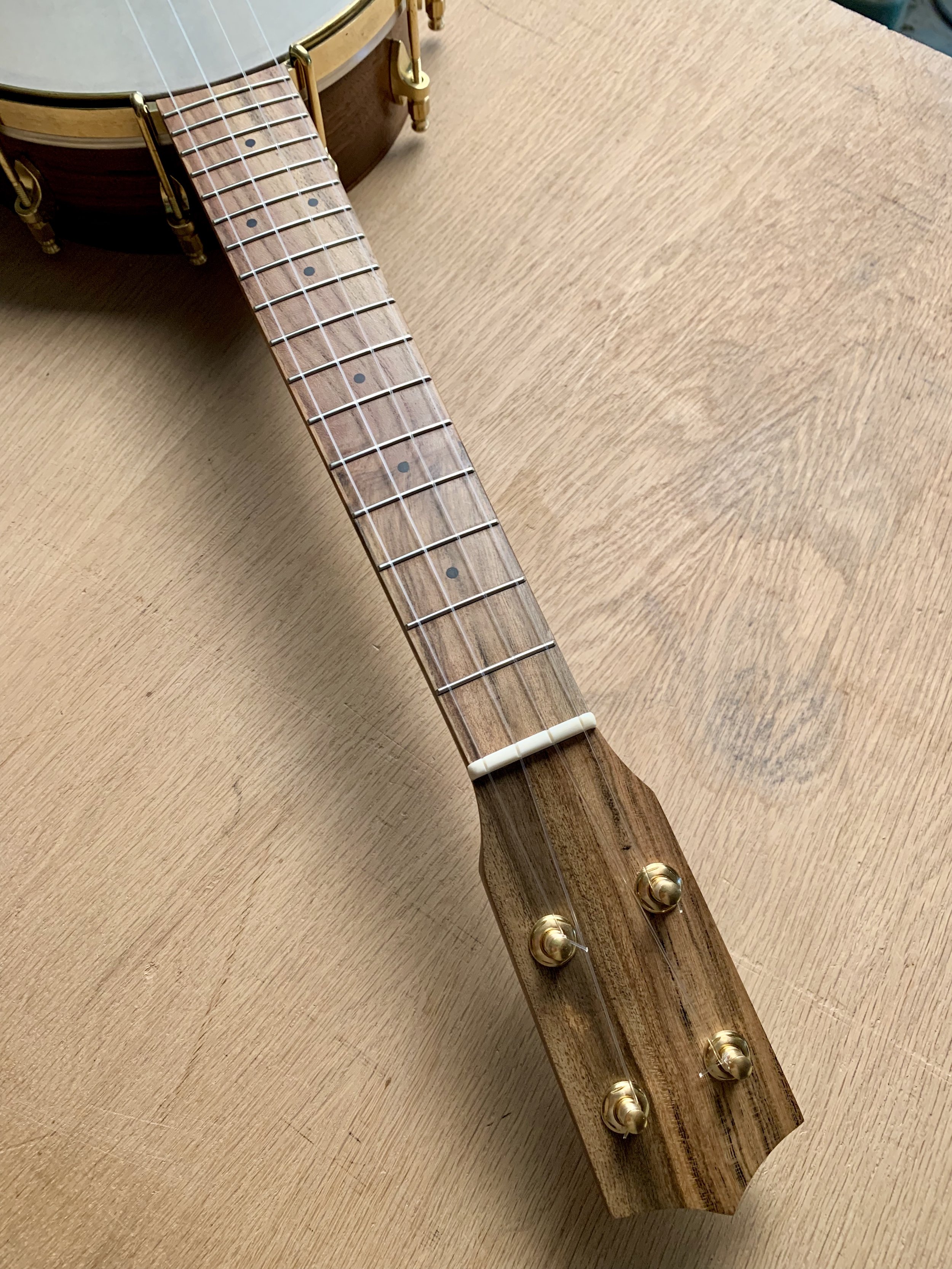
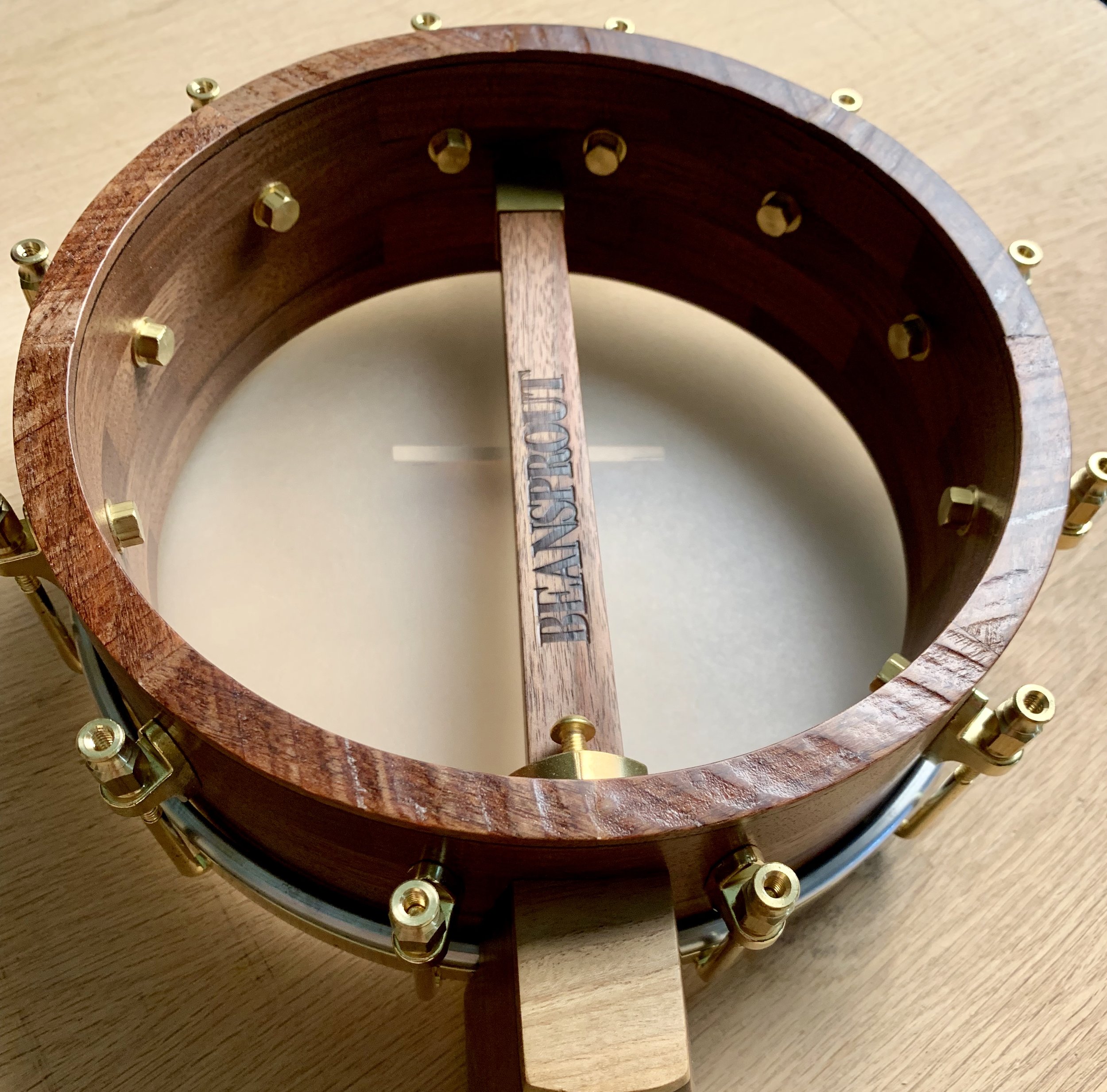
#397- Curly Maple and Pistachio Mini Five String Banjo

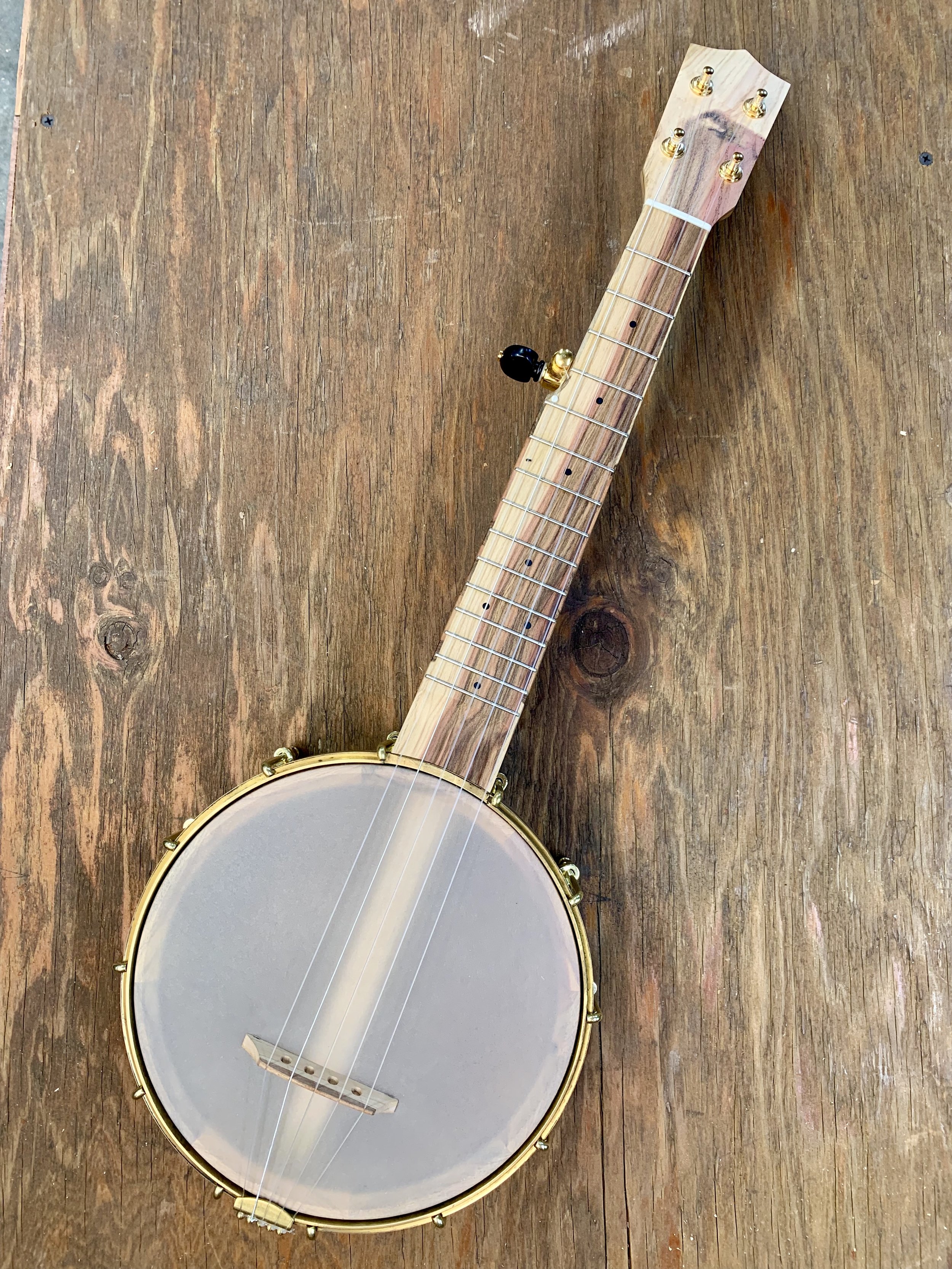
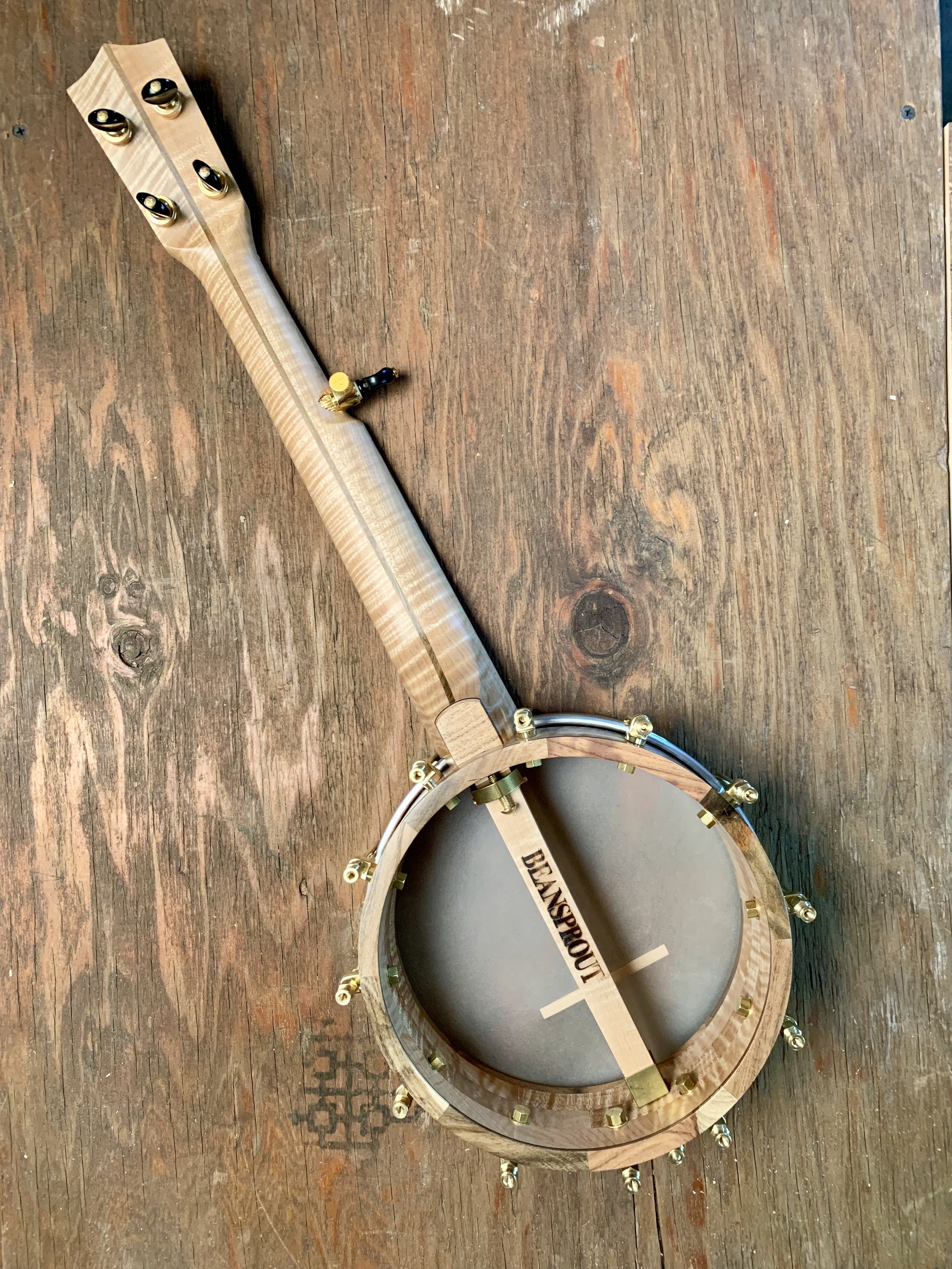
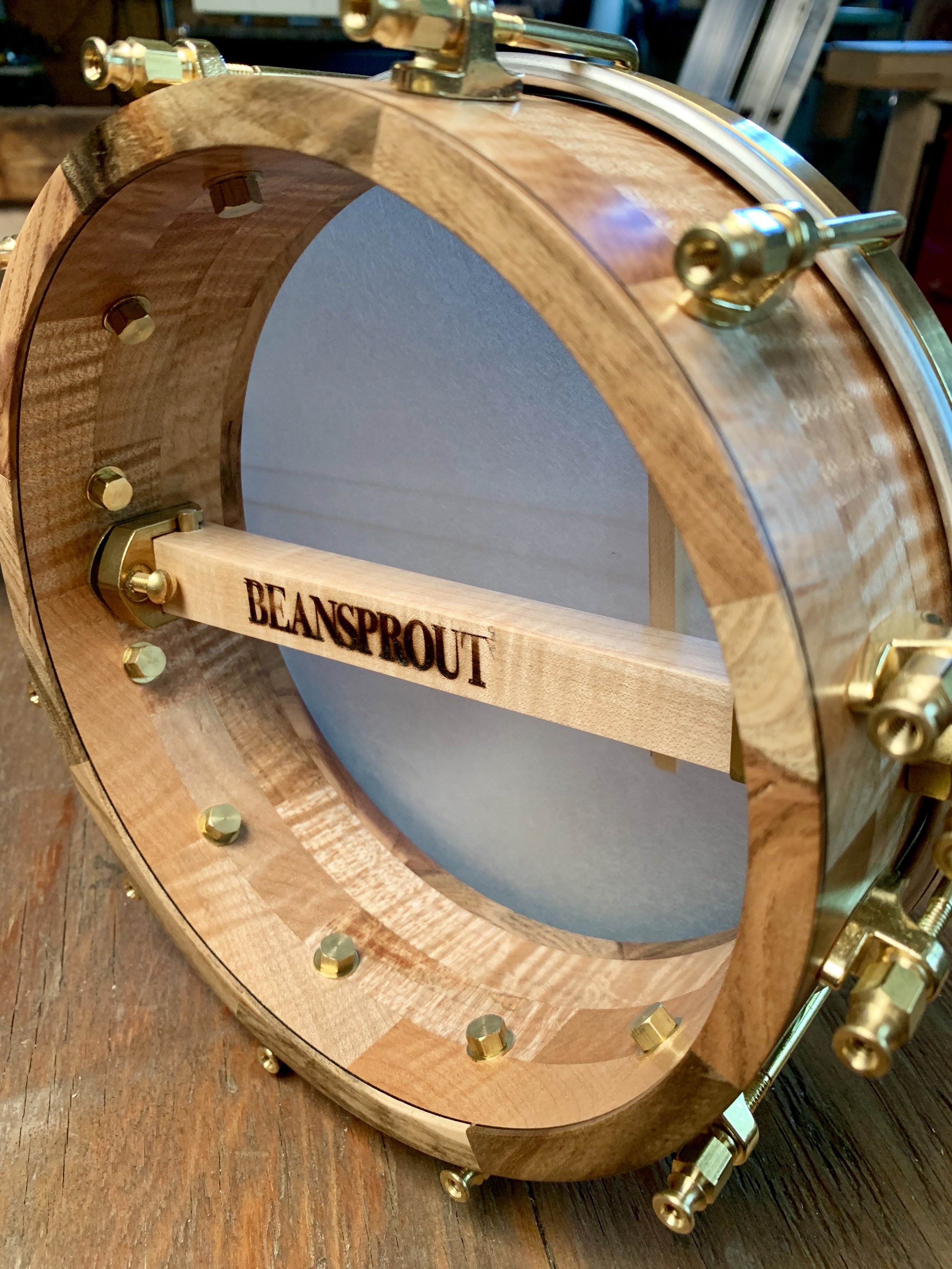
This curly maple from Zena Forest Products is just so awesome. The curl is great, the reddish natural color is better than any stain and it is quite hard, which produces a strong tone. I paired it with some unique pistachio from California orchards to complete the look. With materials this nice, it really pushes the boundaries of my folk art. This inspires me to work better and more accurately but also grounds me to the wood’s and my own limitations. It is off to Hawaii to live it’s own best life as a beautiful and functional object.

#396- Maple and Pistachio Concert Banjo Ukulele

Just because you can play loudly, doesn’t mean you should. (Well, sometimes, maybe…). Either way, Ed will be well equipped with this one. Hard Maple from Henry’s dance floor stash and some awesome pistachio from California Orchards. Ready for music.

#394- Port Orford Cedar and Mastergrade Myrtle Baritone Ukulele

This one can do it all, deep and rich, bright and vibrant, loud and soft. It has so much sound it practically leaps off my lap! It is a whole different animal compared to the muddy and quiet import baritone ukuleles. The Mastergrade Myrtle back and sides really are a special piece that I have found myself staring at for long stretches of time. (Get back to work, Aaron.). The Port Orford Cedar top has blue streaks in it that I like as a subtle texture. The fir neck came from the barn at Level Beer in Portland. Everything else is from the Oregon Coast and California Central Valley via woodfromthewest.com.

#393- Mastergrade Myrtle Alto Ukulele

It is a strange feeling to spend many years collecting “perfect” wood but watch my wabi-sabi/asymmetrical/twisted grain designs gain so much attention. I’m not complaining, but it’s a little funny to dig through the wood stash, pushing aside the “good” pieces to find something like this. This set does stand a cut above, I believe, because of the beautiful flame and curl AND the asymmetrical stance it takes. This Myrtle is from a board given to me by a customer that was left over from a furniture project. I wrapped it all up with straight grain pistachio from California Orchards and set it with a fir floorboard and walnut neck. It plays easy and sounds great. Proceed.


I spent a pretty good amount of time with #393 this weekend and I absolutely love it! It’s a fantastic work of art and is just lovely to play. It sounds great and it is by far the easiest uke to play that I’ve encountered. The neck has a softness to it that was unexpected in the best way and all of the detail that’s gone into it is just wonderful to see up close. The myrtle you had available really is some of the best looking wood I’ve seen in any instrument, period. It feels like it can tell so many stories already. A few of my friends who also play have all asked me who made it as well as grilled me on all the details of the build. Thank you so much for making such a wonderful instrument for me! It’s going to have a wonderful home here in Chicago.
- R. R.
ryanriley.jpg

#391- Port Orford Cedar and Myrtle Alto Ukulele

It has been fun to make so many alto ukuleles lately, they all seem to have their own personality while being so similar. This curly Myrtle set includes some crazy bug holes and knots that I love. The fretboard is also interesting, so I paired a rather plain neck, binding and Port Orford Cedar top to balance it out. I find it beautiful but not too busy. It has a sweet, breathy voice with plenty of volume. The Port Orford Cedar and Myrtle is from the Oregon coast and the pistachio is from California orchards, all from woodfromthewest.com. The salvaged old growth fir neck is from Portland Salvage Works.

#384- Spruce and Maple Alto Ukulele

The main focus for this build was to get Karen more tone and volume so she could compete with her band mates. Despite the alto’s smaller size, I find that it could be perceived to be as loud as a tenor, but with a different voice. The other thing I like about this instrument is the amazing quilted maple back and sides. It’s like the best part is hiding on the back for Karen to show you (or not.) The maple is from the Carpenter Ant stash, the spruce top is straight grain dulcimer spruce, the neck is from Douglas fir floorboards and the pistachio fretboard and trim is from California orchards.

#390- Spruce and Walnut Tenor Ukulele

Shane has some good ideas. The first was bringing me a pile of salvaged fir and a sampling of beer from his brewery when he came to visit the shop. The fir was from the barn at Level Beer and I got a few more necks out of it than this one. I kept a couple of small nail holes in the neck as witness to its origins. The top is straight grain spruce from my dulcimer stash and the walnut is curly Oregon walnut from Goby. The dramatic pistachio fretboard is from California orchards. Shane’s next good idea was to let me decide how to decorate his wood choices. Because of how busy everything else was, I decided on a rope rosette and no binding. Yes, I am excited about the materials but I also love the sound. Loud but balanced, like his beer. (Not too hoppy!)

#385- Myrtle, Fir and Pistachio Scout Ukulele

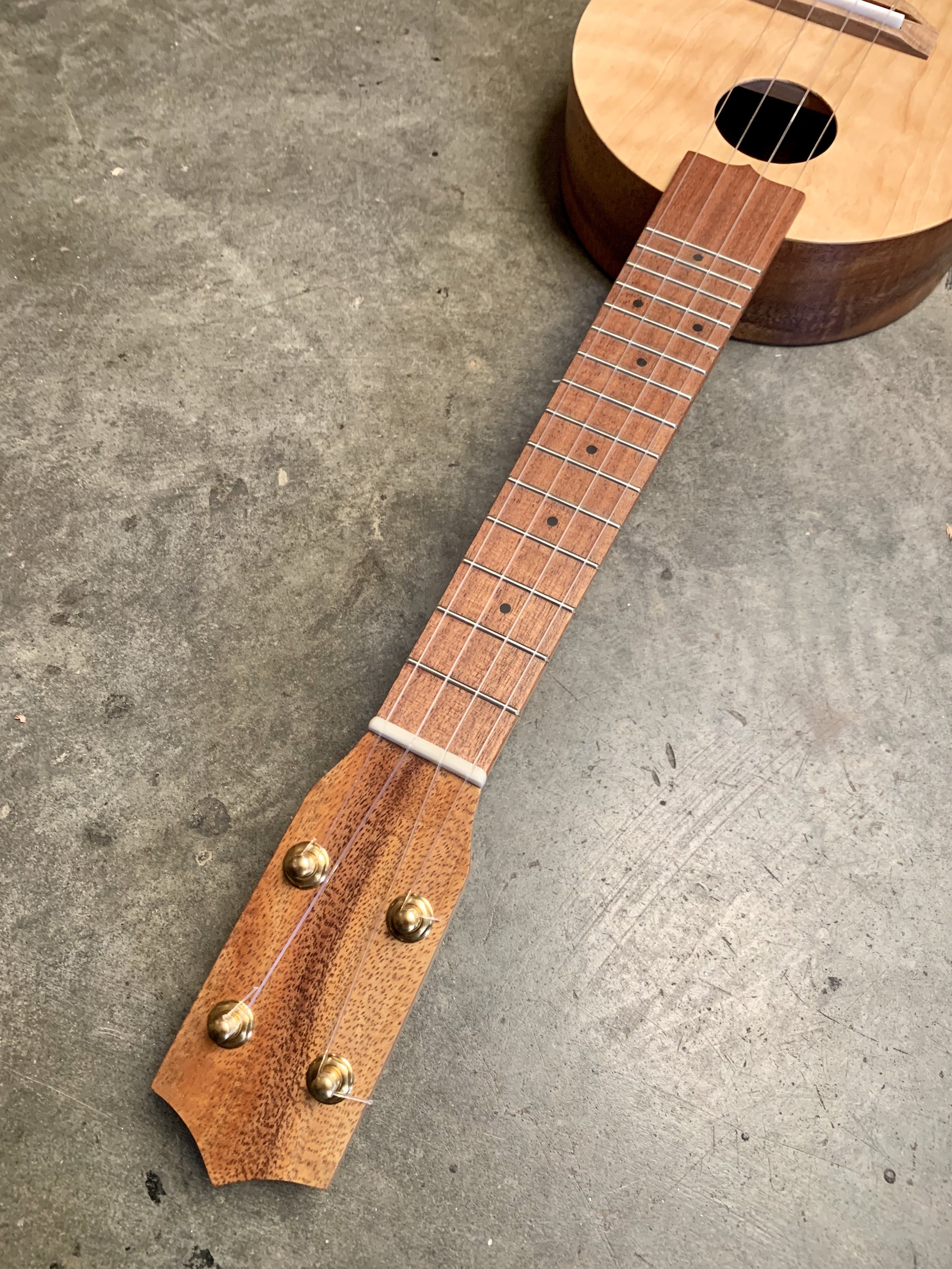
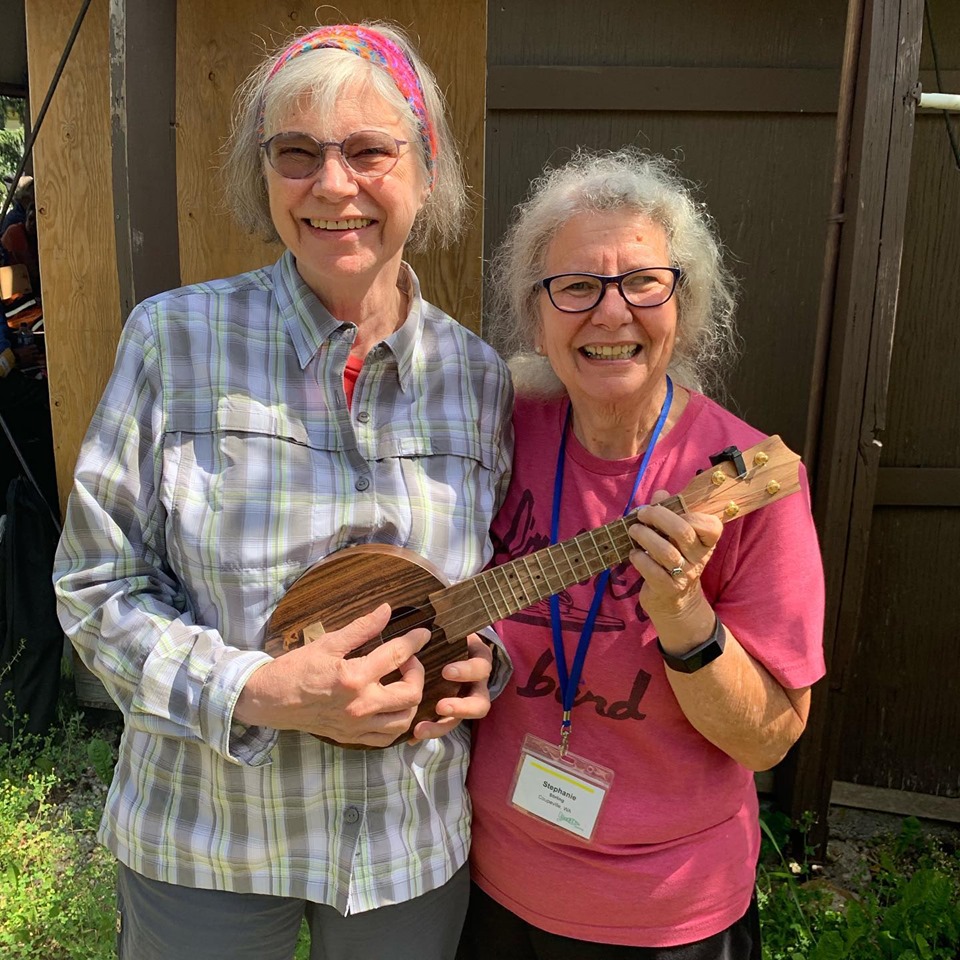
This is the second Scout model ukulele I have built, a soprano scale uke with a 7.5” round body. It is an homage to Lyon and Healy/Washburn’s camp ukulele from the 1920’s. The dark Myrtle is a cutoff I saved from when I worked at Mya-Moe, it was the same board as my two main instruments during that time. The neck is old growth Douglas Fir and the fretboard is pistachio from California orchards. It features a beautiful burl in the first few frets that I have been saving for a special project.

Friends Stephanie and Louise decided upon joint ukulele custody of this little gem!!

stephanieandlouise.jpg

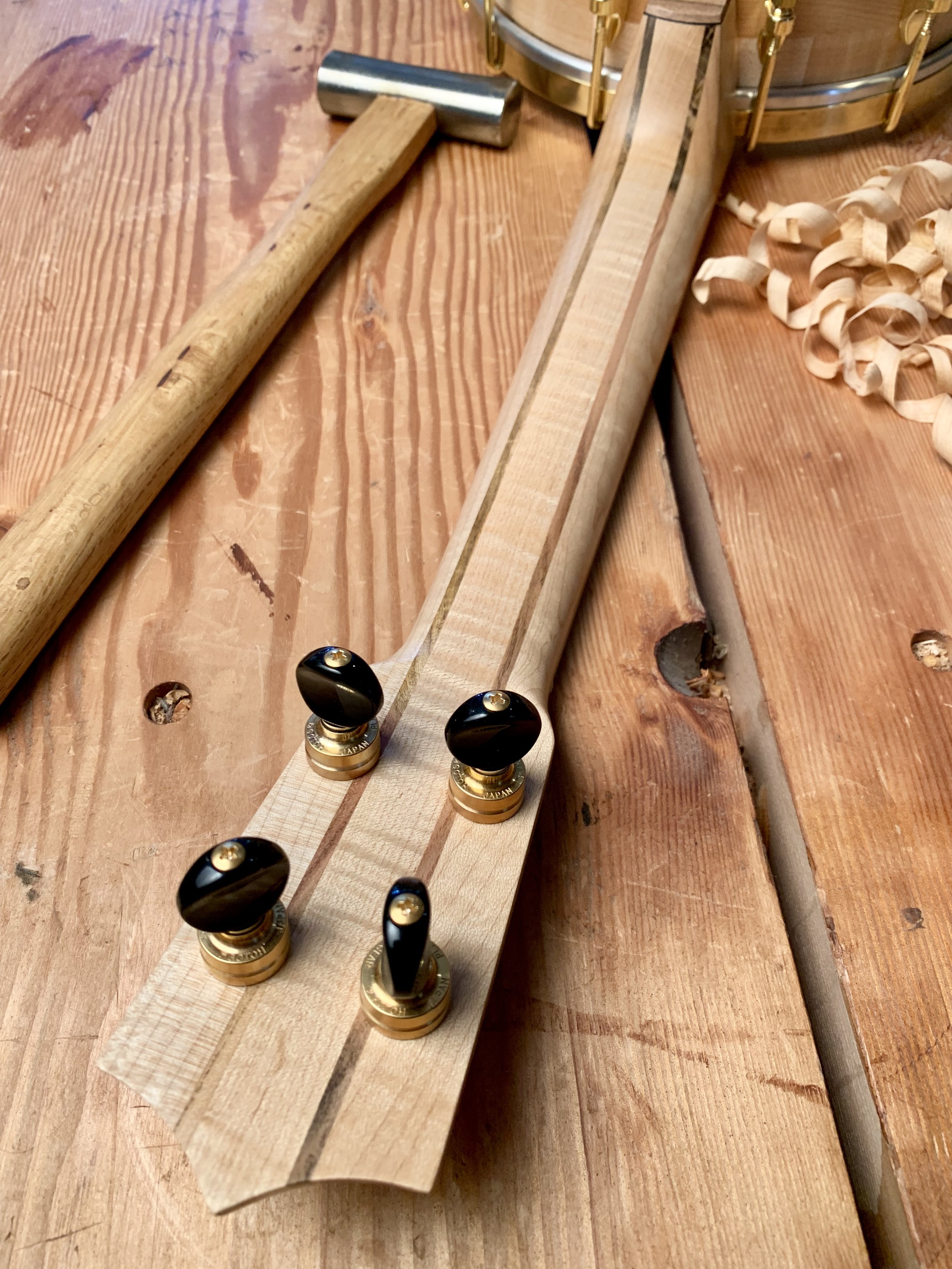
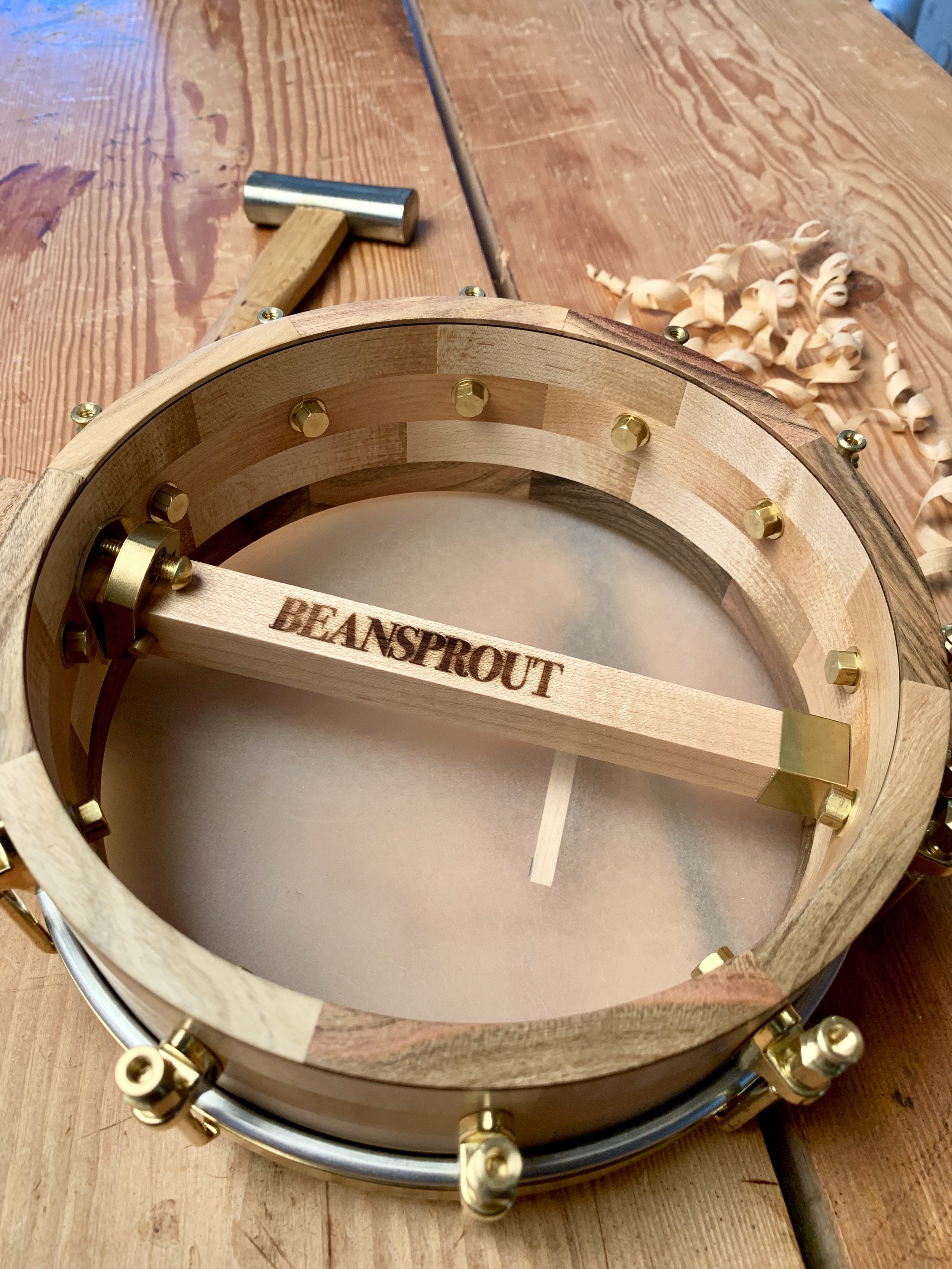
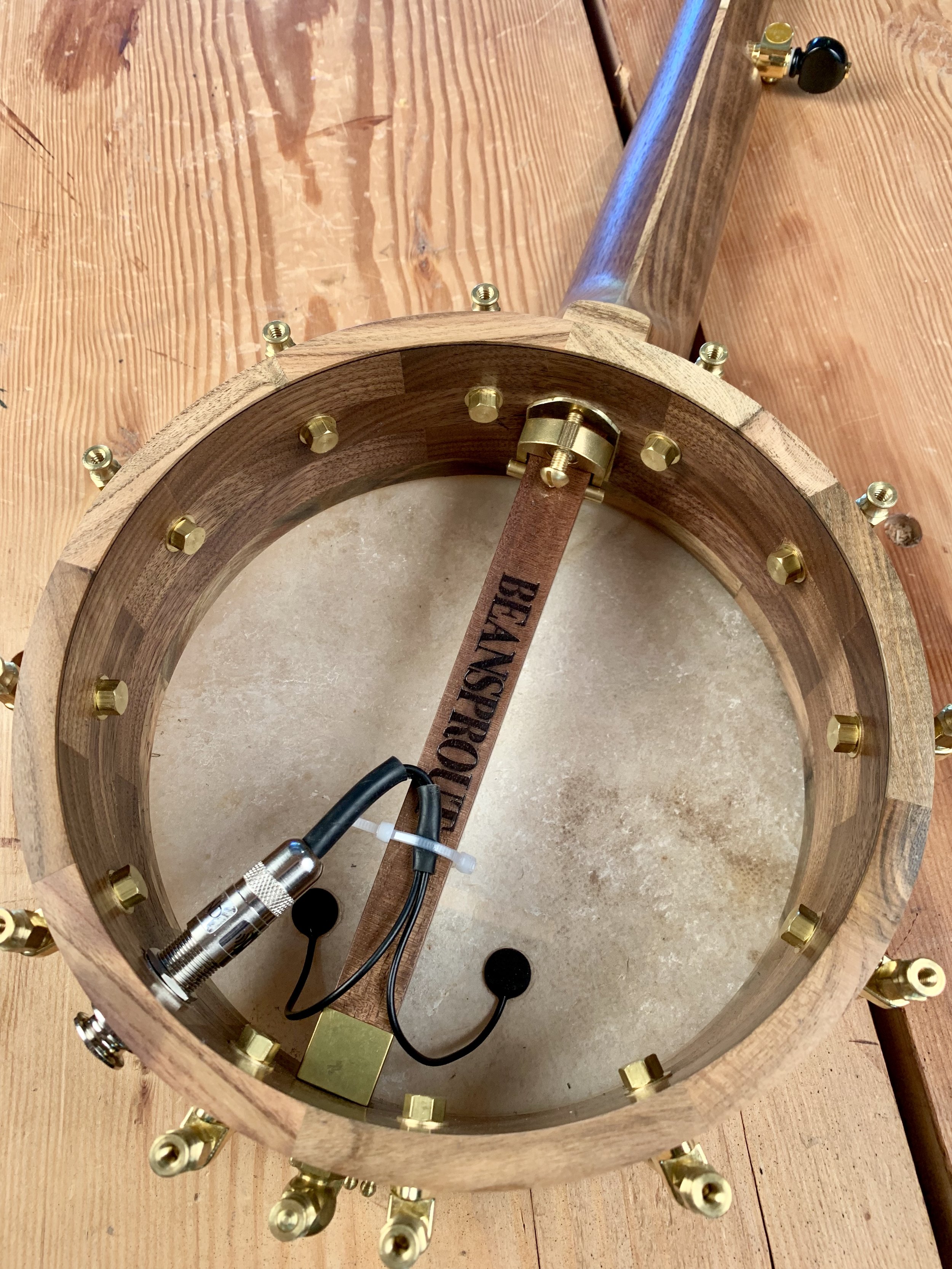
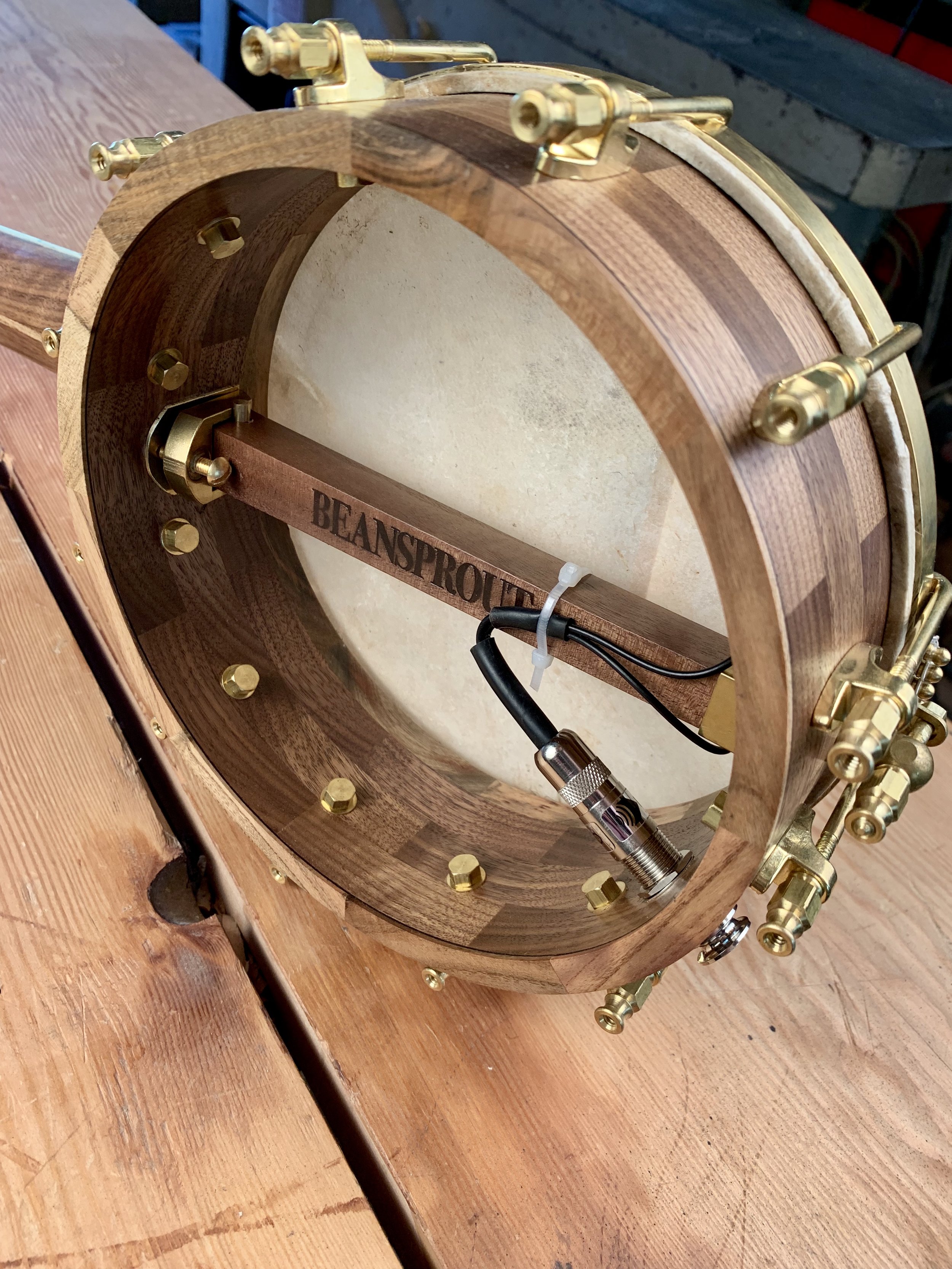
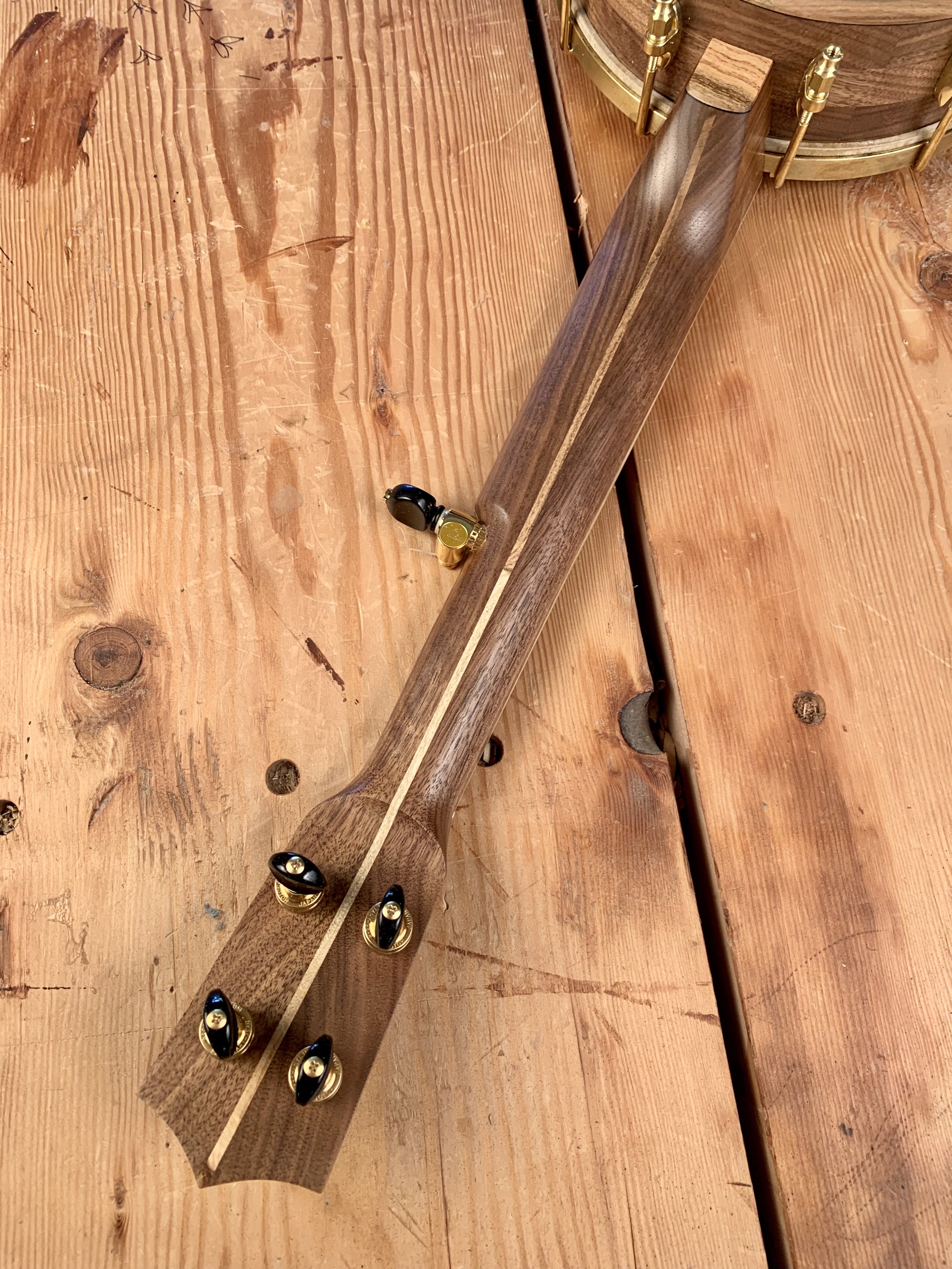
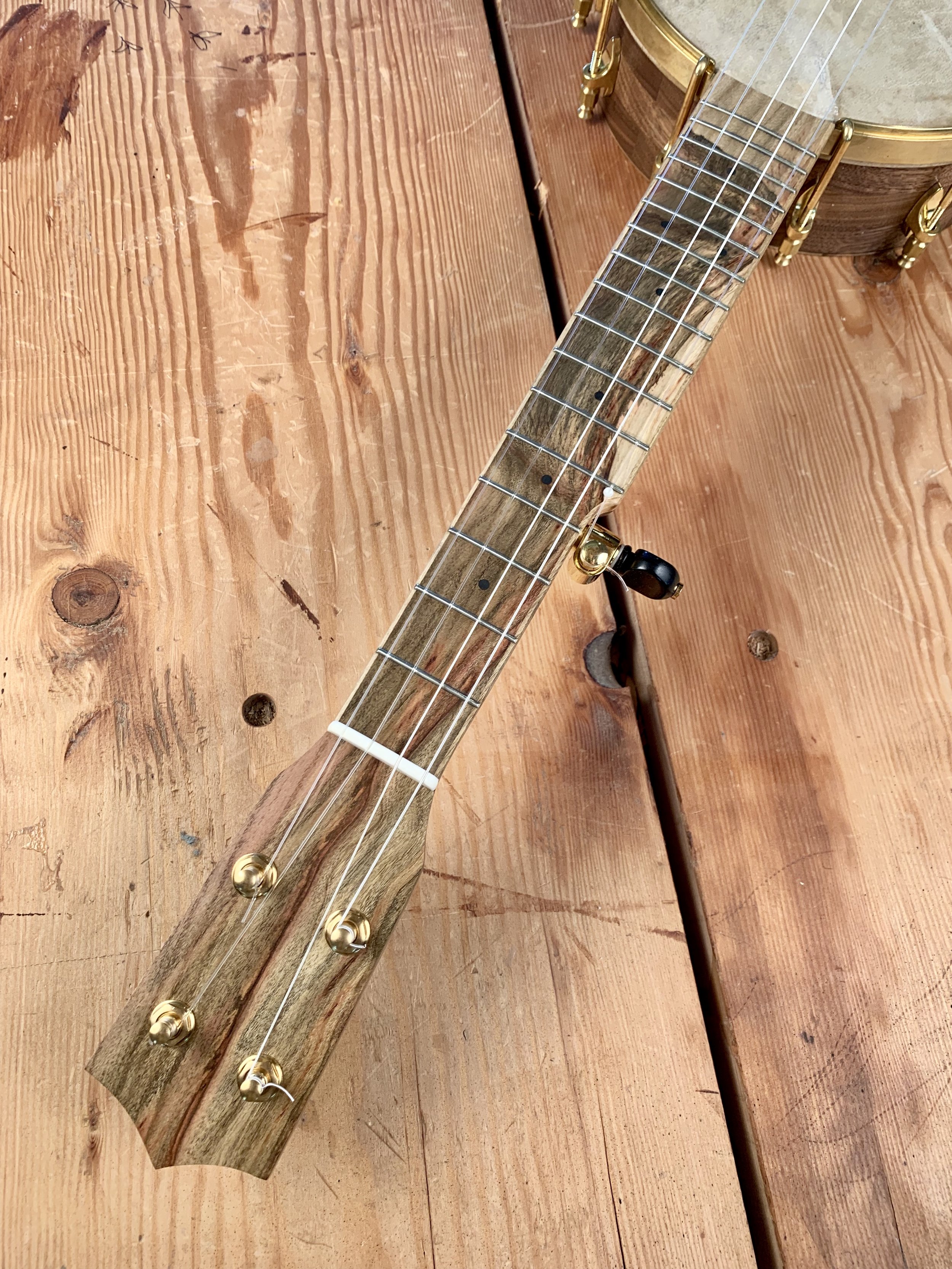
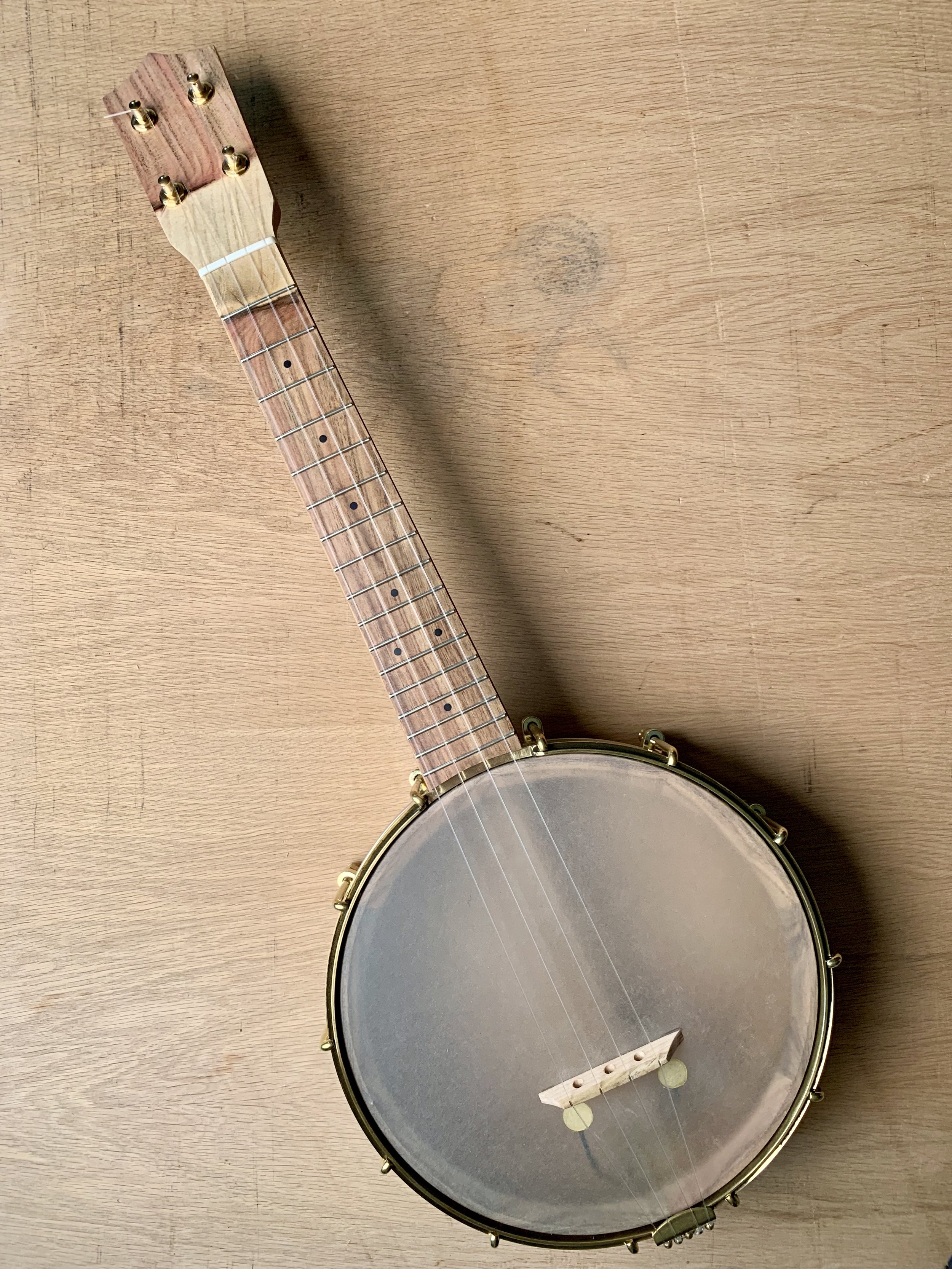
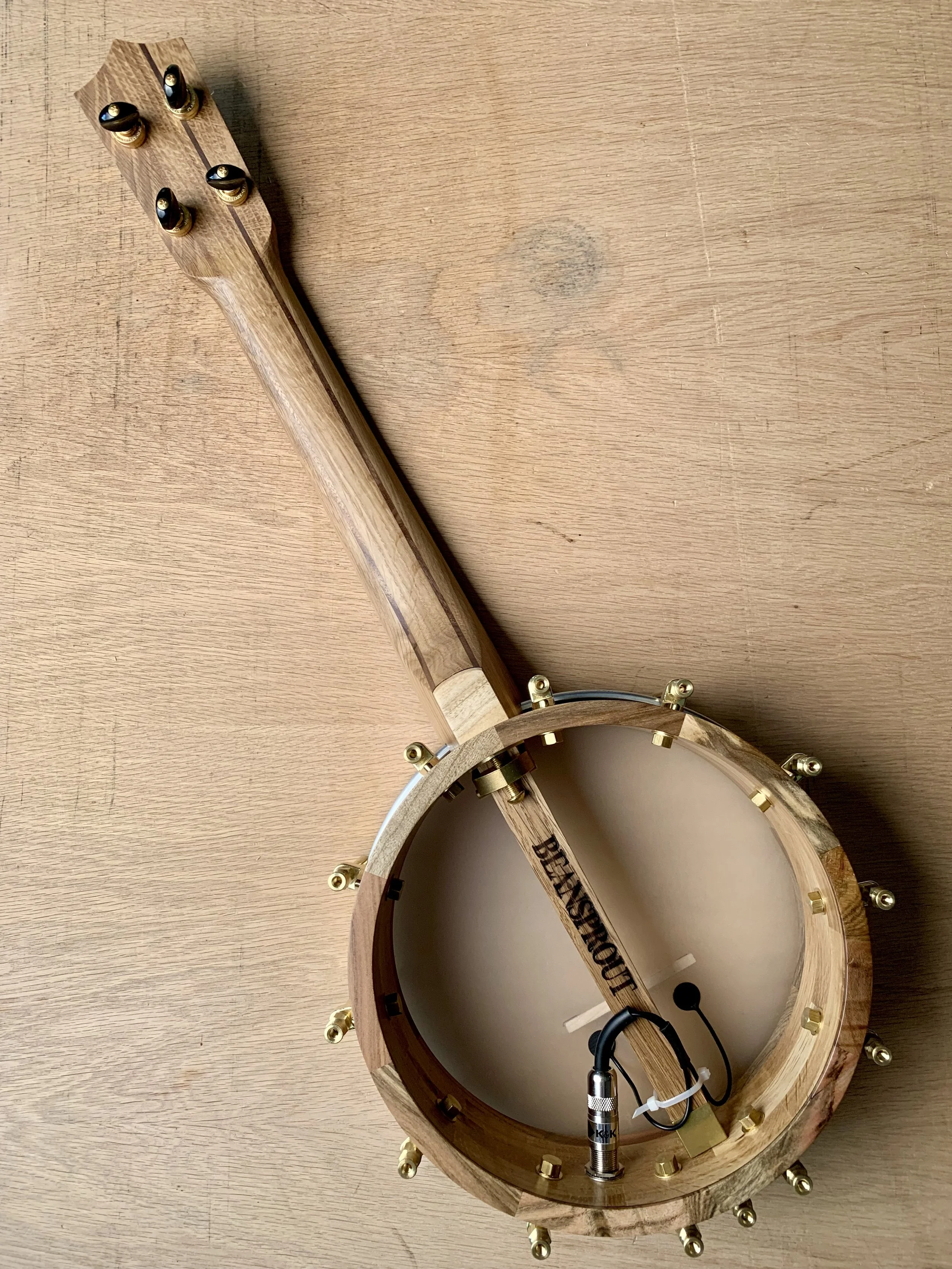
#392-Walnut and Pistachio Mini Five String Banjo

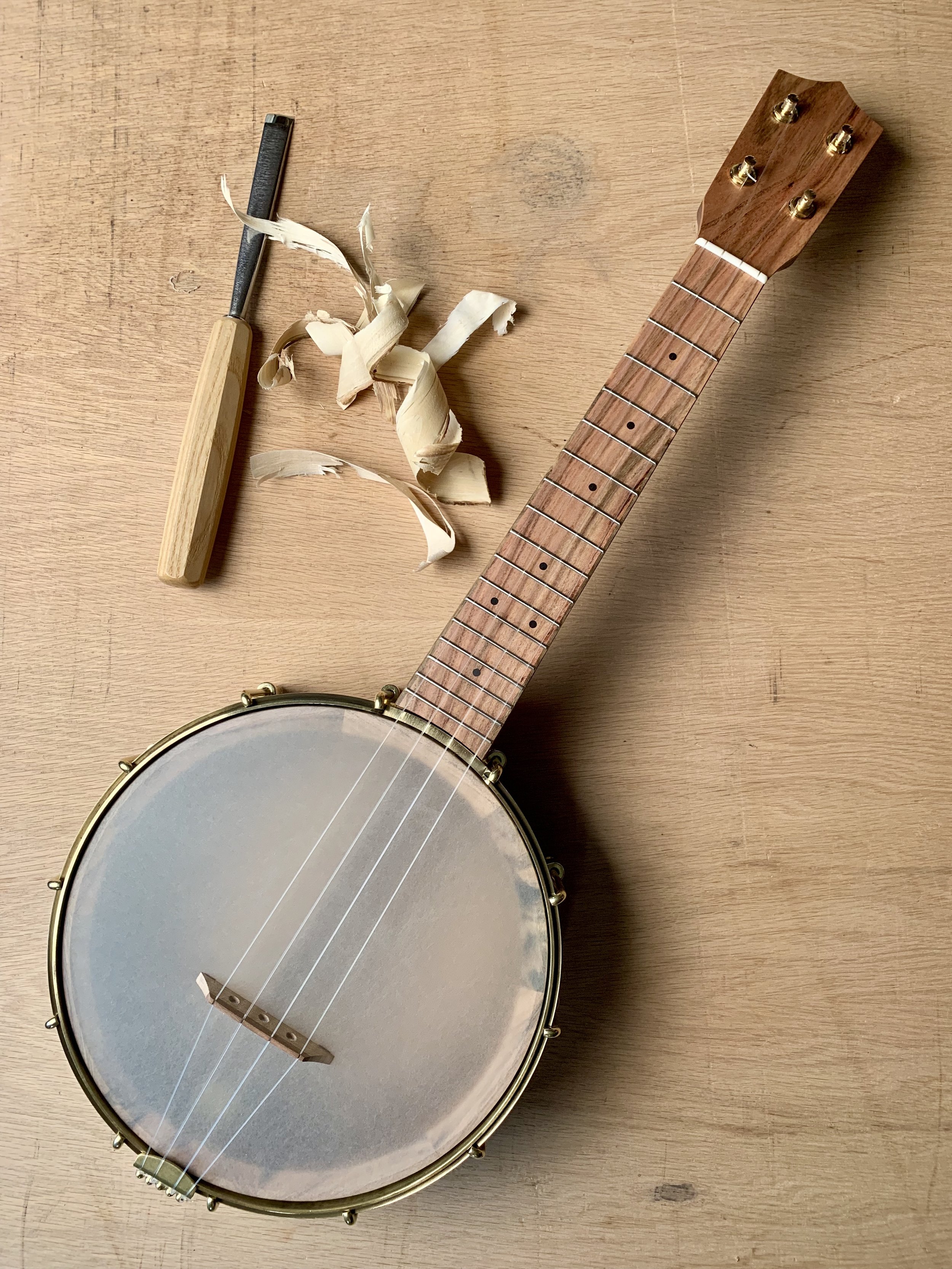
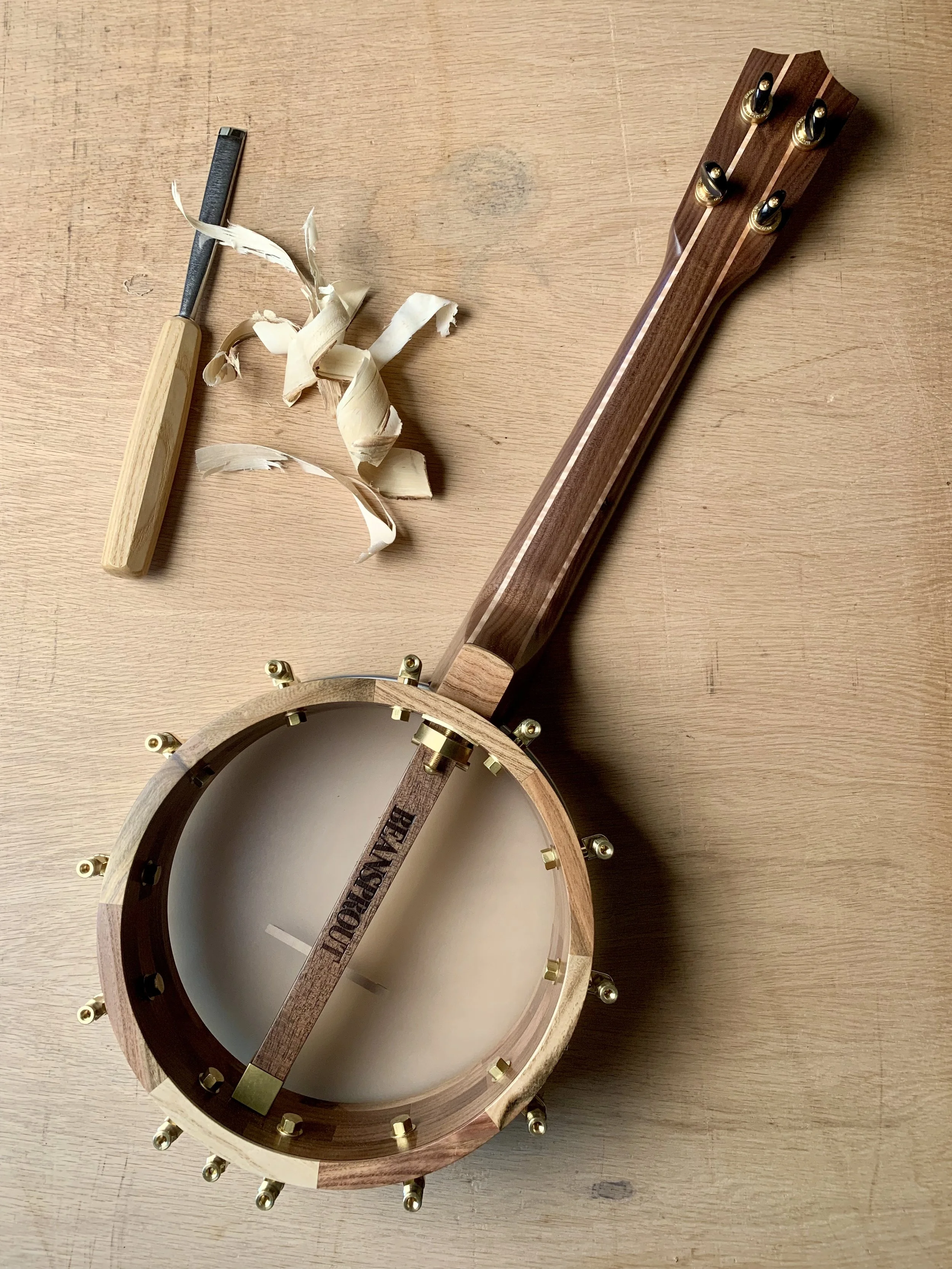
This one was fun! The natural skin head, the low tuning, the dark walnut, it all combined to make a rich and detailed sound. If I play hard, it barks and growls. If I play soft it sweetly sings. It has a rustic folk sound that makes me want to keep playing and discover what songs are stuck in it! The walnut cane from Vashon Island, brought there from back east by my friend. The amazing pistachio fretboard and trim are from California orchards.

Hi guys it’s here safe and sound and looking mighty fine after the long trip. Can’t wait to really get my hands on it! Thank you so much for the fabulous end product and superior service all through.

You do what you do well 😊
Very Best Wishes,
- M.D.

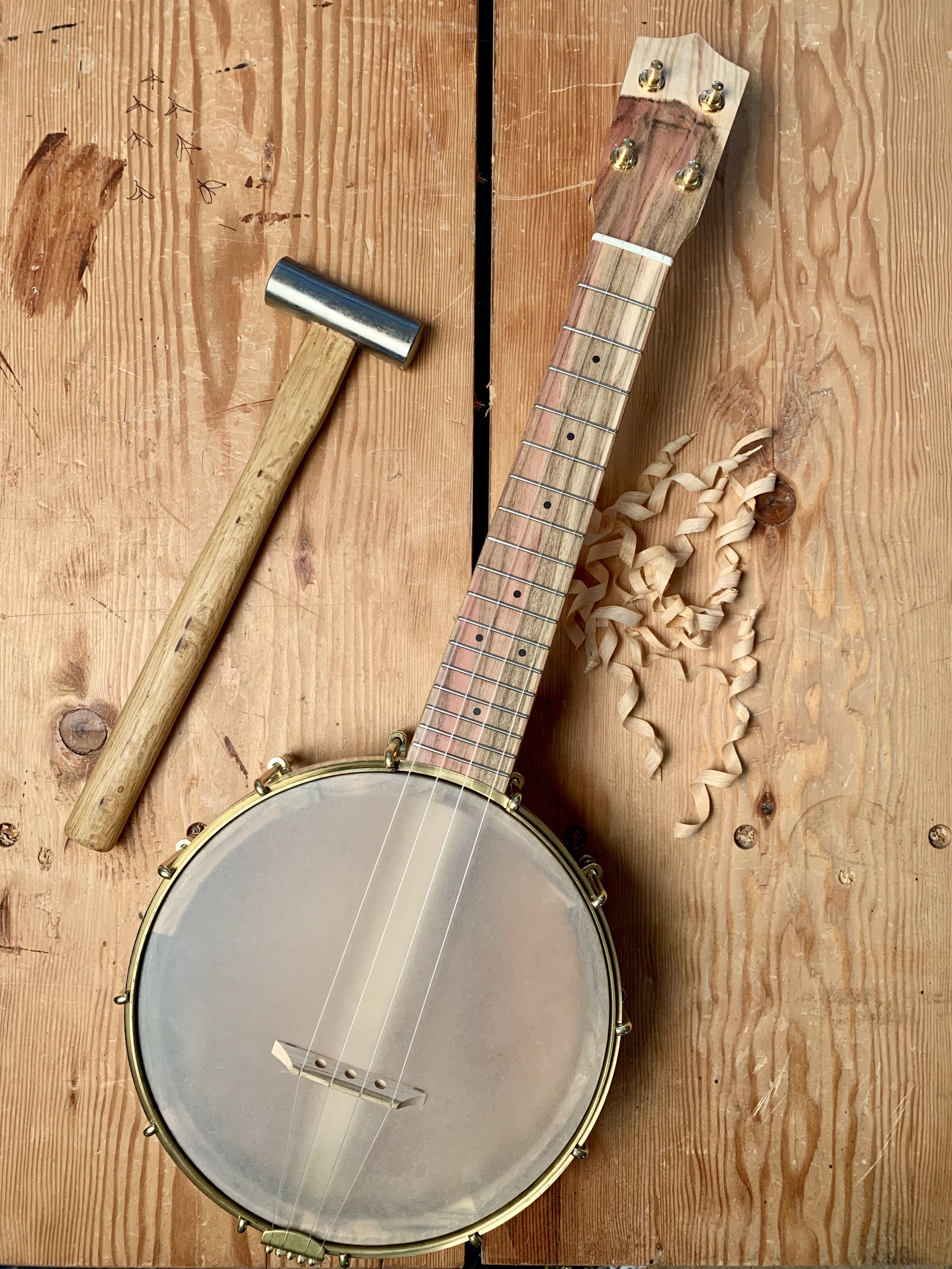
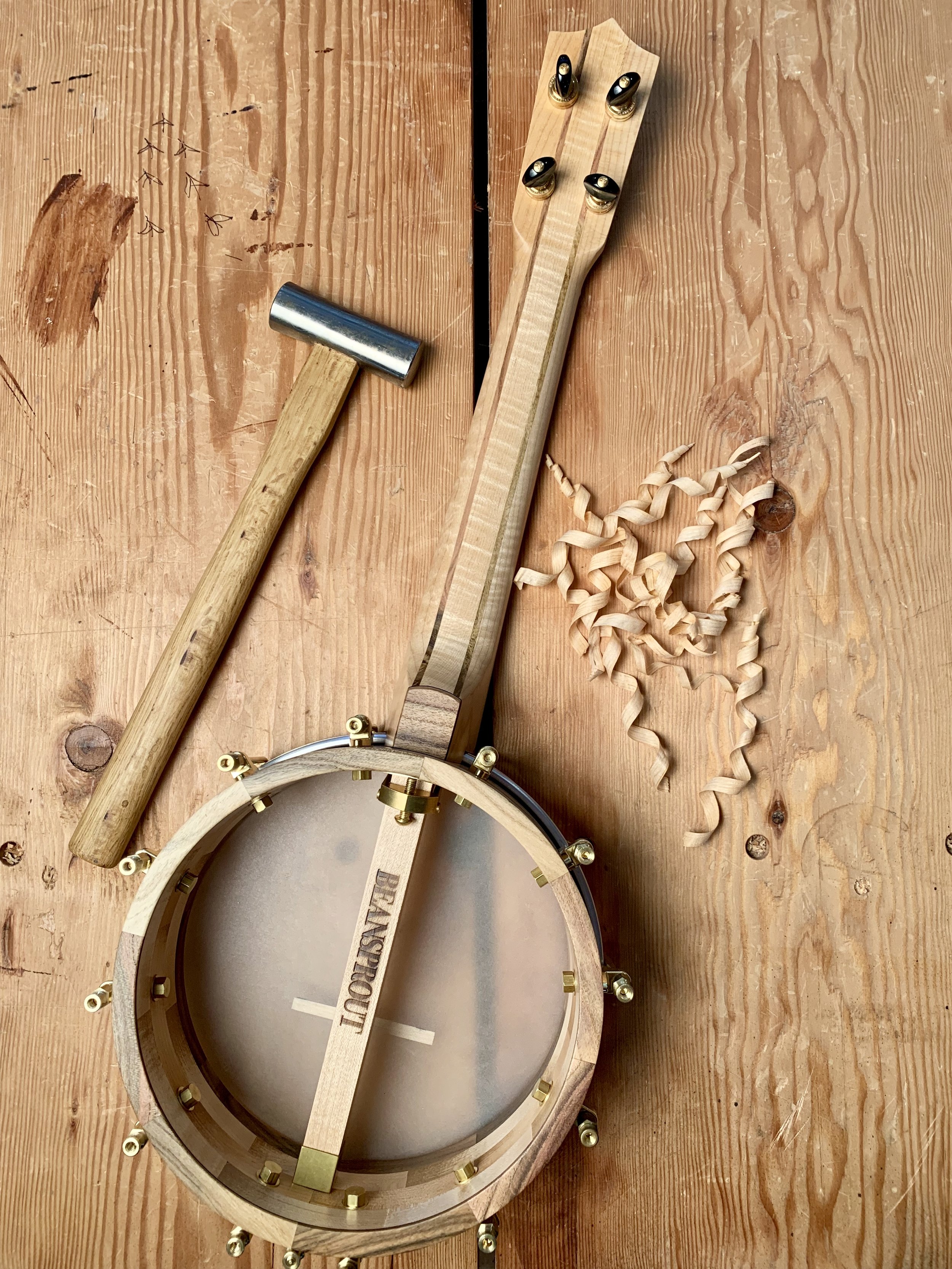
#387- Oak and Pistachio Concert Banjo Ukulele

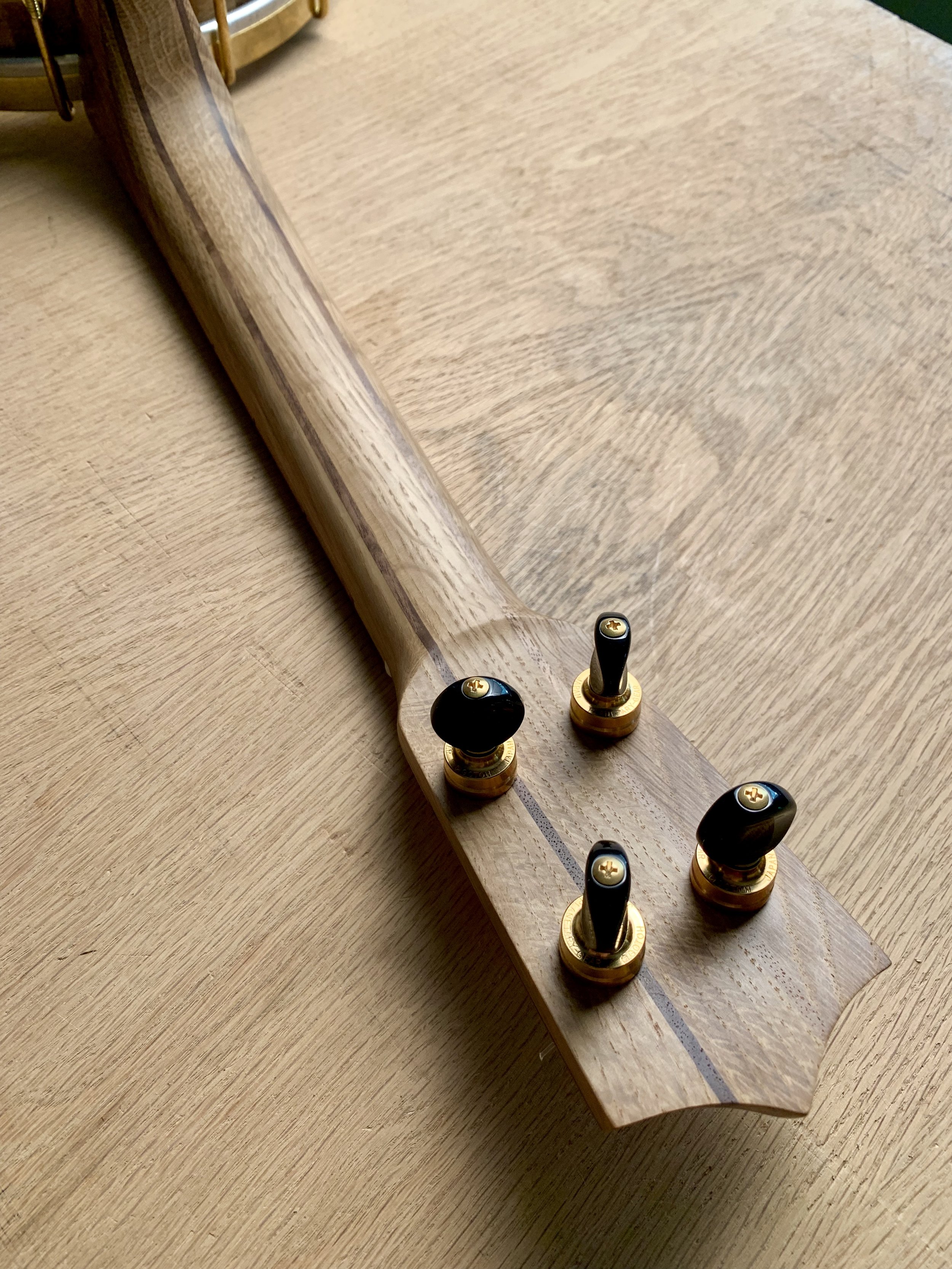
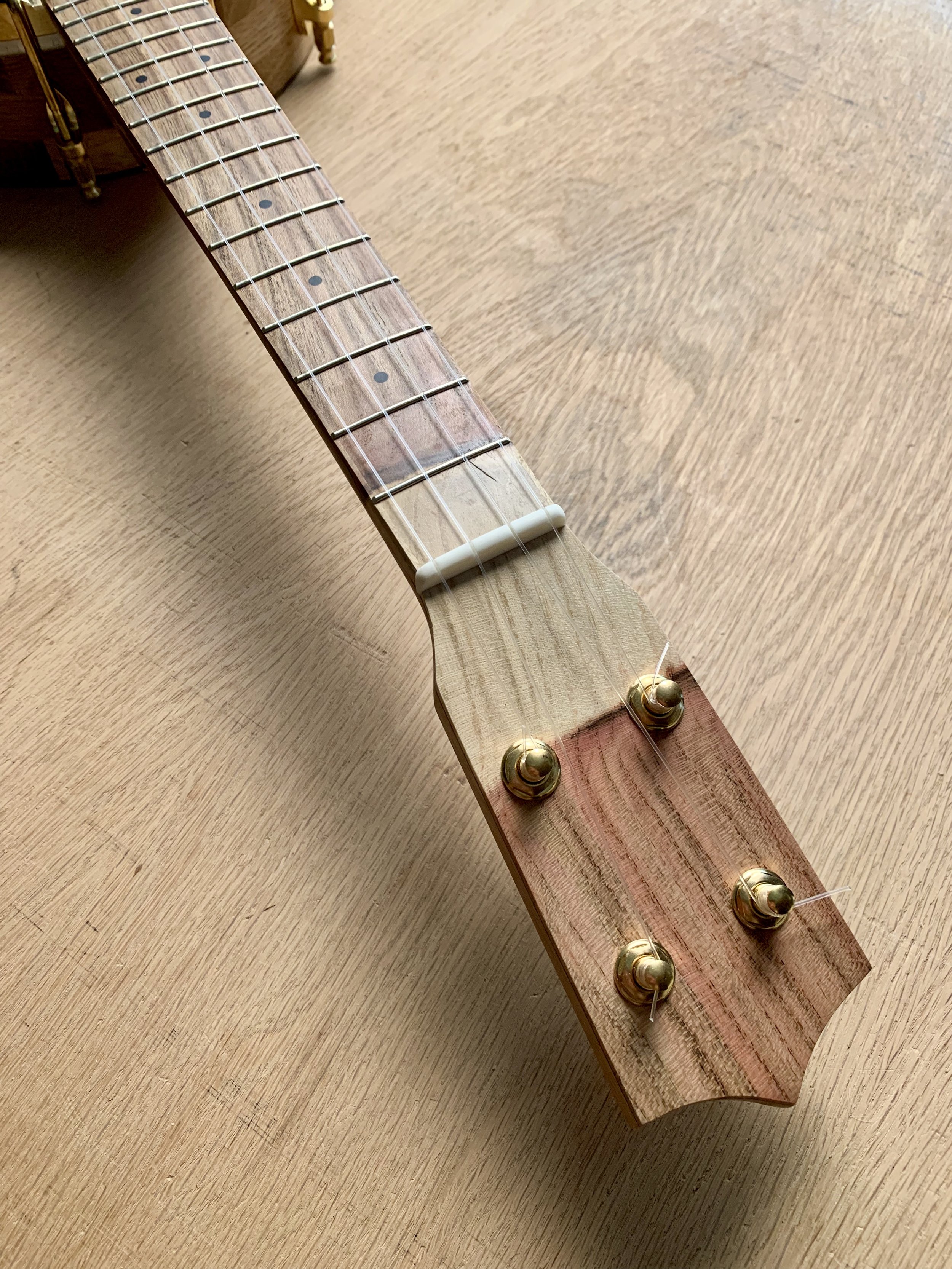
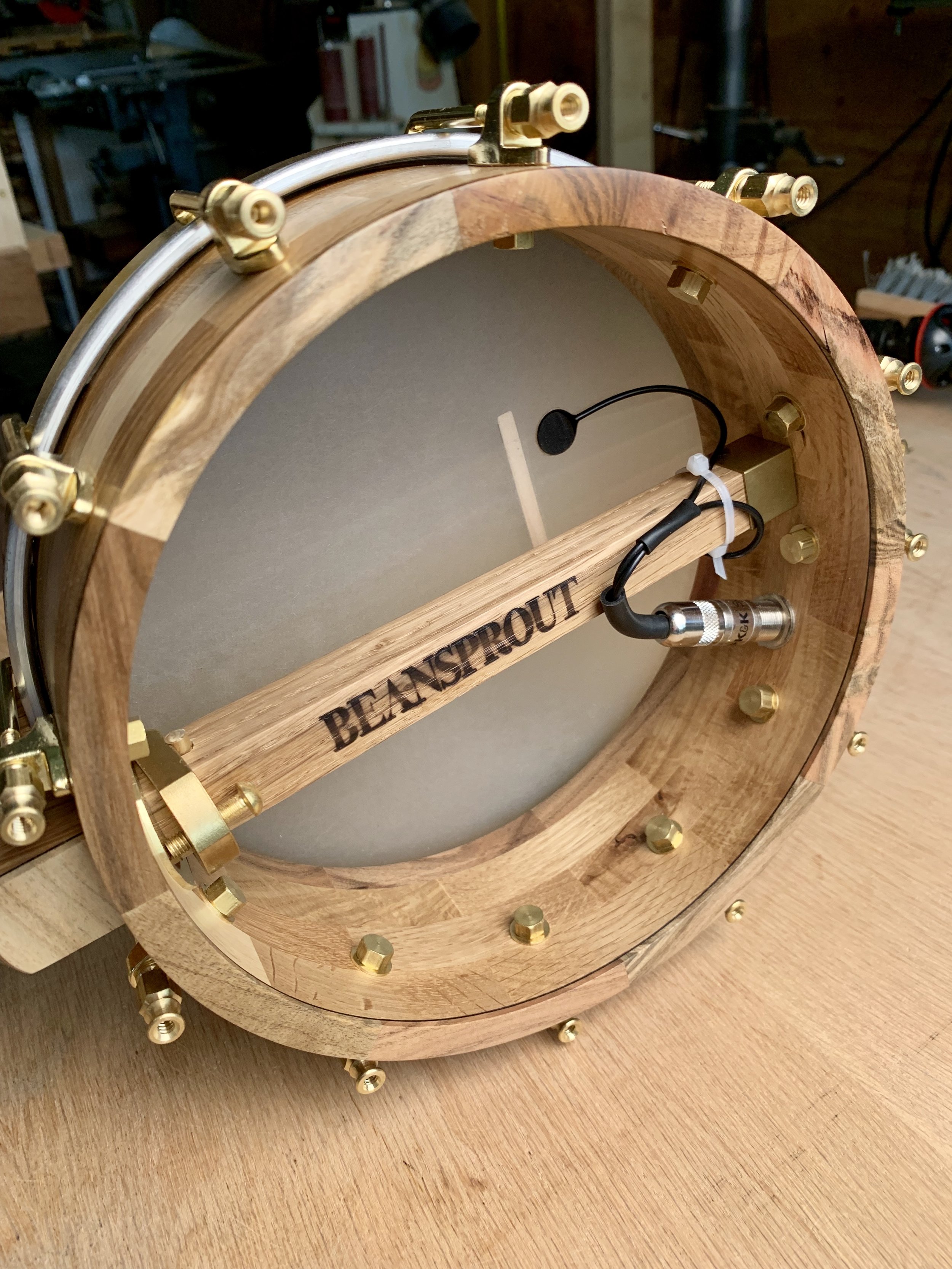
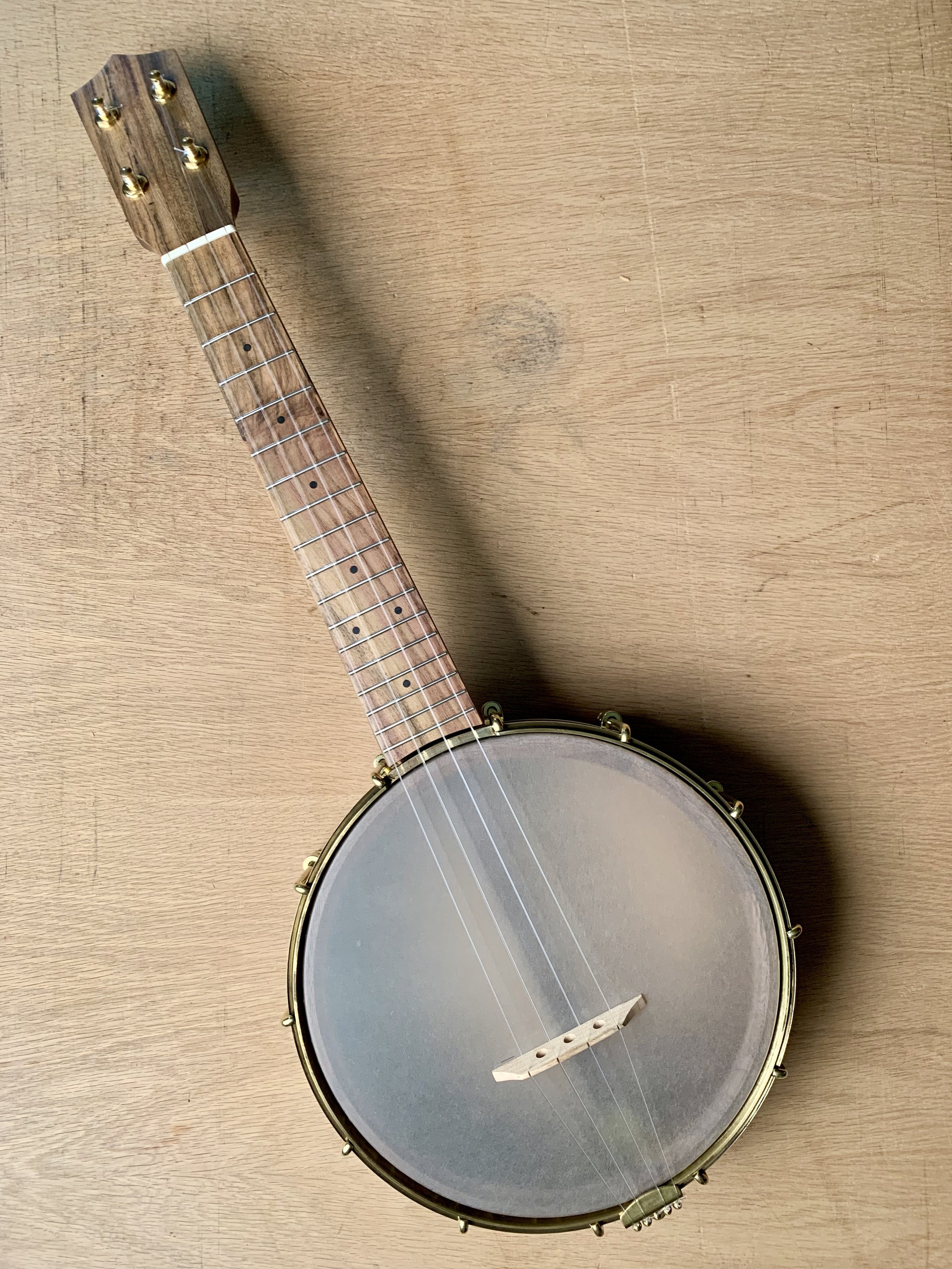
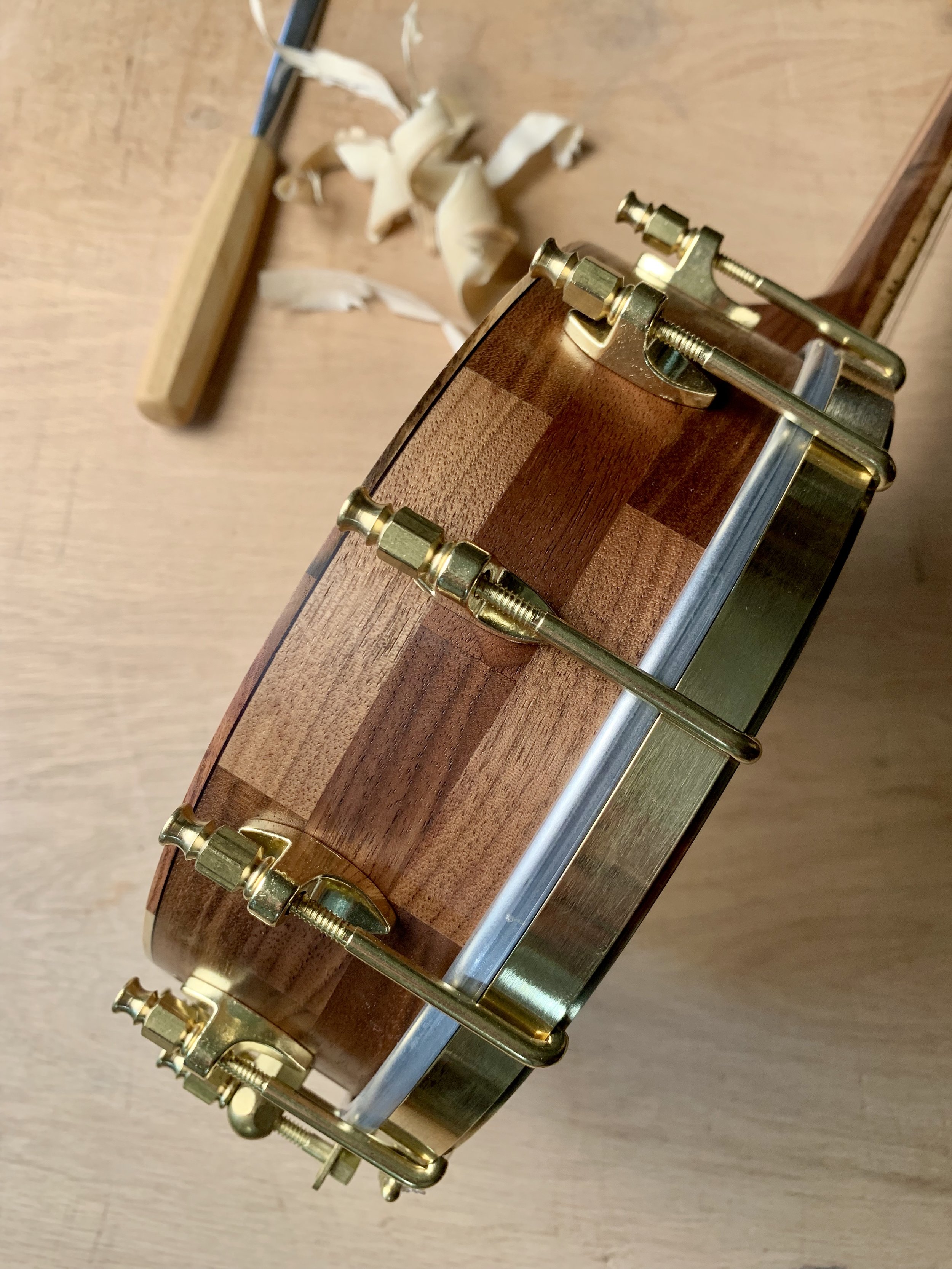
I made this instrument for myself as I recently sold my walnut banjo uke. For this one, I grabbed some Oregon white oak from the Carpenter Ant stash and some grafted pistachio from woodfromthewest.com. I feel that oak has a tone between walnut and maple. It also works easy, is plentiful and takes finish well. The video below compares this uke to a walnut one.

#389- Walnut and Pistachio Concert Banjo Ukulele

Tony sent me a box of walnut cut by his family in Missouri a long time ago. I was taken by the texture of the original sawmill marks and I chose to leave them on the rim cap. We are so used to sleek modern designs (the iPhone, the Prius, chrome and glass furniture, injection molded plastic kitchen implements, etc) that a rough or variable texture can be a bit of a surprise! Also, this old black walnut is some of the cleanest and straightest I’ve ever used. It looks beautiful and rings like a bell! The pistachio is from California orchards. The video below pairs this banjo with the next one as a sound sample.

#383- Spruce and Walnut Alto Ukulele

It is interesting to build for a long term customer. I am not just building an ukulele, I’m building one that fits into their long term needs and growth as a musician. I know what they will be comparing the new one against and I have an idea of how this one will fit in their “stable.” This spruce and walnut alto is all wrapped up in rope binding, making for an old timey look. I am pleased with its projection and sustain. I can’t wait to see what Rob uses it for. The spruce was salvaged from a dulcimer maker, the walnut is from Goby and the pistachio from California Orchards.

#386- Walnut and Pistachio Concert Banjo Ukulele

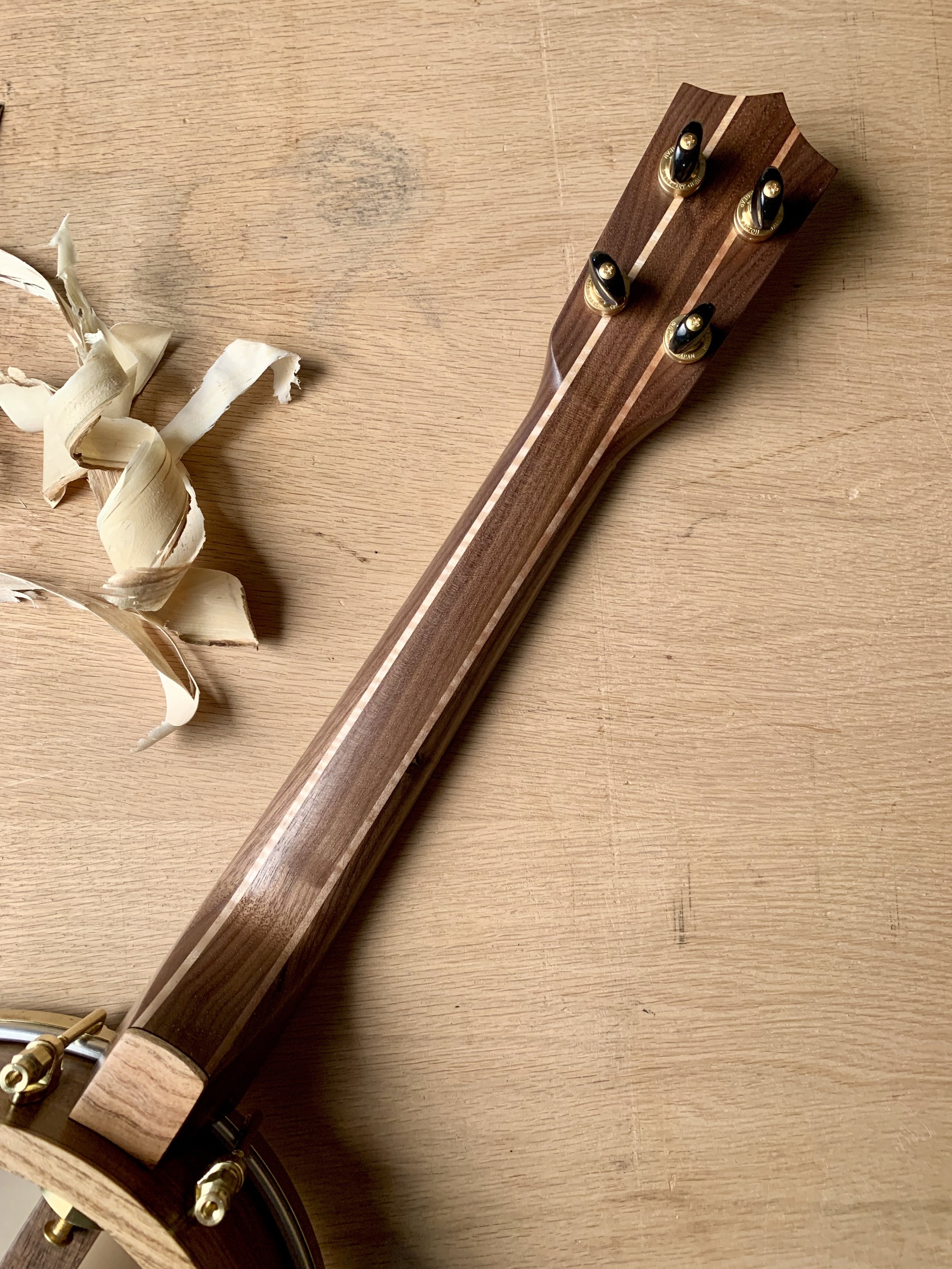
One of my greatest joys and challenges is to make a standard model over and over again, slowly and subtly refining it over time. I also like leaving some of the details of a standard model up to chance, improvisation and the natural grain of the wood. This one, for instance, got narrow curly maple strips as part of the five piece neck, something I’ve never done before. It looks great and does the job but also allows me to stretch my creativity within the narrow boundary of the set design. Anyway, this one sounds great of course. Walnut from the Carpenter Ant Stash in Portland and pistachio from California orchards.

#382- Myrtle Tenor ukulele

I love Myrtle! It’s local, beautiful and sounds great. This set comes from the carpenter ant stash in Portland. It was a bit of a surprise that we found some Myrtle there. It luckily ended up looking really unique, with irregular flame and curl. It also has some lovely knots and dark streaks. Adam was wise to leave the binding and rosette off, it doesn’t need it. The neck is salvaged hemlock from Portland Salvage Works and the pistachio fretboard is from woodfromthewest.com.

#381- Spruce and Cherry Alto Ukulele

First off, see the below post about music/craft/community, as it also applies to this uke!

For this alto, Jeri came to the shop and picked out some nice pieces of wood. The top is Oregon spruce from Camp Westwind, the gnarly cherry back and sides are from the Carpenter Ant stash, the mahogany neck is salvaged from a furniture maker and the pistachio comes from California orchards. Compared to the more earth tone look and breathy sound of Jann’s uke below, this one has a crisper look and sound that I also like. It is pretty hard to hear the difference on the video but it’s something I can feel when I play, although it’s pretty subtle.

#377- Port Orford Cedar and Myrtle Alto Ukulele

Today I really feel inspired by the community we are connected to with our music and our craft. This instrument is built for our friend/student Jann, using wood from our friend/student Lizann’s father’s wood stash. Lizann and Jann play music together and will soon be playing instruments made by the same maker from wood collected by the same man. Next weekend, I am going to Portland to teach them an arrangement I wrote of an old jug band waltz and we will all make music together. I don’t know if the art/music/craft makes the community or the other way around, but I like it. (all this applies to Jeri’s uke in the next post as well, btw)

The myrtle is from a funky board from the Carpenter Ant stash and seems to have a gnome hiding in the back. The top is some striped Port Orford Cedar which came from the Oregon coast courtesy of woodfromthewest.com. The fretboard, headplate, bridge and bindings are pistachio from California orchards. The neck are fir floorboards with cherry lamination stripes. This instrument is a good example of the muted earth tones that are a hallmark of the wabi-sabi aesthetic. From far away, they blend together, up close you notice subtle differences.

jannbrown.jpg

#366- Myrtle Scout Uke

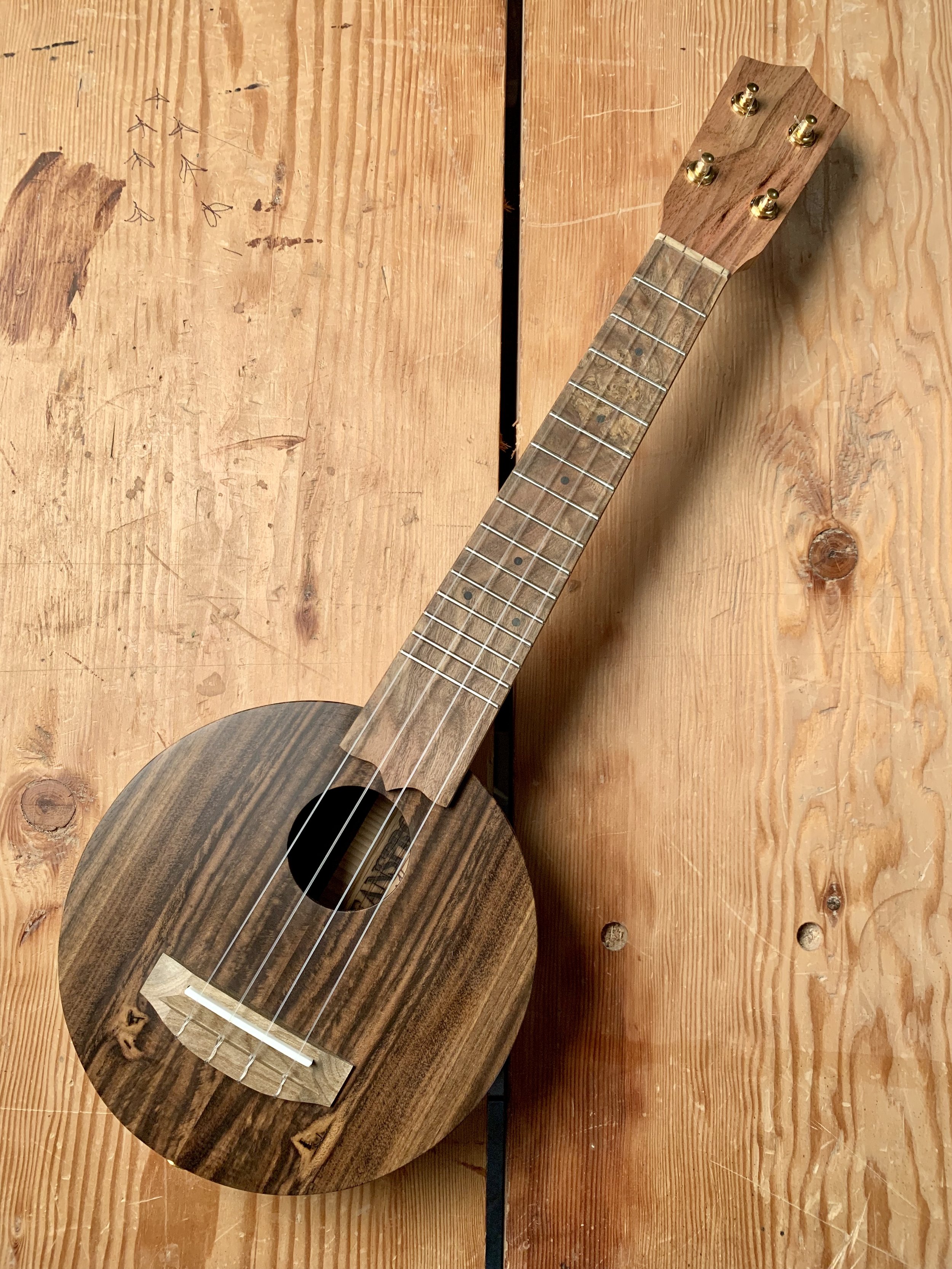
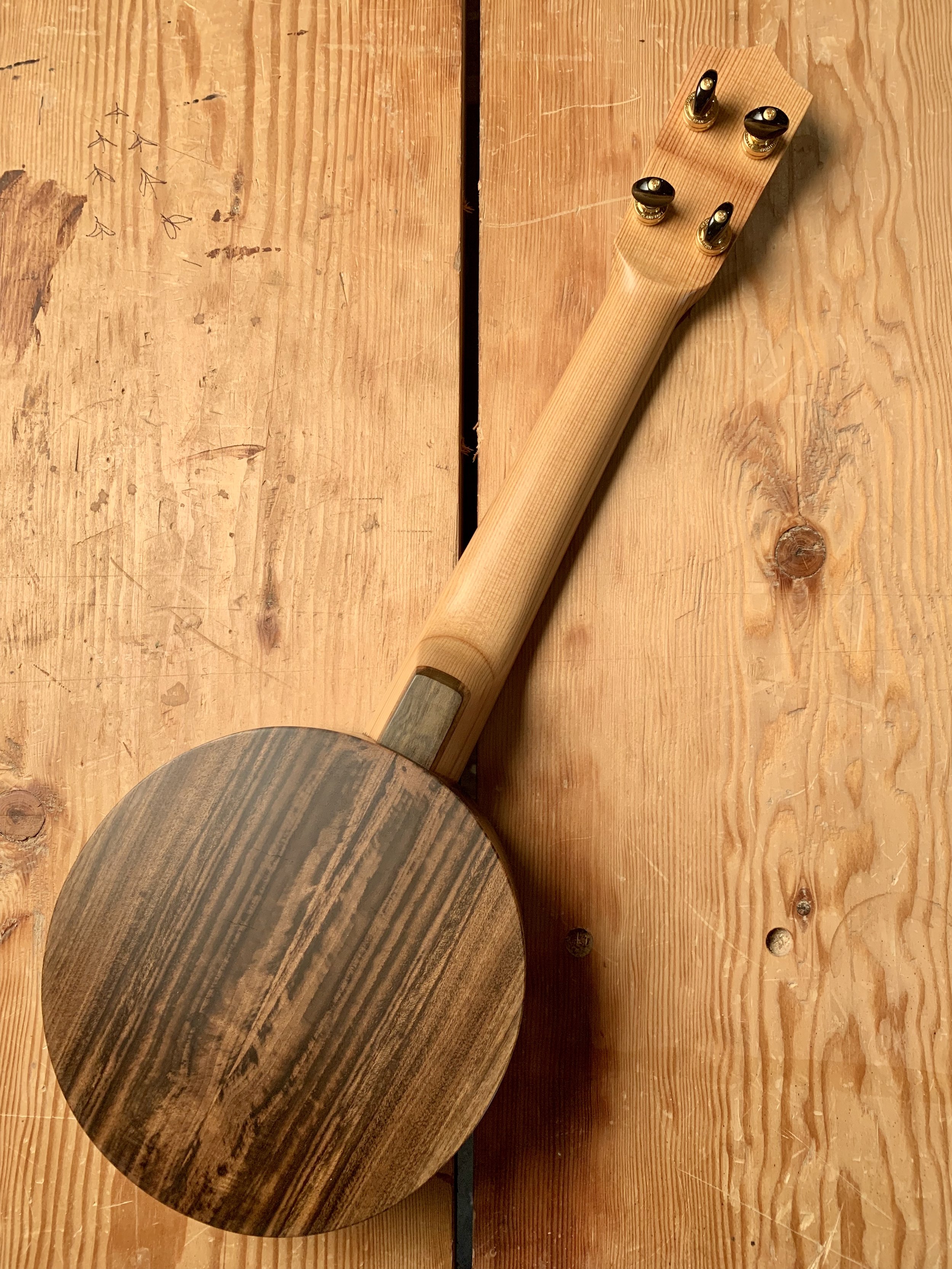
Inspired by the Lyon and Healy “camp uke” from the 1920’s-30’s, the Scout is a handmade ukulele with a simple design, sweet tone, easy playability and maximum portability.  This one has an Oregon Myrtle body, old growth Douglas fir neck and pistachio everything else.

IMG_8431.jpeg

#371- Spruce and Oak Tenor Ukulele

Quarter-sawn white oak such as this is common in the furniture trade and was also used in parlor guitars, mandolins and banjos at the turn of the 20th century. To my ears, it has the volume of maple but a dustier sound, more old timey in a way. I paired it with a spruce top, pistachio fretboard, headplate and binding from California orchards and a fir floorboard neck. This oak is from the Carpenter ant stash in Portland and I have more like it. Drop me a line if you would like it in a uke or a banjo.

IMG_6987.jpeg