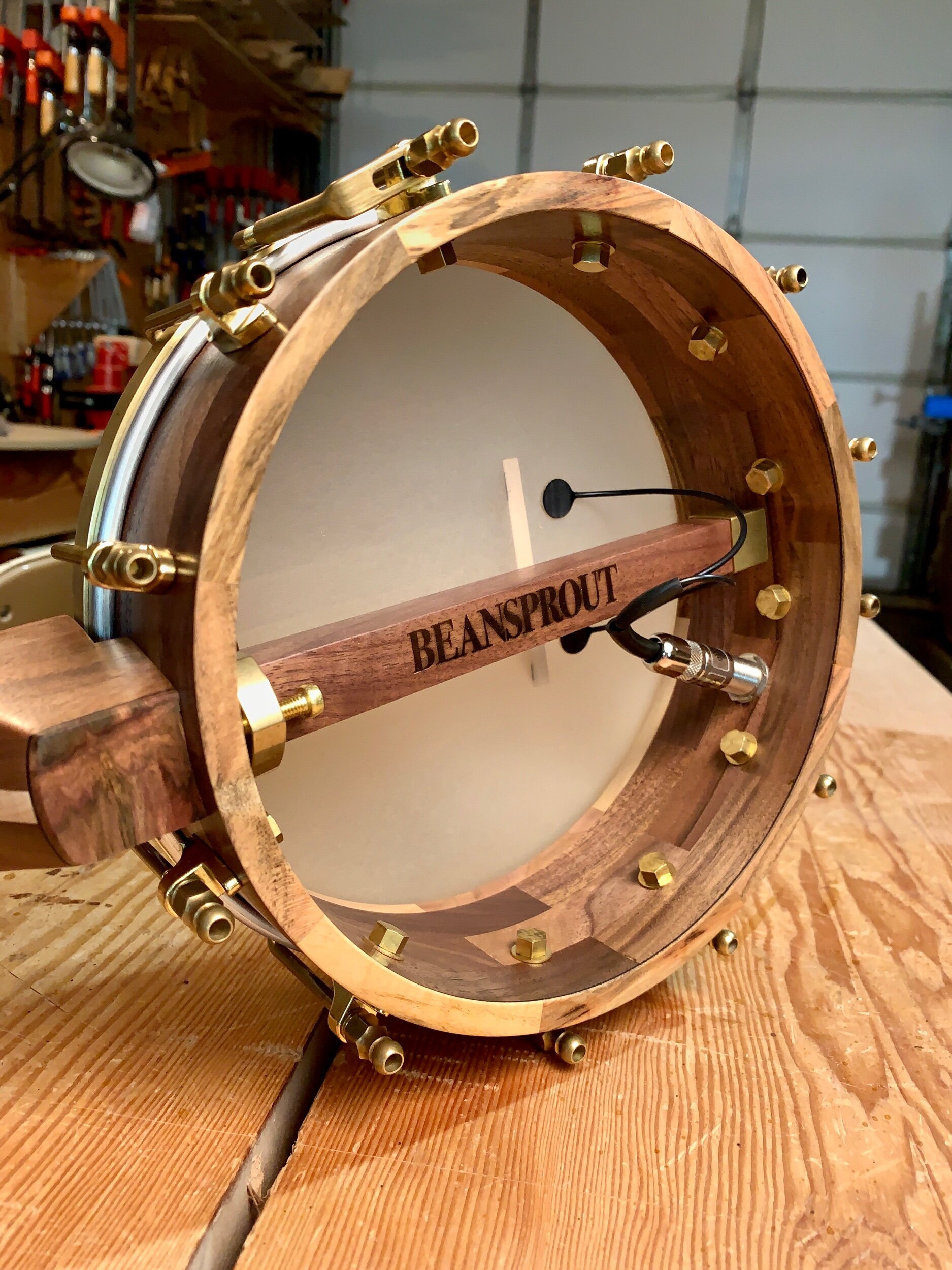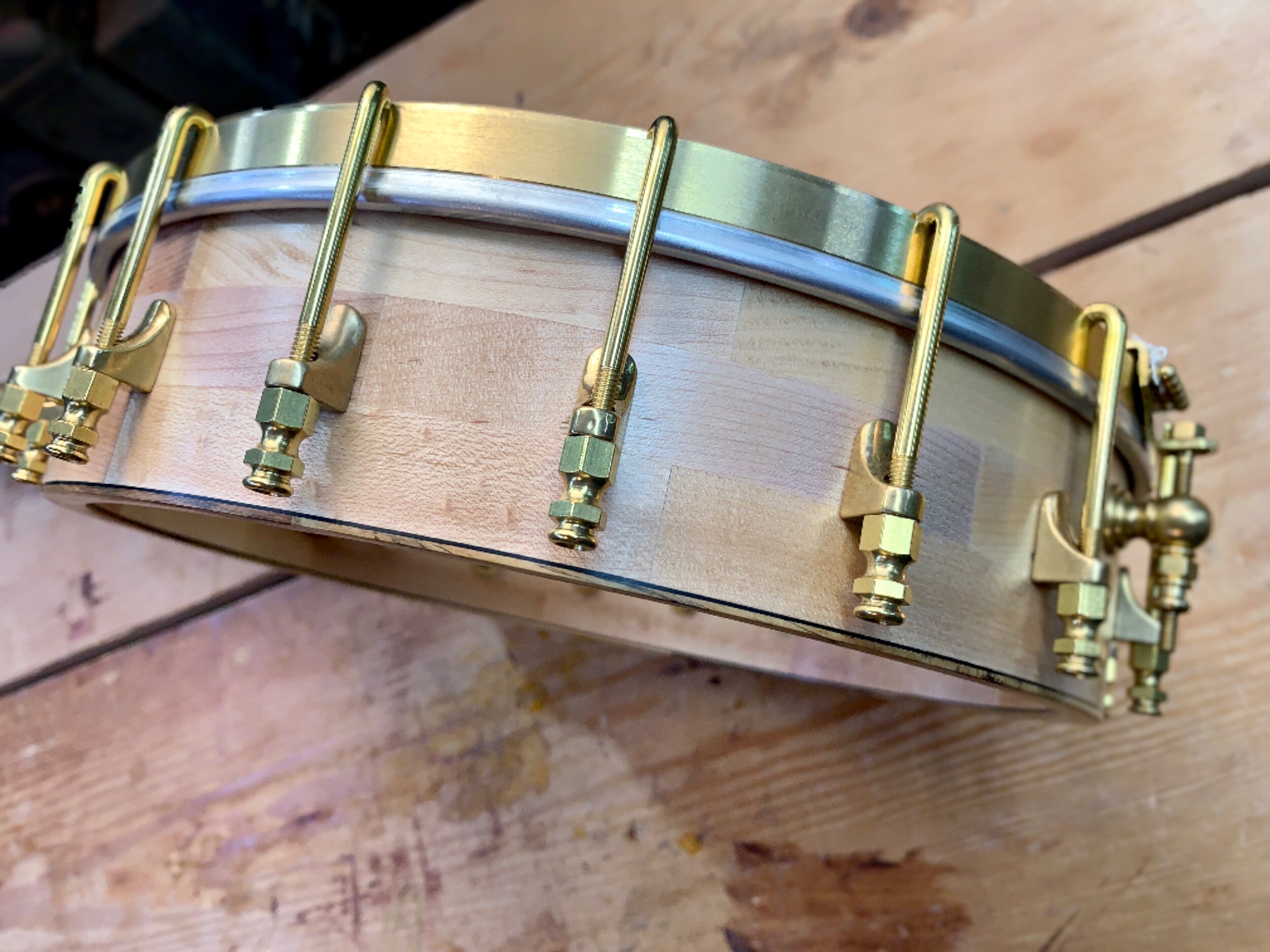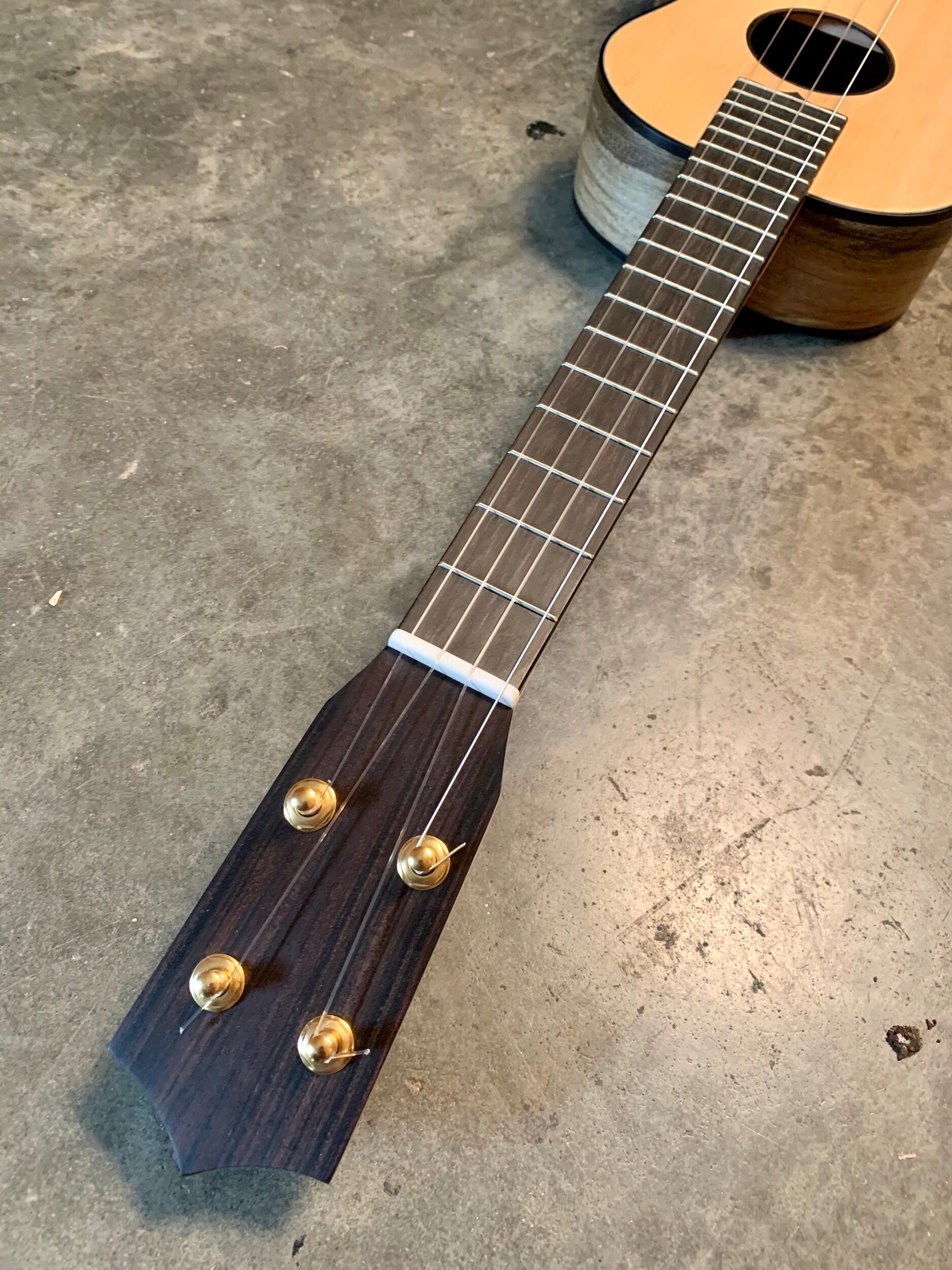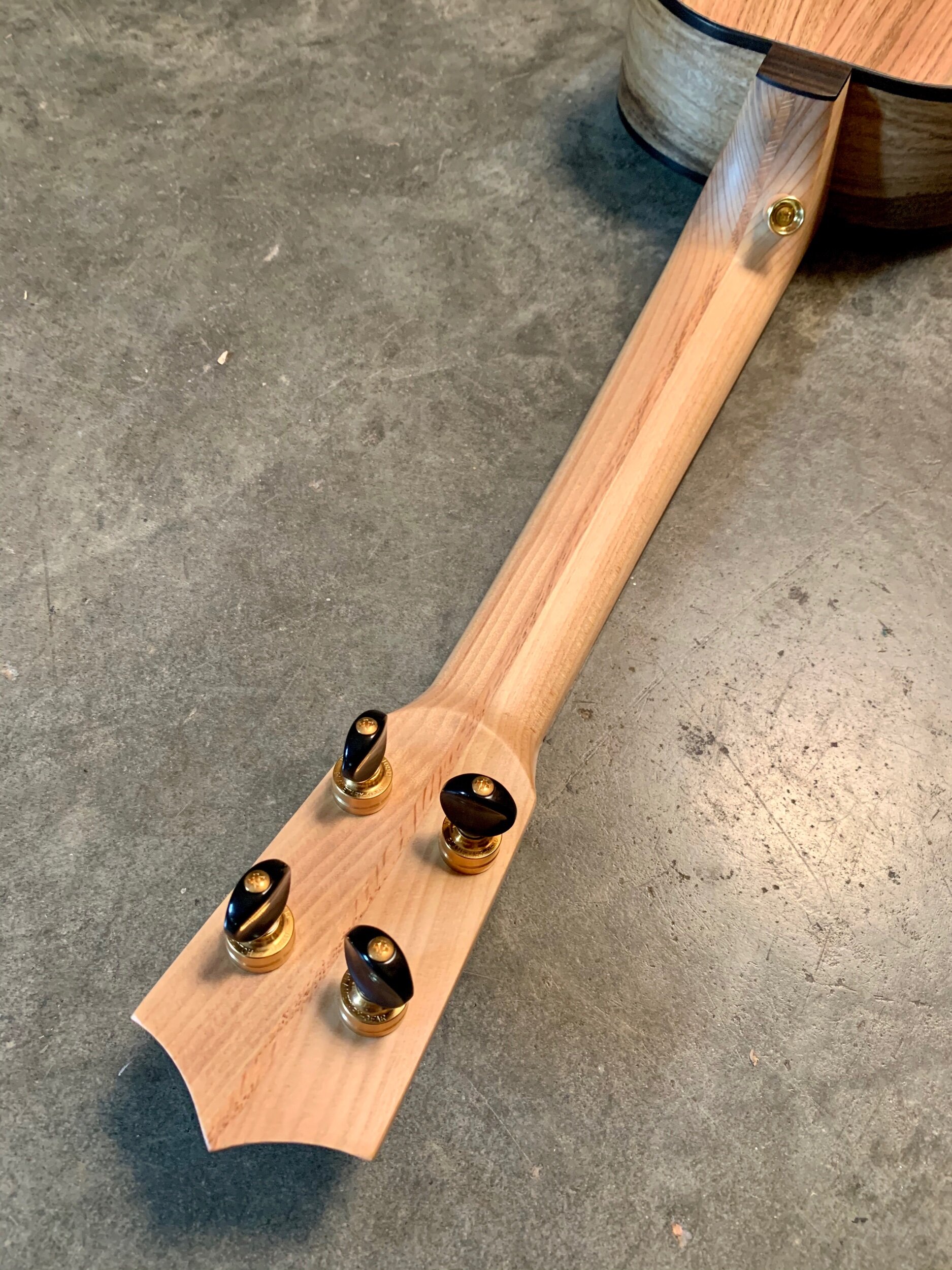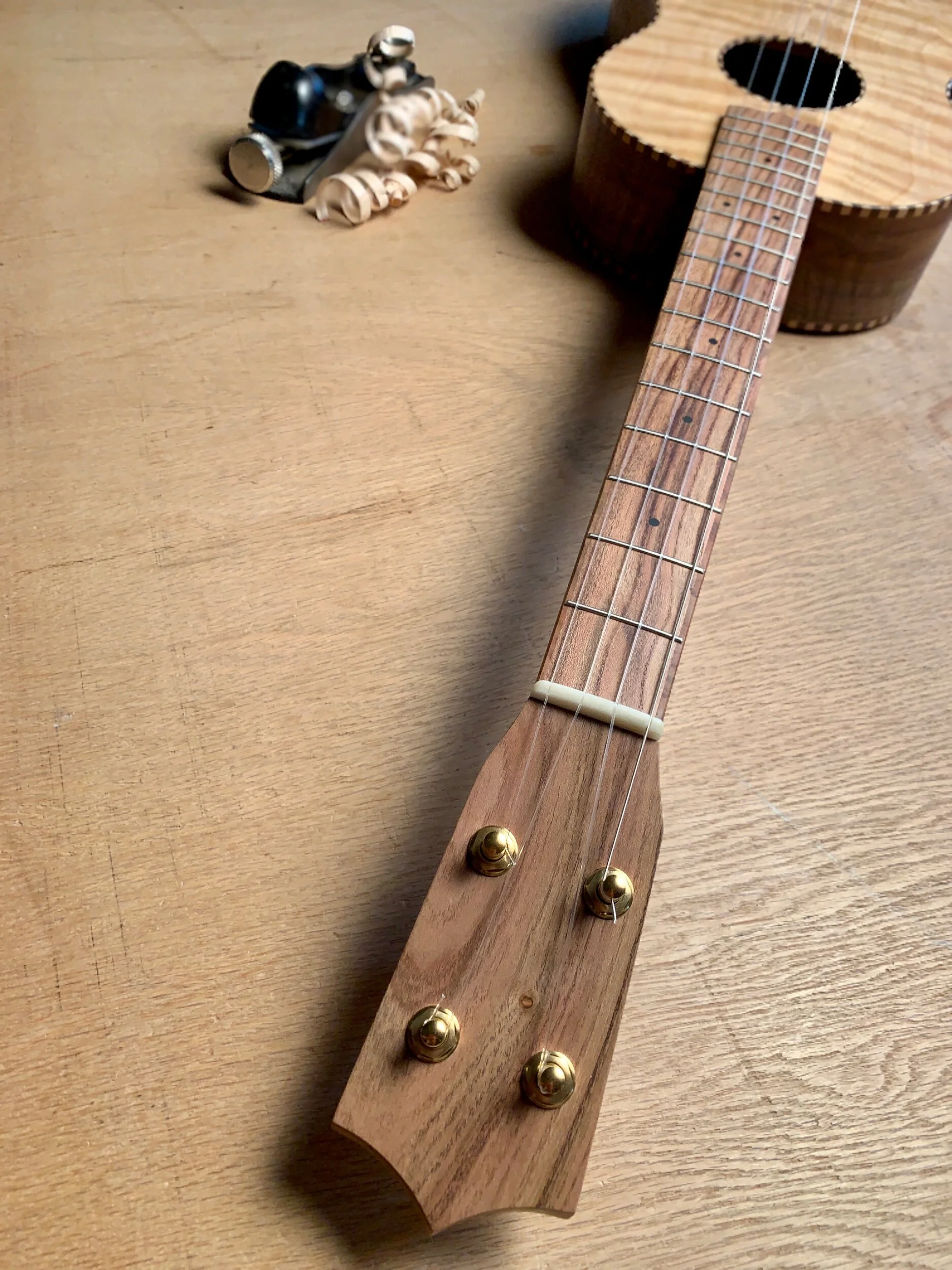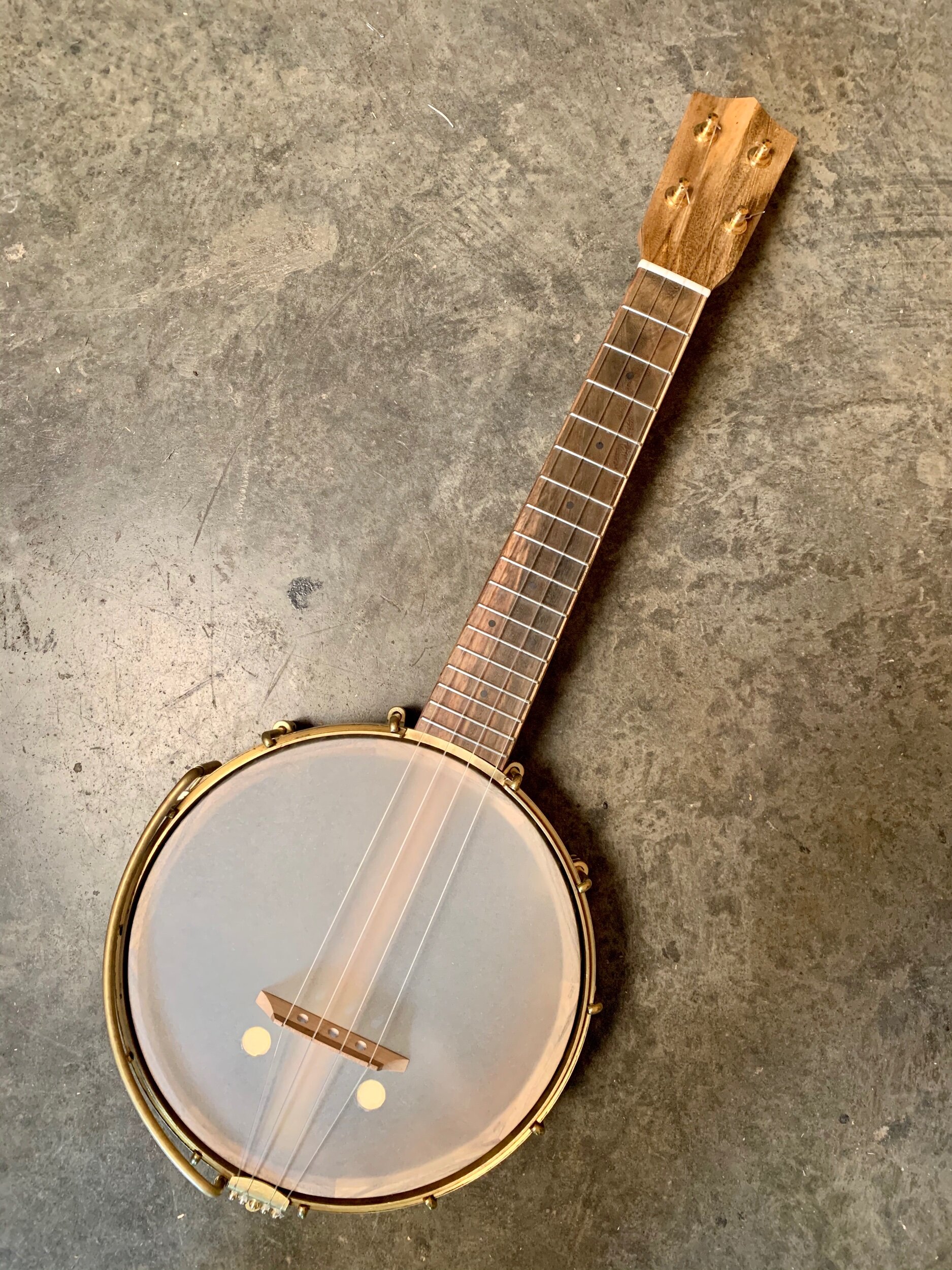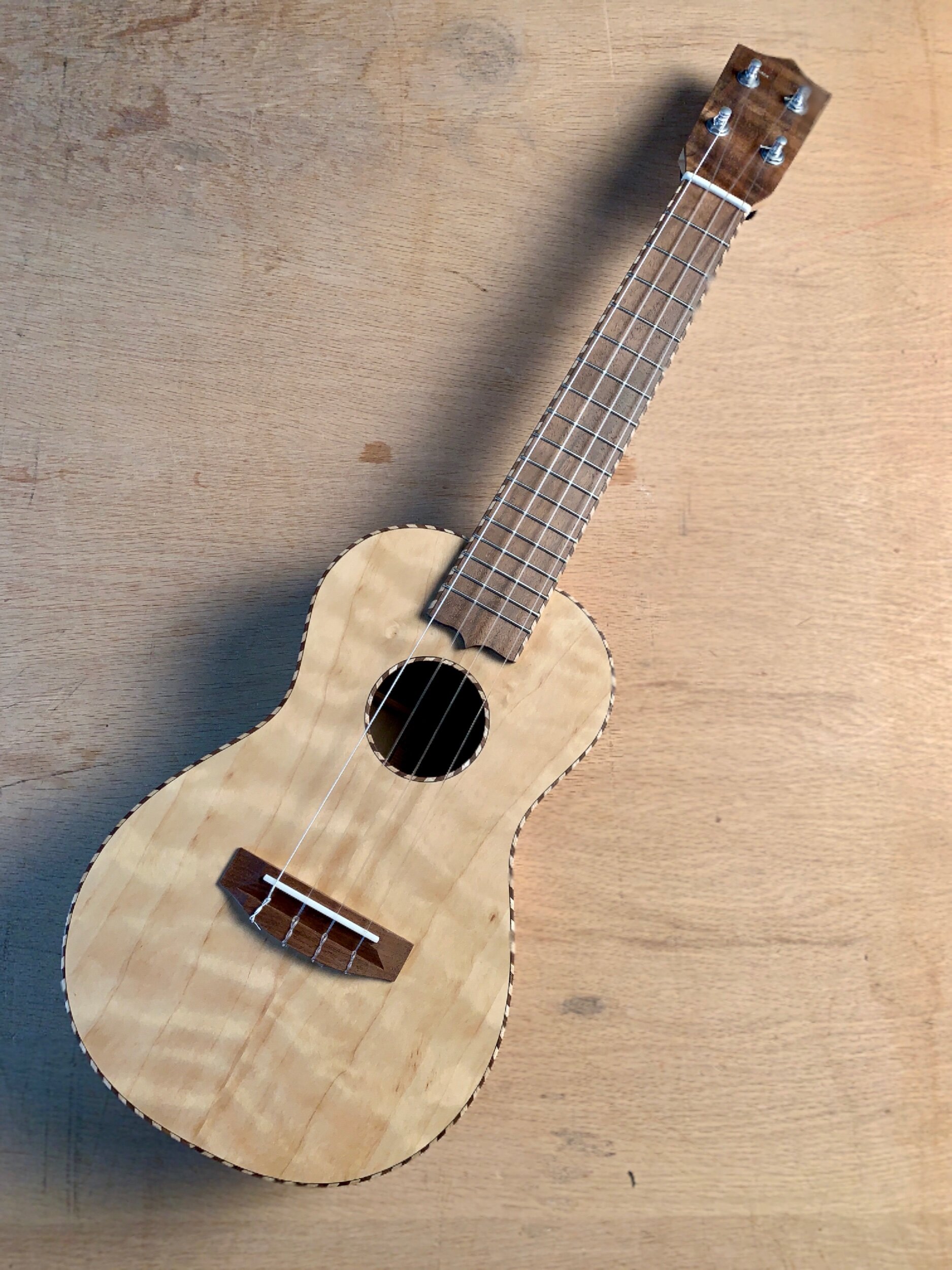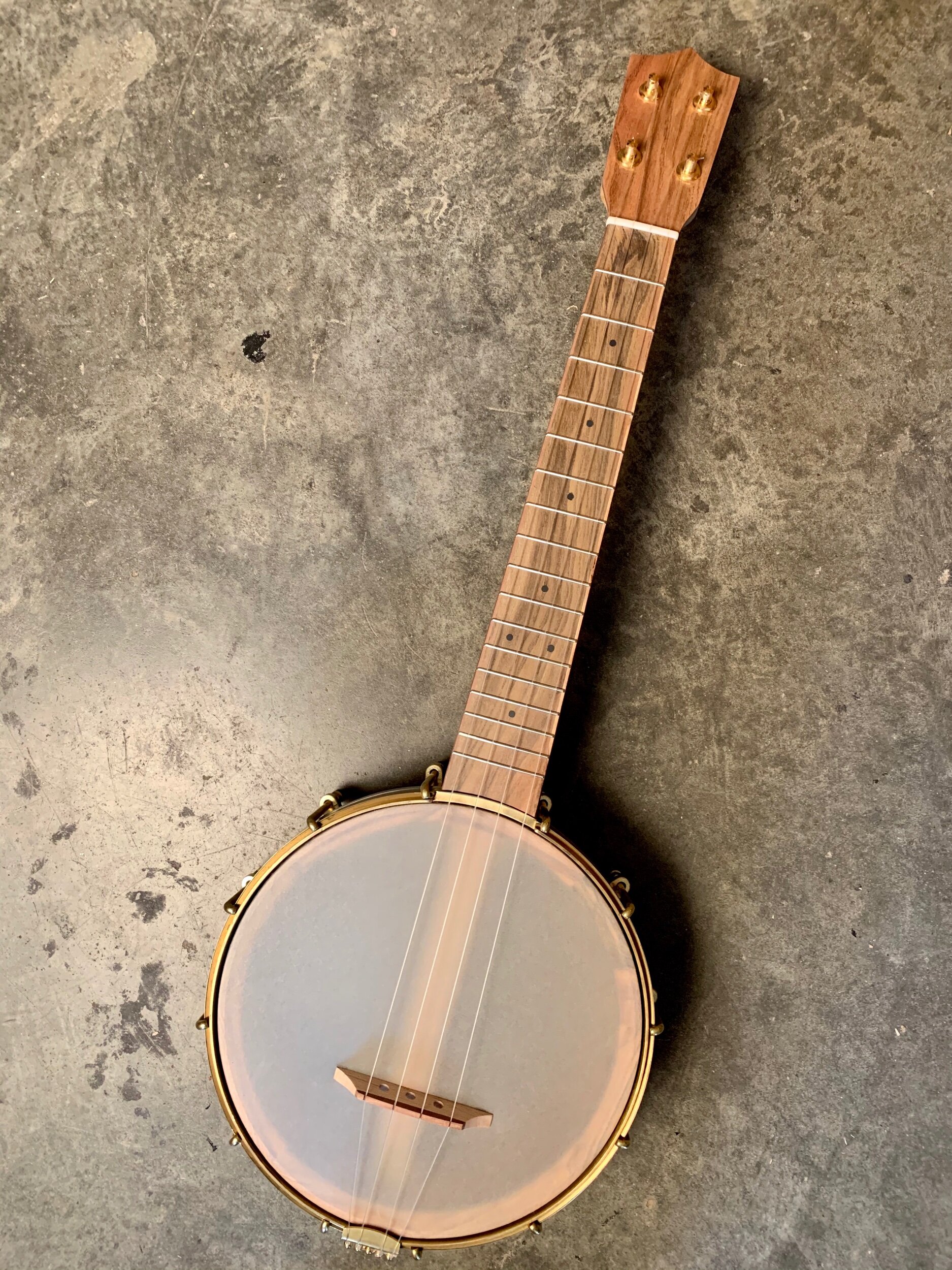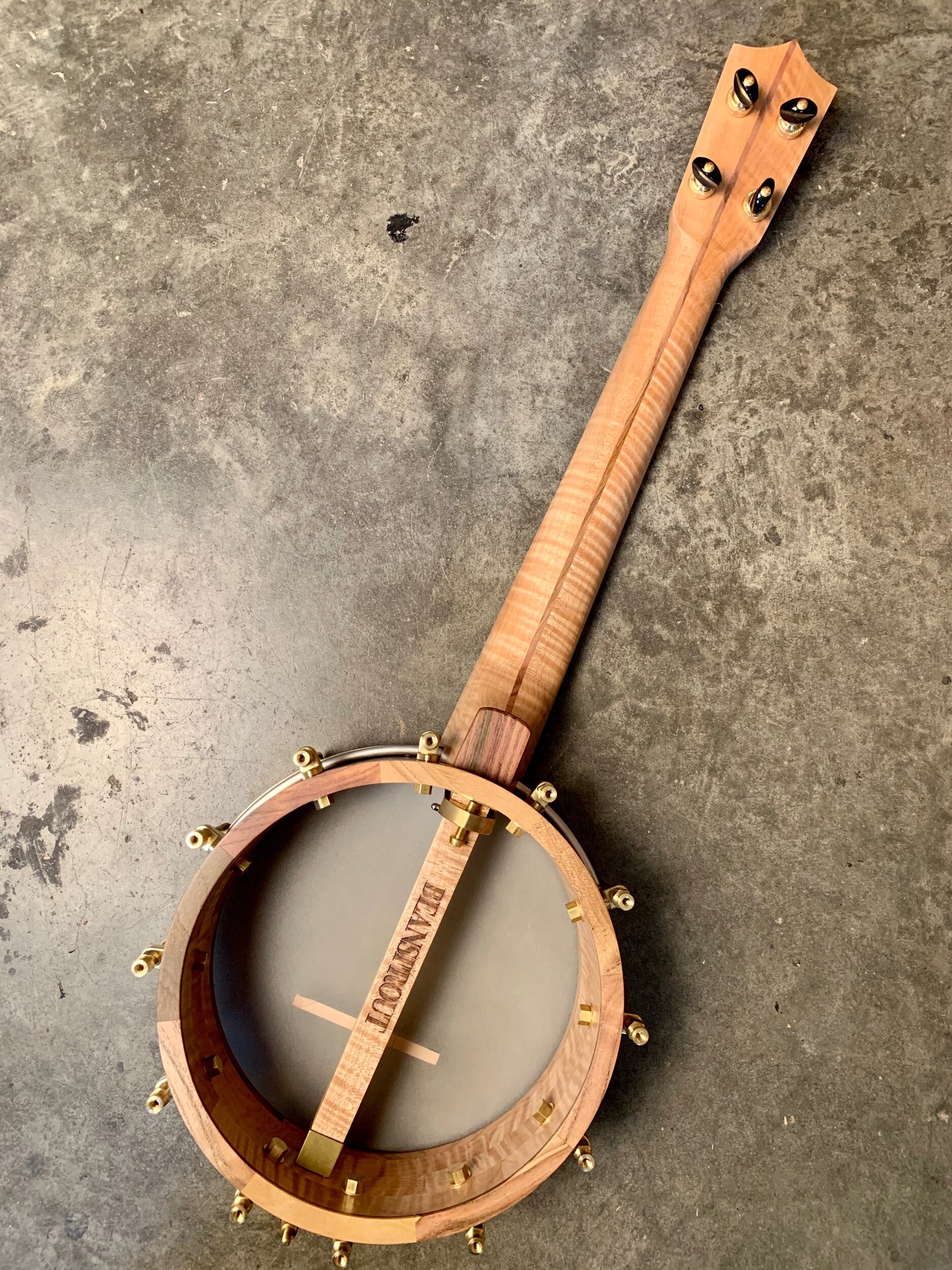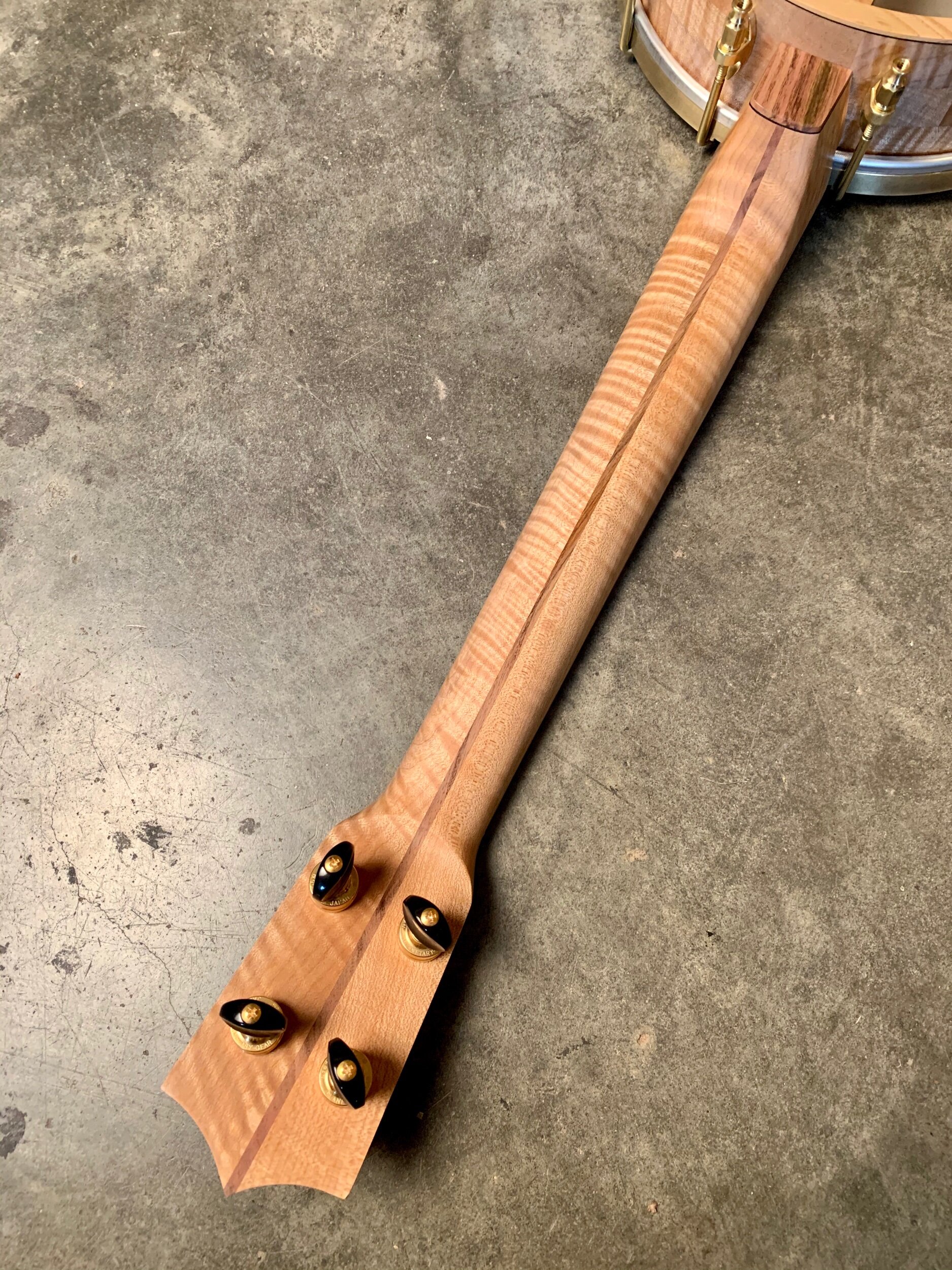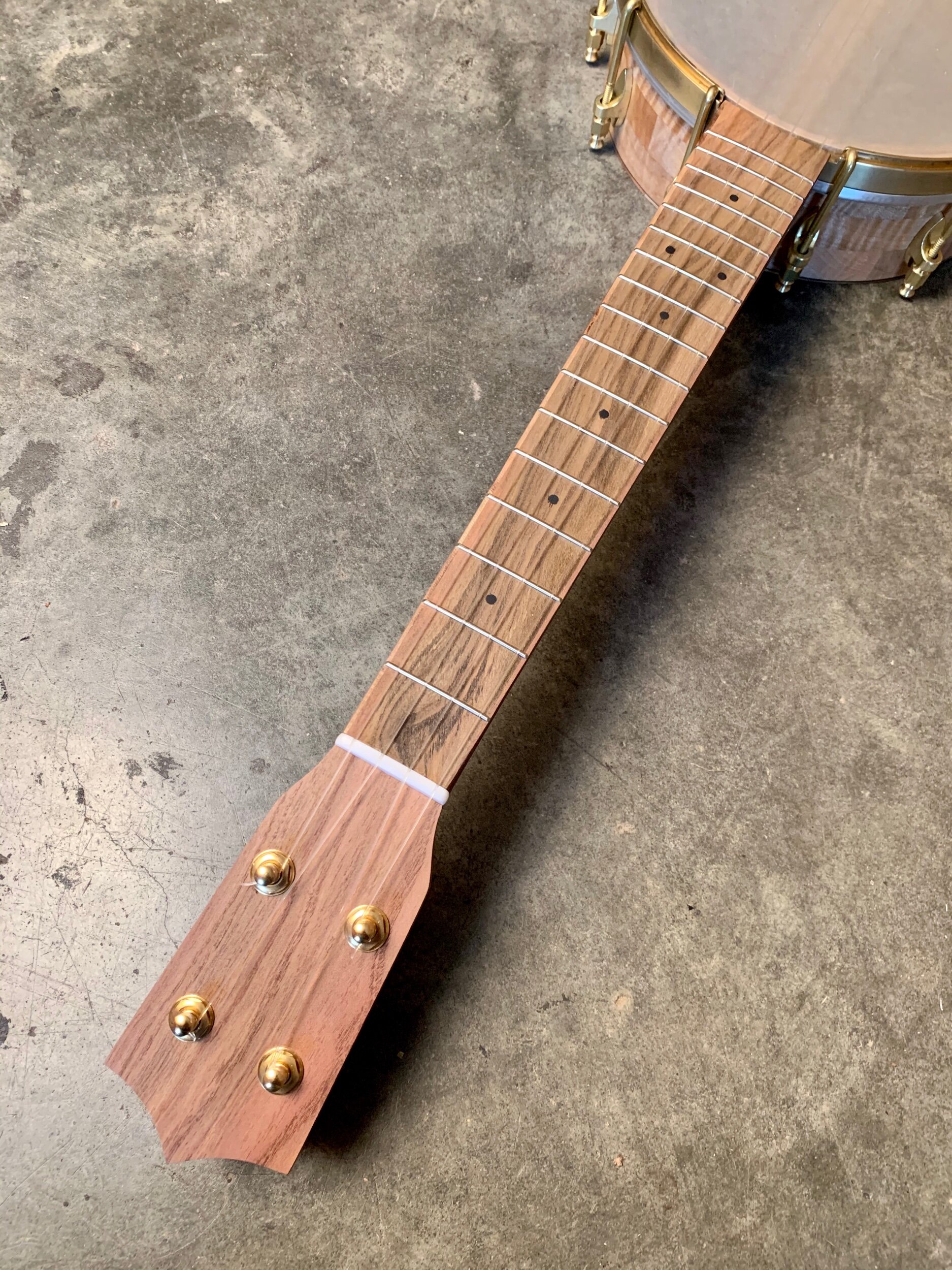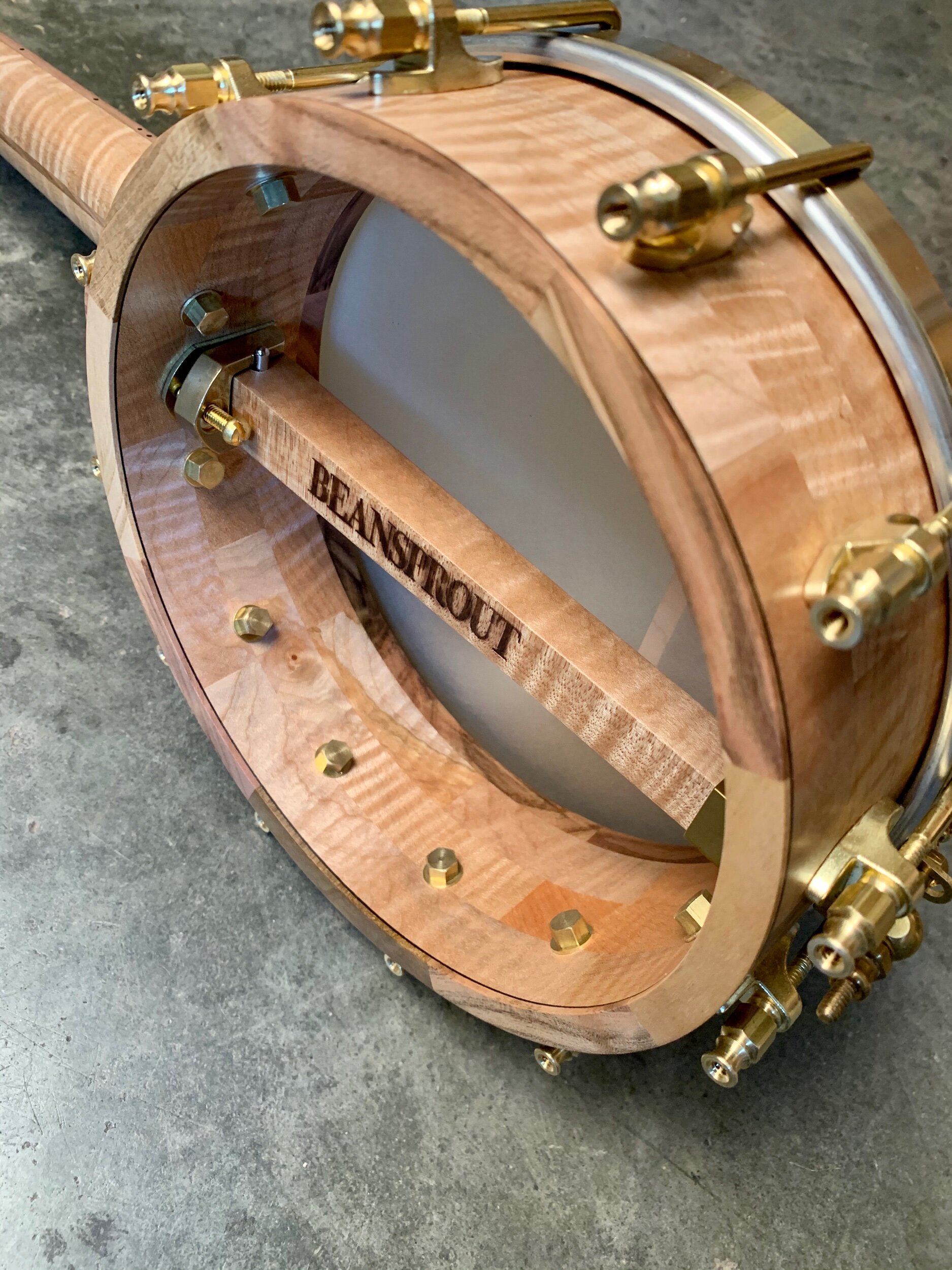
#477- Walnut and Pistachio Concert Banjo Ukulele

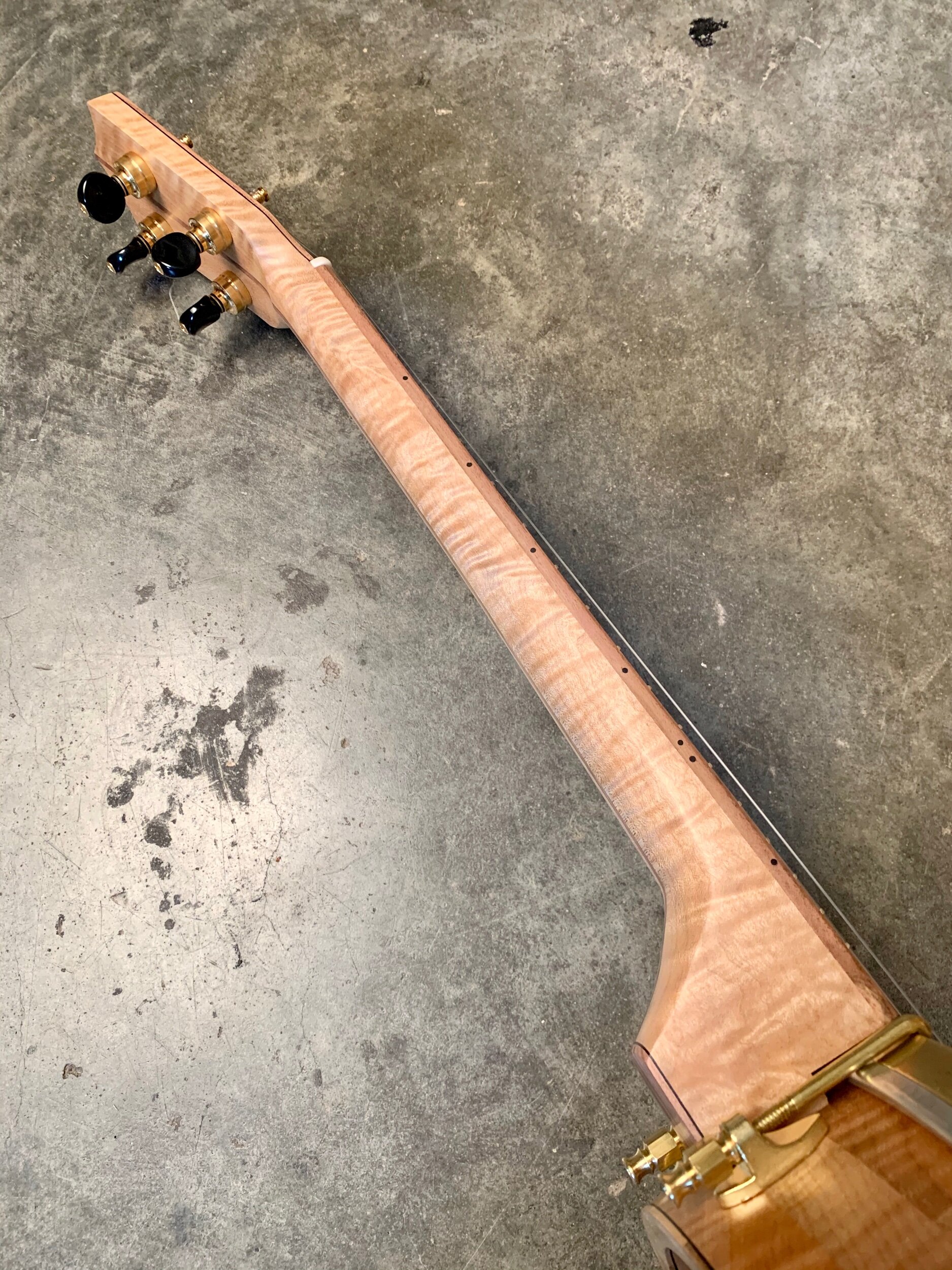
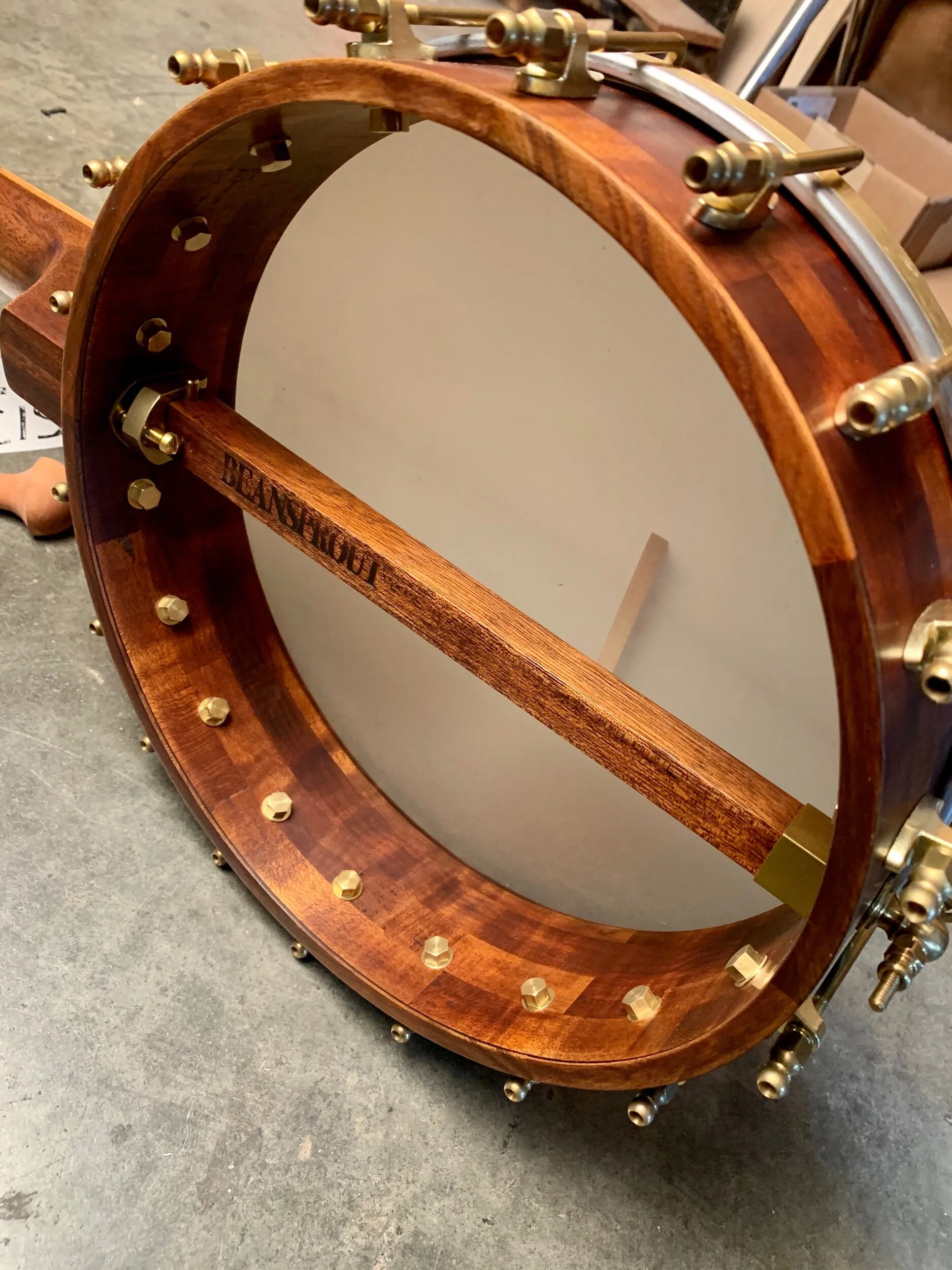
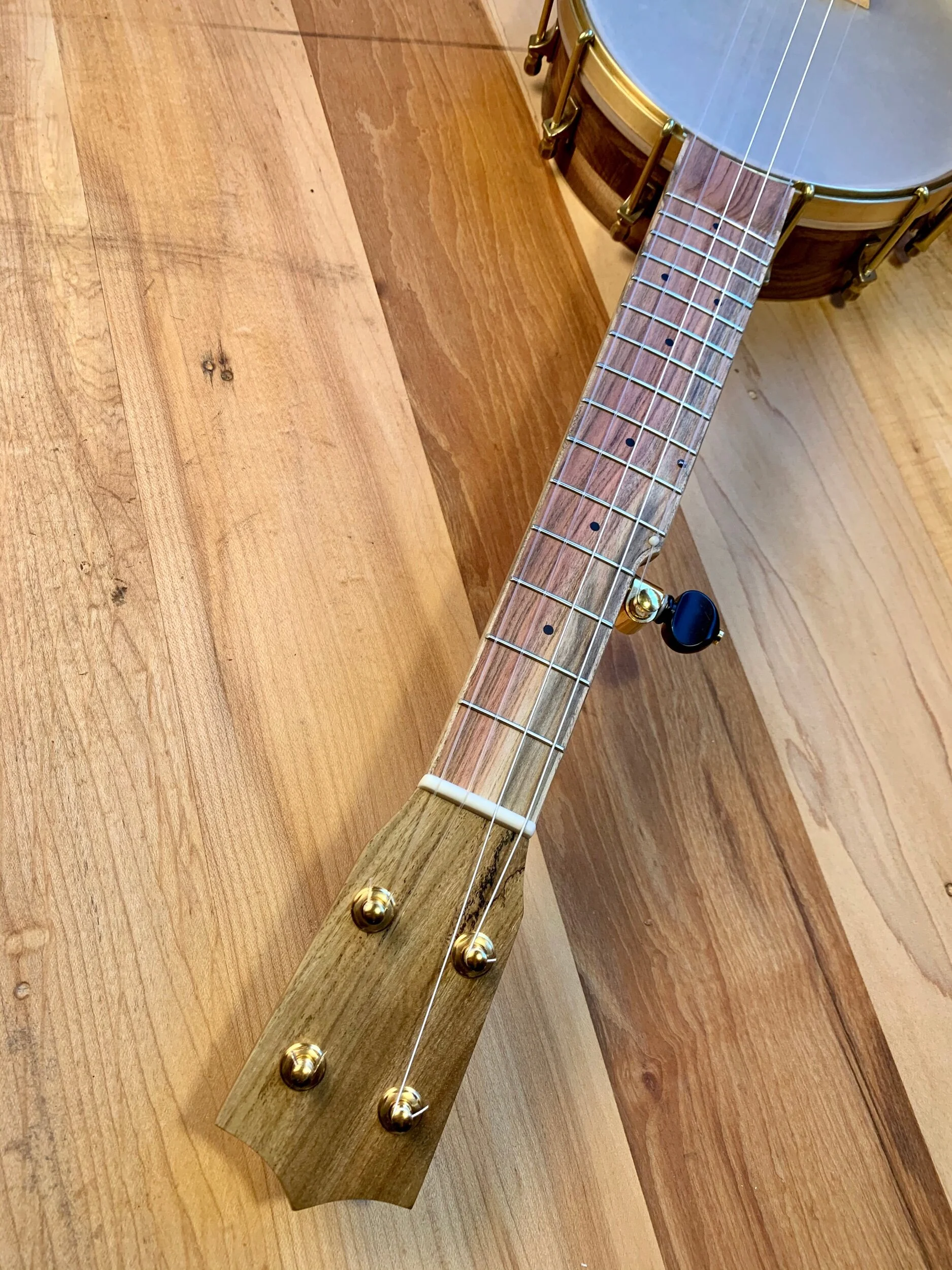
The walnut and pistachio concert banjo uke has become one of our standard models and I’m happy to make another. This one is going to an artist in the UK who has been a long term customer, Stephen Wragg, who has a lovely family band and runs an ukulele club in St Albans. I had fun with the multi colored pistachio on this one to contrast with the more subtle walnut. The pistachio comes from California orchards and the walnut is old air dried stuff from Missouri, harvested from a customer’s family land.

Hi Aaron and Nicole,

Banjo Uke has arrived and I love it, so beautifully made. It’s wonderful, and so comfortable to play too.

I am in awe of how you do it…

Am having fun playing with the foam block and hearing the differences.

Thank you so much, and keep well, and will be in touch soon!

All the best,
- S.W.

#479- Mastergrade Myrtle Tenor Ukulele

Myrtle. Wow. This stuff looks and sounds amazing. I am so lucky to get to use such a fine material that is also harvested in my region in a sustainable way. This set looks like it has scorch marks in the grain, so I continued the theme by picking other parts that hinted it at as well. The fir neck comes from old floor joists, the Myrtle and pistachio are from woodfromthewest.com.

Aaron,

I just wanted to let you know that my ukulele arrived yesterday and was in perfect condition. Wow, I couldn’t be more pleased with this instrument.

First, I appreciate your philosophy of primarily using local and salvaged wood in your instruments. The care and thought that you give to each of your instruments shows in all the details and the quality of your work.

Visually, this instrument is stunning. The master grade myrtle that you matched for the front and back with the dark grains going up the face immediately catches the eye. I also appreciate the contrast of how the sides are darker, which is similar to the look of my Beansprout baritone. From the headplate down the pistachio fretboard, through the body, the lines give this instrument personality. Even the little racing flame on the fir neck and tying in the bridge to the body with the dark grain helped tie everything together.

Most importantly I was captivated by the sound of this instrument. Of all the instruments I have played, including some really high-end tenor ukes made in Hawaii, this immediately captured me. The first thing I said to my wife after playing it was, ”this is the sound I’ve been looking for”. I don’t know what specific elements caused that, but I want to say thank you for all the thought and skill you put into this instrument.

This instrument captured not only the visual esthetics of my eyes but captured my soul through the sound.

One last thing, it feels really nice to hold. Very balanced and light weight. This didn’t translate to a light or thin sound. The sound and its overtones are by far richer and more robust than any of the other tenors I compared it to.

I feel very fortunate and honored to have this new Beansprout myrtle, pistachio and fir instrument as well as the baritone and tenor banjo in my collection. I look forward to continuing to make music and sharing these instruments with others.

Thank you also Nicole for your part and artistry in creating Beansprout instruments.

Aaron, Nicole, and Henry, take care, stay safe and stay well.

- D. B.

#478- Maple and Pistachio Four String Banjo

I designed this banjo as an all around size that would sound great with steel or non-steel strings and various tunings. This one is going to the customer tuned dgbe with my set of fluorocarbon and wound strings. It has a big dynamic range, is easy to play and feels balanced in my lap. The tone is bright but sweet with nice sustain. The pistachio comes from California orchards, the maple is Henry’s dance floor maple, found at an estate sale.

I received my new baritone banjo ukulele in excellent condition and it sounds great. Thank you. These instruments were made with love and that is a mystical and magic additive that few other instruments have. As a retired physician, one of the best gifts that you can give to the medical personnel, who are on the front lines battling the virus for all of us and are subject to all the emotional damage that comes their way, is a musical instrument like the ones you make by hand. It is a spiritual awakening and re-humanization that may save and preserve the lives of the caretakers. You guys have a special purpose in life!
- E. S.
Edshaheen.jpg

#474- Port Orford Cedar and Pistachio Tenor Ukulele

This one is for a long time customer who has some recent physical challenges. The first is an issue with her eyesight which has made it impossible to see the side fret markers on her instruments unless they are white on black. Also, problems with her left hand means that she needs a thinner neck than I normally do as well as a flat instead of a radiused fretboard. Instead of altering her existing instruments we decided to build a new one that would address both issues. The first thing that will stand out to you is my choice of ebony for the fretboard, a wood I don’t normally use, but will allow her to see the fret markers. Since I don’t keep any on hand and didn’t want to support ebony harvesting by buying new ebony, I called my friend Ben Bonham who kept a box of ebony scraps from when we worked for Mya-Moe and grabbed what I need. From a design perspective, I knew that if I used ebony for the fretboard, I would need to use it all around, so it is on the headplate, bridge and binding as well. The top is one piece port Orford cedar from the Oregon coast and the pistachio is from California orchards thanks to to woodfromthewest.com. I hope this uke meets her needs, it was a nice challenge!

It’s even more beautiful than your excellent photos! And the neck is a dream, I can play closed chords all the way up. I can see both the dots and the strings perfectly and I could not be happier. Thanks so much for all your efforts, securing the ebony was a step beyond. All deeply appreciated.
- L. B.

#473- Curly Myrtle Alto Ukulele

It’s rare that I find time to get out a stock instrument and this alto is a sweet one. Curly Myrtle for the body, crazy pistachio for the fretboard and Douglas fir floor boards for the neck. She’s headed to a lucky customer in North Carolina!

The curly myrtle alto arrived today and it’s even more beautiful, both in sound and appearance, than it was on your website. The simple, but very wonderful, construction really allows the beauty of the wood to be the dominant feature.

- J. D.

#464- Fir and Walnut Tenor Ukulele

I built this one in February and March with my limited shop time while I was recovering from my ankle surgery. I prepped the parts before the surgery so I could sit down and just do the hand work. I’ve been playing this one for lots of our online music events during quarantine, but it is time for it to find its real home. It’s on its way to a customer in Montana. The old growth fir neck and top are salvaged from floor joists. The walnut back and sides and pistachio fretboard are from California orchards. It is an all west coast instrument with a cheery voice and easy playability.

Aaron,

I just got my uke, and man is it beautiful! Sounds great too. I am thoroughly enjoying playing it and I am certain it will be a good friend for many years. Thank you for sharing your craftsmanship and love of music with the world.
- K. G.

#472- Curly Port Orford Cedar and Curly Walnut Baritone Ukulele

A baritone ukulele tuned gcea? Yes, it’s possible, but will it sound good? Totally. It just takes a special string set, a light build and an open mind. This one is for a long term customer/patron and I really wanted to do it right. Curly Port Orford cedar, curly walnut and pistachio sustainability harvested by woodfromthewest.com. Hemlock for the neck salvaged from a pig barn in The Dalles, OR by Portland Salvage Works.

Aaron and Nicole
The baritone ukulele arrived today. It is beautiful and I love the look, feel and sound. I was a little concerned that it would be hard to play with string tension set up for gCEA but no problem. It plays beautifully. Thanks for a beautiful instrument.
- S. S.

#468- Curly Walnut and Pistachio Five String Banjo

Curly walnut is a beautiful wood and difficult to come by. This board from Goby in Portland is multi-colored, swirly, knotty and filled with character. It was a real challenge to get the whole rim and neck from the one board, but I really wanted it to match. The rim is 12” across and features a wooden tone ring and goat skin head, which give it depth, warmth and character. But, I’ve started making the rims a little thinner, which gives it more vibrancy and volume. A really nice combination overall. The walnut is so crazy looking that I chose plain pistachio from California orchards for the fretboard and trim. This was a challenging build for me, as the larger rim maxes out my tooling capacity, but the beautiful sound made it all worthwhile.

Hi Aaron,
Just wanted to let you know that #468 arrived today, safe and sound. Got her all tuned up and I’ve been playing it in between meetings I’ve had today.

It’s absolutely beautiful — and the sound of it really, really resonates with me. The action feels spot on. The wood is gorgeous. Your craftsmanship is amazing.

My husband Jody, who doesn’t play an instrument, commented to me today about the sound of your banjo: “It’s mellow and round.”

I’m looking forward to getting to know this banjo. Lots of playing ahead!

Thank you,
- J. E.

#465- Curly Red Oak Concert Banjo Ukulele

Our modest home has 30 year old kitchen cabinets. The problem isn’t the red oak doors, the problem is the poorly designed and constructed melamine boxes they cover. Despite the fact that red oak may not be in style in the home design world, it is fantastic for musical instruments. Many turn of the 19th century guitars and banjos were built of oak, so I’m not a pioneer. I’m just a careful student of materials. When I see a domestic, readily available, beautiful, easy to work, good sounding wood, I use it. For the pistachio fretboard and trim, we chose a mottled green and tan look, which I think is a good contrast to the oak. The armrest and the pickup are nice add ons for a capable but modest instrument.

#467- Curly Port Orford Cedar and Curly Walnut Baritone Ukulele

For me, it’s all about texture. The feel of the different woods under finish, the visual textures of these crazy pieces of wood and the sonic textures that this instrument makes. All of these things are odd, unique, personal, idiosyncratic and maybe unable to be repeated. That is what makes a handmade object so precious. Unlike our modernist factory made goods, it can’t be replicated. The grafted pistachio and the grafted walnut from this uke come from California Orchards. The curly and mineral stained Port Orford Cedar top comes from the Oregon coast. The wide grained spruce neck comes from Camp Westwind, one of my favorite places on earth. I find the tone of this one really beautiful, it’s dark and rich without being muddy and the sustain lasts forever.

#469- Curly Port Orford Cedar and Myrtle Alto Ukulele

This one really shows off what I feel I am good at: domestic woods, tidy design, classic details and natural wood tones. Add in easy playability, balanced tone and comfortable proportions to top it all off. The Port Orford cedar top and Myrtle back and sides are from the Oregon coast via woodfromthewest.com. The walnut is from some salvaged wall paneling and the spruce neck is from Camp Westwind in Otis, OR.

Love the ukulele! I played it all evening. It sings beautifully!

- D. S.

#470- Mastergrade Myrtle Tenor Ukulele

I will never be perfect, neither will you and nothing ever will be. But as I strive for a more humble and empathetic outlook in my work and life, I still find myself working towards a perfection of my craft. This is an obvious contradiction, yet it seems to make sense in my head and heart. Every instrument is better than the last, yet I can still point out flaws that a customer never sees. I somehow need to be proud of my work and aware of how it can be better. How do I do it? I let go.

And now, I let this one goes to Mitch, who is also imperfect and beautiful at the same time.

Mastergrade Myrtle from the Oregon coast and pistachio from California orchards thanks to woodfromthewest.com. The spruce neck is from Camp Westwind in Otis, OR.

Hi Aaron and Nicole,

My Beansprout Tenor arrived safely and I have now had a bit of time with it. The wood and craftsmanship are excellent and it sounds great - loud and well balanced! Did I mention it’s beautiful?

Thank you and stay safe.

Best,
- M. K.

#466- Curly Maple and Pistachio Tenor Banjo Ukulele

Furniture maker James Krenov wrote that the most sustainable and eco-friendly thing you can do with wood is to make something from it that will never been thrown away. Instead of owning five cheap end tables in your lifetime that wear out and are discarded, it would be better to buy one of quality that is made to last. The same goes for musical instruments, of course. My friends at Zena Forest Products in Salem, OR understand this. They run a mill/shop on their family land, managing 1300 acres of native Oregon forest. I bought three slabs of of this multi colored curly maple a few summers ago when I visited and it’s almost gone. This banjo is for a customer who also knows the folks at Zena and asked for a banjo from their wood. The maple is so fancy, that I chose some simpler pistachio for the fretboard and headplate. The pistachio comes from our friends woodfromthewest.com, another company that knows how to provide quality wood with a sustainable footprint. Partners like these make it easier for me to do this crazy job and keep close to my values, I’m glad I’m not alone.

It arrived (that was fast), it’s beautiful, and it sounds great!

Hopefully, I’ll have some time to play more with it tomorrow.

I am looking forward to playing this for years to come.

Best,
- B. K.

#471- Port Orford Cedar and White Oak Alto Ukulele

This one was fun for me as it is the first customer instrument I have completed since my ankle surgery in January. It also turned out to be a unique combination of domestic woods that made for a nice look and tone. I have been drawn to playing it the last few days and I am excited to get it out to the world. The blue stained Port Orford cedar top and the pistachio fretboard and headplate are from woodfromthewest.com, one of our favorite west coast suppliers. Both have a Wabi-Sabi look to them that I like. The quartersawn oak back and sides from the Carpenter and stash remind me of arts and crafts style furniture, which is a favorite of mine. The curly maple binding ties it all together. I’m hoping that this instrument signals a return to a more normal shop schedule. Stay safe, friends.

Thank you Aaron, Nicole and Henry for a terrific ukulele!

It arrived last Friday and I’ve already had great time with it and with your “Fingerstyle Ukulele” book. The alto size feels comfortable to hold and to play. For such a small instrument, the sound is beautiful and resonant, and I think low G works very well. Both the sound and the looks speak of fine workmanship.

Thank you again and all the best,
- Y. K.

#462- Mastergrade Koa Tenor Ukulele

This instrument was supposed to be the centerpiece of my merch table at the Reno Uke Fest this spring. Since that has been postponed, I thought I would offer it up on eBay. This big island Koa came from Bruce at Notable Woods, who works hard to sustainability harvest and preserve this precious wood. The neck is old growth fir from a Portland floor hoist and the pistachio comes from California orchards. I wrapped it up in rope binding for a classic look. The sound is also classic, with the sparkle of Koa and the depth of the tenor size.


Aaron,
I am so pleased! The uke arrived a day before expected and it is so wonderful in my hands.
Nice sustain, friendly familiarity of play, and the most gorgeous douglas fir neck showing off an ancient tree’s slow growing later years. You know i love that kind of workmanship. I love its contrast to the flaming marvel of the koa and it rope binding. I am one pleased accidental owner of my first Beansprout.
This hawaiian oregon songbird has found a happy new home. I look forward to hearing it “open up” over the coming months.
Thank you to you and Nicole and Henry (because i bid for all of you) from the bottom of my smiling heart.
- L. M.
libby.jpg

#461- Curly Koa Scout Ukulele

This instrument was slated to be sold as a stock instrument at a festival this spring, but all of our festivals were cancelled, of course. We were able to sell it by auction on ebay and thankfully it offset some of our lost income. We are so grateful.

The curly Koa are cutoffs from the old Mya-Moe shop that I saved. The walnut fretboard, headplate and bridge are made from 1960’s wall paneling and the mahogany comes from a pallet. The rope binding ties it all together and gives it a nice old timey look. It is a soprano scale with a flat fretboard and 8” round body based on the old Lyon and Healy camp uke. It has a bone nut and saddle, fluorocarbon strings, brass fret markers, geared tuners, strap buttons and a soft case.

Thank you for building such a lovely work of art! I keep missing the regular scouts that you’ve built, and I wasn’t about to let this special one escape. It’s here and it’s **wonderful**, as you know! The size is absolutely perfect. I’m playing things with ease that have been a bit of a struggle - a struggle to play cleanly, anyway.

Thanks again so much for everything; I hope you all stay well. “

- K. V.

#440- Western Red Cedar and Walnut Tenor Ukulele

I put this together as a stock instrument and to try a few things out. This is the first red cedar top I have done since relaunching Beansprout. Cedar can get torn up by hard strummers and cracks more easily than some other soft woods. But, if braced well and with a clear plastic pick guard, I was ready to use it again. It just sounds so dang good! I also wanted to try out some vintage style purfling and some curly maple binding to wrap it up. Over all, I am so pleased with the look and the sound of this uke. It’s a real winner! The curly walnut back and sides come from woodfromthewest.com, the cedar top is salvaged from wall siding, the walnut fretboard, headplate and bridge come from Goby in Portland and the Oregon spruce neck is from Camp Westwind.

#463- Maple and Mahogany Five String Banjo

I needed a banjo for myself that was: 1) lightweight 2) loud and sweet 3) made quickly from available/thrifty woods.

To achieve this, I tried curly maple for the rim without a pistachio tone ring. I turned the block rim a little thinner than normal. For the neck, I used some mahogany and added maple for the fretboard, stripe and headplate. The maple rim turned out loud and sweet, with a growl to the low strings that I like. The mahogany neck made it a bit lighter than a maple neck. I also used a smaller headstock and tuners to make it balanced in my lap. I stained everything with the same stain, which gives it a bit of a folk art look. The thin, hand rubbed stain and finish will show a nice patina over time. Overall? A success. It was really just a series of small tweaks to my usually design, but it added up to something with a slightly different personality.

#460- Port Orford Cedar and Koa Scout Ukulele

My homage to the vintage Camp ukuleles made by Lyon and Healy, these Scout ukes pack a lot of music into a small package. Made from shop scraps and little pieces I couldn’t bear to put in the wood stove, they each have their own personality. You can’t order one, I just make them when I have the extra time. This one sounds really good, probably because of the choice Port Orford Cedar top. It is paired with a Koa back and sides, mahogany neck and walnut everything else.

Completed Work Demo #453- Walnut and Pistachio Mini Five String Banjo

We just finished reading “Farmer Boy” by Laura Ingalls Wilder, which our son Henry loved. He noticed how hard they worked and how little they had, even though they were prosperous farmers and landowners. He noticed how many things the family made and did by hand, even though they had money to spend in town. I noticed that the characters leaned on honesty and hard work to fix the problem. No excuses, no lies and no backing out of duty and responsibility. I admit that I made a mistake when working on this banjo and found myself thinking “what would the dad in Farmer Boy do?” I messaged the customer, admitted the problem and fixed it so that we are both happy. I’m proud of my work, happy to support my family this way and grateful for the business. We don’t do everything in the old ways, but Farmer Boy really got me thinking. Maybe we should get a few pigs…or build a sleigh…or make some watermelon pickles…or weave our own straw hats…we are gonna need more than 1/2 acre though….


The walnut for this banjo is urban salvage from Goby in Portland. The pistachio is from California orchards. The hands that built it are mine, the hands that play it are yours, the music is for everybody.

Hi Nicole and Aaron,
I love my mini banjo! It’s fun and easy to play and a work of art. The craftsmanship is beautiful.

- C. M.